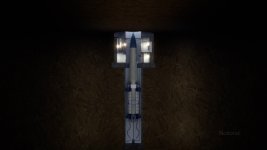

HGVs can actually leave the atmosphere before re-entering and commencing the glide phase, Dark Eagle and ARRW can do that. You get far better range that way but it does leave it open to exo-intercepts.


 www.twz.com
U.S. military officials have been stressing that space is now a warfighting domain where active conflict could occur for years now. This, in turn, has also led to increasingly open discussions about new anti-satellite capabilities.
“But protecting and defending satellites can’t simply be done by protect and defend. You can’t run away from a bully forever. Sometimes you got to turn around and punch,” Gagnon continued. “So protect and defend, although necessary is insufficient to deliver space control. We also need, as part of our joint force, the ability to attack.”
 aviationweek.com
AURORA, Colorado—Lockheed Martin plans to demonstrate a number of on-orbit capabilities related to missile defense over the next three years, a company executive said Feb. 23.
The company is planning multiple launches between 2026-28 to build confidence toward “space-enabled missile defense,” including the ability to sense and maneuver, and to contain missile threats “in an agile way,” Todd Stevens, vice president of mission strategies and advanced capabilities, told reporters at the Air and Space Forces Association’s Air Warfare Symposium here.
These demonstrations are run under the company’s Ignite business unit, referred to internally as the “Skunk Works for Space.”



 aviationweek.com
The U.S. Defense Department’s Golden Dome program is seeking a space-based interceptor with the thrust to intercept long-range ballistic and hypersonic missiles and the range to cover multiple launches from sites on land and submarines in the open sea.
Revealing the size of the interceptors necessary to provide boost-phase coverage, this concept would shoot down incoming missiles launched from Earth with a constellation of theater interceptor-size missiles in space.
- Change to rocket motor’s exhaust nozzle opens path to hypersonic and space applications
- X-Bow is assessing latest XB-34 static fire test results

 www.defensedaily.com
The size of the interceptors involved is indicated by a technical change that X-Bow (pronounced “Crossbow”) Systems plans to make to the exhaust nozzle of the freshly tested, 34.5-in.-dia. XB-34 solid rocket motor.
But the U.S. military selected the XB-34 to become a second-source supplier to Northrop Grumman on two hypersonic missile programs, removing a potential production capacity constraint. That decision makes X-Bow a future supplier for the 34.5-in.-dia., two-stage rocket that powers the Navy’s Conventional Prompt Strike (CPS) missile and the Army’s Long-Range Hypersonic Weapon (LRHW), also known as the Dark Eagle.
To qualify for the hypersonic missile role, X-Bow Systems plans to modify the XB-34 motor with the same type of flexseal nozzle that Northrop uses for the CPS and LRHW missiles. The flexseal nozzle includes a swivel bearing, which allows the rocket to meet the CPS and LRHW requirement for thrust-vector control steering.
Making that single change, however, opens a new path for the XB-34 as the steerable propulsion system for a space-based missile.
“Instead of a [High-Mobility Rocket Artillery System (Himars)] launcher on the ground, you basically have your Himars in space,” Hundley tells Aviation Week.
The concept has emerged as the Defense Department refines the architecture for the Golden Dome missile shield. In additional to a terrestrial “underlayer” of land-based interceptors, the architecture includes a space layer focused on shooting down ICBM and hypersonic glide vehicles during the short boost phase after launch, Pentagon officials say.
The catch is that intercepting offensive missiles in boost phase is challenging. The stage lasts only 3-5 min. In the 1980s and early 1990s, the Strategic Defense Initiative proposed the Brilliant Pebbles program, which envisioned a constellation of about 2,000 satellite-like interceptors, with solid rocket motors on board to propel them toward the incoming missiles (AW&ST Feb. 26, 1990, p. 62). But the vastness of low Earth orbit and the limitations of those thrusters meant that only a handful of Brilliant Pebbles interceptors would be in range of any single ICBM launch. An enemy that launched multiple ICBMs nearly simultaneously could defeat the system.
But propelling space-based interceptors with large solid rocket motors—especially an XB-34—could change the orbital math, expanding the reach of each missile over a broader coverage area.
The concept envisions a constellation of XB-34-powered interceptors in low Earth orbit, each refreshed by a new interceptor every 3-5 years. The thrust available to the rocket motor makes deorbiting into the Earth’s atmosphere unnecessary, Hundley said. The missiles instead could be launched on a solar trajectory. That ability to rocket away from the planet also makes these interceptors an option for asteroid defense, Hundley adds.
Asked if space-based, rocket-powered interceptors had advanced beyond the concept stage, Hundley says: “Most of the conversations going on in this area are classified, but we think we’ve got some low-cost, affordable and scalable capability in this area that could be a game changer on that equation.”

 www.navalnews.com
aviationweek.com
www.navalnews.com
aviationweek.com
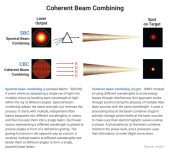
nLight megawatt demonstration scheduled for this year
Demonstrate a 1-megawatt-class laser made by nLight, which is capable of shooting down ballistic and hypersonic missiles.
 www.nlight.net
 aviationweek.com

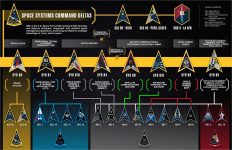
The question is what MD 3, 6, 7 and 9 are?Too many Deltas

The question is what MD 3, 6, 7 and 9 are?


 www.airandspaceforces.com