

Even i didnt understand , why are they buying M4s? Is it for SPG?
All SAMs need protection, so a small unit will be earmarked for it.
Even i didnt understand , why are they buying M4s? Is it for SPG?
I thought it was a rumour but action on the ground hints otherwise. I see this move as another in a long list of moves by this government to appease Trump & be in his good books. How else does one explain this? The Indian team wasn't even allowed a demo on their visit there which makes one wonder why were they there in the first place.
So why M4s? Looks like a forced buyAll SAMs need protection, so a small unit will be earmarked for it.
So why M4s? Looks like a forced buy


How do you tackle cruise missiles aimed at Delhi then? That's what comprises a significant part of Paxtan's delivery platforms.After SPYDER , QRSAM investing in a 3rd similar class system is a waste of resources.
If the PMO really wants to award US a project in lieu of S400 deal, just buy more C130J and P8I systems and be done with it.
MRSAM is a capable system to tackle multiple threats including cruise missiles.How do you tackle cruise missiles aimed at Delhi then? That's what comprises a significant part of Paxtan's delivery platforms.
I don't think IAF is suggesting about a whole new system altogether. Maybe it's about QRSAM, MRSAM along with AAD, PAD, SHORAD, VSHORAD, Akash and integrating these systems with each otherAfter SPYDER , QRSAM investing in a 3rd similar class system is a waste of resources.
If the PMO really wants to award US a project in lieu of S400 deal, just buy more C130J and P8I systems and be done with it.
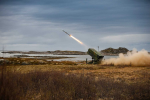
Not Keen On NASAMS-II, IAF Wants Indian Missile Defence
It’s official: The Indian Air Force doesn’t want the American NASAMS-II networked air defence system and has communicated this to the government. Pitched to India since 2017 in the wake of India’s decision to procure the Russian S-400 Triumf, Livefist has learnt that the Indian Air Force has informed the government that it would rather spend resources on the indigenous multi-tiered Ballistic Missile Defence (BMD) program that includes medium and long range surface-to-air missile elements. The latter system has completed the first phase of its development and is currently part of plans for operational deployment by 2022.
View attachment 16881
That said, it is unclear if the IAF’s word will impact active ongoing India-US negotiations to acquire the NASAMS-II system. The Indian government kickstarted the procurement process in 2018, with the MoD according acceptance of necessity (AoN) for a NASAMS-II based ‘Integrated Air Defence Weapon System’ for the Delhi region. A steep dollar price tag — nearly double the $1 billion budgeted by India for the procurement — has slowed progress.
India’s ballistic missile defence (BMD) program, which began development two decades ago, is reported to be ready for deployment in a configuration for India’s national capital territory, with future phases to fine-tune and expand capabilities. At present, the BMD system includes the endo-atmospheric Advanced Air Defence (AAD) interceptor and the exo-atmospheric Prithvi Air Defence (PAD) systems. The IAF has pledged full support to the Indian BMD program and the necessary logistics to see it roll into operational service on time.
While the IAF’s view the NASAMS-II is crucial and may support concerns over the price of the system, it may not ultimately stall an acquisition. Like several items of military hardware, the NASAMS-II wasn’t pitched to meet a specific Indian requirement, but rather an offer made in the wake of India’s decision to buy five regiments of the Russian S-400 air defence missile system, the first of which arrive in India late 2021.
In that sense, the NASAMS-II is very much chess piece in the larger strategic game between the U.S. and Russia with India as the battlefield. Following the S-400 deal, India was able to successfully navigate possible punitive actions under the Trump Administration’s Countering America’s Adversaries Through Sanctions Act (CAATSA) through sustained diplomacy undoubtedly sweetened with the reminder of the near non-stop list of armament contracts awarded to US companies in the last decade. Agreeing to consider the NASAMS-II was very much part of this India-US interplay.
Russia has separately been lobbying hard against India’s decision to even consider the NASAMS-II. In August 2018, Dmitri Shugaev, chief of Russia’s Federal Service of Military-Technical Cooperation (FSMTC) told Livefist, “We don’t see any need for India to buy NASAMS from U.S. as S-400 provides umbrella cover.” That, again, assumes that the NASAMS-II campaign is anchored in a staff requirement.
The NASAMS-II isn’t the first integrated air defence system that’s been pitched to India. Starting in 2004-05, the George W. Bush administration pushed a layered ballistic missile defence system to India comprising the endo-atmospheric Patriot PAC-3 and the exo-atmospheric THAADS (terminal high altitude air defence system). While India had a steady supply of Russian equipment for far longer than its renewed relationship with the US, choosing the S-400 was an especially violent jolt to Washington given the S-400’s reputation and its controversial role in the larger air defence interplay in the region.
The question at hand, now, is if the government will continue with plans to acquire the NASAMS-II or use cost concerns and the IAF’s reservations as leverage to push back. The truth also is that the dynamic has changed overwhelmingly in the last five months. The brink-of-war standoff between India and China in eastern Ladakh since May has turned several pre-standoff perceptions and views on their head. The impact on defence acquisitions and planning is clear to see, with a familiar flood of procurements now jostling for ‘fast track’ priority. Interestingly, the slew of new purchase efforts includes new air defence weaponry from Israel. Last year, the Indian Navy kickstarted a contest to choose new air defence missile weaponry for its future warships, a program that will see a pack of contenders including MBDA’s Sea Ceptor, an improved version of Israel’s IAI Barak, and offerings from Russia, Sweden’s Saab and South Korea.
If a deal for NASAMS-II does go through, it will have been birthed by the all new post-Covid/Ladakh world, one that is seeing an an intensifying alignment between India and the United States
Not Keen On NASAMS-II, IAF Wants Indian Missile Defence
How do you tackle cruise missiles aimed at Delhi then? That's what comprises a significant part of Paxtan's delivery platforms.

