

United Nations : News and Updates
- Thread starter Gautam
- Start date
You are using an out of date browser. It may not display this or other websites correctly.
You should upgrade or use an alternative browser.
You should upgrade or use an alternative browser.
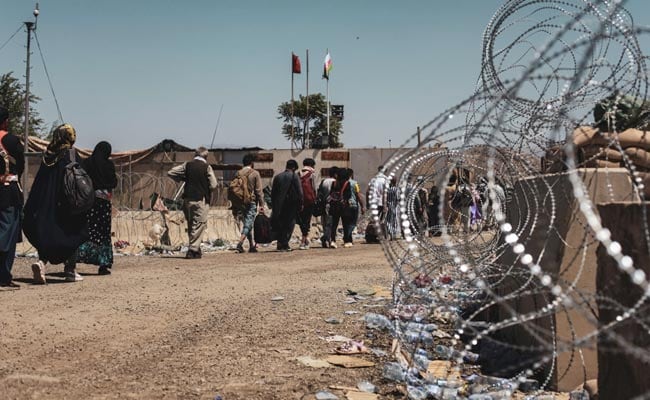
UN Security Council Adopts Afghanistan Resolution, But No "Safe Zone"
United Nations, United States:The UN Security Council adopted a resolution Monday requiring the Taliban to honour their commitment to let people freely leave Afghanistan, but the measure did not cite a "safe zone" mentioned by French President Emmanuel Macron.
The resolution -- drafted by the United States, Britain and France -- was passed with 13 votes in favor and no objections. China and Russia abstained.
The resolution says the council expects the Taliban to allow a "safe, secure, and orderly departure from Afghanistan of Afghans and all foreign nationals."
It refers to an August 27 statement by the Taliban in which the hardline Islamists said Afghans would be able to travel abroad, and leave Afghanistan any time they want to, including by any border crossing, both air and ground.
The Security Council "expects that the Taliban will adhere to these and all other commitments," the resolution says.
Macron had raised hopes of more concrete proposals in comments published in the weekly Journal du Dimanche over the weekend.
He said Paris and London would present a draft resolution which "aims to define, under UN control, a 'safe zone' in Kabul, that will allow humanitarian operations to continue," Macron said.
"I am very hopeful that it will be successful. I don't see who could be against making humanitarian projects secure," he said.
But the UN resolution is far less ambitious. It is not clear whether another resolution proposing a "safe zone" will be circulated later on.
"This resolution is not an operational aspect. It's much more on principles, key political messages and warnings," a UN diplomat told reporters.
Richard Gowan, UN expert at the International Crisis Group, said the resolution "does at least send a political signal to the Taliban about the need to keep the airport open and help the UN deliver aid," but is "a pretty thin text."
"Macron was guilty of overselling the idea of a safe zone at Kabul airport this weekend, or at least not communicating very clearly," he told AFP.
Despite those criticisms, the French foreign ministry said that Paris "welcomes the adoption of the resolution. We got what we asked for, which was for the airport to be a safe place for those who want to leave Kabul."
"We regret the Russian and Chinese abstention, but will work with each to ensure the council's decision is implemented," the French statement added.
Tuesday's deadline
The text calls for the Taliban to allow for "full, safe, and unhindered access" for the United Nations and other agencies to provide humanitarian assistance.
It also "reaffirms the importance" of upholding human rights, including of children, women and minorities and encourages all parties to seek an inclusive, negotiated political settlement with the "full, equal and meaningful representation of women."
The text also calls for Afghanistan to "not be used to threaten or attack any country or to shelter or train terrorists, or to plan or to finance terrorist acts."
Experts said the resolution was watered down to ensure China and Russia would not use their vetoes to block it, including softening some of the language related to the Taliban.
Moscow said it could not support the text because it did not mention the "brain drain" caused by Afghans leaving or the "harmful influence" of the freezing of Afghan financial assets.
Beijing said the current chaos was a direct consequence of Western countries' "disorderly withdrawal."
The resolution comes as international efforts to airlift foreign nationals and vulnerable Afghans out of the country come to an end after the Taliban swept back into power on August 15, with the United States withdrawing from the country after 20 years.
France ended its evacuation efforts on Friday and Britain followed suit on Saturday.
The United States announced it had withdrawn just before midnight Kabul time Tuesday.
US troops had been scrambling in dangerous and chaotic conditions to complete a massive evacuation operation from the Kabul airport by the Tuesday deadline.
UN Security Council Adopts Afghanistan Resolution, But No "Safe Zone"
The UN Security Council adopted a resolution Monday requiring the Taliban to honour their commitment to let people freely leave Afghanistan, but the measure did not cite a "safe zone" mentioned by French President Emmanuel Macron.
 www.ndtv.com


UN Security Council reform is a membership-driven issue: General Assembly President Shahid
India is currently in the Security Council as a non-permanent member for a two-year term, has been at the forefront of the years-long efforts to reform the Council.
India to pitch for permanent solution for food security in WTO meet
India will pitch for finding a permanent solution to the issue of public stockholding for food security at the upcoming 12th ministerial conference of the World Trade Organization (WTO) that will kick start from November 30, said officials on Wednesday.“Now that the 12th meeting is approaching, a number of submissions are being made at the WTO for advancing negotiations in agriculture. India, along with the G-33 (group of nations), has been engaging in finding a permanent solution to the public stockholding issue,” one of the officials cited above said. India is hopeful of a positive outcome on public stockholding and domestic support, which are part of the negotiations.
It believes that the draft text on agriculture that was firmed up four months ago by a WTO panel is “completely imbalanced”. It felt this has dampened the prospects of any reasonable outcome on agriculture at the 12 ministerial conference and is not in favour of developing nations.
Finding a permanent solution to the public food stockpile issue is linked to the survival of 800 million hungry people across the globe.
Under the trade norms, a WTO member’s food subsidy bill should not breach the limit of 10 per cent of the value of production based on the reference price of 1986-88. Apprehending that full implementation of the food security programme may result in breach of the WTO cap, India has been seeking amendments in the formula to calculate the food subsidy cap.
As an interim measure, the WTO members, at the Bali ministerial meeting in December 2013, had agreed to put in place a mechanism popularly called the Peace Clause. They committed to negotiating an agreement for a permanent solution at the 11th ministerial meeting at Buenos Aires. Under the Peace Clause, WTO members agreed to refrain from challenging any breach in the prescribed ceiling by a developing nation at the dispute settlement forum of the WTO. This clause will be there till a permanent solution is found to the food stockpiling issue.
India had invoked the clause in 2018-19 (13 per cent) and 2019-20 (11 per cent) as it breached the subsidy cap for rice. The discourse in agriculture talks includes developed members asking developing countries to take on additional commitments in terms of enhanced market access and reduction in policy space through reduced domestic support.
Another issue under discussion is related to additional disciplines on export restrictions of agricultural products. Countries such as Japan, Cairns, G-10, European Union, the US, and Singapore are seeking outcomes on two issues. One is related to exemption of foodstuffs purchased for non-commercial humanitarian purposes by the World Food Programme. The other is advance notification of export restrictive measures.
“Under the rules, WTO members can temporarily impose export restrictions to prevent critical shortages of food or other essential products to the country. India has raised concerns, saying this may be burdensome for developing countries,” the official said.
India to pitch for permanent solution for food security in WTO meet
India believes that the draft text on agriculture is "completely imbalanced"
‘Strongly’ believe there is great potential for more cooperation with India: UN peacekeeping chief
‘Strongly’ believe there is great potential for more cooperation with India: UN peacekeeping chief
The UN Peacekeeping chief said India has the "capacity to help us" with qualified peacekeepers, both police and military, and the country "obviously" has the capacity to "help us to further increase the number of women in peacekeeping, both in the military and the police".
 indianexpress.com
UNICEF, India Sign Visionary Statement On Child Participation At Local Governance
Commemorating the 75th year of India’s Independence ‘Azadi ka Amrit Mahotsav’ UNICEF India Representative Yaumasa Kimura and Secretary Ministry of Panchayati Raj (MoPR) Sunil Kumar signed a visionary Joint Statement of Understanding. At the event, UNICEF committed to the rights of youth and children in India in line with the achievement of the Sustainable Development Goals (SDGs). The UNICEF-India partnership aims to include the voices of youth and children in the Gram Sabhas through the provision of Bal/ Balika (Children) Sabhas. According to UNICEF, one-third of India’s population comprises children, adolescents and young people constituting 22 percent of the total population.“UNICEF is proud to partner and provides technical collaboration under this partnership with the MoPR, to strengthen outcomes for children across all social sectors, ” said Yasumasa Kimura, Representative of UNICEF India.
UNICEF signs a joint resolution of understanding with the Ministry of Panchayati Raj reiterating its commitment towards the realization of the rights of youth and children in India.
— UNICEF India (@UNICEFIndia) April 14, 2022
The Bal Sabhas will identify children’s priorities and integrate these into the Gram Panchayat Development Plans, the UNICEF informed in a release. “This is to ensure that policies, social protection schemes, and programs are inclusive and relevant to the needs and aspirations of children and adolescents,” it went on to add. The India UNICEF partnership program was struck in accordance with Article 12 of the UN Convention on the Rights of the Child. It focuses on providing the right platform for every child to freely express their views. It will also be pivotal in driving better SDG outcomes for children for programs focusing on child survival, child protection, child development, and child participation through a decentralized and participatory approach.
'We all need to come together..'
At the launch of the program, Sunil Kumar, Secretary MoPR said, “We all need to come together, not just the Central and state governments but the domain experts, academic institutions, IGOs/ NGOs, and the Panchayats in a Whole of Society approach. UNICEF’s presence here today is an acknowledgement of the need for convergence, collaboration, and commitment to the localization of SDGs. We thank them for the support.”Meanwhile, in a statement, Asumasa Kimura, Representative UNICEF India said, “The UNICEF-MoPR partnership will ensure that children and young people’s voices are an integral part of the decision-making processes of the Gram Panchayat.” He continued, “Boys and girls will be engaged in the policies and development plans, impacting their lives. We are confident that this model will bring children’s aspirations on nutrition, health, learning, engagement, and protection, to the core of the village agenda."
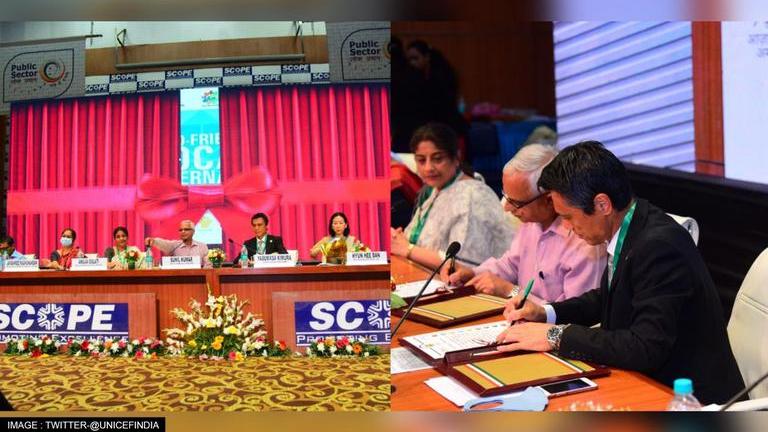
UNICEF, India sign visionary statement on child participation at local governance
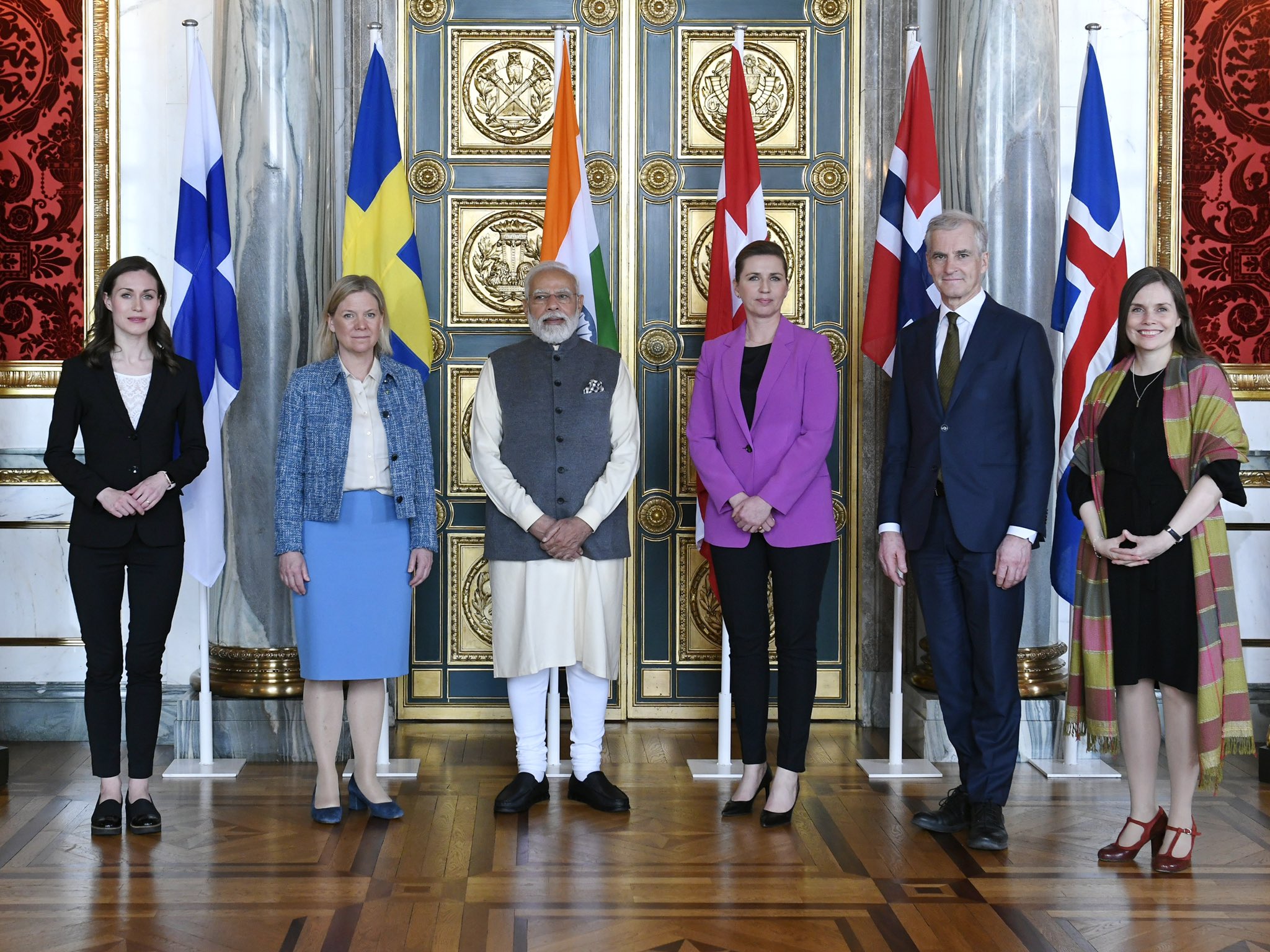
Renewed support for India’s bid for permanent UNSC membership - NewsOnAIR -
As the world grapples with a pandemic and multilateralism is under stress, India has emerged on the international stage as a rallying point of hope. This is one of the key highlights of PM Modi’s 3-day Europe visit, which Included 25 engagements with 8 world leaders & 50 businessmen. Besides...
 newsonair.com

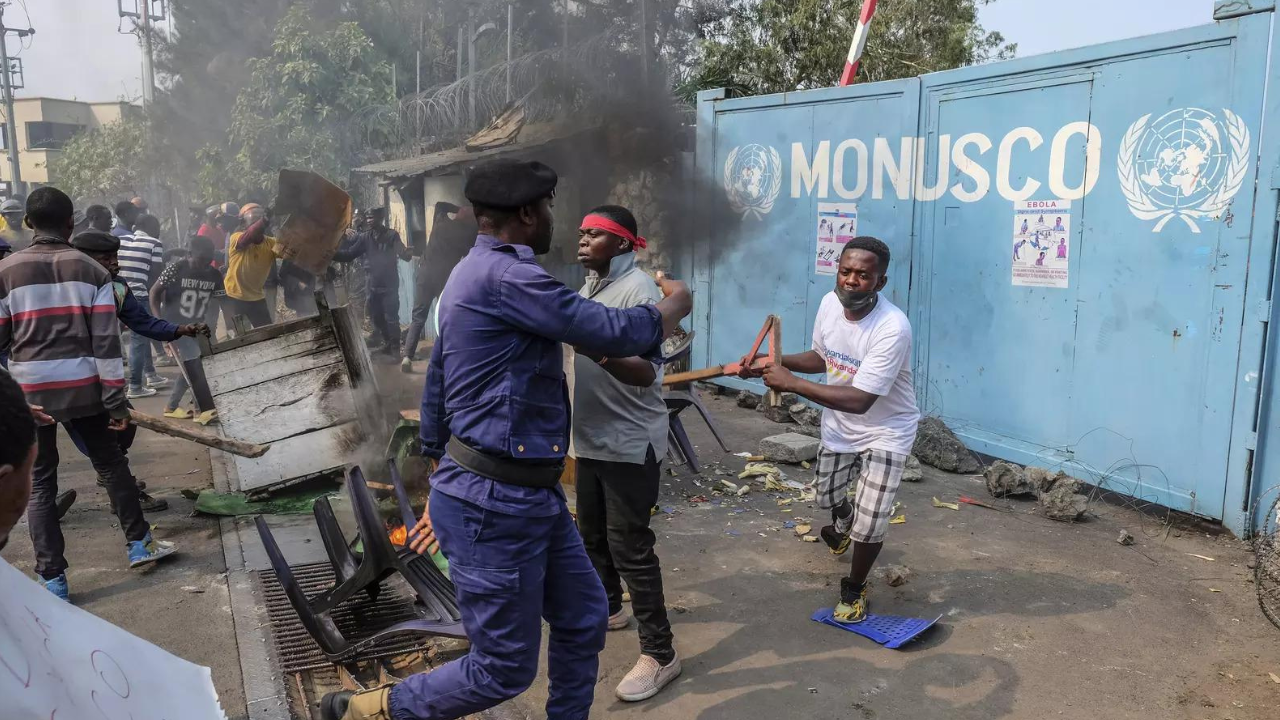
2 Indian peacekeepers killed amid anti-UN protests in DR Congo - Times of India
Three United Nations peacekeepers, including two Indian nationals from the Border Security Force (BSF), died in anti-UN protests in the eastern DR Congo town of Butembo on Tuesday. Seven demonstrators were also killed in the violence, said Butembo police chief Paul Ngoma.
 m.timesofindia.com

UN General Assembly President Abdulla Shahid to visit India on August 28-29
During the visit, the President of the General Assembly is expected to meet with Vice President Jagdeep Dhankhar and Foreign Secretary Vinay Kwatra where he will focus on ongoing issues at the General Assembly and India's engagement with the United Nations., World News, Times Now