Analysis Tracking USA VS China Trade war

U.S. 'playing with fire' on Taiwan, China says ahead of defense meeting

U.S. 'playing with fire' on Taiwan, China says ahead of defense meeting


By Ben Blanchard

,
ReutersMay 30, 2019

127515db3cba09c03c60426be455f1bb


Flags of Taiwan and U.S. are placed for a meeting between U.S. House Foreign Affairs Committee Chairman Ed Royce speaks and with Su Chia-chyuan, President of the Legislative Yuan in Taipei

More
By Ben Blanchard

BEIJING (Reuters) - The United States is "playing with fire" with its support for self-ruled Taiwan, China said on Thursday, in angry comments ahead of a meeting between Defence Minister Wei Fenghe and acting U.S. Defense Secretary Patrick Shanahan.

The two countries, locked in an escalating trade war, are also at odds over a series of strategic issues, from the disputed South China Sea to democratic Taiwan, claimed by China as its sacred territory, to be taken by force if needed.

Wei and Shanahan - who on his first day as acting defense secretary in January said the U.S. military would focus on "China, China, China" - are both attending the annual Shangri-La defense forum in Singapore which begins on Friday, where they are expected to meet.

China has been particularly incensed by recent U.S. Navy patrols in the Taiwan Strait, U.S. legislation in support of Taiwan and a meeting between Taiwan's national security chief David Lee and White House national security adviser John Bolton.

Speaking at a regular monthly news briefing, Chinese Defence Ministry spokesman Wu Qian described military ties between Beijing and Washington as generally good.

But he took a much darker tone when asked about U.S. support for Taiwan, an issue China has long described as the most sensitive in relations between the two countries.

"Recently, the U.S. sides has been continually playing the 'Taiwan card', trying in futile to 'use Taiwan to control China'. This is deluded," Wu said.

"The series of actions the U.S. side has taken is playing with fire, seriously harms the development of military relations between China and the United States, and seriously harms peace and stability in the Taiwan Strait area."

Taiwan's air, sea and land forces conducted an exercise to repel an invading force on Thursday, as its defense minister pledged to defend the island against what it sees as China's rising military threat.

Washington has no formal ties with Taipei, but is its most important international supporter and main supplier of arms.

A senior U.S. defense official said the fact that Shanahan was going to the Shangri-la dialogue during a period of tension with Iran was a sign that the United States was committed to the region and its allies.

During a meeting with Wei, Shanahan is expected to bring up better communication between the two militaries to avoid the risk of miscalculation, the U.S. official said.

While Wei will likely tackle the Sino-U.S. trade dispute and the hardening Trump administration approaches to Taiwan and the South China Sea, Asian states will be looking for calming messages, according to security experts and regional diplomats.

"Regional countries will be expecting reassurances that China's intentions are in fact peaceful given its growing military might," said Singapore-based regional security analyst Ian Storey. Storey, of Singapore's ISEAS Yusof Ishak Institute, said Wei must also speak to his domestic constituents, given the fact his address and a rare question-and-answer session are expected to be shown prominently in China.

"In the current environment maybe they won't want him to be too accommodating. He can be expected to blame the U.S. for growing tensions in the South China Sea and there is no way he is going to admit that China is part of the problem."
 
Foxconn halts some production lines for Huawei phones, according to reports – TechCrunch

Foxconn halts some production lines for Huawei phones, according to reports
Jonathan Shieber@jshieber / 2 days ago

Comment

huawei-e1559187416947.jpg

Huawei, the Chinese technology giant whose devices are at the center of a far-reaching trade dispute between the U.S. and Chinese governments, is reducing orders for new phones, according to a report in The South China Morning Post.

According to unnamed sources, the Taiwanese technology manufacturer Foxconn has halted production lines for several Huawei phones after the Shenzhen-based company reduced orders. Foxconn also makes devices for most of the major smart phone vendors including Apple and Xiaomi (in addition to Huawei).

In the aftermath of President Donald Trump’s declaration of a “national emergency” to protect U.S. networks from foreign technologies, Huawei and several of its affiliates were barred from acquiring technologies from U.S. companies.

The blacklist has impacted multiple lines of Huawei’s business including it handset manufacturing capabilities given the company’s reliance on Google’s Android operating system for its smartphones.

In May, Google reportedly suspended business with Huawei, according to a Reuters report. Last year, Huawei shipped over 200 million handsets and the company had a stated goal to become the world’s largest vendor of smartphones by 2020.

These reports from The South China Morning Post are the clearest indication that the ramifications of the U.S. blacklisting are beginning to be felt across Huawei’s phone business outside of China.

Huawei was already under fire for security concerns, and will be forced to contend with more if it can no longer provide Android updates to global customers.

Contingency planning is already underway at Huawei. The company has built its own Android -based operating system, and can use the stripped down, open source version of Android that ships without Google Mobile Services. For now, its customers also still have access to Google’s app store. But if the company is forced to make developers sell their apps on a siloed Huawei-only store, it could face problems from users outside of China.

Huawei and the Chinese government are also retaliating against the U.S. efforts. The company has filed a legal motion to challenge the U.S. ban on its equipment, calling it “unconstitutional.” And Huawei has sent home its American employees deployed at R&D functions at its Shenzhen headquarters.

It has also asked its Chinese employees to limit conversations with overseas visitors, and cease any technical meetings with their U.S. contacts.

Still, any reduction in orders would seem to indicate that the U.S. efforts to stymie Huawei’s expansion (at least in its smartphone business) are having an impact.

A spokesperson for Huawei U.S. did not respond to a request for comment.
 
Exclusive: Top Japanese chip gear firm to honour U.S. blacklist of Chinese firms - executive

Exclusive: Top Japanese chip gear firm to honour U.S. blacklist of Chinese firms - executive


By Makiko Yamazaki

ReutersJune 11, 2019

cd4068c8acff15654c047b83e8c3029f


A man walks behind a signboard with logo of Tokyo Electron Ltd in Tokyo

More
By Makiko Yamazaki

TOKYO (Reuters) - Japan's Tokyo Electron, the world's No.3 supplier of semiconductor manufacturing equipment, will not supply to Chinese clients blacklisted by Washington, a senior company executive told Reuters.

The decision shows how Washington's effort to bar sales of technology to Chinese firms, including Huawei Technologies, is ensnaring non-American firms that are not obliged to follow U.S. law.

China, which is locked in a crippling trade war with the United States, is pushing to build its semiconductor industry to reduce its reliance on U.S., Japanese and European suppliers for chip-making machinery.

"We would not do businesses with Chinese clients with whom Applied Materials and Lam Research are barred from doing businesses," the executive said, referring to the top U.S. chip equipment firms.

"It's crucial for us that the U.S. government and industry see us as a fair company," he said, citing Tokyo Electron's long U.S. partnership since the 1960s, when it started off as an importer of U.S. equipment.

He did not want to be named given the sensitivity of the matter. Applied Materials and Lam Research declined to comment.

Another major Japanese chip equipment supplier is also considering halting shipments to blacklisted Chinese firms, a person familiar with the matter said.

"The issue is beyond something we can decide on our own," said the person, who also declined to be identified.

Executives at other equipment suppliers said they were communicating closely with the Japanese industry ministry.

"We haven't received any specific instructions from the ministry," one of the executives said. "We are aware that we could be in deep trouble if we take advantage of the U.S. export ban to expand businesses with China."


DIFFICULT TO REPLACE U.S. RIVALS

The Tokyo Electron executive did not specify the names of the Chinese clients, but state-backed memory chipmaker Fujian Jinhua Integrated Circuit Co is currently on a list of entities that cannot buy technology goods from U.S. firms.

Fujian Jinhua did not respond to an emailed request for comment. A handful of other Chinese companies and research institutions are on a 'red list' that U.S. companies have been advised to avoid.

Huawei's chip arm, HiSilicon, is a so-called fabless company focusing on chip design and thus is not normally a buyer of chip-manufacturing gear. But Huawei also faces major risks from non-U.S. suppliers adhering to the U.S. blacklist.

British chip designer ARM, owned by Japan's SoftBank, has halted relations with Huawei, potentially crippling the Chinese company's ability to make new chips for its future smartphones.

But Taiwan Semiconductor Manufacturing Co, global leader in chip production and maker of many Huawei chips, has said it would continue to be a supplier to Huawei.

U.S. law specifies that any product comprising 25% or more U.S. content is subject to the U.S. export control restrictions.

But the Japanese chip equipment executives did not cite that as a reason for cutting off supplies to some Chinese companies.

"It's not impossible for Japanese companies like Tokyo Electron to replace their U.S. rivals and complete production lines for China," an executive at a U.S. chipmaker said. "But in reality, that's very difficult considering a U.S. backlash."


CHINA CHIP TECHNOLOGY LAGS

Five Japanese companies rank among the world's top 10 chip equipment firms. The highly specialized chip equipment industry is relatively small, but the gear is strategically critical for all semiconductor manufacturers.

Making chips involves numerous processes that require different types of equipment. Each market segment is typically dominated by just a few players.

Tokyo Electron controls nearly 90% of the market for microchip coaters and developers. It competes directly with Applied Materials and Lam Research in some segments.

Beijing has been investing heavily to grow domestic chip equipment suppliers as part of an effort to achieve its goal of producing 70% of the semiconductors it uses by 2025.

But industry sources say technologies at those suppliers are still far behind, leaving China dependent on imported equipment.

Today, only 16% of the semiconductors used in China are produced in-country, half of which are made by Chinese firms, according to the Center for Strategic and International Studies, a Washington-based think tank.

But aggressive investments by local chipmakers and foreign players like Samsung Electronics made China the world's No.2 market for chip equipment last year.

Many chip equipment manufacturers are forecasting substantial profit drops this year as the China-U.S. trade war dampens demand for chips and chip equipment globally.
 
  • Informative
Reactions: Gautam
Vietnam and India see explosion in direct investment from China as tech suppliers shift production overseas, says Goldman Sachs

  • Vietnam sees direct investment capital from China jump by 4.6 times to US$1.56 billion during the first five months of the year
  • More than 34 listed companies within the Greater China tech supply chain have set up or are building production capacity in Southeast Asia
by Xie Yu, Published: 5:33pm, 24 Jun, 2019
14549c9e-9662-11e9-b82d-cb52a89d5dff_image_hires_173328.JPG

The landscape of the technology supply chain is changing as companies that make components for smartphones and computers move their manufacturing facilities out of China. Photo: Reuters

Vietnam and India have seen an explosive surge of investment from Chinese companies shifting their production capacity abroad as they try to minimise the affects of the trade war, research by Goldman Sachs has found.

“The trade tariffs between the US and China serve as a pressing driver for companies to have part of their production overseas”, said the investment bank’s report issued last Thursday.

Cheap labour and land costs are the main driving force behind relocation of factories, but the threat of trade tariffs has made the push more keen, the report said.

The landscape of the technology supply chain in the Greater China region is changing as companies that make components for smartphones, computers and other high-tech products increasingly move their manufacturing facilities out of China.

How US-China tech war is rippling through the global supply chain

More than 34 listed companies within that supply chain have set up or are building production capacity in Southeast Asia, according to the report, which is based on interviews with companies.

Vietnam and India emerged as “the two most popular destinations for new production sites” among companies in the tech supply chain across China and Taiwan, the survey found.

Vietnam’s newly registered foreign direct investment (FDI) capital from China jumped by 4.6 times year on year to reach US$1.56 billion yuan during the first five months of 2019, according to the General Statistics Office of Vietnam.

India’s FDI inflow from China grew 137 per cent in 2018 from the previous year, exceeding US$391 million, according to the country’s Department of Industrial Policy and Promotion.

AAC Technology, a Hong Kong-listed electronic components producer based in Shenzhen, will have new factories in Vietnam and the Philippines ready as soon as late 2019, the report quoted management from the company as saying.

The firm supplies acoustic components for smartphones, and lenses to US phone maker Apple and its Chinese competitor Huawei, mainly from its production bases in mainland China.

However, the company’s management said that about 10-15 per cent of acoustics revenues are being generated in Vietnam currently, with new capacity to be gradually added in 2020.

Shenzhen-listed cable assembly company Luxshare has only 3 per cent of its revenue directly linked to the US market, but is also extending its production sites to Vietnam and India. The company’s second factory in Vietnam is aiming to start production by June 2020.

Trade war forcing 93 per cent of Chinese firms to transform supply chains, survey shows

Luxshare set up an Indian subsidiary in early 2019, and plans to start production by the end of the year, the report said.

Taiwanese multinational electronics giant Hon Hai has 14 affiliates in India, covering manufacturing, logistics, maintenance, sales and marketing. It also has six affiliates in Vietnam, and has one more planned with investment worth US$16.6 million, the company announced in January, the report said.

The report highlighted some of the challenges of moving into the region. The first, it said, is the long lead time: it takes three to six months for a new site to be evaluated and at least 18 months for factory set-up before production can begin.

The second challenge is the complexity of operation, as coordination of procurement, logistics, and production across multiple locations “can create inefficiencies”. The third is workers’ skill levels and culture integration.

Because of these drawbacks, the analysts believe the manufacture of high-end components like semiconductors is unlikely to move to Vietnam. Smartphone and PC production is more likely to be moved to Vietnam and India.

India, Vietnam benefit as trade war drives production out of China
 
Huawei’s secret back doors

Huawei's secret back doors


A cybersecurity study of Huawei equipment found that 55% of the Chinese company’s hardware devices tested contained at least one backdoor access point. (Associated Press/File) more >
Print

By Bill Gertz - - Wednesday, June 26, 2019

An investigation of the telecommunications equipment produced by China’s Huawei Technologies Ltd.has uncovered numerous cases of secret access points that could allow Chinese intelligence to conduct cyberoperations through the equipment.

Finite State, a cybersecurity research firm, conducted a survey of Huawei equipment and discovered that 55% of Huawei hardware devices it tested contained at least one backdoor access point.

The vulnerabilities in Huawei products pose serious security threats of cyberattack and data exfiltration if the equipment is used, according to Finite’s report on Huawei published Wednesday.

“The Chinese National Intelligence Law of 2016 requires all companies ‘to support, provide assistance, and cooperate in national intelligence work,’” the report stated. “Even if Huawei may be technically correct in saying that Chinese law doesn’t explicitly ‘compel’ the installation of backdoors, China’s intelligence and counterespionage activities tend to be so expansive that these provisions could be used to justify activities extending well beyond China’s borders.”

The report notes that Huawei dominates the global market for next-generation 5G telecommunications infrastructure. The concern is that all data passing through mobile devices, smart homes and other internet-connected devices will become cyberattack vectors if Huawei equipment is used in 5G networks.


Finite reviewed more than 1.5 million files embedded in 9,936 firmware images supporting 558 Huaweienterprise networking products. The review found hard-coded backdoor credentials, unsafe use of cryptographic keys, indicators of insecure software development practices, and the presence of known and zero-day vulnerabilities. A zero-day vulnerability is a hole in software that can be used for cyberattacks.

“The results of the analysis show that Huawei devices quantitatively pose a high risk to their users,” the report said. “In virtually all categories we studied, we found Huawei devices to be less secure than comparable devices from other vendors.” Hundreds of cases of back doors were discovered.

One of the ways Huawei set up backdoor remote access is to code firmware of its products with a default username and password that can permit remote access unless changed by computer administrators. In other instances, a specific password was coded into the firmware that would provide easy backdoor access. A third method used a special encryption key coded into the software that would allow remote access to the key holder.

The Dutch AIVD intelligence service reported in May that Huawei equipment used by a Dutch telecommunications carrier contained back doors. In January, the African Union reported that Huaweiequipment at its headquarters was sending confidential information to China. Vodafone, a large European phone company, also has identified hidden back doors in software inside Huawei products that could provide unauthorized access to networks in Italy.

Huawei and founder Ren Zhengfei, a People’s Liberation Army veteran, deny the company engages in intelligence-gathering for the Chinese government and insist the company’s products are secure. However, the Finite investigation is the first public security assessment of Huawei products.

Huawei is facing federal charges related to economic espionage of American cellphone technology and illegal financial dealings with Iran. Huawei Chief Financial Officer Meng Wanzhou is facing extradition from Canada on charges of violating international sanctions on trading with Iran.

The U.S. government, however, has stopped short of revealing all it knows about the danger of using Huawei equipment. The government has banned use of its products, however.

Michael Wessel, a member of the congressional U.S.-China Economic and Security Review Commission, praised the report.

“For years, Huawei has essentially dared the international community to identify the security vulnerabilities that have so often been alleged regarding the use of the company’s products,” Mr. Wessel said in a statement. “Finite State’s report identifies a broad range of significant security vulnerabilities, a substantial portion of which could allow for remote access to their products.

“Policymakers now have in their hands information that can be used to debate the advisability of utilizing Huawei products in our systems,” he added. “Finite State’s report removes the discussion from the limited purview of the intelligence and law enforcement communities and opens this up to public debate.”

IRANIAN CYBERATTACKS

Amid reports that the United States carried out cyberattacks against Iran’s military, the Department of Homeland Security warned this week that Iranian hackers are stepping up cyberattacks of their own against U.S. computer networks.

Christopher C. Krebs, director of the Homeland Security Department’s Cybersecurity and Infrastructure Security Agency (CISA), issued a statement Saturday warning of the increased Iranian cyberactivity.

“CISA is aware of a recent rise in malicious cyberactivity directed at United States industries and government agencies by Iranian regime actors and proxies,” he said. “We will continue to work with our intelligence community and cybersecurity partners to monitor Iranian cyberactivity, share information and take steps to keep America and our allies safe.”

The statement said Iranian regime hackers and proxies stepped up destructive “wiper” cyberstrikes that are aimed at doing “much more than just steal data and money.”

“These efforts are often enabled through common tactics like spear phishing, password spraying and credential stuffing,” Mr. Krebs said. “What might start as an account compromise — where you think you might just lose data — can quickly become a situation where you’ve lost your whole network.”

To counter the Iranian activities, CISA is urging computer administrators to shore up basic cyberdefenses, such as using stronger user/password authentication. “If you suspect an incident — take it seriously and act quickly,” Mr. Krebs said.

The warning coincided with a Yahoo News report a day before the warning was issued that Cyber Command, the military cyberwarfare unit, carried out online attacks against Iranian intelligence groups behind the recent mining attacks against oil tankers in the Gulf of Oman. No details of the cyberattacks were disclosed.

The cyberattacks followed President Trump’s decision to call off bombing strikes against Iranian air defense batteries. The planned U.S. raid followed the Iranian shoot-down of an RC-4 Global Hawk drone.

Iranian cyberattack capabilities are considered to be a middle-tier threat that in the past was focused on an evolving array of targets initially involving denial-of-service strikes to shut down banking websites, attacks designed to steal money from banks and, more recently, destructive cyberattacks.

One such attack was the Iranian cyberattack in August 2012 against the state-owned Saudi Aramco oil corporation that destroyed tens of thousands of computers. Iranian hackers also were blamed for cyberattacks against the Sands casino and hotel in Las Vegas in 2014 that involved wiper malware.

Then in May 2016, seven Iranian hackers were indicted on federal charges of conducting a cyberattack that unsuccessfully sought to take over the industrial controller used for a dam near Rye, New York. Two Iranian groups linked to the Islamic Revolutionary Guard Corps were identified in the indictment, the ITSec Team and the Mersad Co.

In 2010, the U.S. government conducted a cyberattack against Iran’s illicit nuclear program by planting the Stuxnet computer virus inside an industrial control system used for centrifuges.

CHINA’S STRONG MILITARY NIGHTMARE

China’s Communist Party is engaged in a major program to funnel civilian technology into Beijing’s large-scale military buildup using a variety of means, including theft of American technology, according to a senior State Department official.

Christopher A. Ford, assistant secretary of state for international security and nonproliferation, said this month that China’s party-ruled government has moved beyond seeking regional hegemony to striving for global dominance and the replacement of the U.S.-led democratic and free market world order with its communist-style system.

Mr. Ford told the U.S.-China Economic and Security Review Commission that the entire Chinese system is working to achieve what is called the “Strong Military Dream” of having the world’s most powerful military forces by 2049, the 100th anniversary of Communist Party rule.

“Despite the win-win propaganda rhetoric, this is no peaceable, benevolent, live-and-let-live vision of 21st century international engagement,” Mr. Ford said. “In the scope of its ambitions, the Chinese Communist Party is inescapably revisionist, even revanchist, in its approach to influencing the rest of the world. Its self-conceived national mission is to make itself ever more powerful vis-a-vis everyone else — and particularly vis-a-vis the United States.”

Mr. Ford said the Chinese are seeking to export their socio-political “operating system” around the world under a Beijing leadership that is aggressively pursuing a model of modernization that entails state-controlled economics and authoritarian dictatorship. That system is “one in direct competition with the liberal institutions of the current international system,” he said.

The Chinese are employing a “military-civilian fusion” to rapidly build up the military through all its universities and high-technology research institutes.

A key aspect will be producing state-of-the-art military power driven by artificial intelligence and AI-enabled technology.

China has focused relentlessly not just upon developing technology indigenously but also upon acquiring it abroad, by means both fair and foul, tilting the playing field in its favor at the expense of U.S. and global companies,” he said.
 
Walmart’s Supplier Says Chinese Factories in ‘Desperate’ State
By Daniela Wei and Jinshan Hong

July 10, 2019, 2:30 AM GMT+5:30, Updated on July 10, 2019, 1:44 PM GMT+5:30

  • Li & Fung is accelerating shift out of China due to trade war
  • Vietnam now ‘completely full’ as American retailers rush in

The world’s largest supplier of consumer goods says China’s factories are getting “urgent and desperate” as worried U.S. retailers accelerate a move out of the country amid heightened trade tensions.

China will see more factory shutdowns as the trade war that’s roiled the global supply chain exacerbates an exodus, said Spencer Fung, chief executive officer of Li & Fung Ltd. The company, which designs, sources and transports consumer goods from Asia for some of the world’s biggest retailers including Walmart and Nike, is being pushed by American clients to shift production out of China.

200x-1.jpg

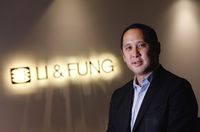
Spencer Fung
Photographer: Bobby Yip/Bloomberg

“U.S. clients are definitely very, very worried,” Fung said in an interview with Bloomberg. “Everyone is making razor-thin margins already and most people have a huge percentage in China. So if the biggest source increases the price by 25%, they are worried,” he said, referring to the scale of tariffs threatened on all Chinese imports to the U.S. by President Donald Trump.


Though Fung didn’t specify Walmart by name, the U.S. retailer is the company’s second-biggest customer after Kohl’s, accounting for 7.6% of revenue, according to Bloomberg data. A spokeswoman for Walmart declined to comment.

Seismic Shift
Because of its position as middleman connecting American retail giants to low-cost Asian factories, Li & Fung has a unique, ground-level perspective of the seismic shifts taking place around the world due to the trade war. Although the U.S. and China have resumed talks on a deal, there are growing signs that the global supply chain, long reliant on China as the factory to the world, is being permanently transformed. Intel has said it’s reviewing its global supply chain, while others including Apple and Amazon are reportedly doing the same.

Read more: World’s Top Bike Maker Says Era of ‘Made in China’ Is Over

“Nobody’s investing, nobody’s buying. The trade war is causing people to stop investment because they don’t know where to put the money,” the Silicon Valley-trained CEO said. “Many people put the money into Vietnam with one tweet,” he said, referring to Trump’s habit of announcing American trade policy over the social media tool.


The Hong Kong-based supply chain and logistics provider, which relies heavily on trade between the world’s two biggest economies to make its fortune, will see China’s contribution to its total sourcing fall from 59% in 2015 to less than half this year for the first time.

‘Completely Full’
While Chinese factories suffer, manufacturers in other Asian hubs become beneficiaries -- up to a point. American retailers have already taken up all the manufacturing capacity in Vietnam in their rush out of China, said Fung, highlighting the lack of scale that prevents other destinations from fully substituting for China’s manufacturing might.

“Vietnam, for example, is full, completely full,” he said. “There’s no extra capacity for the U.S. companies to get in.”

800x-1.jpg


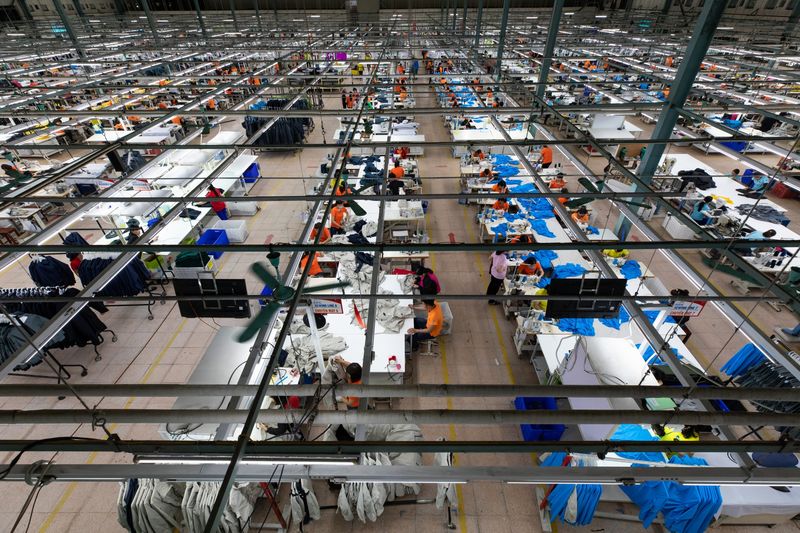
A clothing factory in Bac Ninh province, Vietnam.

Photographer: SeongJoon Cho/Bloomberg

Chinese factories, meanwhile, are lowering asking prices in their desperation, creating an opportunity for European and Japanese consumer brands. Li & Fung is advising its non-U.S. clients to move in and take advantage of the mature supply chain and lower costs.

“It is a buying opportunity for European and non-U.S. retailers,” Fung said, “In China, there are a lot of factories with less and less orders. They’re offering actually pretty good prices to anybody.”

How the U.S.-China Trade War Got to This Point: QuickTake

Li & Fung, which started its trading business 113 years ago, has seen a steep profit decline in the last five years as the rise of e-commerce platforms like Alibaba and Amazon cut out the middleman, and its retail clients faced waves of store closures. Fung said that core operating profit will continue to decline this year, but he stressed that he’s “seeing the bottom.”


The company’s shares, which fell 71% last year, climbed 2.7% in Hong Kong trading Wednesday, breaking a six-day losing streak.


Fung, whose great-grandfather Fung Pak-Liu established the company in 1906, sees the havoc currently being wreaked in the established global supply chain as an opportunity for Li & Fung’s re-emergence. Its 50-country sourcing network means it can nimbly shift out of China as clients desire, and its investment in technology like 3D virtual sampling will cut costs and save time, he said.

800x-1.jpg

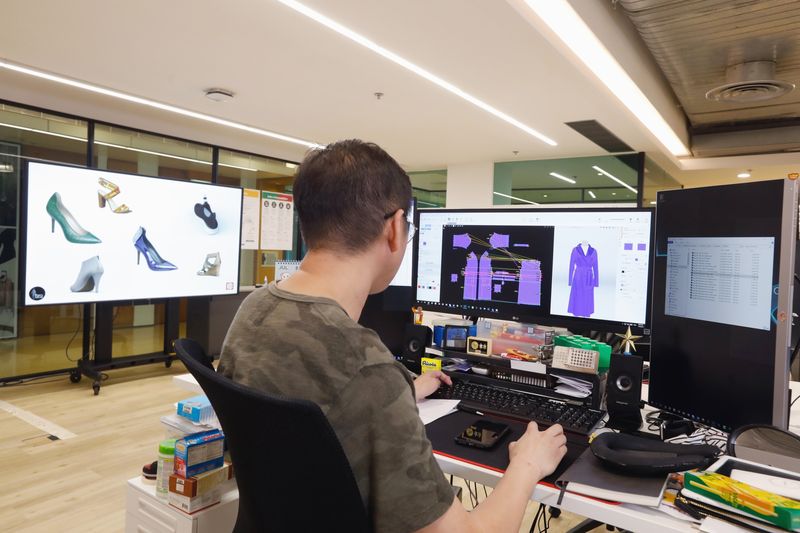
An employee works on a 3D graphic rendering.
Photographer: Bobby Yip/Bloomberg

The company is at the tail-end of a three-year restructuring plan that simplified its structure through divesting non-core businesses and streamlining operations.

“It’s like you’re flying a plane, you’re losing altitude,” said Fung. “But now one after another, I see the indicators turning green. I can actually see that the altitude loss is reducing and we’re actually pulling that plane back up.”

https://www.bloomberg.com/news/arti...tens-chinese-factories-existence-li-fung-says
 
Beyond the Trade War, China’s Economy Is Struggling to Stabilize
Bloomberg News, July 12, 2019, 3:35 PM GMT+5:30

  • Gross domestic product growth and other data due on Monday
  • Infrastructure, retail and property key to chances of upturn

China is grappling with a slowdown that will see output growth slide to the weakest pace in almost three decades this year, as factors far beyond the trade war with the U.S. weigh on the world’s second-largest economy.

Gross domestic product is forecast to grow at 6.2% in the second quarter, the slowest in a three-month period since at least 1992. Data due for release next Monday will show whether the downward forces from external demand, deflationary factory prices and contracting manufacturing can be offset by stabilizing investment, brighter consumer sentiment and a rebounding property sector.

The chances for those green shoots to hold on and expand into a firmer recovery depend in turn on how well the government’s targeted stimulus policies can lift local production and counteract the trade war’s effects. The U.S. Federal Reserve’s path toward imminent rate cuts is handing China more room to make its own monetary policy easier, just when it needs it.

“China’s economy will slow further in the second half as external demand remains the biggest drag, and it’ll likely stabilize from there under policy support,” said Wang Tao, chief China economist at UBS AG in Hong Kong. “The annual growth rate will stay above 6%.”

Data released Friday in Beijing confirmed the picture of weak domestic demand, the negative impact of the tariff war -- and the chance that stimulus measures aimed at fostering credit may put a floor under the slowdown. Export growth slowed, imports slumped, while credit expansion held up.

Read More on China’s Economy

As China’s population ages and the economy transitions from the double-digit growth rates of the mid-2000s, policy makers are attempting to manage the path down, while curbing debt and fending off mass industrial unemployment. Those efforts can be seen in three key sectors:

Infrastructure
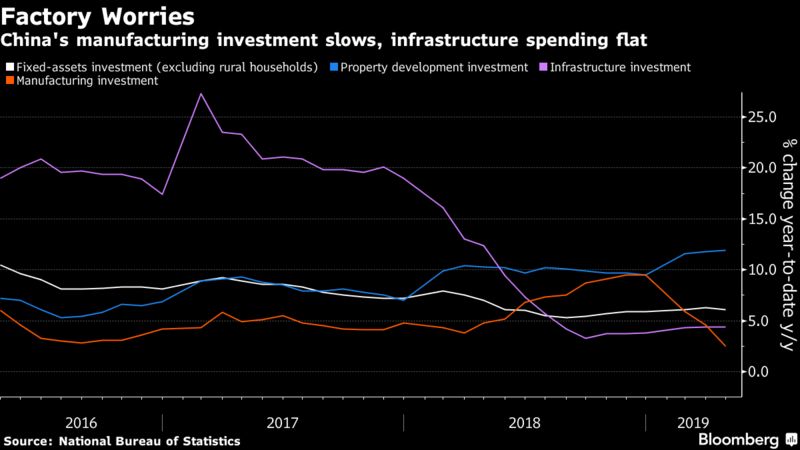
How strongly fixed-asset investment growth can pick up is key. More specifically, infrastructure investment will have to do the heavy lifting, as manufacturers who continue to be pressured by the tariff threats and a fragile global economy are hesitant about new investment.

Economists including those at UBS AG, Australia & New Zealand Banking Group Ltd. and Morgan Stanley expect infrastructure investment growth to continue to gradually accelerate this year.

800x-1.png


A fiscal stimulus plan including about two trillion yuan ($291 billion) of tax cuts is slowly feeding through into the economy. The government has stepped up efforts recently, easing the rules for using government debt in some infrastructure projects and pledging to renovate hundreds of thousands of old buildings. The relaxation of the use of government debt can increase investment by 800 billion yuan to 1 trillion yuan, according to UBS’s Wang.

A leading indicator of infrastructure investment -- excavator sales -- was basically flat in June after falling in May. That sign of stabilization “bodes well for investment activity and economic growth over the second half of 2019,” Xing Zhaopeng And Betty Wang at ANZ wrote in a note.

What Bloomberg Economists Say
The data due Monday will highlight an economy under continued pressure, with investment likely to remain sluggish and industrial output growth to slow. The most worrying sign from the June trade data released Friday was another month of undershoot in imports, which underscores weakness in domestic demand.
-- Chang Shu and Qian Wan, Bloomberg Economics
Retail Sales
China needs its masses of middle-class consumers to help drag it out of a trade-induced slump. This year though, auto sales and property-related consumption such as home appliances have been among the main drags on weak retail sales, and there aren’t clear signs of recovery yet in those sectors.

No Big Ticket
Auto and property-related sectors weighed on consumption

Passenger-car sales posted the first increase in June in more than a year as dealers offered heavy discounts, yet economists remain cautious on how long the recovery can be sustained. ING Bank NV’s Iris Pang said the auto industry will continue to face challenges from both “technological disruption from the ride hailing apps” such as Didi as well as cyclically slowing growth.

Property
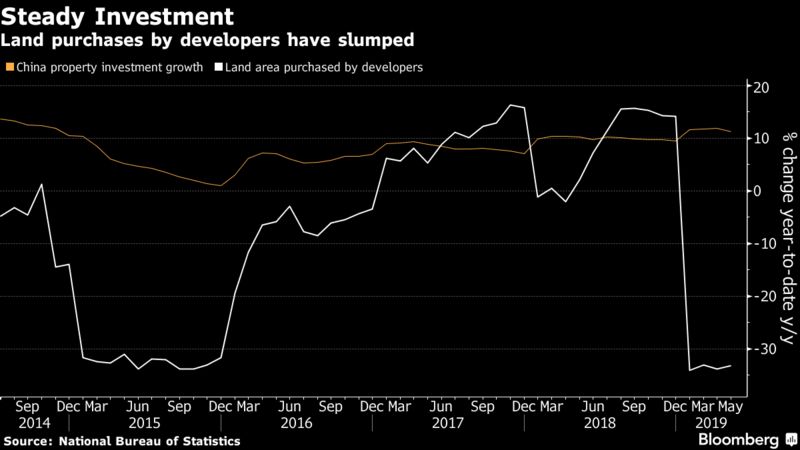
Policy makers are trying to keep a tight lid on the property sector, always a candidate for runaway asset prices. Property development investment has stayed stable this year, and regulatory curbs mean that growth will stay within bounds.

800x-1.png


The country’s banking regulator has asked trust companies with fast-growing businesses in the real estate sector to control the pace of expansion and manage risks better, Xinhua News Agency reported. The People’s Bank of China has also requested banks to not lower mortgage rates further, despite easier monetary conditions.

In a scenario where the trade war negotiations fall apart and tariffs on all of China’s exports again appear on the horizon, the property and auto sectors will be where policy makers try to buffer the economy, according to Lu Ting, chief China economist at Nomura Ltd. in Hong Kong.

“Beijing will likely roll out more real stimulus measures such as cutting purchase tax for passenger cars and forcing major cities to ease auto license quotes,” he said. Earlier stimulus measures that had been mothballed “will likely be put back on the table in the case that U.S.-China trade tensions escalate further.

— With assistance by Yinan Zhao, and Kari Soo Lindberg

https://www.bloomberg.com/news/arti...ar-china-s-economy-is-struggling-to-stabilize
 
  • Informative
Reactions: BMD
Quite right too. It's not a developing nation any more and developing nations shouldn't be threatening neighbours and militarising reefs.

Trump threatens not to recognize China's special status at WTO

Trump threatens not to recognize China's special status at WTO


AFPJuly 26, 2019

81cc0135d3b1cdec0be2397caac38fc59ad3fdb7.jpg


President Donald Trump, in a July 25, 2019 image, has threatened to withdraw recognition of the special "developing nation" status of China and other relatively rich countries at the World Trade Organization unless changes are made to the body's rules (AFP Photo/NICHOLAS KAMM)

More
Washington (AFP) - President Donald Trump on Friday threatened to withdraw recognition of the special "developing nation" status of China and other relatively rich countries at the World Trade Organization unless changes are made to the body's rules.

The global trade body uses "an outdated dichotomy between developed and developing countries that has allowed some WTO members to gain unfair advantages," Trump said in a statement.

Without "substantial progress" to reform WTO rules within 90 days, Washington will no longer treat as a developing country any WTO member "improperly declaring itself a developing country and inappropriately seeking the benefit of flexibilities in WTO rules and negotiations," the statement said.

While the statement points to multiple countries that benefit from the designation, it focuses mostly on China.

"The WTO is BROKEN when the world's RICHEST countries claim to be developing countries to avoid WTO rules and get special treatment. NO more!!! Today I directed the U.S. Trade Representative to take action so that countries stop CHEATING the system at the expense of the USA!," Trump said on Twitter.

The statement notes that seven of the 10 wealthiest economies in the world claim developing country status, as do Mexico, South Korea, and Turkey, which are members of the Group of 20 leading economies.

Trump's order directs the US Trade Representative's office to "use all available means to secure changes at the WTO," with the cooperation of other countries where possible.

It is unclear how the measure would change US policy but it likely would open the door even more retaliatory tariffs against China and other countries.

"When the wealthiest economies claim developing-country status, they harm not only other developed economies but also economies that truly require special and differential treatment," the statement said, and that "cannot continue to go unchecked."

Developing country status in the WTO allows governments longer timelines for implementing free trade commitments, as well as the ability to protect some domestic industry and maintain subsidies.
 
That's the problem with the US. In China a Chinese-looking guy speaking Chinese with a hint of an American accent stands out, meanwhile in the US a Chinese guy speaking Chinese doesn't even stand out.
Even if the do stand out you can't point fingers at them coz that will be viewed as xenophobia. However in China or Russia even more in North Korea, its not xenophobia, its struggle for motherland.

Political correctness is a disease prevalent in democracies, not beyond democracies. Sadly our liberals often fail to see the lack of reciprocity in such matters, what wolud be a fight between nations often turn to an internal political fight. I am sure you will find some American liberal somewhere taking political pot shots at US govt. for this.