

The coming Global Backlash against China
- Thread starter BMD
- Start date
You are using an out of date browser. It may not display this or other websites correctly.
You should upgrade or use an alternative browser.
You should upgrade or use an alternative browser.

Colonisation by debt: Where China begins as an economic partner of a country, and ends up its economic master
American statesman John Adams famously said, “There are two ways to conquer and enslave a country: One is by the sword; the other is by debt.” China, choosing the second path, has embraced colonial-era practices and rapidly emerged as the world’s biggest official creditor.
With its international loans surpassing more than 5% of the global GDP, China has now eclipsed traditional lenders, including the World Bank, International Monetary Fund, and all the creditor nations of the Organisation for Economic Cooperation and Development (OECD) combined. By extending huge loans with strings attached to financially vulnerable states, it has not only boosted its leverage over them but also ensnared some in sovereignty-eroding debt traps.
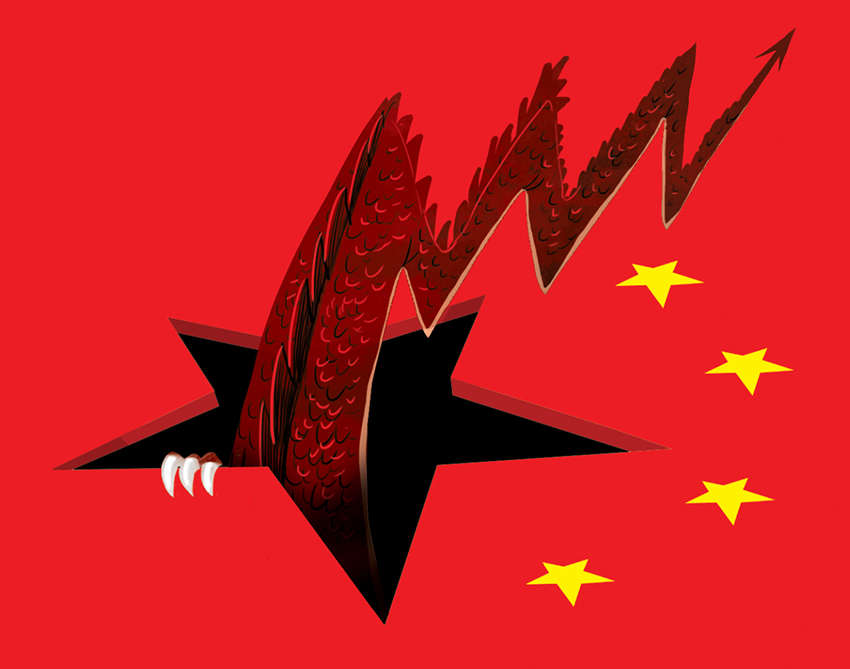
The latest to fall prey to China’s debt-trap diplomacy is Laos, which recently signed a 25-year concession agreement allowing a majority Chinese-owned company to control its national power grid. Instead of first evaluating a borrower country’s creditworthiness, China is happy to lend, because the heavier the debt burden on the borrower, the greater China’s own leverage becomes.
A new international study has shed light on China’s muscular and exploitative lending practices by examining 100 of its loan contracts with 24 countries. The lopsided contracts, while curtailing the options of the borrowing nations, give China’s state-owned banks untrammelled discretion, including the power to scrap loans or even demand full repayment ahead of schedule. China leverages its state-sponsored loans to aggressively advance its trade and geopolitical interests, with the study reporting pervasive links between Chinese financial, trade and construction contracts with other countries.
Many Chinese loans, in fact, have not been publicly disclosed, thus spawning a “hidden debt” problem. Every contract since 2014 has incorporated a sweeping confidentiality clause that compels the borrowing country to keep secret the terms or even the loan’s existence. Such China-enforced opacity, as the study points out, breaches the principle that public debt should be public and not hidden from taxpayers so that governments can be held accountable.
Forcing the other side to keep contractual provisions under wraps is also necessitated by the fact that China’s loan accords equip it with “broad latitude to cancel loans or accelerate repayment if it disagrees with a borrower’s policies”, whether domestic or foreign policy, according to the study. The contracts, the study found, also obligate the borrower to exclude the Chinese debt from any multilateral restructuring process, such as the Paris Club. This is aimed at ensuring that the borrowing country remains dependent on Beijing.
The study confirms that little of what China provides is aid or low-interest lending. Instead, its infrastructure financing comes mainly in the form of market-rate loans like those from private capital markets. The more dire the borrower’s financial situation, the higher the interest rate China is likely to charge for lending money. In stark contrast, interest rates for Japan’s infrastructure loans to developing countries mostly run below half a percent. Many of China’s loan contracts also incorporate collateral arrangements.
The study did not examine how borrowing states, when unable to repay Chinese loans, are compelled to cede strategic assets to China. Water-rich Laos’s transfer of its national electric grid to Chinese majority control holds implications for its water resources too as hydropower makes up more than four-fifths of national electricity generation.
One of China’s earliest successes was in securing 1,158 square kilometres of strategic territory from Tajikistan in 2011 in exchange for debt forgiveness. Since then, as the Chinese military base in Badakhshan underscores, China has further consolidated its foothold in Tajikistan, thanks to a corrupt power elite there.
A more famous example is the Sri Lankan transfer of the Hambantota Port, along with more than 6,000 hectares of land around it, to Beijing on a 99-year lease. The concept of a 99-year lease, ironically, emerged from the flurry of European colonial expansion in China in the 19th century. The transfer of the Indian Ocean region’s most strategically located port in late 2017 was seen in Sri Lanka as the equivalent of a heavily indebted farmer giving away his daughter to the cruel money lender.
China’s debt-trap diplomacy has not spared even its close ally Pakistan. Saddled with huge Chinese debt, Pakistan has given China exclusive rights, coupled with a tax holiday, to run Gwadar Port for the next four decades, with Beijing also pocketing 91% of the port’s revenues. China also plans to build near Gwadar a Djibouti-style outpost for its navy.
In small island nations, China has converted big loans into acquisition of entire islets through exclusive development rights. China took over a couple of islets in the Indian Ocean archipelago of the Maldives and one island in the South Pacific nation of the Solomon Islands. The European Union, meanwhile, has refused to bail out the tiny Balkan republic of Montenegro for mortgaging itself to China.
China’s Belt and Road Initiative (BRI) has been plagued by allegations of corruption and malpractice, and many of its completed projects have proved not financially viable. But, as an unclassified US intelligence report released on April 13 said, Beijing will continue to promote BRI, while fine-tuning it. After all, BRI is central to its debt-trap diplomacy. China often begins as an economic partner of a small, financially weak country, only to gradually become its economic master.
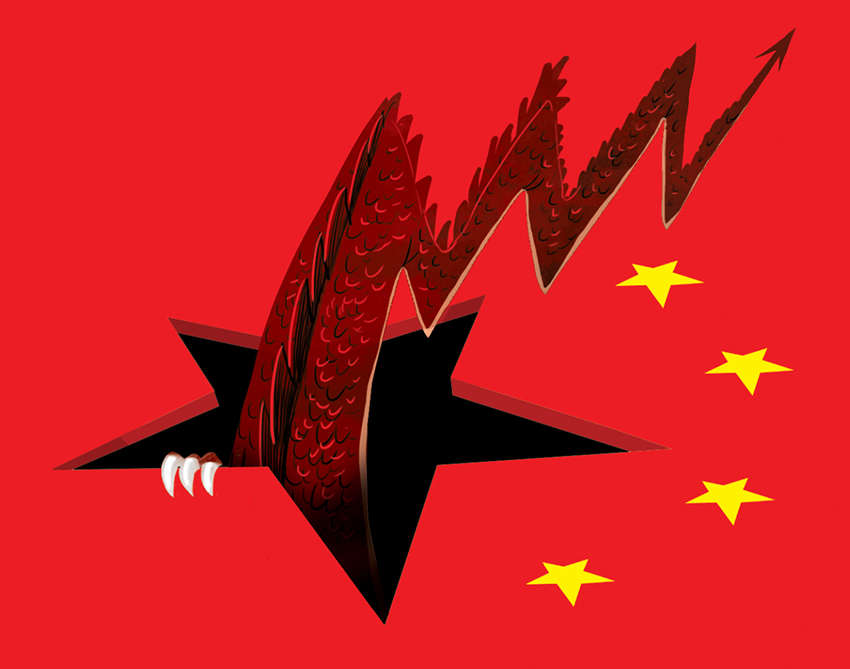
Colonisation by debt: Where China begins as an economic partner of a country, and ends up its economic master
American statesman John Adams famously said, “There are two ways to conquer and enslave a country: One is by the sword; the other is by debt.” China, choosing the second path, has embraced colonial-era practices...
‘Bloodless coup’: Samoa’s first female leader locked out of her own swearing-in ceremony
The first woman elected prime minister of Samoa showed up for her swearing-in ceremony on Monday to find her opponents had locked the doors to prevent her from taking office.Fiame Naomi Mata’afa and her followers pitched a tent on the statehouse lawn, where she took the oath of office instead.
The bizarre scenes capped six weeks of election turmoil that escalated into a constitutional crisis over the weekend as Mata’afa’s fierce rival refused to cede power.
“This is an illegal takeover of government,” Mata’afa said Sunday of the efforts to keep her from office. “Because it’s a bloodless coup, people aren’t so concerned or disturbed by it.”
The small Pacific islands at the center of a big power play
The drama in the Pacific nation of 200,000 could have broader geopolitical ramifications. Mata’afa has pledged to stop a $100 million port development backed by China, which has been expanding its regional influence.
The standoff began April 9 when a national election ended in a 25-25 tie between Mata’afa’s newly created FAST Party and the ruling Human Rights Protection (HRP) Party, headed by Tuilaepa Sailele Malielegaoi, the prime minister since 1998.
Fiame Naomi Mata'afa sits with members of parliament and the judiciary as she is sworn in as Samoa's first female prime minister on Monday during an extraordinary makeshift ceremony. (Malietau Malietoa/AFP/Getty Images)
The deadlock appeared to have broken when a lone independent lawmaker sided with Mata’afa, only for the electoral commission to appoint another HRP candidate, citing gender quotas. That restored the tie.
Samoa’s head of state — an ally of Malielegaoi— announced new elections to resolve the standoff. But Mata’afa’s party appealed and last week the Supreme Court ruled in her favor, annulling the appointment, canceling the new election and clearing the way for her to take office, according to the Associated Press.
Monday marked the deadline for the new parliament to be seated.
But on Saturday night, head of state Tuimaleali’ifano Va’aleto’a Sualauvi II canceled the seating without explanation, Radio New Zealand reported. When the Supreme Court overruled him on Sunday, the house speaker — another Malielegaoi ally — postponed the opening of parliament.
That led to Mata’afa’s claim that a “bloodless coup” was underway.
“We have to fight this because we want to retain this country as a country that is democratically ruled, premised on the rule of law,” she told New Zealand’s Newshub on Sunday.
When she arrived at the circular parliament house on Monday accompanied by the chief justice — dressed in a ceremonial wig and robes — who would swear her in, however, Mata’afa found the doors locked tight. The clerk of the house told her the building had been locked on the orders of Malielegaoi and the speaker.
Mata’afa asked him to open up anyway.
Samoa's Chief Justice Satiu Simativa Perese arrives at parliament in Apia on Monday. He and Prime Minister-elect Fiame Naomi Mata'afa were locked out of the building. (Keni Lesa/AFP/Getty Images)
“We need brave Samoans right now,” she said, according to the Guardian. “Return the power to the hands of the people.”
But the doors stayed locked, and police refused to intervene.
As Mata’afa and her supporters gathered under a large white tent on the parliament lawn, her opponent held a news conference to accuse her of “breaking and entering.”
“They have desecrated the grounds of parliament, and have made a ruckus in our hallowed grounds, they are trying to use force to open the House of Parliament,” Malielegaoi said, the Guardian reported.
A few hours later, Samoans found themselves faced with two prime ministers when Mata’afa was sworn in during an ad hoc outdoor ceremony.
As onlookers fanned themselves in the afternoon heat, Mata’afa took the oath of office to loud applause.
But the ceremony appeared to add to Samoa’s constitutional crisis, with experts saying the situation was unprecedented since independence in 1962.
“Samoa is a young democracy,” said Iati Iati from Victoria University of Wellington. “What you have then is a number of institutions whose power has not been accurately defined, so you have the head of state pushing the limits of his power, you’ve got the speaker coming in with his, you’ve got the courts asserting their power and you’ve got the prime minister saying he won’t listen to the courts.”
The crisis could get worse before it’s resolved.
“With apparently two governments, you would imagine that tensions could be brought to a boiling point very soon,” Iati said.
International leaders appeared reticent to take sides on Monday.
“We have faith in Samoa’s democracy and in their institutions,” said New Zealand Prime Minister Jacinda Ardern, while Australian Foreign Minister Marise Payne urged “all parties [to] respect the rule of law and democratic processes.”
Mata’afa was a member of Malielegaoi’s party until she broke away last year, criticizing — among other things — his plan for a Chinese-funded wharf.
She has said she will continue close relations with Beijing, but does not want to add to the more than $150 million Samoa already owes China.
Malielegaoi sought to dispel his rival’s swearing-in as “a joke.”
“Oh my, where have we ever seen a Speaker sworn in, in a tent? Shameful,” he said, according to Radio New Zealand.


Biden’s Asia Czar Says Era of Engagement With China Is Over
(Bloomberg) -- The U.S. is entering a period of intense competition with China as the government running the world’s second-biggest economy becomes ever more tightly controlled by President Xi Jinping, the White House’s top official for Asia said.“The period that was broadly described as...