South Korean Navy

USA gives South Korea Green Light to Build Nuclear Submarines (at the Philadelphia shipyard)​


The announcement came following a meeting with various Asian heads of state including South Korean President Lee Jae-Myung in Gyeongju, South Korea. Additional posts by Trump on Truth Social have detailed that the Submarines will be built on U.S soil at the Philadelphia shipyards, which were acquired by the Korean defense firm Hanwha late in 2024.

Subsequently, the construction of Nuclear submarines marks a departure from past efforts, as previous South Korean submarine construction has focused primarily on conventionally powered submarines. In tandem with this, South Korean Nuclear Submarine construction projects have remained in limbo for sometime as the U.S had not given tacit approval until President Trump’s statement.

However, as the Philadelphia Shipyards where construction will take place is not currently equipped to handle the construction of Nuclear Submarines (only commercial vessels have been produced), Hanwha has reportedly invested an additional $5 billion dollars into modernization and preparation. Despite this, there has been a lack of a concrete agreement regarding the development of the shipyards and a plan for the construction of the submarines with no official signature from the South Korean side.


These agreements are the conclusion of a long standing desire for nuclear powered submarines expressed by the South Korean government and military. Naval News has previously reported that subsequent efforts for a Nuclear Submarines have been born of increasingly intense operational needs for endurance and a deterrent towards neighboring nations such as North Korea, China, and Russia.


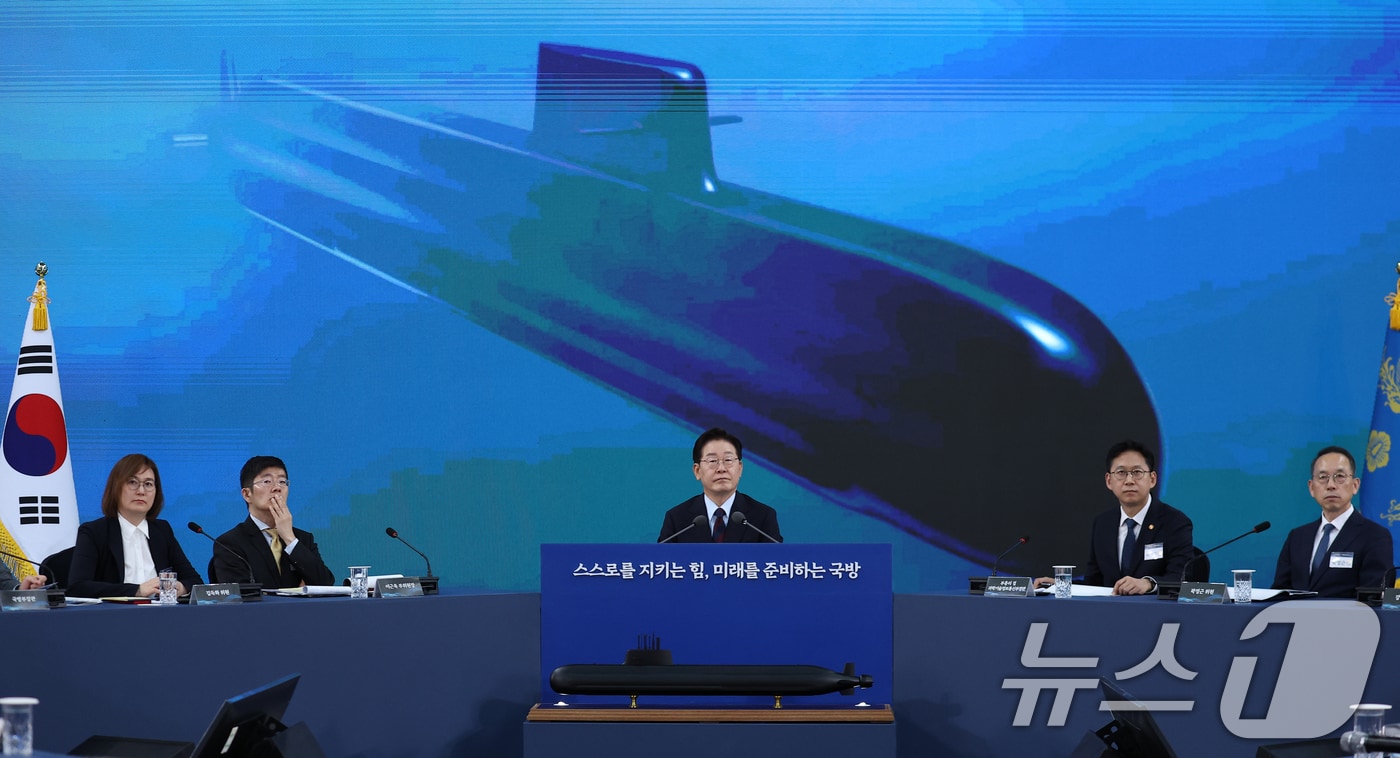
At the National Assembly’s Defense Committee audit on the 30th, Chief of Naval Operations Kang Dong-gil stated, “The start date for the nuclear-powered submarine program has not yet been decided, but once it begins, it will take more than 10 years,” adding, “Its displacement is expected to exceed 5,000 tons.”

Defense Acquisition Program Administration (DAPA) Commissioner Seok Jong-geon also stated, “Looking at advanced countries’ cases, it generally takes about 10 years to build a nuclear-powered submarine,” adding, “If we combine our capabilities, it could be somewhat shortened.”

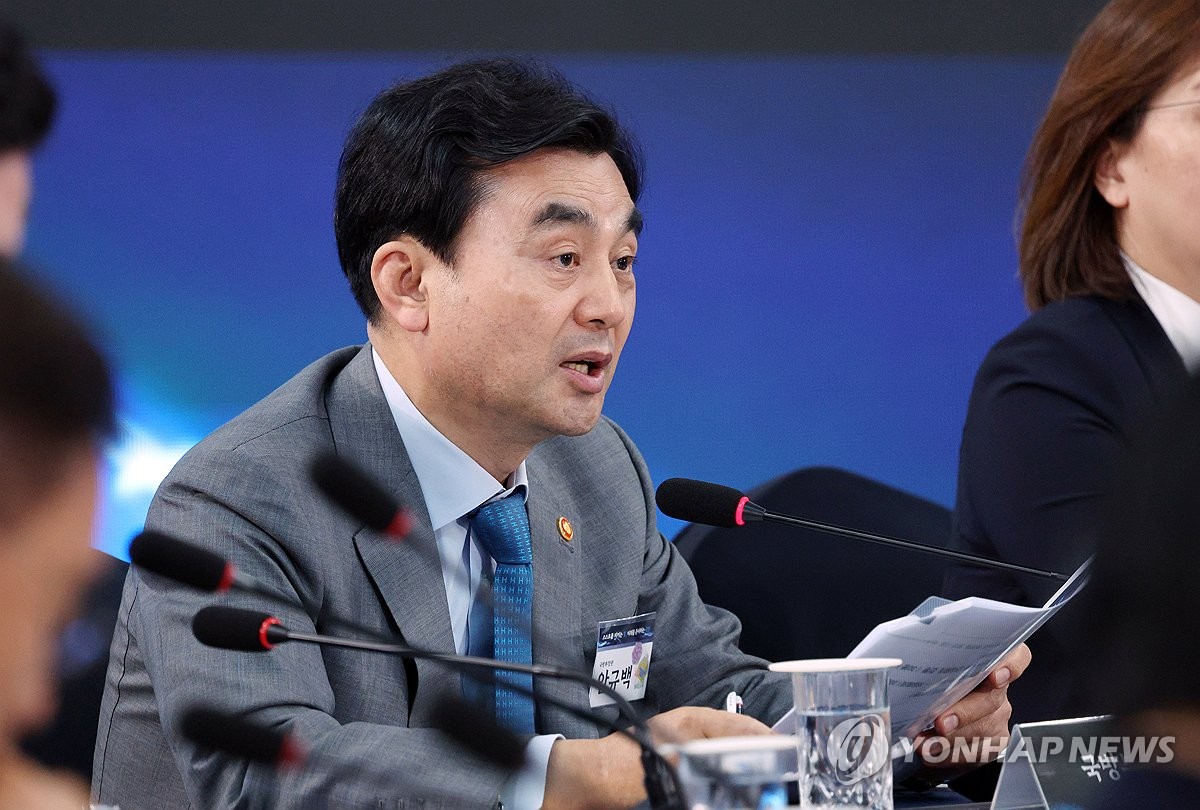
Minister of National Defense Ahn Kyu-baek, when asked about the scale of the planned nuclear-powered submarine acquisition, replied, “It will need to be discussed with the Navy, but I think at least four submarines would be necessary.”
 
  • Informative
Reactions: Shan

USA gives South Korea Green Light to Build Nuclear Submarines (at the Philadelphia shipyard)​


The announcement came following a meeting with various Asian heads of state including South Korean President Lee Jae-Myung in Gyeongju, South Korea. Additional posts by Trump on Truth Social have detailed that the Submarines will be built on U.S soil at the Philadelphia shipyards, which were acquired by the Korean defense firm Hanwha late in 2024.

Subsequently, the construction of Nuclear submarines marks a departure from past efforts, as previous South Korean submarine construction has focused primarily on conventionally powered submarines. In tandem with this, South Korean Nuclear Submarine construction projects have remained in limbo for sometime as the U.S had not given tacit approval until President Trump’s statement.

However, as the Philadelphia Shipyards where construction will take place is not currently equipped to handle the construction of Nuclear Submarines (only commercial vessels have been produced), Hanwha has reportedly invested an additional $5 billion dollars into modernization and preparation. Despite this, there has been a lack of a concrete agreement regarding the development of the shipyards and a plan for the construction of the submarines with no official signature from the South Korean side.


These agreements are the conclusion of a long standing desire for nuclear powered submarines expressed by the South Korean government and military. Naval News has previously reported that subsequent efforts for a Nuclear Submarines have been born of increasingly intense operational needs for endurance and a deterrent towards neighboring nations such as North Korea, China, and Russia.


At the National Assembly’s Defense Committee audit on the 30th, Chief of Naval Operations Kang Dong-gil stated, “The start date for the nuclear-powered submarine program has not yet been decided, but once it begins, it will take more than 10 years,” adding, “Its displacement is expected to exceed 5,000 tons.”

Defense Acquisition Program Administration (DAPA) Commissioner Seok Jong-geon also stated, “Looking at advanced countries’ cases, it generally takes about 10 years to build a nuclear-powered submarine,” adding, “If we combine our capabilities, it could be somewhat shortened.”

Minister of National Defense Ahn Kyu-baek, when asked about the scale of the planned nuclear-powered submarine acquisition, replied, “It will need to be discussed with the Navy, but I think at least four submarines would be necessary.”
 
  • Like
Reactions: babablacksheep

On October 30, 2025, Hanwha Ocean hosted the Right Honourable Mark Carney, Prime Minister of Canada, the Honourable David McGuinty, Canada’s Minister of National Defence, and Vice-Admiral Angus Topshee, Commander of the Royal Canadian Navy, at its shipyard in Geoje, South Korea. They were joined by Republic of Korea Prime Minister Kim Min-Seok, Vice Minister of Defence Lee Doo-Hee, Deputy Director of the Defence Acquisition Programme Administration Kang Hwan-Seok as well as Vice Chairman of Hanwha Group Kim Dong-Kwan.

Hanwha Ocean press release

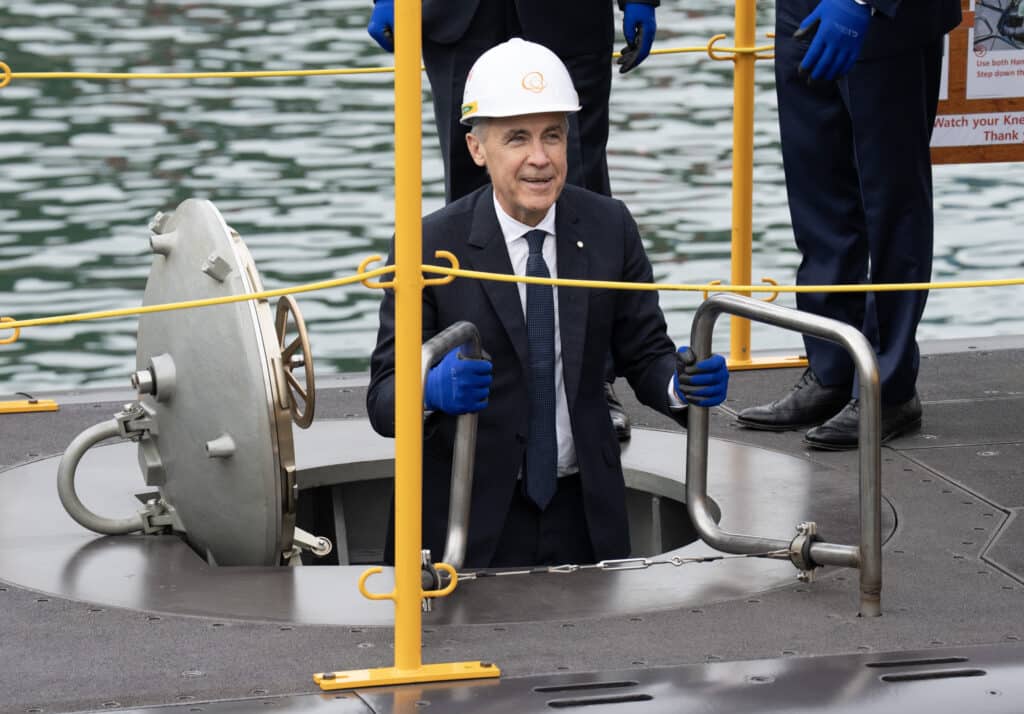
During the visit, Mr. Carney, Mr. McGuinty and VAdm Topshee toured one of the largest and most advanced shipbuilding facilities in the world, including the active production line for the KSS-III submarine. They also boarded and toured the KSS-III that was launched for the Republic of Korea Navy on October 22 – the exact same submarine that Hanwha is proposing for the Canadian Patrol Submarine Project (CPSP).

Also present during the visit were representatives from some of Hanwha’s Canadian partners, including Babcock Canada, CAE, Gastops, L3Harris Canada, ModestTree and PCL Construction.

In August 2025, Hanwha Ocean’s KSS-III was selected by the Government of Canada as a qualified supplier for CPSP. The KSS-III is a proven, in-service, in-active production submarine that fully meets and exceeds all High-Level Mandatory Requirements (HLMRs) set by the Government of Canada for CPSP. These include superior underwater surveillance capability and deployability in the Arctic with extended range and endurance that will provide stealth, persistence and lethality to ensure that Canada can detect, track, deter and, if necessary, defeat adversaries in all 3 of its oceans.
 
  • Like
Reactions: babablacksheep
There's an update on South Korea's nuclear submarine program:


South Korea should be able to launch its first domestically built nuclear-powered submarine in the mid-to-late 2030s, as the United States signaled support for Seoul's efforts following last week's summit between the two countries' leaders, a defense ministry official said Wednesday.
They expect to stick to this timeline if they're able to begin construction in the late-2020s.

What is important though is this statement:
Won said the government has secured key technologies needed to build a nuclear-powered submarine, such as the reactor and arms systems, and work is under way to verify the safety.
"As this will be the first case in which a reactor is installed in a submarine, we will make sure that we have the necessary legal and regulatory frameworks established at the same time," Won said.
Which is pretty much what I had said in my previous post -

They already have a base design - based on the next generation submarine revealed by Hanwha Ocean in MADEX. And they have been working on civilian maritime reactors (openly), and naval reactors (secretly since 2003, more recently, since 2018).

There's no other way they have all key technologies, including the reactor, within 2 days of announcing they'll pursue a nuclear submarine program.
 

South Korean shipbuilder Hanwa Ocean today inked Memorandums of Understandings (MoU) with French shipbuilder Naval Group and European missile manufacturer MBDA during the Defense & Security 2025 held in Bangkok, Thailand.

As part of the MOUs, Naval Group would provide its SETIS Combat Management System and MBDA would provide a range of naval missile systems for Hanwha Ocean’s OCEAN-40F design which is being pitched by the Korean shipbuilder to the Royal Thai Navy’s 2nd phase frigate acquisition program which is expected in 2026.

Hanwha Ocean, during the same event, also signed a MOU with British defense company Cohort. This MOU includes proven naval defence capabilities such as sonar systems, torpedo launcher systems, surveillance, targeting and fire-control systems as well as communications management.

It is unusual for Naval Group to provide its SETIS CMS to vessels designed or produced by other shipbuilder, but there is a precedent: The Royal Norwegian Navy’s Skjold-class corvettes were built by Kvaerner/Umoe Mandal incorporating the SENIT 2000 combat management system by Naval Group.
 
  • Like
Reactions: spice
There's a new update about South Korea's nuclear submarine program in the joint fact sheet released by the US and Korea - the original report is in Korean.


These are direct quotes by the national security advisor, Wi Seong Rac in a press conference, following President Lee's announcement of the agreements -
"정리된 문제…협업 필요하면 美도움 청하겠지만 전체는 한국서 건조"
Translation : "The issue has been resolved... If collaboration is needed, we will seek help from the US, but the overall project will be handled by Korea."
그러면서 "이로써 건조 위치에 대한 문제는 정리가 된 것으로 본다. 작업을 하다 보면 협업이 필요하고, 그래서 미국에 도움을 청할 수도 있지만 '핵잠수함 전체를 어디서 짓느냐'고 묻는다면 한국에서 짓는 것"이라고 거듭 강조했다.
Translation : He then reiterated, "I believe this resolves the issue of where to build the submarines. While collaboration is necessary as we work, and we may seek assistance from the United States, if you ask where we'll build the entire nuclear submarine fleet, we'll build it in Korea."

And this is exactly what I had said earlier.

And, as I has said earlier, the submarine design will be Korean.

This is in addition to Korea confirming its nuclear enrichment and fuel reprocessing rights, also agreed upon in the APEC summit. What it means is that you'll see a nuclear South Korea sooner rather than later.
 
SoKo has done well in the naval domain. They have managed to secure quite a few deals in the past few years.


Korean shipbuilder HD Hyundai Heavy Industries (HD HHI) announced on 17 November 2025 that U.S. Navy Chief of Naval Operation (CNO) Admiral Caudle visited the HD HHI’ shipbuilding facility in Ulsan, South Korea.

During his visit, HD HHI and the CNO discussed collaboration under MASGA, focusing on fleet readiness, technology cooperation, and supply-chain integration. Admiral Caudle toured our commercial shipyard and Naval Ship business unit, boarding the recently launched Aegis destroyer ROKS Dasan Jeong Yakyong and observing construction of the next Aegis destroyer and the overhaul of the 214-class submarine ROKS Son Won-il.

As global navies modernize, HD Hyundai Heavy Industries is expanding its presence in key defense markets—including the United States. We expect this visit to further deepen bilateral cooperation in advanced shipbuilding.
 
There's a new update about South Korea's nuclear submarine program in the joint fact sheet released by the US and Korea - the original report is in Korean.


These are direct quotes by the national security advisor, Wi Seong Rac in a press conference, following President Lee's announcement of the agreements -


And this is exactly what I had said earlier.

And, as I has said earlier, the submarine design will be Korean.

This is in addition to Korea confirming its nuclear enrichment and fuel reprocessing rights, also agreed upon in the APEC summit. What it means is that you'll see a nuclear South Korea sooner rather than later.
Excellent. And if possible we need to aid the Koreans by giving them missile tech and codes for our boosted fission and hydrogen bomb simulations. We can even help them launch early warning ballistic missile tracking satellites, long rage early warning radars and other strategic assets which may be out of their grasp for some time but can enhance their 2nd strike capabilities. Let us return the favour the bat eaters in Beijing gave us in the 1980s and help their adversary reach nuclear capability.


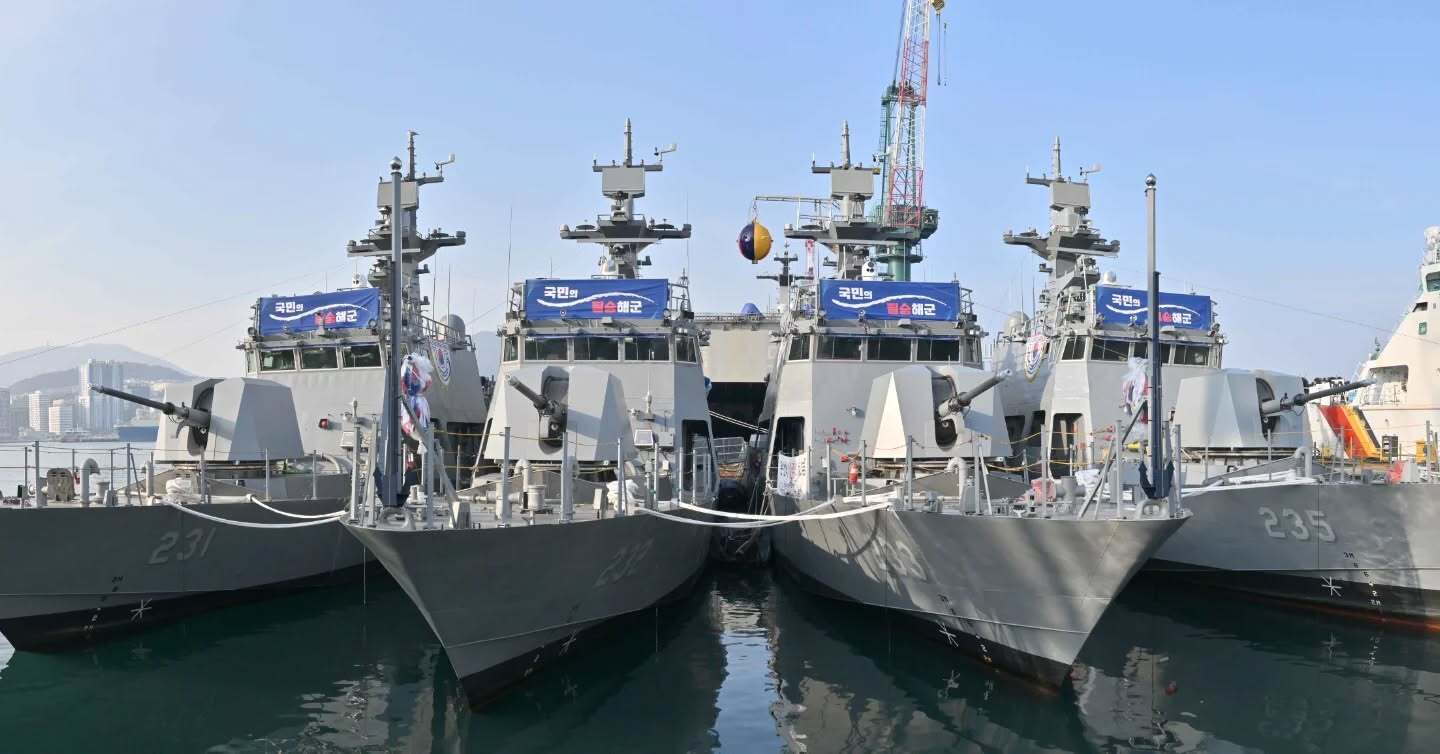
The newly launched vessels, Chamsuri-231, Chamsuri-232, Chamsuri-233, and Chamsuri-235, are 230-ton-class patrol craft that will be deployed to forward areas to conduct coastal surveillance and to intercept and neutralize infiltration threats along the Northern Limit Line (NLL). They are the first four ships of the PKX-B Batch-II program.
 
  • Like
Reactions: spice
In what maybe an interesting information regarding the Korean nuclear submarine project, some submarine specs were displayed by KRISO (Korea Research of Ships and Ocean Engineering) (their leading state-led marine engineering organisation).

At the "2025 Defence Core Technology Planning and Performance Conference", they displayed a submarine model titled "KRISO SPL Submarine and Pumpjet" with the following specs:

L x B x D - 111.2 x 9.8 x 10.7 m
Displacement - 8,280 tons
Max. Speed - 30 kts

Source - '24 국방핵심기술 기획·성과 컨퍼런스 - 3

Not sure if these are the exact specifications that the Korean nuclear submarines will have, but they seem oddly specific, and these numbers (8,000+ tons disp. and 30 kts speed) can only mean a nuclear submarine.

But if these turn out to be the actual specs, the Koreans might be designing an absolute monster considering this is their first attempt at actually building a nuclear submarine. Its bigger than the Astute and the Block IV Virginia.

Additionally, the project will be managed by a joint task force, comprising of 10 ministries/agencies (incl. the ministry of national defence, ADD, DAPA, ministry of trade, industry, and energy, ministry of economy and finance etc.) which will be overseen directly by the prime minister, and report to the president.

In a National Assembly hearing, the defence minister, Ahn Gyu-baek, also revealed that the detailed blueprint, including requirements, construction plans, and roadmaps will be presented within the next year (i.e., 2026).

This follows previous statements to the National Assembly by the defence minister and the national security advisor mentioning that the plan would be to start building the submarines in the later part of this decade (2027/28), for induction into service by 2035/36, with each submarine costing over KRW 3 trillion (USD 2.3 billion) with a total project expenditure of over KRW 20 trillion.
 
In what maybe an interesting information regarding the Korean nuclear submarine project, some submarine specs were displayed by KRISO (Korea Research of Ships and Ocean Engineering) (their leading state-led marine engineering organisation).

At the "2025 Defence Core Technology Planning and Performance Conference", they displayed a submarine model titled "KRISO SPL Submarine and Pumpjet" with the following specs:

L x B x D - 111.2 x 9.8 x 10.7 m
Displacement - 8,280 tons
Max. Speed - 30 kts

Source - '24 국방핵심기술 기획·성과 컨퍼런스 - 3

Not sure if these are the exact specifications that the Korean nuclear submarines will have, but they seem oddly specific, and these numbers (8,000+ tons disp. and 30 kts speed) can only mean a nuclear submarine.

But if these turn out to be the actual specs, the Koreans might be designing an absolute monster considering this is their first attempt at actually building a nuclear submarine. Its bigger than the Astute and the Block IV Virginia.

Additionally, the project will be managed by a joint task force, comprising of 10 ministries/agencies (incl. the ministry of national defence, ADD, DAPA, ministry of trade, industry, and energy, ministry of economy and finance etc.) which will be overseen directly by the prime minister, and report to the president.

In a National Assembly hearing, the defence minister, Ahn Gyu-baek, also revealed that the detailed blueprint, including requirements, construction plans, and roadmaps will be presented within the next year (i.e., 2026).

This follows previous statements to the National Assembly by the defence minister and the national security advisor mentioning that the plan would be to start building the submarines in the later part of this decade (2027/28), for induction into service by 2035/36, with each submarine costing over KRW 3 trillion (USD 2.3 billion) with a total project expenditure of over KRW 20 trillion.
As I had speculated in this post, the Korean nuclear submarine will indeed be a monster, for what is essentially Korea's first attempt at nuclear naval propulsion. The class has been revealed to be "8000-ton class." One thing to note: Korean naval displacements are quoted for light displacement or surfaced displacement (for example - the 3,000-ton class KSS-III Batch - I displaces closer to 3300 tons surfaced and 3800 tons submerged). This one, the KSS-N, will displace somewhere between 8,000-9,000 tons surfaced. This range matches with the KRISO figure of 8,280 tons. Not sure about the submerged displacement; since this is expected to carry newer, longer ranged SLBMs. It will use LEU fuel.
Sources are linked below -

정부는 지난해까지만 해도 5000톤급 배수량의 핵잠 건조를 고려했으나, 북한이 한국의 핵잠을 의식해 잠수함발사탄도미사일(SLBM) 탑재가 가능한 8000톤급 이상의 전략핵잠수함(SSBN) 건조를 추진하고, 5000톤급의 신형 구축함 건조에 속도를 내며 '동해 함대' 구축에 속도를 내는 점 등을 감안해 한국형 핵잠의 크기를 키운 것으로 분석된다.


In addition to this, as had been said earlier, the submarines will be built entirely in Korea, to Korean submarine and reactor designs, and in Korean yards. This was again affirmed in the unveiling of the "KSS-N Nuclear-Type Submarine Aquisition Basic Plan" that was unveiled by their Defence Minister and the President on 26th May, 2026. The first submarine will be in water by 2035 (mid-2030s).


Exact quotes:
아울러 "대한민국 내에서 핵추진잠수함을 개발·건조하겠다"며 "우리 원자로와 조선 기술을 활용해 자주적으로 건조하겠다"고 밝혔다.

This again coincides with their SLBM development plan (first test from submerged platform - 2027, service by 2030-31, mass production by 2032-34). Whether its based on the Hyunmoo-5, which weighs 36 tons, or maybe a lighter and longer ranged missile remains to be seen. It is entirely possible that it could be a variant of the Hyunmoo-6 or the Hyunmoo-7, both of which have been confirmed to be in development by their Defence Minister in an interview.

The rumored investment is expected to be KRW 30 trillion, for at least 6 (previously cited), possibly 8-9 submarines (from a 2017 seminar by the Korean Navy to the National Assembly).

This shows a few things -
1. As said earlier, the Koreans were always designing for an eventual nuclear submarine, before last year's announcement merely formalised everything.
2. These submarines will be fully Korean, based on the "next-generation submarine" model unveiled by Hanwha Ocean in 2025 MADEX.
3. And most importantly, these represent a Korea gearing up for a nuclear deterrence by the 2040s. This will happen. 100%.

In case anyone might be interested in some additional context:
1. This is in context of the Korean government trying to get the program to a stage by 2030 (when the current President Lee's term ends) that even in the off chance the PPP (their conservative party) manages to win the Prez election, they wouldn't be able to reverse their armaments program (which is something all post-dictatorship conservatives have done).
2. This is in combination with trying to get full wartime OPCON by 2029. There's even rumors that SK wants the combined command dissolved. Their current president has long held a belief (which he has said publicly) that American bases in SK is akin to occupation or vassalage, and if the liberals win the 2030 prez elections, be sure that the US bases will be severely downsized, regulated, and essentially closed eventually.
3. All this is broadly alongside their efforts to become completely self-sufficient when it comes to military tech. They have already achieved that for the army (small arms, all forms armoured vehicles, tanks, artillery (both howitzers and rockets), and now increasingly, drones). They will achieve the same for the Navy by 2036. The ROKAF and their space force will take some time, before their indigenous programmes start yielding results.