News 'Soft connectivity' key to India-ASEAN ties: Thai envoy

RISING SUN

Senior member
Dec 3, 2017
18,689
8,767
'Soft connectivity' key to India-ASEAN ties: Thai envoy
As New Delhi continues to push for better connectivity with Southeast Asia through the northeast under its Act East Policy, Thailand's Ambassador to India Chutintorn Gongsakdi has said that "soft connectivity" is the key to India-ASEAN ties.

Commenting on the India-Myanmar-Thailand Trilateral Highway, work on which is under way, Chutintorn said that construction on the Thailand side has been completed and "we are waiting for India to finish road construction in Myanmar".

"But what is more important is that when the road is finished, we have to be prepared on the customs, immigration and quarantine aspects because we cannot have roads and then people getting stuck at the border," he saidon the sidelines of a Thai food festival in the capital.

"So, we are interested in what we call the 'soft connectivity', the software for the people, the rules and regulations. Now we are negotiating the motor vehicle agreement."

According to the Indian External Affairs Ministry, the highway connecting Moreh in the northeastern state of Manipur with Mae Sot in Thailand is set to be completed in 2019.

Explaining why customs, immigration and quarantine comprise the difficult part of connectivity, Chutintorn said: "When we had a road going up to China through Laos, at one of the summits, the Prime Minister of Laos said that it cannot be that it takes five hours to get from one country to the next and then you have another five hours of customs, immigration and quarantine. So, we have to make sure that this does not happen. It has to be seamless and smooth."

His comments come as New Delhi prepares to host on January 25 a commemorative summit to mark the 25th anniversary of the India-Association of Southeast Nations (ASEAN) Dialogue Partnership and ahead of Thailand taking over from Vietnam later this year as country coordinator for India with the regional bloc.

Thai Prime Minister Prayur Chan-o-cha will be among all 10 ASEAN leaders who will be participating in the January 25 summit before attending the Republic Day celebrations the next day as guests of honour.

The ASEAN comprises Brunei, Cambodia, Indonesia, Laos, Malaysia, Myanmar, the Philippines, Singapore, Thailand and Vietnam.

Asked what would be the priorities for Thailand when it takes over as the country coordinator for India, Chutintorn said that it was too early to say but "at least we know we will continue with ASEAN-India priorities".

"Things like connectivity, maritime security, economic integration and especially connectivity link through the northeast," he said. "But also emphasising on maritime and air connectivity because only one dimension is not enough. We need air, sea and land."

Asked about India-Thailand bilateral economic ties, the Ambassador said: "We can do more because India-ASEAN trade is over $70 billion and with Thailand it is just over $8 billion, which is just over a tenth. It can be more."

In this connection, he stressed on the need to conclude the India-Thailand free trade agreement (FTA) and also Regional Comprehensive Economic Partnership (RCEP).


The RCEP is a proposed FTA between the 10 ASEAN member states and the six countries with which ASEAN has FTAs -- Australia, China, India, Japan, New Zealand and South Korea.

On the India-Thailand FTA, Chutintorn said: "I think we need to sit down and have a talk about what we can do for each other because there is often the perception that Thailand is the only one benefiting from the early harvest of our FTA. This is because we had a surplus every year."

"We believe that a good agreement is one where we both can gain," the Ambassador stated.

On Assam Chief Minister Sarbananda Sonowal's proposal for ASEAN countries open consulates in Guwahati, Chutintorn said that it is not feasible at the moment.

"To be honest, we are not rich countries and to do that, it's not a political act, it's also an economic act," he said. "To open an embassy or consulate general is a big financial commitment."

Chutintorn said the problem with India's northeastern region for industries to be located is that the size of the population of the state has to be looked at.

He said what would be most feasible would be for the northeast to engage in border trade with Myanmar once the Trilateral Highway is completed.

"In Thailand, we make so much money from border trade with Malaysia, with Cambodia, Laos and Myanmar. That is what is going to make the Northeast region
prosperous. And also, of course, tourism and agriculture," the Ambassador opined.

prosperous. And also, of course, tourism and agriculture," the Ambassador opined.

Read more at:
//economictimes.indiatimes.com/articleshow/62590504.cms?from=mdr&utm_source=contentofinterest&utm_medium=text&utm_campaign=cppst

 
India-Singapore free-trade agreement doesn't grant automatic access to citizenship, PR status or a job: MTI
THE India-Singapore Comprehensive Economic Cooperation Agreement (CECA) does not give Indian nationals automatic access to citizenship, permanent residence or employment in Singapore, a Ministry of Trade and Industry spokesperson said on Thursday, in response to media queries.

"Singaporeans are understandably concerned with competition from foreign professionals, managers and executives (PMEs) amid the challenging economic and employment situation," said the spokesperson.

"However, it is misleading to attribute the number of Indian PMEs, especially intra-corporate transferees (ICT), solely or mainly to CECA."

There is no provision in CECA that allows Indian nationals to become permanent residents or citizens of Singapore; nor does CECA oblige Singapore to automatically grant employment passes (EPs) to PMEs from India.

"None of our FTAs (free-trade agreements), including CECA, obliges us to automatically grant EPs to any foreign nationals," said the spokesperson. "All foreign nationals applying for EP must meet our prevailing criteria, and all companies must comply with rules on fair hiring."

Intra-corporate transfers seeking to enter Singapore under CECA or any other FTAs must still meet prevailing work-pass rules.

Intra-corporate transferees in Singapore have consistently accounted for less than 5 per cent of all EP holders, said the spokesperson, adding that "they come from a wide range of different source countries, with Indian nationals constituting only a small segment".
 

The historical and cultural connections between India and Thailand​

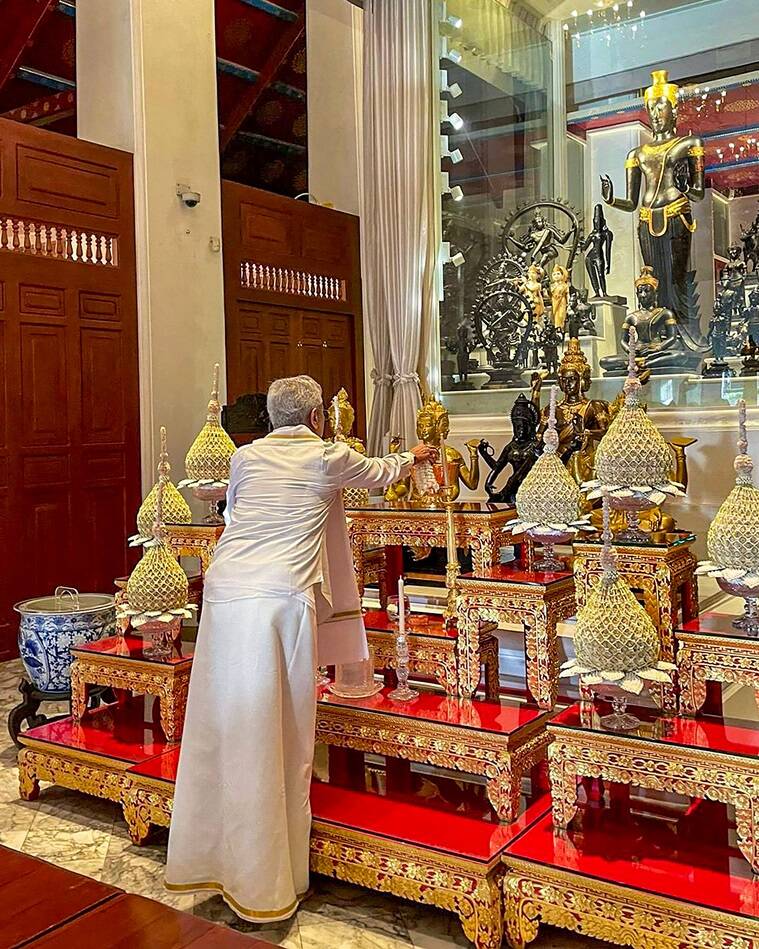
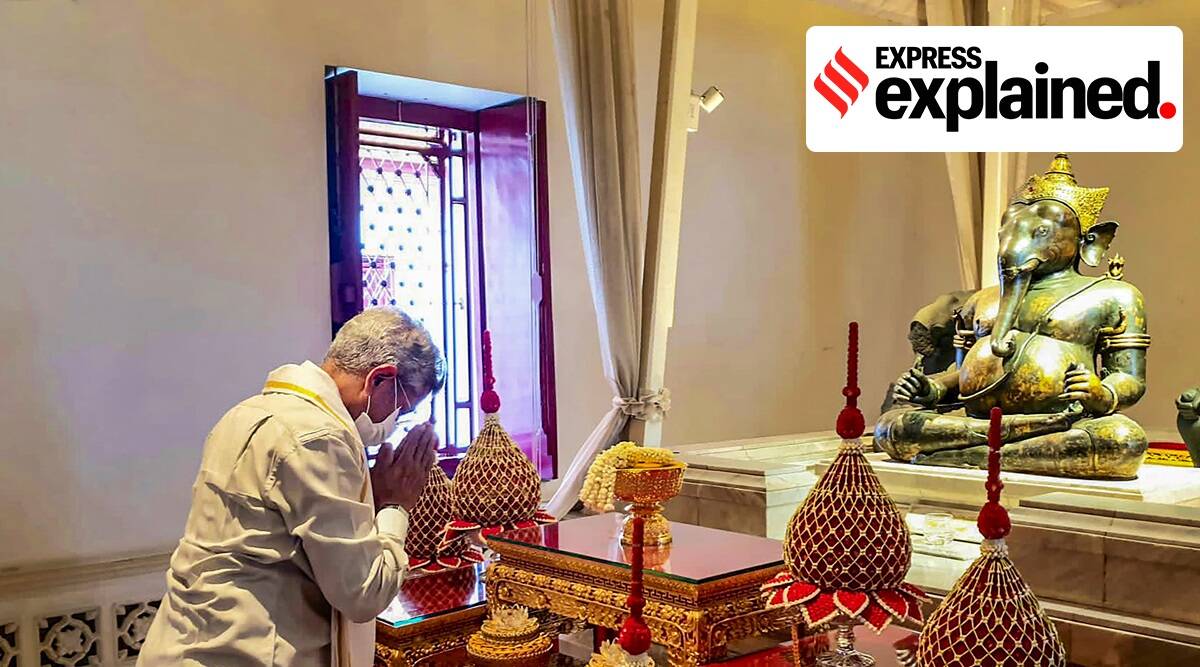
As part of his visit to Thailand for the ninth India-Thailand joint commission meeting, External Affairs Minister S. Jaishankar Thursday visited the Devasthan in Bangkok. The Devasthan is the Royal Brahmin Office of the Thai Royal Court and is the official centre of Hinduism in Thailand. “Offered prayers this (Thursday) morning at the Devasthana of Bangkok. Received the blessings of Phra Maharajaguru Vidhi. Underlines our shared religious and cultural traditions,” he tweeted, as he emphasised the long history of cultural contacts between India and Thailand.

The making of ‘Greater India’ in Southeast Asia
India and the Southeast Asia region share a long history of cultural and commercial relations. The classical Sanskrit and Pali texts from India carry references of the region using various names such as Kathakosha, Suvarnabhumi (the land of god) or Suvarnadvipa (the golden island), indicating that this was a region that attracted Indian merchants. Trade in spices, aromatic wood and most importantly gold is known to have flourished.
In more recent times, European and Indian scholars have referred to Southeast Asia as ‘Farther India’, ‘Greater India’, or ‘Hinduised or Indianised states’.

The first person to do an in depth study of the process of ‘Indianisation’ in Southeast Asian countries was a French scholar named George Coedes. He coined the term ‘Farther India’ to refer to those states that experienced “the civilising activity of India’. Geographically, it refers to Vietnam, Cambodia, Laos, Thailand, Myanmar and the Malay states.

The Sanskrit, Buddhist, and Jain texts indicate that interactions between the two regions go back more than two thousand years ago, mainly through sea voyages and that trade played an important role. Historian Karmveer Singh, in a research paper titled, ‘Cultural dimensions of India-Thailand relations: A historical perspective’ (2022), notes that the traders brought along with them “Indian religion, culture, traditions and philosophy along with them to the shores of Southeast Asia”. “They were also accompanied by Brahmin priests, Buddhist monks, scholars and adventurers and all of them played an important role in the transmission of Indian culture to the natives of Southeast Asia. Some of the merchants and Brahmin priests married the local girls and were often employed by the local rulers,” writes Singh.

Coedes, in his 1968 book “The Indianised states of Southeast Asia”, writes that from the beginning of the common era, these relations resulted in the formation of Indian kingdoms. He cautions, however, that Indian expansion into southeast Asia cannot be compared to European colonisation since Indians were not complete strangers to the population of Southeast Asia and had pre-existing trade relations.

In the early 20th century, the nationalist historians of India frequently referred to the ancient Indian kingdoms in Southeast Asia as its ‘colony’. Historian RC Majumdar, for instance, noted that “the Hindu colonists brought with them the whole framework of their culture and civilisation and this was transplanted in its entirety among the people who had not emerged from their primitive barbarism”.

More recently, however, the colonisation theory has been rejected on the ground that there is very little evidence of conquest or direct political influence in the ancient Southeast Asian kingdoms.

The first Indian kingdom to come up in Southeast Asia was Funan, which is the predecessor of modern Cambodia and Lin-yi in southern Vietnam, both of which came up in the second century CE.
jaishankar-2-1.jpg
External Affairs Minister S Jaishankar receives blessings of Phra Maharajaguru Vidhi in Bangkok, Thursday, Aug 18, 2022. (PTI Photo)

Contemporary Southeast Asian society carries several pieces of evidence of the cultural impact of these interactions. Many local languages in the region, including Thai, Malay, and Javanese contain words of Sanskrit, Pali and Dravidian origin in significant proportions. The Thai language is written in script derived from Southern Indian Pallava alphabet.
Advertisement

Perhaps the most important influence of India on Southeast Asia was in the field of religion and how Shivaism, Vaishnavism, Theravada Buddhism, Mahayana Buddhism and later Sinhalese Buddhism came to be practised in the region. “The political and administrative institutions and ideas, especially the concept of divine authority and kingship, are largely shaped by the Indian practices. For example, the Thai king is considered as an incarnation of Vishnu,” writes Singh.

The episodes of Ramayana and Mahabharata are regularly featured in puppet shows and theatre events. In terms of architecture, monuments like Borobodur Stupa in Java, the Angkor Vat temple in Cambodia, My Son temple in Vietnam are some of the best examples of Indian influence in the region.

India’s religious links to Thailand
In the early centuries of the common era, Thailand, which was historically known as Siam, was under the rule of the Funan Empire. Following the decline of the Funan Empire in the sixth century CE, it was under the rule of the Buddhist kingdom of Dvaravati. In the 10th century, the region came under Khmer rule, which is also known to have links with India.

Singh in his article writes how archeological, epigraphic and other evidence point to the Indian cultural penetration into Thailand from the early centuries of the common era or even earlier. “A Tamil inscription found in Takua-pa testifies trade links between the Pallava region of South India and southern Thailand. A mercantile corporation of South Indians called Manikarramam had established a settlement here and built its own temple and tank, and lived as a ‘self-contained’ colony,” he writes.
Advertisement

It is important to note that Brahmanism and Buddhism existed alongside each other in Thailand in the pre-Sukhothai period of the 13th century. The Mon kings of Dvaravati and the Khmers had patronised Buddhism and built several Buddhist edifices, but at the same time had also adopted Brahmanical customs and practises. The thriving coexistence of the two religions is evident from the fact that while Thailand today is a Buddhist majority country, there are many temples in the country where Buddhist and Brahmanical Gods are kept side by side. Apart from the popular Brahamanical deities of Ganesha, Brahma, Vishnu, and Shiva, those that are largely absent in Indian socio-religious landscape, such as Indra are also worshiped in Thailand.

Author S N Desai, in his book ‘Hinduism in Thai Life’ (2005), notes that nothing of Hindu origin has more profoundly affected the tone of Thai life than the epic Ramayana. The Ramayana — known in Thailand as Ramakriti (the glory of Rama) or Ramakien (the account of Rama) — has provided an outlet of cultural expression in Thailand for both the elite and the common man. Episodes from the epic are painted on the walls of Buddhist temples and enacted in dramas and ballets.

Although there is no archaeological evidence of the story of Rama in Thailand, certain towns in the country have legends related to Rama’s life connected with them. For instance, Ayutthaya in Central Thailand, which emerged in the 10th century CE, is derived from Ayodhya, birthplace of Lord Rama. Desai writes that “from the 13th century onwards, several Thai kings assumed the title Rama, which has become hereditary during the present dynasty.”
 

India-Thailand Joint Commission: Prospects for improved bilateral ties​

On the 75th anniversary of the diplomatic relations between India and Thailand, Dr S Jaishankar, the Foreign Minister of India, attended and co-chaired the ninth India-Thailand Joint Commission Meeting (JCM) in Bangkok from 16–18 August 2022 with Mr Don Pramudwinai, his Thai counterpart and Deputy Prime Minister. Coincidentally India also celebrates its 75th year of independence this year and is thus keen to give its bilateral relations a new boost.

The three-day visit signalled the strengthening of relations as the focus was on the advancement of bilateral relations in the post-pandemic period. Various areas were highlighted such as trade, tourism, joint exercises, defence mechanisms, physical connectivity, ICT, cyber security, and geopolitical aspirations in terms of free, fair, and open Indo-Pacific and neighbourhood issues.

The visit followed the signing of two Memorandums of Understanding (MoUs). This included one MoU on health and medical research cooperation between the Indian Council of Medical Research (ICMR) in India and the Department of Medical Sciences (DMS) in Thailand. The second MoU cemented the alliance of broadcasting between Prasar Bharati and the Thai Public Broadcasting Service.

Dr S Jaishankar also paid a visit to Thai Prime Minister Mr Prayut Chan-o-cha and had a productive discussion on the further expansion of bilateral and multilateral cooperation and other important issues pertaining to the region and the world.

The two foreign ministers also jointly inaugurated the newly constructed Indian embassy residence and residential complex as a positive gesture toward cementing relations. Dr S Jaishankar also paid a visit to Thai Prime Minister Mr Prayut Chan-o-cha and had a productive discussion on the further expansion of bilateral and multilateral cooperation and other important issues pertaining to the region and the world.

‘Act East-West’

Thailand is strategically an important player for India, both in the bilateral and regional spheres. According to the ‘Act East’ policy, Thailand, like Myanmar, is a gateway to South East Asia. Likewise, according to ‘Act West,’ India is Thailand’s opening to South Asia. Both nations are prime members of several multilateral forums, for instance, BIMSTEC, East Asia Summit, IORA, and Asia Cooperation dialogue, MGC, and they also cooperate closely in ASEAN meetings.

It has also been observed that trade between New Delhi and Bangkok has picked up in recent times due to reduced tariff rates. During the Northeast festival held in the last week of July 2022 in Bangkok, the Union Minister of State for External Affairs, Mr Rajkumar Ranjan Singh stated proudly that “the trade between nations reached an all-time high of around US$15 billion in 2021–22 as the domestic market remains attractive for Thai investors”.

Exquisite Northeast Indian cuisine, especially pork dishes became popular during the festival and the demand for it among Thai people opens up prospects for the supply of meat, along with the opening of food chains for the Thai audience.

While there are commercial houses successfully operating in both nations, there is still room to advance business opportunities. The Northeast Festival held in this regard, in addition to displaying the traditional links between India’s Northeast and Thailand, opens the channel for lucrative business prospects for the Northeast Indian business community that is still discovering its footing within the region. Exquisite Northeast Indian cuisine, especially pork dishes became popular during the festival and the demand for it among Thai people opens up prospects for the supply of meat, along with the opening of food chains for the Thai audience. Moreover, the advent of ‘Aatmanirbhar Bharat’ is vital in this regard since it opens the prospects for investment and broadens the scope for Indian products to be traded by Thailand to the rest of the world, especially from the Northeast, for instance, its tea products, agro-horticultural products, bamboo, handicrafts, etc.

In terms of security, the defence and security aspects are also developing with joint maritime patrolling by the navies of both countries, joint military drills, and training.

Points of convergence

Indian diaspora has been an integral part of the Thai community for more than 150 years. The community serves as a significant link between both nations and contributes significantly to the GDP of Thailand. Tapping this potential, Dr Jaishankar, on the first day of his visit, interacted with the Indian community. He also highlighted the initiatives undertaken by the Government of India aimed at facilitating the Indian diaspora. He showed his appreciation for the help extended by the community during India’s second phase of COVID by supplying a substantial number of medical equipment.

Tourism is one of the key sectors of cooperation for strengthening people-to-people ties. It was highlighted as the foreign minister visited the Buddhist temples and tweeted about the similarities in the culture and civilisation between the two countries. Both governments have tried to tap into the Buddhist Circuit (which includes the most important pilgrimage destinations for Buddhist tourists in India and Nepal) since 2016. Millions of Thai Buddhists visit Lumbini, Bodh Gaya, Sarnath, and Kushinagar in India for their religious trips. To make this engagement seamless, the Indian government facilitated double-entry e-tourist visas for Thai citizens. It was also hoped that the Thai companies will invest in the development of the Buddhist Circuit and construct a few luxury hotels that will cater to a wider audience. While COVID-19 had affected the initiation of this process, the reopening of air channels has hoped to re-establish this initiative. The air travel bubble scheme that has been endorsed by the Thai PM to encourage Indians to visit Thailand if regular flights remain suspended has been effective. From January to May 2022, the nation received 100,884 Indian tourists, the highest number of foreign arrivals in 2022. Thus, utilising this opportunity remains vital.

Millions of Thai Buddhists visit Lumbini, Bodh Gaya, Sarnath, and Kushinagar in India for their religious trips. To make this engagement seamless, the Indian government facilitated double-entry e-tourist visas for Thai citizens.

In terms of connectivity projects, Thailand has been developing the Ranong port to increase trade with India’s Chennai and Kolkata ports. The progress on the trilateral highway that forms a crucial bridge between India and Thailand was again addressed and as stated by the ministers, is on track. The highway, which will run from Moreh in Manipur to Mae Sot in Thailand will be extended to facilitate Cambodia, Laos, and Vietnam. It thus hopes to allow access to markets across the ASEAN region and boost people-to-people ties.

New Delhi is building two key stretches of the 1,360-km trilateral highway in Myanmar, however, work on a few sections and the upgrade of nearly 70 bridges has been delayed on account of several issues such as lack of funds, technology, or qualified workers. After the coup in Myanmar, the work on several parts that are passing via the Chin State in Myanmar is slow due to security concerns stemming from conflicts and movements in the region. Thus, the speedy completion of this project seems improbable.

Issue of concern

The political instability since the February 2021 coup in Myanmar and the rising conflicts and displacements have affected both New Delhi and Bangkok. By June 2022, both nations have received more than 40,000 displaced people and this trend is expected to escalate. Coupled with this, Bangkok has been facing heavy damages near its border areas that shares boundary with the Kayah and Karen states, as the airstrikes from Myanmar Junta continue to disrupt the area. Drug and human trafficking are also exacerbating. Thus, addressing this issue remains important for them. Both the nations are not signatories to the 1951 Refugee Convention and thus are unable to provide the displaced people with the required resources. A peaceful surrounding remains essential for the development and growth of the region. However, as neighbours, both have diplomatic obligations and security concerns; thus, dialogue has remained a suitable and constructive approach amidst the crisis. Whether it opens the doorway for a proper resolution of the situation is yet to be seen.

Coupled with this, Bangkok has been facing heavy damages near its border areas that shares boundary with the Kayah and Karen states, as the airstrikes from Myanmar Junta continue to disrupt the area.

If another common neighbour China is considered, it was made clear by the Indian foreign minister at Chulalongkorn University that the relations at the moment are at a difficult juncture due to the border standoff, nevertheless, it is in the interest of both the nations to come together but much will depend on China’s intent and actions.

Thailand’s close engagement with China at present is mainly driven by the economic factor as the latter is Thailand’s largest trade partner. China offers a huge market in terms of employment, business, and investment. . However, bilateral relations have been facing minor setbacks due to the slow development of the high-speed railway, the struggling submarine deal, and tourism. While both nations have successfully conducted the joint air exercise, and have restarted work on rail connectivity, Thailand continues to strengthen its engagements with other players such as the United States, Japan, and India to balance its stakes. In this respect, the growing footprints of India will remain crucial. Thus, swift completion of connectivity projects will hold the key to bolstering trade, tourism, and economic development.

As the 75th-anniversary celebrations of diplomatic relations continue, a lot of initiatives are yet to be tapped in terms of tourism, trade and commerce, and security concerns. While some of them have been addressed, concrete actions and plans are hoped to be designed and implemented in the near future.
 

Saifuddin: Malaysia-India ties are a 'civilisation-based' friendship​

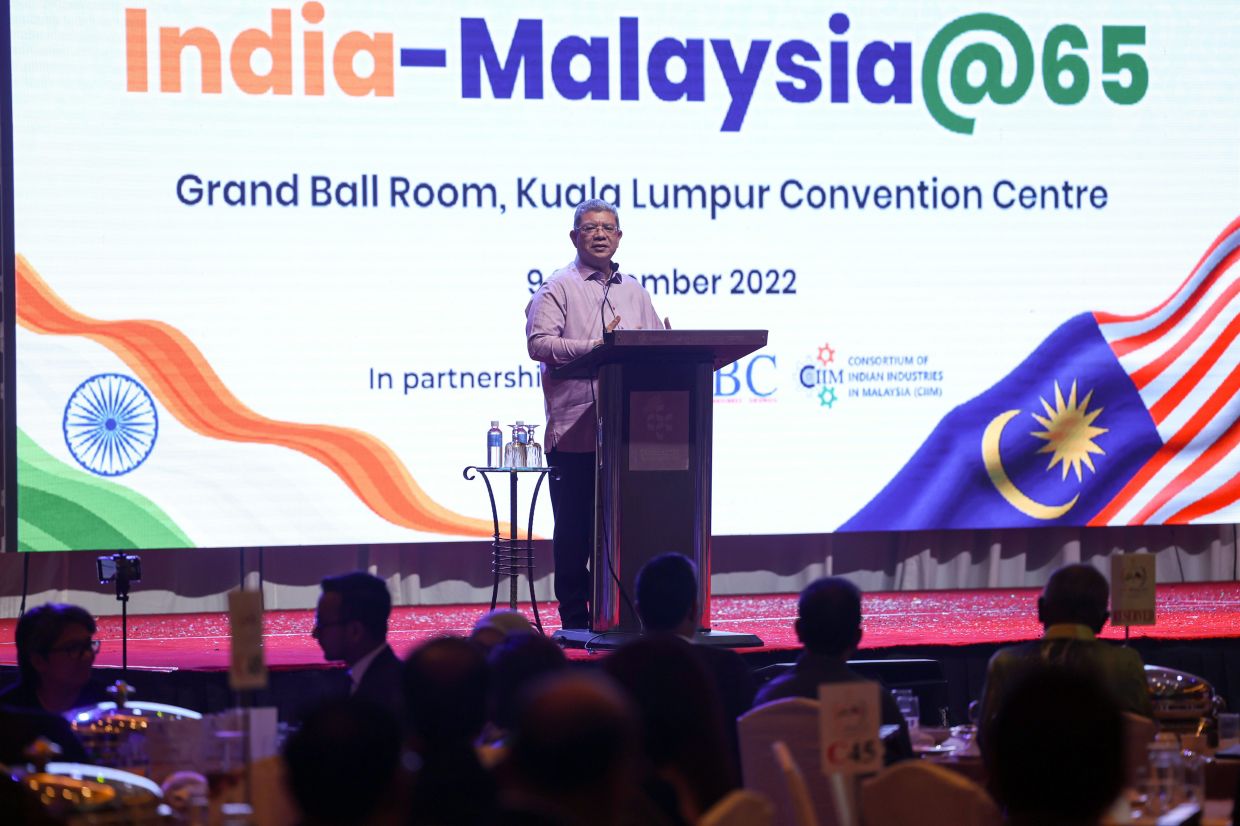
KUALA LUMPUR: Malaysia regards the 65 years of diplomatic ties with India as not merely anchored on bilateral relations but extended to the level of friendship based on civilisation, says Malaysian Foreign Minister Datuk Seri Saifuddin Abdullah (pic).

The minister said there has been significant progress in the two countries' bilateral relations and the civilisational relationship enjoyed by both countries made the relationship even more special.

"Our relations predate the 65 years of official bilateral relations, the relations between India and Malaysia and the people of India and Malaysia is not just a bilateral relation, but a civilisational relation," he said in his speech at the special commemorative event" 'India-Malaysia@65' organised by the Consortium of Indian Industries in Malaysia (CIIM) and Malaysia India Business Council (MIBC) to celebrate 65 years of the establishment of diplomatic relations between India and Malaysia here, on Friday (Sept 9) night.

Also present at the event were the Indian High Commissioner to Malaysia, B.N Reddy and Founder Chairman of CIIM Datuk Umang Sharma.

The minister said the relationship between India and Malaysia had grown from Strategic Partnership in 2010 to Enhanced Strategic Partnership in 2015, eyeing new cooperation in cultural diplomacy, digital economy and agro commodity.

"During my visit to New Delhi in June 2022, I met my (counterpart) India's External Affairs Minister Dr S. Jaishankar at the sidelines of the special Asean-India Foreign Ministers' meeting and discussed possible new cooperation in various fields including cultural diplomacy as well as trade and investment," he added.

He said over 150 Indian companies have invested US$3bil in Malaysia in various sectors namely biotechnology, financial services, manufacturing and textile industry.

Saifuddin said considering the strategic location and conducive business environment, Indian companies are encouraged to expand their operations taking advantage of Malaysia being the hub for Asean.

Meanwhile, Reddy in his speech said the 65 years of vibrant ties between India and Malaysia takes pride from the Indian diaspora community in Malaysia, the second largest in the world, who are the living bond of friendship between India and Malaysia.

On the education sector, the diplomat said considering the success of the Melaka-Manipal Medical College in Malaysia in churning out close to 15,000 medical doctors in Malaysia to date, India would have its first offshore campus of the Indian Institute of Technology (IIT) in Malaysia. - Bernama.
 

India, Indonesia look to boost air connectivity​

India and Indonesia are looking at opening up new routes to boost air connectivity between the two nations, including a proposal to connect Port Blair in the Andamans and Aceh, the westernmost province of Indonesia.

“Today I have met with Adani Group, Secretary in the Ministry of Civil Aviation (MoCA) Mr. Rajiv Bansil, and Managing Director & CEO of GMR Mr. Kiran Kumar Grandhi. We discussed bilateral relations between Indonesia and India in the field of air and sea transportation,” Indonesia’s transportation minister Budi Karya Sumadi said in an Instagram post on December 15.


“Thank God the three meetings yielded good results, India wants more connectivity and investment in Indonesia. Especially now that Indonesia has 10 new tourism destinations that can be explored,” his post said.

The two countries are also exploring higher connectivity between Indonesia and southern India, an official close to the matter said. “Flight connectivity between Jakarta and Bangalore and Hyderabad are also being explored,” the official said, requesting anonymity.


Sabang port in Aceh is around 90 nautical miles from the islands of Andaman and Nicobar.

During Prime Minister Narendra Modi’s 2018 visit to Indonesia, both sides decided to discuss boosting connectivity between the Andamans and Aceh. It was also decided to set up a joint task force to undertake projects on port-related infrastructure in and around Sabang island in Indonesia.

International flights from the Port Blair airport had not started despite authorities waiving off value-added tax on jet fuel and landing charges, the standing committee on home affairs said in a report on December 12.

The committee said starting international flights from the Andamans will boost tourism by attracting foreign tourists. The matter should be taken up on a priority, it said. The home ministry had said that the civil aviation ministry has been requested to encourage airlines to start international flights from Port Blair to nearby cities in south-east Asia.