PAK-FA / Sukhoi Su-57 - Updates and Discussions

Strange. The Malaysian MKMs were the first to get airframe mounted MAWS from South Africa's Avitronics while the IAF toyed with multiple solutions like MILDS-F , Elisra MAWS over the years and ended up with nothing.

The Russians themselves don't have MAWS on their Su-30SM/SM2. It's bizarre to say the least.
This happened after the BrahMos-A was integrated with Su-30 without Russian help, and at significantly lower costs by HAL. The Russians also aren't happy with be fact the we stopped footing the PAK-FA development bill and started prioritising western equipment over Russians ones. They're just being petty, coz like you said, Malaysians got MAWS on their Su-30s, and that too from SA.

Buthere's the thing, Malaysians are small fish. We're the big fish. The bank the Russians can make being closely involved with Super Sukhoi project dwarfs whatever they made integrating a South African MAWS with Malaysian Flanker. And the fact that we're going at it alone (with minimal Russian involvement) isn't sitting well with them.
 
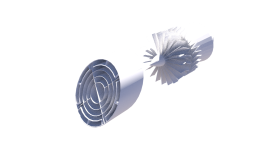
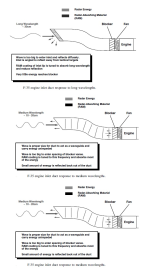
RCS blockers are like lipstick on a pig, won't be of much use so that issue would remain unless redesigned completely.
RCS blocker of su57's are surprisingly quite effective, not as good as if a S duct was chosen but close enough.

The bigger problem is the RCS increase by corner reflections, caused by the design choice of having this recessed part(housing IWB) between engine nacceles, instead of one uniform flat surface like f22,j20,f35(kind of)
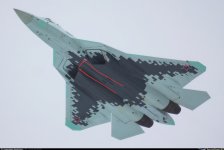
3jtorv7uz6i21.jpg
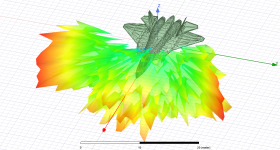
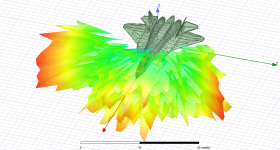
trimetric-su57-x-band.png
 
Here's an article simulating Su-57's RCS vis-à-vis J-20. If interested, one can give it a read. Had it saved up for a while.

J-20 vs Su-57 RCS comparison.

Indian Air Force is expected to purchase Sukhoi Su-57 due to the large technology gap vis a vis PLAAF in coming future. Although Su-57 has certain other advantages over J-20 this article exclusively attempts to compare Radar Cross Section of both.

Radar Cross Section (RCS) of Chengdu J-20 and Sukhoi Su-57 was evaluated using full-scale 3D HFSS electromagnetic simulations across four major radar frequency bands: VHF (150 MHz), L-band (1.15 GHz), S-band (3.15 GHz) and X-band (8.15 GHz). RCS is measured in square meters (m²) and represents how large an aircraft appears on radar — not its physical size, but how much radar energy it reflects back to the radar source. Lower RCS means the aircraft is harder to detect and track. Based on the simulation ratios converted into real-world estimates, the J-20 shows an approximate frontal RCS of ~0.003–0.02 m², while the Su-57 shows a higher frontal RCS of ~0.008–0.05 m², depending on radar band and viewing angle. These values already place both aircraft far below conventional fighters, but clearly separate them into different stealth performance classes.

The J-20 achieves its lower RCS mainly through geometric stealth shaping, meaning its airframe is designed so radar waves are deflected away from the radar instead of being reflected back. Its most important features are serpentine (S-shaped) air intakes, which hide the engine compressor blades (one of the strongest radar reflectors on any jet), radar blockers inside the inlet ducts that weaken radar energy before it reaches the engine face, and edge alignment, where wings, canards and control surfaces share similar angles to minimize scattering. The simulation also shows that J-20’s first major RCS spike appears at around 50° off-boresight, which means its stealth is strongest directly from the front and remains relatively effective even while maneuvering. In practical terms, this makes J-20 harder to lock onto in Beyond Visual Range (BVR) combat, where radar detection and tracking dominate air battles.

In contrast, the Su-57 exhibits higher radar visibility across all frequency bands, especially from the frontal aspect. Its strongest RCS spike occurs at 0° boresight, meaning it is most visible when flying directly toward a radar — the worst possible condition for stealth. The main reason is its twin-engine tunnel and inlet geometry, which form a large reflective cavity that returns significant radar energy. Even with stealth treatments, this structural feature limits how low its RCS can go. As a result, Su-57 remains in the “Reduced Observable” range (~10⁻² to 5×10⁻² m²), while J-20 operates closer to the “Low Observable” range (~10⁻³ to low 10⁻² m²). Across VHF, L, S and X bands, this means J-20 will be detected later and tracked at shorter ranges than Su-57 in real integrated air-defense environments, giving it a consistent system-level stealth advantage.

Source ~
F-35 vs J-20 vs Su-57 Summary
 
The widely circulated frontal RCS of 0.1-0.5m2 showing up on Google of Su57, is purely That of its shape.

And AFAIK Su57's frontal rcs is the worst out of all the operational 5th gens in most relevant bands( except VHF, where su57 performs exceptionally well compared f35,J20)

BUT

F35 itself has frontal median rcs of 0.08-0.15m2 purely based on its shape.

F35's RAS material on its body is required to bring its rcs to the widely reported 0.0005-0.001m2 from 0.08-0.15m2

> Battle survivability needs complete product, so the RCS quoted for F-22 & F-35 is due to geometry+RAS+RAM as the program managers & test pilots said in 1990s documentaries.

> Export ban on F-22 is apparently due to many trade secrets. But exported F-35 would obviously be inferior to both F-22 & US F-35s.

Frontal RCS is as good as other VLO fighters.
How? People are saying it is worse than J-20.🤦‍♂️ The geometry is good but may be Russian RAM not that good. The canopy rail, IFRP doors, round IRTS (even of painted with RAM) contribute to problem. What about round engine bays?

With new engines, its rear aspect RCS is also going to improve substantially. Just wait for some time bud, all of ya shall be pleasantly surprised;)
The new engine with F-22 like nozzle is indeed a good improvement of rear stealth. But we need confirmation if they have implemented rear ceramic RF blocker.

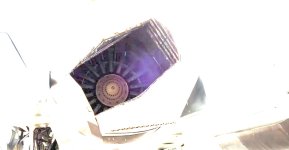
1771957752190.jpeg

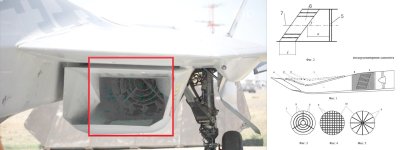
RCS blocker of su57's are surprisingly quite effective, not as good as if a S duct was chosen but close enough.
These diagrams are from various forums. The blocker must be working definitely, but overall result with return RCS doesn't seem good.

1771959026045.jpeg
1771959117778.png
1771959126754.png

F-22 & F-35 have S-duct + blockers. They have money, wanted to be best & play safe in every way possible.

1771959483467.png


The bigger problem is the RCS increase by corner reflections, caused by the design choice of having this recessed part(housing IWB) between engine nacceles, instead of one uniform flat surface like f22,j20,f35(kind of)
If such small gap is big concern then soare the canopy rail, IFRP doors, round IRST, round engine bays. 🤷‍♂️
 
Export ban on F-22 is apparently due to many trade secrets
Expory ban on F22 was initiated in 1998.
It was a time where F22 was the pinnacle of technology.
Its been almost 30 years now, and the leap in fighter jet tech whether it be materials, avionics, computing etc have exploded in these almost 30 years.

The reason export ban on F22 still exist is that its bothersome to initiate a process to lift it when there's no reason & incentive to lift it, not due to guarding some outdated secrets.

How? People are saying it is worse than J-20.🤦‍♂️ The geometry is good but may be Russian RAM not that good.
Geometry is the problem here, tho.


If such small gap is big concern then soare the canopy rail, IFRP doors, round IRST, round engine bays.
Surely?

You really like your assumptions.
trimetric-su57-x-band.png

As you can see, the RCS increase is specifically showing in lateral arc and on *lower central arc*, you can also see canopy, irst, IFRP door not showing same increase.
 
Last edited:
  • Like
Reactions: _Anonymous_
The pylon mounted config had 2 front and rear apertures + conformal housings on the spine and underbelly for look up, look down coverage. One can only speculate that the latter 2 fittings might have created flight envelope problems.

It'd be interesting to see how this is addressed on MKI UPG.

The IAF could've gone in for an off the shelf pylon mounted solution like Terma PIDS which can integrate customer furnished maws/cmds/rwr payloads. Terma also offers podded solutions btw.
We're deviating from thread, but i would say comprehensively that 4gen jets have so many bumps, humps, portrusions, extensions, etc that something aerodynamically is always out of order but still manageable by FCS.

I feel bad to say this but - Best of luck to entire world with remaining 4gen in emerging era of 6gen.🤞👍
Let's get back to future oriented tech. Life is unexpected, time is limited.😆
We should look at Su-57 as better jet than Su-3X.
Russia may not have matched level of F-22, F-35 but it'll definitely do something nasty against F-47, GCAP, FCAS, J-36, J-50, etc.
 
  • Like
Reactions: Rajput Lion
Americans were testing it, but have since dropped it. It's old news.


Yeah right. IAF themselves weren't happy the frontal RCS of the Su-57 when they dropped out, and since then nothing has changed on that front. RCS blockers are like lipstick on a pig, won't be of much use so that issue would remain unless redesigned completely.


In your dreams maybe. Agree on the rear aspect RCS improvement with new engines & nozzles, but rest is just unhealthy amounts of cope from you. Chill out mate, even the Russians don't shill as hard as you for this aircraft.

We're deviating from thread, but i would say comprehensively that 4gen jets have so many bumps, humps, portrusions, extensions, etc that something aerodynamically is always out of order but still manageable by FCS.

I feel bad to say this but - Best of luck to entire world with remaining 4gen in emerging era of 6gen.🤞👍
Let's get back to future oriented tech. Life is unexpected, time is limited.😆
We should look at Su-57 as better jet than Su-3X.
Russia may not have matched level of F-22, F-35 but it'll definitely do something nasty against F-47, GCAP, FCAS, J-36, J-50, etc.
Once again I am saying that Su-57's RCS is as good as any other VLO fighter. Let IAF first have it then you all shall know. Till then just wait n watch, mates;)
 
Su-57 was never meant to be VLO. Sukhoi designers sought to find a delicate balance between kinematic performance and signature mgmt.

No amount of RAS/RAM or minor shaping improvements can make up for compromises like protruding tail sting, spaced engine nacelles etc. A 2 seater model will be even worse.
 
Last edited:
The MKIs USP was that it amalgamated various elements like canards, 3D TVC from other models to create a best in class Flanker. (Not counting the Su-35 which had been flying at airshows like Farnborough as early as 1998)

Imo, we'd only be continuing that tradition by adopting low risk elements like chined radome from Su-34 as part of the MKI UPG.

It can dramatically reduce frontal rcs, especially if combined with semi-recessed weapons stations along the wing root, etc (after validation of safe airframe separation etc via CFD modeling)

Whether the IAF takes the initiative is a different matter though. They've left the MKI upgrade hanging for too long waiting for the Rafale to hope for something radical.

Anyways, no more from me on this.
 
  • Like
Reactions: Rajput Lion
Expory ban on F22 was initiated in 1998.
It was a time where F22 was the pinnacle of technology.
Its been almost 30 years now, and the leap in fighter jet tech whether it be materials, avionics, computing etc have exploded in these almost 30 years.

The reason export ban on F22 still exist is that its bothersome to initiate a process to lift it when there's no reason & incentive to lift it, not due to guarding some outdated secrets.

> The world has many technically qualified grads today, so citizens can definitely guess old secrets like stealth geometry, liquid PAO cooling, transpiration nozzle cooling, frequency hopping, EW techniques, encryption, S/w protocols, new alloys, etc.
> But many characteristics, parameters, performance data, etc are kept secret for as long as possible byr non-disclosure agreements, prosecution laws, thesis publishing restrictions, etc.🚨👮‍♂️🚔⚖️👨‍⚖️
> Still after 35 years also no jet is able to match F-22's RCS (geometry+RAS+RAM).
> There are still enhancements of old tech. By the time old tech is deciphered, there's a new set of secrets now, some of which can be pushed by MLU.
> The 1990s documentaries showed that at least some parts of F-22's H/w & S/w are modular to be MLUed later.
> F-22 is undergoing 11 Bn$ of MLU💸👀, i guess it is called Advanced Raptor Enhancement and Sustainment (ARES), some of which we know so far - EOTS pod, avionics, CPU, antennas, fuel tanks, engine parts, skin panels, etc.
1771998227164.png

> But as the MLU is not enough, hence NGAD.

Geometry is the problem here, tho.
Which part of geometry exactly for frontal RCS?

Surely?

You really like your assumptions.

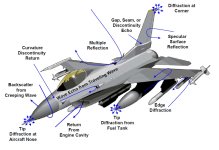
> What would you expect from enthusiasts to assume/believe when basics of stealth tech says that bumps, surface discontinuities, right angles, refraction, etc are responsible for RCS return?

1771967356771.jpeg


View attachment 49908

As you can see, the RCS increase is specifically showing in lateral arc and on *lower central arc*, you can also see canopy, irst, IFRP door not showing same increase.

> Many people are aware of this type of articles with nice multi-color RCS diagrams, etc. But nobody thinks that - is it that easy that anybody with a simulating S/w will start leaking stealth signatures of existing weapon & compromising national security? 🚨 👮‍♂️🚔
Such stuff is supposed to be TOP SECRET, with shoot on sight order if needed, to prevent leak.
 
  • Like
Reactions: YoungWolf
Once again I am saying that Su-57's RCS is as good as any other VLO fighter.
But how? Russia didn't quote its RCS to be as good as F-22, right? Is there any article by GoR, Sukhoi, Rosorboronexport, etc?

Let IAF first have it then you all shall know. Till then just wait n watch, mates;)
May be Indian RAS panels & RAM wil help it.😆
But if we wait till then then this kind of forums will expire. :ROFLMAO:
 
  • Like
Reactions: Rajput Lion
Su-57 was never meant to be VLO. Sukhoi designers sought to find a delicate balance between kinematic performance and signature mgmt.

No amount of RAS/RAM or minor shaping improvements can make up for compromises like protruding tail sting, spaced engine nacelles etc. A 2 seater model will be even worse.
I also feel that the center IWB could have been merged flat with engine nacelles, like in F-22.

But why you think tail extension housing rear radar is compromise?
 
  • Like
Reactions: Rajput Lion
Still after 35 years also no jet is able to match F-22's RCS (geometry+RAS+RAM).
That's your assumption, F22 is mostly a metal jet, with a relatively fragile stealth coat, unlike F35's RAS skin, even in overall IR spectrum F22 will be less stealthy from front, despite having flat nozzles in the back for IR suppression.


F-22 is undergoing 11 Bn$ of MLU💸👀, i guess it is called Advanced Raptor Enhancement and Sustainment (ARES), some of which we know so far - EOTS pod, avionics, CPU, antennas, fuel tanks, engine parts, skin panels, etc.
shows the Limitation of current F22 as a old jet with old tech, its been far surpassed by F35 despite F35's lack in kinematic performance, now with the MLU its trying to keep up with newer stealth jets & to have a more complete sensor suite that it currently lacks.


Which part of geometry exactly for frontal RCS?
The recessed space(that houses main IWB) between engine ducts creates substantial corner reflections compared to if it was mostly a flat bottom like in f22,J20. radar blockers also to some extent lack compared to a S-duct(more heavy &volume inefficient)

These mostly contribute to degrade Su57's frontal stealth(compared to Other operational stealth fighters) head on( assuming IRST is closed) especially if a enemy fighter is approaching head on from a lower altitude, also against ground based radars.

Su57's most stealthy aspect is if a enemy fighter is approaching head on flying at a higher altitude than Su57.


What would you expect from enthusiasts to assume/believe when basics of stealth tech says that bumps, surface discontinuities, right angles, refraction, etc are responsible for RCS return?
They don't say to what extent, you assumed by yourself the extent.

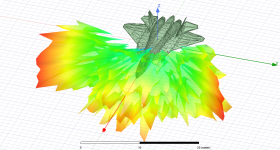
trimetric-su57-x-band.png
As you can see, the extent of degradation in frontal stealth, caused by the geometry of Recessed space between engine ducts, is the biggest & most substantial factor in current su57.

You can also see its canopy, IFRP panels etc, shows much better stealth characteristics compared to its bottom profile.


is it that easy that anybody with a simulating S/w will start leaking stealth signatures of existing weapon & compromising national security?
You can't censor basic physics.

Yes, its well within civilian capabilities to assess geometric stealth of stealth fighters, you have to know what you are doing & have the right tools but the knowledge and tools are present in civilian world itself.

But it doesn't tell the whole story, first these type of simulation do not account for RAS/RAM, assuming surface as metal and focus purely on Geometric stealth, the quality of simulation themselves also matter.

But they can get pretty close to the Geometric truths of a fighter's RCS.

The core principle of geometric stealth—deflecting radar waves away from the source via specular reflection—is fully public-domain electromagnetics. High-frequency approximations like Physical Optics (PO) or Shooting and Bouncing Rays (SBR) are standard for modeling how a metallic-like surface scatters waves based on geometry alone.
 
> The public info says -
- Defence Minister Rajnath Singh has told DoD to look into 6gen tech. So we need to start few thingslike wind tunnel models, CFD analysis, etc.
Depends on what does the IAF want ? Su-57 is your replacement for MKI . The very fact we're upgrading ~ 88 / 270 odd MKIs which in turn is expected to be completed in 8+8 yrs from 2025 is a dead giveaway.

There's no way we'd be upgrading a 4th Gen FA in the 2040s meaning the rest of the MKIs will obviously start retiring from 2040 onwards beginning with the ones first inducted into the IAF from 2005 onwards.

One can't rule out peripheral modifications to some of the MKIs mfgd in India as opposed to the deep upgrades / Super Sukhoi configuration for the 88 nos .

If this reading of the situation is true do we really require a J-36 size 6th Gen FA or do we settle for something like the FCAS .

The INs input will also carry weight as they'd be expected to field at least 4 AC in the 2040-50 time frame.
- Chances of getting Su-57 are increasing daily.
Hence i said that if Russia allows modifying airframe of Su-57 then it can be a precusrsor or TD of 6gen, not the production 6gen jet.
Otherwise,no Su-57 MKI means 6gen TD also clean-sheet.

> What is MII?
Make in India .
> IDK if J-36 like jet can land on an AC. May be J-50 can.
But i don't imagine AHCA like J-36. Different people would imagine our 6gen differently.

> From current models of FCAS & GCAP it doesn't look they can carry AGM, CrM, AShM longer than 4m. And GCAP may not be having naval version.
If we opt for the FCAS JV , GCAP is out. However if we do opt for FCAS , DA will follow the same playbook as they did for the Rafales meaning the Naval version gets developed first & the AF version derived from it later .

This means the IN would have to be the Project Manager for the FCAS from our side.

Given the mutual love between the IAF & IN on Naval Aviation , I don't think the IAF would be amenable to such an arrangement.

If we want to see the project through we require a strong MoD who'd be in position to put IAF in its place putting our national interest over their partisan interests. The present placeholder of a Defence Minister hardly inspires that kind of confidence .

Then there's the issue of synchronisation between the French PANG & our IAC -3&4 . Le Francais may also seek to inveigle us into their PANG project . Are we prepared for such deep strategic commitments ?

Lots of such questions need to be answered before such a decision is taken. A lot will obviously depend on how the forthcoming negotiations on Rafale pan out - both technical ( meaning the degree of freedom we enjoy to make modifications on our own on the Rafale platform ) & commercial. Then of course there's the JV for the 120 KN TF.

My gut feeling is the GoI will not commit till it has achieved what it wants from these projects before they even begin considering the FCAS JV.
 
But why you think tail extension housing rear radar is compromise?

That tail stinger extends well beyond the engine nozzles and horizontal tail surfaces which means specular radar reflections. Perhaps a shorter 'beaver tail' as on the MiG-35 would've been a better choice.

Imo, rear facing radar is redundant on a jet with dorsal maws + dircm.
 
That's your assumption, F22 is mostly a metal jet, with a relatively fragile stealth coat, unlike F35's RAS skin, even in overall IR spectrum F22 will be less stealthy from front, despite having flat nozzles in the back for IR suppression.
Something the citizens & enthusiasts need to assume, based on something like searching, news, programs, interviews, documentaries, etc.
Official sources would have higher precedence.
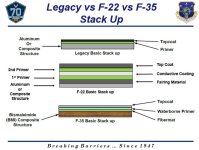
1772008000369.jpeg

But i don't have official diagram/slide for Su-57.

Like i said, the finished poduct matter (geometry+RAS+RAM).
So USA/USAF/LM tell in interviews & documentaries that F-22's frontal RCS is like bee or 0.00015 sqm & F-35 like a golf ball or 0.0015 sqm. These figures are for a particular band, range, boresight angle probably.
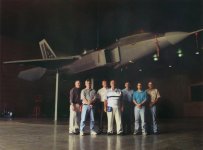
1772016957341.jpeg

What does Russia/Sukhoi/Rosoreboronexport say about Su-57?
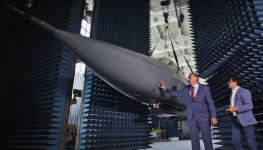
1772016645267.png


And F119 & F135 both are 5gen engines with ceramic RF blocker, transpiration nozzle cooling, PAO liquid cooling for body, additional HX (Heat eXchangers), etc.
It is only now that AL-51 (Isdeliye-30) engine has TVC nozzle, probably with other cooling & stealth features as well, but need official confirmation.

Bottomline- will India get top notch Russian domestic version, or export level reduced version.😆

shows the Limitation of current F22 as a old jet with old tech, its been far surpassed by F35 despite F35's lack in kinematic performance, now with the MLU its trying to keep up with newer stealth jets & to have a more complete sensor suite that it currently lacks.
Obviously, a newer jet will/should defiitely be better. F-35 has better cockpit, HMDS, DAS-MAWS, radar, EOTS, etc.
Overall, on exterior F-22 is better, while on interior F-35 is better.
But domestic ADF vs exported JSF, the former is supposed to be more stealthy. Nobody wants to hand over better exterior/stealthy jet & make other nations better.
Hence frontal RCS of F-35 is quoted 0.0015 sqm, 10x more than F-22.
Otherwise F-22 woudn't matter anymore & American citizens will be very angry to maintain an older & much costlier jet.🤷‍♂️

The recessed space(that houses main IWB) between engine ducts creates substantial corner reflections compared to if it was mostly a flat bottom like in f22,J20. radar blockers also to some extent lack compared to a S-duct(more heavy &volume inefficient)

These mostly contribute to degrade Su57's frontal stealth(compared to Other operational stealth fighters) head on( assuming IRST is closed) especially if a enemy fighter is approaching head on from a lower altitude, also against ground based radars.

Su57's most stealthy aspect is if a enemy fighter is approaching head on flying at a higher altitude than Su57.
They don't say to what extent, you assumed by yourself the extent.

trimetric-su57-x-band.png

As you can see, the extent of degradation in frontal stealth, caused by the geometry of Recessed space between engine ducts, is the biggest & most substantial factor in current su57.

You can also see its canopy, IFRP panels etc, shows much better stealth characteristics compared to its bottom profile.

I thought you're pointing the gap b/w IWB door & fuselage. In other words i already said that round engine bays are problematic.

You can't censor basic physics.

Yes, its well within civilian capabilities to assess geometric stealth of stealth fighters, you have to know what you are doing & have the right tools but the knowledge and tools are present in civilian world itself.

But it doesn't tell the whole story, first these type of simulation do not account for RAS/RAM, assuming surface as metal and focus purely on Geometric stealth, the quality of simulation themselves also matter.

But they can get pretty close to the Geometric truths of a fighter's RCS.

So like you said, these setups don't have RAS, RAM, hence only basic physics & geometry alone doesn't matter, a COMPLETE PRODUCT matters.🤷‍♂️
It is like we don't wanna entertain a salesman persuading for a car with just chasis & engine.

The article is beautiful by Mr. Garry A. from website F-16.net
In Western world many groups of people have finance to setup a bedroom sized anechoic chamber, fabricate test articles, use antennas of different bands & extrapolate data by S/w.
It is a good time pass for them, like we are passing time here. 😆
They can know 1 side of coin "geometry", but won't know ever the other side "RAS + RAM" unless someone like Edward Snowden👨‍🔬 or Robert Lazar :alien:leaks out.:ROFLMAO:
 
That's an uninformed opinion, it was said by India to be 0,5sqm, About the same as the Super hornet
Nah, that's the most informed opinion you heard on this forum, Jack! Once we acquire Su-57s, all of you shall get some hints about its VLO stealth from the horse' mouth(IAF) itself. Till then, as I said earlier, just wait and watch;)

And Su-57 having Super Hornet like RCS? LOL🤣
 
But how? Russia didn't quote its RCS to be as good as F-22, right? Is there any article by GoR, Sukhoi, Rosorboronexport, etc?
Earlier Russian estimate put F-22's overall RCS at 0.3m^2 and Su-57's average RCS to be between 0.3m^2 - 0.5m^2. So, right from its beginning, it was designed to match the Raptor. But that was for basic metal body, not accounting for RAM/RAS. Also, as @babablacksheep said, F-22's RCS is combination of shape and RAM while Su-57 is more like F-35 where its "Carbon NanoTube(CNT)" based composite skin gives its far more broadband stealth than Raptor. No amount of simulation will tell you real RCS of Su-57.

Even the Russians won't share the same level for RAS with us. But never mind as we have already developed our own CNT composite-fibre skin, which we may use on our Su-57MKI variant.

All-in-all, as I said earlier, all naysayers of Su-57's Indian acquisition and those who downplay its stealth characteristics, are in for a rude surprise😎.

'Nuff said.
May be Indian RAS panels & RAM wil help it.😆
But if we wait till then then this kind of forums will expire. :ROFLMAO:
✅✅
 
Earlier Russian estimate put F-22's overall RCS at 0.3m^2 and Su-57's average RCS to be between 0.3m^2 - 0.5m^2. So, right from its beginning, it was designed to match the Raptor. But that was for basic metal body, not accounting for RAM/RAS. Also, as @babablacksheep said, F-22's RCS is combination of shape and RAM while Su-57 is more like F-35 where its "Carbon NanoTube(CNT)" based composite skin gives its far more broadband stealth than Raptor. No amount of simulation will tell you real RCS of Su-57.

Even the Russians won't share the same level for RAS with us. But never mind as we have already developed our own CNT composite-fibre skin, which we may use on our Su-57MKI variant.

All-in-all, as I said earlier, all naysayers of Su-57's Indian acquisition and those who downplay its stealth characteristics, are in for a rude surprise😎.

'Nuff said.

✅✅
Hope you realise if we're going to get into deep structural changes like replacing the body with RAS / RAM panels it's almost the equivalent of building a new FA. Then comes the testing & validation .

The entire process should take a good 8-10 years which sort of defeats the purpose of going in for the Su-57 which is quick induction to make up for the foreseeable delays in the AMCA program especially the Mk-2 version.

Besides it makes little financial sense too. Our best bet is to get their non export version failing which get as close to the technology of the Su-57 version the VKS would be operating with provisions for integrating our armaments & sensors.

Once again this is easier said than done as this is a 5th Gen FA & given the IWB it calls for effective miniaturisation of those armaments.

Typically we'd want to on board the armaments which go on the AMCA in the Su-57 . The only problem is we haven't yet got around to developing them.

This once again would have to be tested & validated which would take time. Ditto for the sensor package assuming what we have is better than what's on the Su-57 . Once again there's no evidence for that.

All these activities therefore would be viable in gradual upgrades we'd be undertaking with the Su-57 in operation with the major ones reserved for the MLU a la what we did with the MKI.

Right now the priority is to induct the Su-57 post haste in an as is condition. We try too many experiments & we fall flat on our faces.