@Gautam, @Ashwin, @Picdelamirand-oil, @Bon Plan, @Innominate

 www.asdnews.com
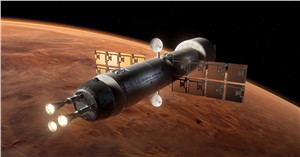
General Atomics Electromagnetic Systems (GA-EMS) announced today that it has completed major milestones for the Track A, Phase 1 Demonstration Rocket for Agile Cislunar Operations (DRACO) program. Under contract from the Defense Advanced Research Projects Agency (DARPA), GA-EMS delivered a baseline design of a DRACO Nuclear Thermal Propulsion (NTP) reactor and engine and successfully tested key components of the nuclear reactor, including the vitally important high-temperature fuel elements in prototypic conditions at the NASA Nuclear Thermal Element Environmental Simulator (NTREES). The NTP system is intended to allow a nuclear thermal rocket to operate in cislunar space, the region between the Earth and the Moon.
“We have leveraged our expertise in nuclear and space system technologies to design an NTP system and test the vital components of that system to confirm they will withstand the relevant design conditions,” stated Scott Forney, president of GA-EMS. “Unlike electric and chemical propulsion technologies in use today, NTP propulsive capabilities can achieve two to three times the propellant mass efficiency, which is critically important for cislunar missions.”
“The cislunar space domain is essential to our national defense, modern commerce, and scientific discovery. As opportunities in cislunar space continue to expand, more innovative propulsion technologies to access space are increasingly necessary,” said Dr. Christina Back, vice president of Nuclear Technologies and Materials at GA-EMS.
General Atomics Completes DRACO Nuclear Thermal Propulsion S
General Atomics Electromagnetic Systems (GA-EMS) announced today that it has completed major milestones for the Track A, Phase 1 Demonstration Rocket for Agile
www.asdnews.com
General Atomics Completes DRACO Nuclear Thermal Propulsion System Design and Test Milestone
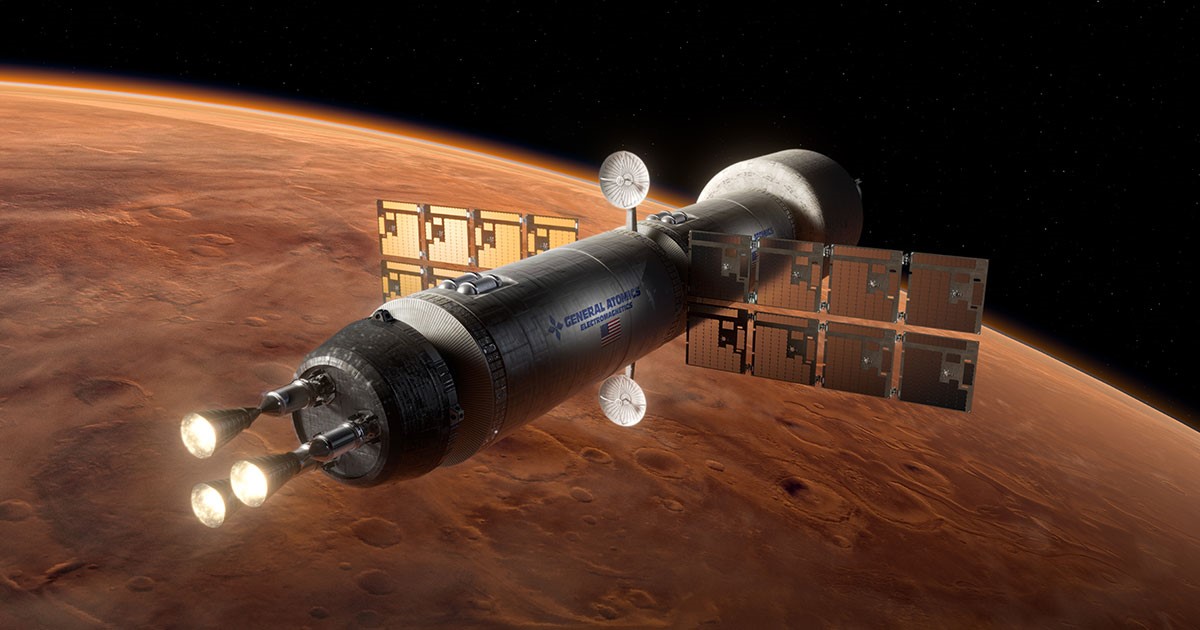
General Atomics Electromagnetic Systems (GA-EMS) announced today that it has completed major milestones for the Track A, Phase 1 Demonstration Rocket for Agile Cislunar Operations (DRACO) program. Under contract from the Defense Advanced Research Projects Agency (DARPA), GA-EMS delivered a baseline design of a DRACO Nuclear Thermal Propulsion (NTP) reactor and engine and successfully tested key components of the nuclear reactor, including the vitally important high-temperature fuel elements in prototypic conditions at the NASA Nuclear Thermal Element Environmental Simulator (NTREES). The NTP system is intended to allow a nuclear thermal rocket to operate in cislunar space, the region between the Earth and the Moon.
“We have leveraged our expertise in nuclear and space system technologies to design an NTP system and test the vital components of that system to confirm they will withstand the relevant design conditions,” stated Scott Forney, president of GA-EMS. “Unlike electric and chemical propulsion technologies in use today, NTP propulsive capabilities can achieve two to three times the propellant mass efficiency, which is critically important for cislunar missions.”
“The cislunar space domain is essential to our national defense, modern commerce, and scientific discovery. As opportunities in cislunar space continue to expand, more innovative propulsion technologies to access space are increasingly necessary,” said Dr. Christina Back, vice president of Nuclear Technologies and Materials at GA-EMS.
 ).
).