Nuclear Energy in India : Updates
- Thread starter Himanshu
- Start date
You are using an out of date browser. It may not display this or other websites correctly.
You should upgrade or use an alternative browser.
You should upgrade or use an alternative browser.


PRAGYA has achieved first light! Rapid progress!


 www.indiatoday.in
"According to Pranos, the reactor took around eight months to build. The company plans to operate Pragya for nearly two decades, targeting between 10 and 12 experimental shots a day, or roughly 3,000 shots annually.... The high-frequency experiments are expected to generate a large volume of data on plasma behaviour, tokamak design and control systems."
"Pranos plans to use the facility to test plasma control technologies, high-temperature superconducting magnets, diagnostics and other critical systems that could eventually be integrated into larger fusion machines."
"Pranos aims to have its high-temperature superconducting magnet technology operational by 2027. By 2030, it hopes to build a net-gain fusion reactor called PraniQ, a far more ambitious machine designed to demonstrate a major milestone in fusion development."

@Gautam @Ashwin @BMD
Bengaluru-based Pranos unveils India's 1st private compact nuclear fusion reactor
Pranos Fusion has unveiled Pragya, which it describes as India's first privately developed compact tokamak. The machine will test fusion technologies while helping build domestic capability in plasma science.
"According to Pranos, the reactor took around eight months to build. The company plans to operate Pragya for nearly two decades, targeting between 10 and 12 experimental shots a day, or roughly 3,000 shots annually.... The high-frequency experiments are expected to generate a large volume of data on plasma behaviour, tokamak design and control systems."
"Pranos plans to use the facility to test plasma control technologies, high-temperature superconducting magnets, diagnostics and other critical systems that could eventually be integrated into larger fusion machines."
"Pranos aims to have its high-temperature superconducting magnet technology operational by 2027. By 2030, it hopes to build a net-gain fusion reactor called PraniQ, a far more ambitious machine designed to demonstrate a major milestone in fusion development."
@Gautam @Ashwin @BMD

Net gain plasma, or net gain total electricity, i.e. MWe,out > MWe,in?
Net plasma gain I would suppose.
Q > 1 basically.
Net plasma gain I would suppose.
Q > 1 basically.
Sir Noob Question
How far Humans are from generating Electricity from Fusion
Sir Noob Question
How far Humans are from generating Electricity from Fusion
I don't think even scientists in the field can give you a definitive answer for that

I still believe ITER is the best possible shot at proving the technologies for commercial-scale electricity production from fusion (but remember, ITER itself is never supposed to produce commercial power, that will be pursued in follow-on reactors called DEMO, built using lessons from ITER).
Bottom line, expect something by ~2050. But that's just a ballpark figure I'm throwing out there. Everyone you talk to will give you a different one. Some will say it's always gonna be 20 years away i.e. it'll never work, while others say they'll have it ready by this time next year. Of course everyone's talking with their biases.
i think the main problem is the current systems are good for experimentation but not exactly for commercial power plants, for example the most used design for the fusion purpose today being the tokamak (its the donut shaped one), is a good design for getting the plasma condition started to where we want, but keeping it in that state of condition is the hard part with it, as the design itself depends on a huge coil that is charged for magnetic field to suspend the plasma, and simply put, after certain time of operation the charge needed for the coil to sustain the magnetic field simply becomes too high, and current solutions for that is like re directing the power generated by the fusion reactor back to the coil to sustain the charge, or simply turn off so that can be started again in to run the thing again, now turning off and turning on tokamaks whenever needed is not bad for experimentation and research but for a commercial power plant, that too one that is aimed at running and generating electricity for long periods is definitely not good, also the "re directing the generated power back to the coil to sustain the process" will simply hit a limit when all the generated power is simply turned back to the reactor instead of sending to grid for electricity.Sir Noob Question
How far Humans are from generating Electricity from Fusion
i think this video explains this problem well
( i most likely gotten some things wrong here, so please correct me if i am)

ITER is 440MWe,in and 500MWth out, or about 200-250MWe out.

India eyes nuclear power in Andamans as China challenge grows near Malacca Strait
Scientists from the Bhabha Atomic Research Centre (BARC) have begun assessing potential sites for Small Modular Reactors (SMRs) across the Andaman and Nicobar Islands. This move could strengthen the archipelago’s energy resilience as India expands strategic and civilian infrastructure near the Strait of Malacca.
A team from the Department of Atomic Energy is visiting the islands from September 4 to 8 to assess potential sites across all three districts. The exercise follows a recommendation to explore SMRs to meet the archipelago’s rapidly growing power requirements.
Electricity demand is expected to rise sharply as major infrastructure projects take shape, including the International Container Transhipment Terminal, a greenfield airport and deep-water multipurpose ports.
The BARC team has also briefed Andaman and Nicobar Islands Lieutenant Governor Admiral D K Joshi on potential sites and other features of the proposed SMR plan.
The proposed SMR sites assume added significance against the backdrop of the Great Nicobar Project, one of India’s most strategically important infrastructure initiatives in the region.
The project envisages an International Container Transhipment Terminal at Galathea Bay, a greenfield international airport, a township and associated power infrastructure. The government has described the project as having strategic, defence and national-security significance.
Its location gives the project significance beyond trade and connectivity. It comes as India seeks to expand its economic and strategic footprint in the eastern Indian Ocean and strengthen its ability to monitor maritime activity in the region.
Countering China, watching the Malacca Strait
The proposed SMR sites acquire a broader strategic dimension because Great Nicobar is emerging as a key component of India’s efforts to strengthen its position in the eastern Indian Ocean amid China’s growing presence in the region.
The government has explicitly described the Great Nicobar Project as having strategic, defence and national-security importance. It has said that a strong and permanent defence presence on the island would help India monitor and secure maritime routes while countering the growing presence of foreign powers in the Indian Ocean.
The Strait of Malacca is central to this strategy. A major maritime chokepoint, it carries substantial volumes of global trade and energy supplies between the Indian Ocean and the Pacific. Great Nicobar’s location gives India a strategically important position near the western approaches to the strait.
The Ministry of Defence has previously highlighted the importance of INS Baaz at Campbell Bay, noting that the naval air station overlooks the Strait of Malacca and the Six Degree Channel.
Scientists from the Bhabha Atomic Research Centre (BARC) have begun assessing potential sites for Small Modular Reactors (SMRs) across the Andaman and Nicobar Islands. This move could strengthen the archipelago’s energy resilience as India expands strategic and civilian infrastructure near the Strait of Malacca.
A team from the Department of Atomic Energy is visiting the islands from September 4 to 8 to assess potential sites across all three districts. The exercise follows a recommendation to explore SMRs to meet the archipelago’s rapidly growing power requirements.
Electricity demand is expected to rise sharply as major infrastructure projects take shape, including the International Container Transhipment Terminal, a greenfield airport and deep-water multipurpose ports.
The BARC team has also briefed Andaman and Nicobar Islands Lieutenant Governor Admiral D K Joshi on potential sites and other features of the proposed SMR plan.
The proposed SMR sites assume added significance against the backdrop of the Great Nicobar Project, one of India’s most strategically important infrastructure initiatives in the region.
The project envisages an International Container Transhipment Terminal at Galathea Bay, a greenfield international airport, a township and associated power infrastructure. The government has described the project as having strategic, defence and national-security significance.
Its location gives the project significance beyond trade and connectivity. It comes as India seeks to expand its economic and strategic footprint in the eastern Indian Ocean and strengthen its ability to monitor maritime activity in the region.
Countering China, watching the Malacca Strait
The proposed SMR sites acquire a broader strategic dimension because Great Nicobar is emerging as a key component of India’s efforts to strengthen its position in the eastern Indian Ocean amid China’s growing presence in the region.
The government has explicitly described the Great Nicobar Project as having strategic, defence and national-security importance. It has said that a strong and permanent defence presence on the island would help India monitor and secure maritime routes while countering the growing presence of foreign powers in the Indian Ocean.
The Strait of Malacca is central to this strategy. A major maritime chokepoint, it carries substantial volumes of global trade and energy supplies between the Indian Ocean and the Pacific. Great Nicobar’s location gives India a strategically important position near the western approaches to the strait.
The Ministry of Defence has previously highlighted the importance of INS Baaz at Campbell Bay, noting that the naval air station overlooks the Strait of Malacca and the Six Degree Channel.
The SST-1 tokamak just got a gyrotron upgrade:
 www.indiatoday.in
"A gyrotron is a powerful device that produces high-frequency microwave energy. The new system injects this energy into the plasma inside SST-1, helping scientists heat and sustain it at extreme temperatures. Operating at 82.6 GHz and 400 kW, it represents a significant upgrade over the earlier 42 GHz system. The enhanced heating capability could allow researchers to maintain hotter plasma for longer and study how it behaves under more stable conditions."

India is building an artificial Sun. It just came closer to becoming a reality
India has installed and commissioned a new 82.6 GHz, 400 kW gyrotron on the SST-1 tokamak in Gujarat. The upgrade strengthens its effort to sustain ultra-hot plasma for longer in fusion research.
"A gyrotron is a powerful device that produces high-frequency microwave energy. The new system injects this energy into the plasma inside SST-1, helping scientists heat and sustain it at extreme temperatures. Operating at 82.6 GHz and 400 kW, it represents a significant upgrade over the earlier 42 GHz system. The enhanced heating capability could allow researchers to maintain hotter plasma for longer and study how it behaves under more stable conditions."

NEW DELHI: NPCIL has begun initial fuel loading at Unit-8 of the Rajasthan Atomic Power Project (RAPP-7&8), bringing the 700-MWe indigenous nuclear reactor closer to commissioning. The unit is expected to start commercial operations during the current financial year.

 timesofindia.indiatimes.com
RAPP-8 begins fuel loading, set to go commercial this fiscal
NPCIL has begun initial fuel loading at Unit-8 of the Rajasthan Atomic Power Project (RAPP-7&8), bringing the 700-MWe indigenous nuclear reactor closer to commissioning. The unit is expected to start commercial operations during the current financial year.
timesofindia.indiatimes.com
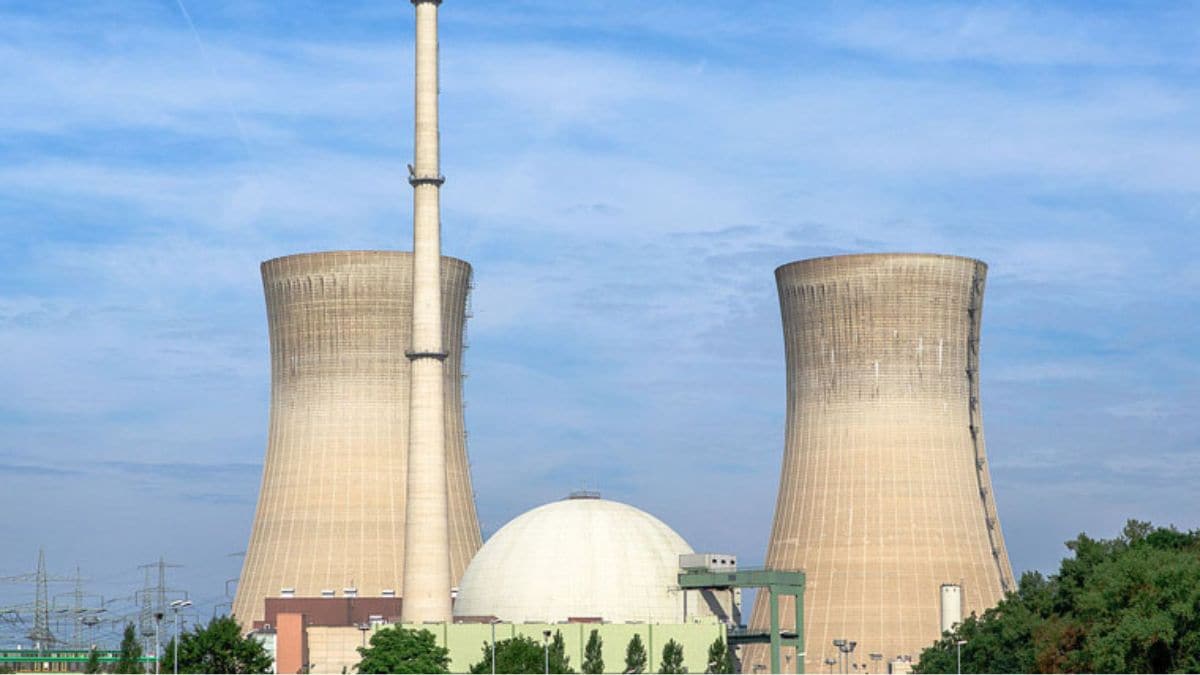
Kerala's government is again considering nuclear power to address a widening gap between electricity demand and generation capacity
The proposed site for a new nuclear power plant is Cheemeni in Kasaragod, an idea that has resurfaced periodically for decades
Past proposals for nuclear power in Kerala have faced significant political opposition, public resistance, and concerns about the state's dense population and ecological fragility
When Kerala began examining nuclear power again, Cheemeni appeared on the shortlist partly because a large tract of land had already been identified for a power project. In 2024, the Kerala State Electricity Board began discussions with the Nuclear Power Corporation of India Ltd. regarding a possible nuclear project. The initial proposal was for two 220MW units, giving a combined capacity of 440MW, with Cheemeni and Athirappilly among the locations being considered.
CPI(M) leader and Opposition leader Pinarayi Vijayan, responding to Joseph’s statement that a nuclear plant could be operated safely at Cheemeni, pointed to the LDF government’s earlier position: “When the proposal was brought forward during the LDF government’s tenure, we had made it clear that we would not pursue it.”
The power minister, nevertheless, says that the government is attempting to build a political consensus around the proposal, citing the acute power shortage facing the state.
 www.theweek.in
The proposed site for a new nuclear power plant is Cheemeni in Kasaragod, an idea that has resurfaced periodically for decades
Past proposals for nuclear power in Kerala have faced significant political opposition, public resistance, and concerns about the state's dense population and ecological fragility
When Kerala began examining nuclear power again, Cheemeni appeared on the shortlist partly because a large tract of land had already been identified for a power project. In 2024, the Kerala State Electricity Board began discussions with the Nuclear Power Corporation of India Ltd. regarding a possible nuclear project. The initial proposal was for two 220MW units, giving a combined capacity of 440MW, with Cheemeni and Athirappilly among the locations being considered.
CPI(M) leader and Opposition leader Pinarayi Vijayan, responding to Joseph’s statement that a nuclear plant could be operated safely at Cheemeni, pointed to the LDF government’s earlier position: “When the proposal was brought forward during the LDF government’s tenure, we had made it clear that we would not pursue it.”
The power minister, nevertheless, says that the government is attempting to build a political consensus around the proposal, citing the acute power shortage facing the state.
Will Kerala overcome decades-old fears and find a nuclear solution to the power problem?
Kerala is once again considering nuclear power to address its significant electricity shortfall, with Cheemeni in Kasaragod as the proposed site
www.theweek.in
Reliance Industries proposed a nuclear power plant in Bengal at Wednesday’s meetings with chief minister Suvendu Adhikari and chief secretary Manoj Agarwal, in addition to developing hotels, a modern data centre and a coal gasification facility.
Estimates suggest the proposed power plant can bring in investment worth about ₹2 lakh crore over a period of six to seven years.
India and Russia signed a deal in December 2009 during a visit to Moscow, which included plans to build a major nuclear park with up to six VVER-1000 reactors (generating around 6,000 to 10,000 MW) at Haripur
But in August 2011, the then Trinamool government scrapped it because of resistance from local fishermen and villagers, protesting since at least three years before the project secured the final nod in 2009.
“The team of top Reliance Industries officials held a two-hour meeting with Agarwal at Nabanna on Wednesday, followed by a meeting with the chief minister,” a senior official said.
“Among the team’s proposals, the nuclear power plant was the most significant as it would bring in huge investment, maybe around ₹2 lakh crore.”
The official said an NPCIL-approved, 2,000-acre plot was available in Haripur. This means the NPCIL had completed all the required surveys — seismic and geotechnical, hydrological and oceanographic, meteorological, demographic, and environmental — before the project was called off.”
“Now, if anyone wants to set up a nuclear power plant on that plot, it would be easier for them to secure the clearances compared with doing so for a new plot,” the official said.
However, keeping in mind the anti-plant resistance by fishermen and other villagers between 2006 and 2011, the new government has proposed an alternative site: Nayachar near Haldia.
“But the Reliance officials are keen on Haripur. The state government is very flexible on the proposal as it does not want to lose out on a potentially huge investment,” the official said.
Estimates suggest the proposed power plant can bring in investment worth about ₹2 lakh crore over a period of six to seven years.
India and Russia signed a deal in December 2009 during a visit to Moscow, which included plans to build a major nuclear park with up to six VVER-1000 reactors (generating around 6,000 to 10,000 MW) at Haripur
But in August 2011, the then Trinamool government scrapped it because of resistance from local fishermen and villagers, protesting since at least three years before the project secured the final nod in 2009.
“The team of top Reliance Industries officials held a two-hour meeting with Agarwal at Nabanna on Wednesday, followed by a meeting with the chief minister,” a senior official said.
“Among the team’s proposals, the nuclear power plant was the most significant as it would bring in huge investment, maybe around ₹2 lakh crore.”
The official said an NPCIL-approved, 2,000-acre plot was available in Haripur. This means the NPCIL had completed all the required surveys — seismic and geotechnical, hydrological and oceanographic, meteorological, demographic, and environmental — before the project was called off.”
“Now, if anyone wants to set up a nuclear power plant on that plot, it would be easier for them to secure the clearances compared with doing so for a new plot,” the official said.
However, keeping in mind the anti-plant resistance by fishermen and other villagers between 2006 and 2011, the new government has proposed an alternative site: Nayachar near Haldia.
“But the Reliance officials are keen on Haripur. The state government is very flexible on the proposal as it does not want to lose out on a potentially huge investment,” the official said.
Last edited:


Department of Atomic Energy
DAE Inaugurates Deuterated Compounds Production Plant and Commissions Prototype Sodium Cell at HWBF, Vadodara
Secretary, DAE & Chairman, AEC inaugurates the indigenous Versatile Deuterated compounds Production Plant (VDPP) and commissions the 24 kA Prototype Sodium Cell at HWBF, Vadodara.
VDPP strengthens indigenous production capability of specialised deuterated compounds required for advanced scientific research, strategic applications and frontier technologies.
24 kA Prototype Sodium Cell marks a major milestone towards indigenous industrial-scale production of nuclear-grade sodium for India's Fast Breeder Reactor Programme.
Facilities reinforce India's technological self-reliance and support the long-term objectives of the country's three-stage nuclear power programme.
DAE Inaugurates Deuterated Compounds Production Plant and Commissions Prototype Sodium Cell at HWBF, Vadodara
Secretary, DAE & Chairman, AEC inaugurates the indigenous Versatile Deuterated compounds Production Plant (VDPP) and commissions the 24 kA Prototype Sodium Cell at HWBF, Vadodara.
VDPP strengthens indigenous production capability of specialised deuterated compounds required for advanced scientific research, strategic applications and frontier technologies.
24 kA Prototype Sodium Cell marks a major milestone towards indigenous industrial-scale production of nuclear-grade sodium for India's Fast Breeder Reactor Programme.
Facilities reinforce India's technological self-reliance and support the long-term objectives of the country's three-stage nuclear power programme.
Posted On: 21 JUN 2026 7:33PM by PIB Delhi
In a significant step towards strengthening India's indigenous technological capabilities and strategic materials programme, Dr. Ajit Kumar Mohanty, Secretary, Department of Atomic Energy & Chairman, Atomic Energy Commission, inaugurated the Versatile Deuterated compounds Production Plant (VDPP) and commissioned the 24 kA Prototype Sodium Cell at the Heavy Water Board Facilities (HWBF), Vadodara, on 21 June 2026.
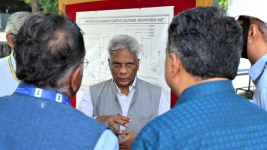
Speaking on the occasion, Dr. Mohanty said, "The inauguration of the VDPP and commissioning of the 24 kA Prototype Sodium Cell reflect India's growing capabilities in developing critical materials and technologies through indigenous research and innovation. These facilities will strengthen strategic self-reliance, support advanced scientific research and contribute to the long-term objectives of India's nuclear energy programme. The development of indigenous nuclear-grade sodium production capability is particularly important for supporting the future growth of India's Fast Breeder Reactor Programme and advancing the vision of Viksit Bharat through technological excellence."
The ceremony was held in the august presence of Shri K. N. Vyas, Homi Bhabha Chair Professor and Former Secretary, Department of Atomic Energy & Chairman, Atomic Energy Commission. Also present were Shri V. V. S. A. Prasad, Chairman & Chief Executive, Heavy Water Board; Shri K. V. Tale, Director (Operation/Technical), Heavy Water Board; Shri Nitesh Mehta, Officer on Special Duty, HWBF (Vadodara); along with senior officials of the Department of Atomic Energy, scientists, engineers and employees of the Heavy Water Board.
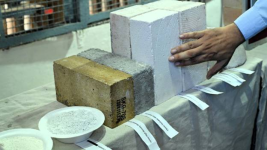
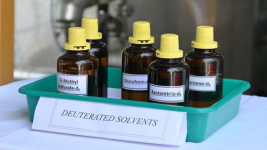
The Versatile Deuterated Compounds Production Plant has been established to enhance the country's indigenous capability for the production of specialised deuterated compounds required for advanced scientific research, strategic applications and frontier technological programmes. The facility is aimed to play a vital role in meeting national requirements in this critical domain through the indigenous production of high-purity deuterated solvents.
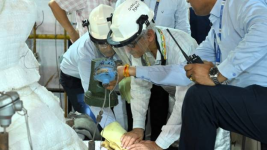
The commissioning of the 24 kA Prototype Sodium Cell marks a major technological achievement towards the indigenous industrial-scale production of nuclear-grade sodium, a critical material for India's Fast Breeder Reactor Programme. Developed through sustained research, engineering excellence and technological innovation, the facility represents a significant step towards achieving self-reliance in strategic materials required for the second stage of India's three-stage nuclear power programme, in line with the national vision of AtmaNirbhar Bharat.
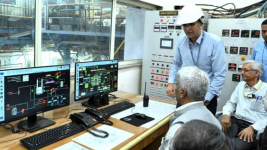
These achievements underscore DAE's continued commitment to technological self-reliance, innovation and excellence in strategic sectors. The milestones further contribute to India's journey towards Viksit Bharat through indigenous technological advancement and strategic capability development.
https://www.pib.gov.in/PressReleasePage.aspx?PRID=2276301®=48&lang=2