
Nuclear Energy in India : Updates
- Thread starter Himanshu
- Start date
You are using an out of date browser. It may not display this or other websites correctly.
You should upgrade or use an alternative browser.
You should upgrade or use an alternative browser.


U-233 can also be used to make bomb if we manage to remove U-232 impurities. They say it work even better than plutonium under certain circumstancesIts a core requirement -- the most important requirement for Phase 2 is to create sufficient U-233 to kickstrat Phase 3 -- only after that Phase 3 can become self sustaining.

Based on what you've put out in #358 , my understanding is it'd take another 10 years likely more to transition into Step B of Stage II & from there to Stage III is another 3 decades away if not more .Its a core requirement -- the most important requirement for Phase 2 is to create sufficient U-233 to kickstrat Phase 3 -- only after that Phase 3 can become self sustaining.
For Stage III to acquire mass is another 100 year program. Most here would be lucky to see the first reactor of Stage III being commissioned .

U-233 can also be used to make bomb if we manage to remove U-232 impurities. They say it work even better than plutonium under certain circumstances
Interesting, my superficial understanding was that using U233 for weapons would be a daunting challenge. I'll need to study it nore.
Based on what you've put out in #358 , my understanding is it'd take another 10 years likely more to transition into Step B of Stage II & from there to Stage III is another 3 decades away if not more .
For Stage III to acquire mass is another 100 year program. Most here would be lucky to see the first reactor of Stage III being commissioned .
Indeed, it will certainly be decades before mass commercial-scale construction of P3 reactors. But some commercialization on a smaller scale could happen earlier depending on a number of factors -- for eg, success of the Shakti program and adoption of CFBR-600, excess supply of Pu-239 so not every reactor need wait to introduce Th232 (it will take a yr to get usable U233 quantities thereafter), etc.
As the proverb goes "A society grows great when old men plant trees whose shade they know they shall never sit in".


the chinese CFR600 has also recieved fuel for the FBR reactor but no one really knows if its operational. Some people think it is and some people think its going through the same diffuculty faced by the first Russian and Indian programs in terms of FOAK stuff although the chinese have more access to russian stuff cause they got a lot of the soviet scientists.

L&T seems to be involved in everything nuclear lol from civilian to military. Hope they take advantage of the SHANTI act to set up a factory for SMRs or even expand the production of the PHWR reactor vessels.
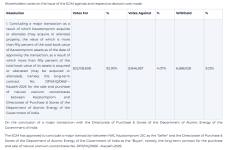

L&T seems to be involved in everything nuclear lol from civilian to military. Hope they take advantage of the SHANTI act to set up a factory for SMRs or even expand the production of the PHWR reactor vessels.
Here's a cool tid-bit: L&T is one of <10 companies in the whole world (spread among 7 countries) that are currently capable of fabricating Reactor Pressure Vessels (RPVs).

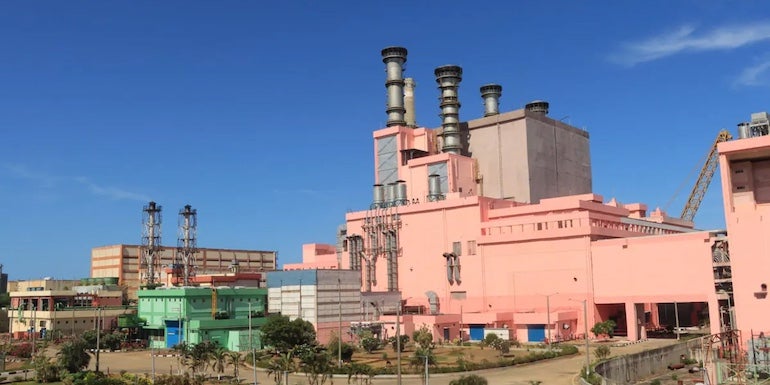
A short summary of some of the technical challenges that went into PFBR's development, part of a larger article by Nuclear Engineering International (NEI):
 www.neimagazine.com
"...Developing the PFBR was not an easy task. Construction of the PFBR began in 2004 and was originally scheduled to be completed in 2010. The project was delayed by approximately 16 years due to a combination of technical, financial, and external challenges. The 2004 Indian Ocean tsunami that struck the Kalpakkam site shortly after construction began required a re-evaluation of safety features and protective structures. Repeated delays caused the project cost to more than double, rising from an original estimate of about INR 35bn ($375m) to approximately INR77bn.
India’s PFBR is a pool-type reactor. In this design, the entire primary circuit (the core, pumps, and intermediate heat exchangers) is housed inside a single massive stainless steel main vessel filled with liquid sodium. Fabricating a vessel of that size (nearly 13 metres wide) to hold 1,150 tonnes of sodium at high temperatures while ensuring it could withstand seismic activity was a massive hurdle for Indian industry.
Because of India’s historical position outside the Nuclear Non-Proliferation Treaty (NPT), there was very little sharing of technical “know-how” from Russia or the West for the PFBR. India’s exclusion from the NPT also led to international trade bans, making it difficult to procure high-end nuclear components and technology.
India had to develop its own materials, such as specific grades of stainless steel (316LN) that could survive 40 years of sodium exposure without corroding or becoming brittle. Every component – from the sodium pumps to the steam generators – had to be designed and manufactured by Indian companies (such as L&T and BHEL) for the first time. India also had to integrated post-Fukushima safety requirements into a breeder design.
Handling liquid sodium is extremely complex as it reacts violently with air and water. Significant setbacks occurred during the commissioning of sodium pumps and secondary cooling systems. There were also persistent difficulties in producing the mixed oxide (mox) fuel elements required for the core.
Despite these difficulties, India’s nuclear programme is progressing. Currently India has a fleet of 18-20 pressurised heavy water reactors (PHWRs) that use natural uranium as fuel and produce plutonium-239 (Pu-239) as a by-product in used fuel – the first stage of the programme. With criticality of the PFBR it is now embarking on stage two."
Criticality for India’s PFBR - Nuclear Engineering International
India’s 500 MWe PFBR at Kalpakkam has achieved first criticality; a major milestone in the country’s three-stage nuclear power programme.
www.neimagazine.com
"...Developing the PFBR was not an easy task. Construction of the PFBR began in 2004 and was originally scheduled to be completed in 2010. The project was delayed by approximately 16 years due to a combination of technical, financial, and external challenges. The 2004 Indian Ocean tsunami that struck the Kalpakkam site shortly after construction began required a re-evaluation of safety features and protective structures. Repeated delays caused the project cost to more than double, rising from an original estimate of about INR 35bn ($375m) to approximately INR77bn.
India’s PFBR is a pool-type reactor. In this design, the entire primary circuit (the core, pumps, and intermediate heat exchangers) is housed inside a single massive stainless steel main vessel filled with liquid sodium. Fabricating a vessel of that size (nearly 13 metres wide) to hold 1,150 tonnes of sodium at high temperatures while ensuring it could withstand seismic activity was a massive hurdle for Indian industry.
Because of India’s historical position outside the Nuclear Non-Proliferation Treaty (NPT), there was very little sharing of technical “know-how” from Russia or the West for the PFBR. India’s exclusion from the NPT also led to international trade bans, making it difficult to procure high-end nuclear components and technology.
India had to develop its own materials, such as specific grades of stainless steel (316LN) that could survive 40 years of sodium exposure without corroding or becoming brittle. Every component – from the sodium pumps to the steam generators – had to be designed and manufactured by Indian companies (such as L&T and BHEL) for the first time. India also had to integrated post-Fukushima safety requirements into a breeder design.
Handling liquid sodium is extremely complex as it reacts violently with air and water. Significant setbacks occurred during the commissioning of sodium pumps and secondary cooling systems. There were also persistent difficulties in producing the mixed oxide (mox) fuel elements required for the core.
Despite these difficulties, India’s nuclear programme is progressing. Currently India has a fleet of 18-20 pressurised heavy water reactors (PHWRs) that use natural uranium as fuel and produce plutonium-239 (Pu-239) as a by-product in used fuel – the first stage of the programme. With criticality of the PFBR it is now embarking on stage two."
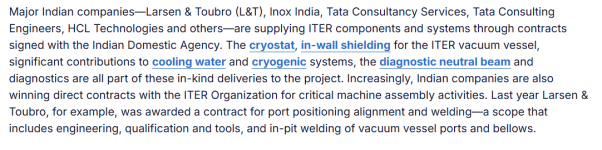
A great thread on India's contribution to the ITER:
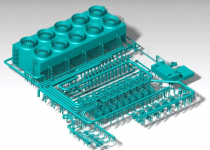
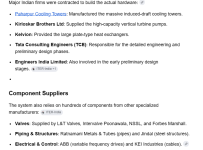
Heat rejection system: Paharpur Cooling Towers, Kirloskar, Kelvion, Tata Consulting Engineers, Engineers India Ltd, L&T valves, KEI, ABB India, Forbes Marshall, NSSL, Intervalve Poonawala, Ratnamani Metals & Tubes all the companies involved for this package.
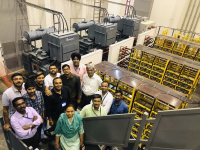
Neutral beam for diagnostics: The (DNB) is a specialized system that injects high-energy hydrogen atoms into the ITER tokamak to measure "helium ash" levels. Original photo from 2019 first tested at the Indian Test Facility (INTF) in Ahmedabad before being shipped to France.
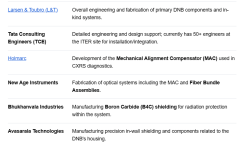
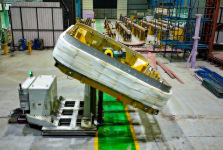
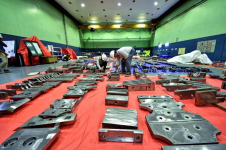
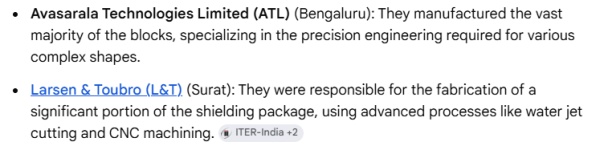
In-Wall shielding: These blocks (9000 in no.) are installed between the inner and outer shells of the vacuum vessel to protect the superconducting magnets from high-energy neutrons. ATL & L&T were the manufacturing partners.
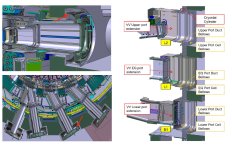
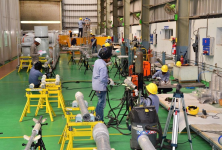
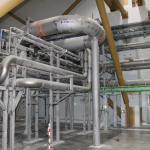
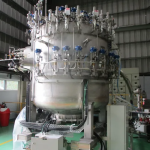
INOXCVA package included- 4km cryolines , 6km warm lines, est Cold Valve Box (TCVB) & the Hydrogen Mitigation System (HMS). TCVB- manages the flow of liquid & gaseous helium to the Pre-Prod. Cryopump (PPC) & prod. cryopumps to ensure they are fully functional. (image 3)
continued below...
Heat rejection system: Paharpur Cooling Towers, Kirloskar, Kelvion, Tata Consulting Engineers, Engineers India Ltd, L&T valves, KEI, ABB India, Forbes Marshall, NSSL, Intervalve Poonawala, Ratnamani Metals & Tubes all the companies involved for this package.
Neutral beam for diagnostics: The (DNB) is a specialized system that injects high-energy hydrogen atoms into the ITER tokamak to measure "helium ash" levels. Original photo from 2019 first tested at the Indian Test Facility (INTF) in Ahmedabad before being shipped to France.
In-Wall shielding: These blocks (9000 in no.) are installed between the inner and outer shells of the vacuum vessel to protect the superconducting magnets from high-energy neutrons. ATL & L&T were the manufacturing partners.
INOXCVA package included- 4km cryolines , 6km warm lines, est Cold Valve Box (TCVB) & the Hydrogen Mitigation System (HMS). TCVB- manages the flow of liquid & gaseous helium to the Pre-Prod. Cryopump (PPC) & prod. cryopumps to ensure they are fully functional. (image 3)
continued below...
continued from above...
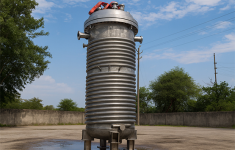
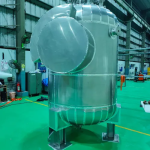
The HMS consists of specialized pressure vessels for the Vacuum Vessel Pressure Suppression System (VVPSS), which acts as a major safety layer. Role: These vessels are (SIC-I) components that prevent over-pressure events & confine radioactivity in the event of an accident.
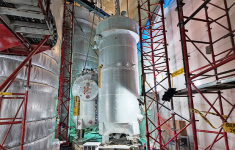
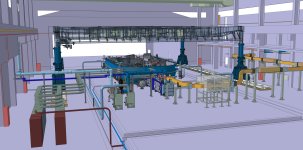
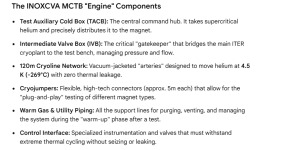
Magnet Cold Test Bench (MCTB) Facility. This is a critical "fast-track" project designed to perform full-scale cryogenic testing on ITER's massive Toroidal Field (TF) & Poloidal Field (PF1) superconducting magnets at 4k before they are permanently installed in the tokamak pit.
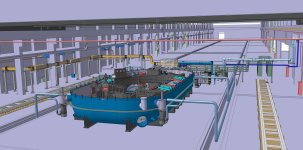
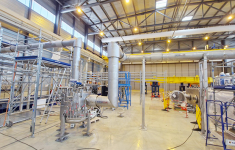
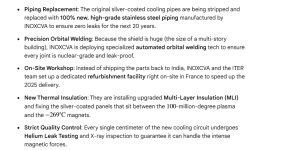
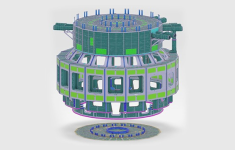
Cryostat Thermal Shield (CTS) Refurbishment in 2025 after stress corrosion cracking (the reason why project has been pushed back to 2034 now). Again, Inoxcva as the contractor.
The HMS consists of specialized pressure vessels for the Vacuum Vessel Pressure Suppression System (VVPSS), which acts as a major safety layer. Role: These vessels are (SIC-I) components that prevent over-pressure events & confine radioactivity in the event of an accident.
Magnet Cold Test Bench (MCTB) Facility. This is a critical "fast-track" project designed to perform full-scale cryogenic testing on ITER's massive Toroidal Field (TF) & Poloidal Field (PF1) superconducting magnets at 4k before they are permanently installed in the tokamak pit.
Cryostat Thermal Shield (CTS) Refurbishment in 2025 after stress corrosion cracking (the reason why project has been pushed back to 2034 now). Again, Inoxcva as the contractor.

thorium is easily extracted from the monzanite sands that andra and the south in general is famous for............. we dont need the stuff in chattisgarh for our thorium needs.
NTPC exploring 2 nuclear power units of 1,400 MW in Banka district of Bihar
A feasibility study is currently underway for the project, which aims to contribute to India's growing nuclear energy capacity.
By PTI
Updated On Apr 26, 2026 at 02:29 PM IST
State-owned NTPC is planning to establish two 700 MW nuclear units in Bihar's Banka district, with an estimated investment of ₹25,000 crore.
As part of its energy diversification plan, state-owned NTPC is looking to set up two nuclear units of 700 MW each in the Banka district of Bihar, which could entail an investment of around ₹25,000 crore.
At present, NTPC officials are conducting a feasibility study for two 700-MW nuclear units in the district, located around 250 km from Patna, a government official said.
The Bihar government has also assured full support for the project and water availability. Initial estimates suggest that around 1,000 acres of land would be required for these units, the official told PTI without sharing any financial information.
According to industry estimates, a 1 GW nuclear plant requires an investment of ₹15,000-20,000 crore and typically takes at least three years from concept to commissioning.
A detailed project report (DPR) will be prepared after the feasibility report is completed, he said.
NTPC is looking to set up around 30 GW of company-owned nuclear projects across various locations in the country in line with the government's ambition of having 100 GW nuclear capacity by 2047.
The power PSU is eyeing at least 2 GW of nuclear capacity as early as 2032.
NTPC is also setting up a nuclear project in a joint venture (JV) with Nuclear Power Corporation of India Ltd (NPCIL) in Rajasthan at an investment of about ₹42,000 crore.
The company, with an installed capacity of over 89,615 MW at the group level, has accelerated its nuclear plans, with recent legislative changes aimed at attracting investment in this space.
NTPC Ltd has steadily expanded and diversified into new energy sources, spanning coal, gas/liquid fuel, hydro and solar power.
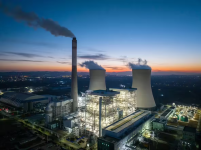
NTPC exploring 2 nuclear power units of 1,400 MW in Banka district of Bihar
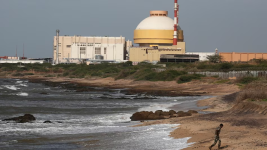
Kudankulam Nuclear Power Project Unit 3 reaches significant commissioning milestone
NPCIL announced Kudankulam Nuclear Power Project, Unit-3 has achieved a significant commissioning milestone Saturday.
By Richa Sharma
Updated Apr 25, 2026, 7:57 PM IST
The milestone signifies the start of individual functional testing of primary system equipment and piping in accordance with design requirements.
In a boost to country’s nuclear power target, Nuclear Power Corporation of India Limited (NPCIL) Saturday announced that the Kudankulam Nuclear Power Project, Unit-3 has achieved a significant commissioning milestone.
This project is being constructed in the district of Timnelveli in Tamil Nadu in technical cooperation with Russian Federation under the framework of Inter-Governmental Agreement.
The NPCIL said the successful commencement of “Spillage to Open Reactor”, an important phase in the nuclear power project commissioning, involves flushing of safety system and Main Coolant Pipelines (MCP) using light water, to ensure cleanliness of the systems for further commissioning activities.
The flushing operation is carried out by operating the safety system pumps from Main Control Room, in a controlled, sequential manner to maintain system integrity and to achieve the required technical parameters towards clean conditions as per design requirements.
The milestone signifies the start of individual functional testing of primary system equipment and piping in accordance with design requirements, marking a critical step towards commissioning of the plant.
B.C.Pathak, Chairman & Managing Director, NPCIL inaugurated the commencement of ‘Spillage to Open Reactor’, in the presence of Mr M. Novikov, Director for Indian Projects, Atomstroyexport (ASE) and other senior officials.
Presently, Units-1&2 (2 X 1000 MW) are operating at the site and have so far generated about 121 billion Units (BUs) of clean electricity, thereby avoiding release of about 104 million tons of CO2 equivalent into the environment.
Unit-4 (1000 MW) is at an advance stage of construction. Further, Units-5&6 (2 X 1000 MW) are at different stages of construction and are planned to be commissioned progressively. Upon completion of these projects, the Kudankulam site will have a total installed capacity of 6000 MW.
India has 8.8GW of installed nuclear power capacity across 7 sites, contributing to 2% of the country’s electricity capacity. The government aims to scale nuclear capacity to 100 GW by 2047 (5% share).
Kudankulam Nuclear Power Project Unit 3 reaches significant commissioning milestone - BusinessToday
India's nuclear shift: HCC plans move into light water reactors
By Richa Sharma
Apr 14, 2026,
Updated Apr 14, 2026, 5:50 PM IST
LWRs are the most common reactors globally, while India has dominance of pressurised heavy water reactors
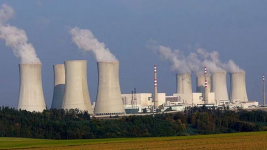
The Hindustan Construction Company (HCC), a key engineering, procurement, and construction (EPC) player in nuclear infrastructure, is looking to venture into light water reactors (LWRs) as part of India’s nuclear energy road map.
The move comes as the Department of Atomic Energy (DAE) is working to expedite the fabrication of an Indian LWR as a key priority.
LWRs are the most common reactors globally, while India has dominance of pressurized heavy water reactors (PHWR). LWRs are thermal reactors in which light water (ordinary water) is used as a moderator as well as the reactor coolant, while PHWRs use a reactor pressure vessel (RPV) to contain the nuclear fuel, moderator, control rods, and coolant.
Having delivered more than 65% of the country’s nuclear power plants, HCC says that LWRs will help meet the government’s plan of adding almost 100 GW of nuclear power by 2047.
The company says that a huge nuclear programme will unfold over the next 10 to 12 years, and it is well poised to make the most of that. HCC has been the biggest EPC player in the sector, having built 14 of India’s 24 nuclear reactors.
The company is seeing a lot of interest from private entities for collaboration since the Sustainable Harnessing and Advancement of Nuclear Energy for Transforming India (SHANTI) Act, 2025, was passed. The law allows private sector participation in the nuclear sector.
According to media reports, the DAE is looking to accelerate work on the 900 MWe LWR, whose design phase began in 2015. Officials cited in reports said that the availability of a homegrown LWR, alongside India’s established fleet of PHWRs, would strengthen the country’s negotiating position with foreign reactor suppliers and help secure more favourable import terms.
India has a nuclear power capacity of 8.78 GW and is expected to reach about 22 GW by 2031-32. “Another 32 GW of nuclear power capacity is envisaged to be set up beyond 2032 by NPCIL, comprising indigenous PHWR and LWR by 2047, taking the capacity to about 54 GW,” Jitender Singh, Union Minister of State (Independent Charge) for Science & Technology and Earth Sciences, informed the Lok Sabha during the Budget session.
As per the road map, the remaining 46 GW is expected to be set up by other public sector enterprises (central and state), state governments, the private sector, and joint ventures.
India's nuclear shift: HCC plans move into light water reactors - BusinessToday
India to invite bids for 220 MWe Small Modular Reactor, boosting nuclear push under green energy transition
By Twesh Mishra & Shilpa Samant, ET Bureau
Apr 16, 2026, 05:30:00 AM IST
Synopsis
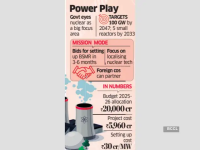
India is set to invite bids for its first 220 MWe Bharat Small Modular Reactor (BSMR-200) within six months, a significant stride in boosting nuclear energy for its green transition. Foreign firms can participate with local partners. This pilot project, costing approximately Rs 30 crore per MW, aims to pave the way for future SMR developments.
India plans to invite bids within three to six months to set up a 220 MWe Bharat Small Modular Reactor (BSMR-200), marking a key step toward scaling up nuclear energy as a central pillar of the country's green transition, officials said.
Foreign companies will be eligible to bid but they would have to tie up with a local partner, said one official.
He said the design of BSMR-200 will be standardised, and this unit will serve as a model for similar projects expected to be commissioned subsequently.
MWe or megawatt electrical is net electricity generated.
“A cost of roughly Rs 30 crore per megawatt (MW) has been approved for BSMR-200 as a pilot project,” another official said.
The BSMR-200 is being jointly designed and developed by Bhabha Atomic Research Centre (BARC) and Nuclear Power Corp of India Ltd (NPCIL). The cost of development and construction is pegged at about Rs 5,960 crore and will be met from funds under the Nuclear Energy Mission. Construction is expected to take 60 to 72 months after administrative and financial approval.
Inter-ministerial consultations are underway to firm up the details of the proposed bid, the official added.
The move comes against the backdrop of the sector being opened to private investment through the enactment of the Sustainable Harnessing and Advancement of Nuclear Energy for Transforming India (SHANTI) Act in December 2025.
“A final call on the proposal will be taken by the Cabinet Committee on Economic Affairs,” the official said, adding that domestic firms capable of executing the project on an engineering, procurement and construction (EPC) basis have already been identified. The budget had earmarked Rs 20,000 crore to develop at least five indigenously designed and operational small modular reactors (SMRs) by 2033 under the Nuclear Energy Mission.
India has set a target of 100 GW of nuclear energy capacity by 2047, with a parallel push for localisation and the development of domestic nuclear technology manufacturing capabilities.
In a landmark development in the nuclear energy space, India’s prototype fast breeder reactor reached criticality this month.
India to invite bids for 220 MWe Small Modular Reactor, boosting nuclear push under green energy transition - The Economic Times
