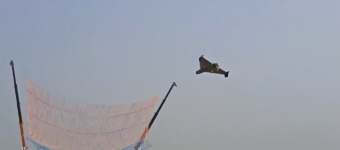
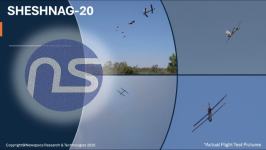
NewSpace (NRT) Unmanned Aerial Vehicle Programs : Updates
- Thread starter Gautam
- Start date
You are using an out of date browser. It may not display this or other websites correctly.
You should upgrade or use an alternative browser.
You should upgrade or use an alternative browser.


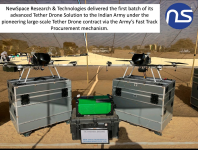
https://twitter.com/AdithyaKM_/status/1936709446975267307
Feel like IAF should join the 𝗡𝗮𝘃𝗮𝗹 - 𝗖𝗼𝗹𝗹𝗮𝗯𝗼𝗿𝗮𝘁𝗶𝘃𝗲 𝗖𝗼𝗺𝗯𝗮𝘁 𝗔𝗶𝗿 𝗩𝗲𝗵𝗶𝗰𝗹𝗲 (𝗡𝗖𝗖𝗔𝗩) program instead of running a separate "FUFA/RPSA" program.
Given the IAF's uninspiring track record of running acquisition/development programs such a joint program should be ideally run by the Navy.
Both probably have different requirements so makes sense why there are two different programs. I wouldn't say Navy has been any better in running a development program.https://twitter.com/AdithyaKM_/status/1936709446975267307
Feel like IAF should join the 𝗡𝗮𝘃𝗮𝗹 - 𝗖𝗼𝗹𝗹𝗮𝗯𝗼𝗿𝗮𝘁𝗶𝘃𝗲 𝗖𝗼𝗺𝗯𝗮𝘁 𝗔𝗶𝗿 𝗩𝗲𝗵𝗶𝗰𝗹𝗲 (𝗡𝗖𝗖𝗔𝗩) program instead of running a separate "FUFA/RPSA" program.
Given the IAF's uninspiring track record of running acquisition/development programs such a joint program should be ideally run by the Navy.

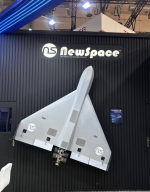

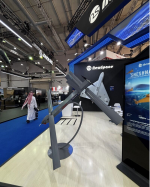
India Unveils SHESHNAAG-20 Canister-Launched Loitering Munition at World Defence Show 2026
11 Feb 2026 - 3:05
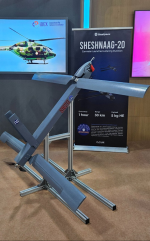
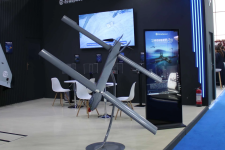
At the 2026 edition of the World Defence Show in Riyadh, NewSpace Research & Technologies introduced the SHESHNAAG-20, a new canister-launched loitering munition developed for deployment from ground positions or from vehicles. The presentation highlighted a compact, electrically powered system intended to combine surveillance and strike functions within a single platform, reflecting the sustained global interest in unmanned solutions capable of operating with limited manpower while delivering accurate effects at tactically relevant distances.
NewSpace Research & Technologies is an Indian company active in the development of unmanned and autonomous systems for defense applications. In recent years it has positioned itself in segments ranging from intelligence, surveillance and reconnaissance to precision engagement, with an emphasis on modular designs and scalable architectures. The SHESHNAAG-20 forms part of this portfolio and illustrates the firm’s effort to address requirements expressed by armed forces seeking organic capabilities that can be rapidly fielded and integrated with existing formations.
The aircraft itself is presented as an electric fixed-wing design powered by batteries and propelled by a brushless DC motor. According to the technical data released during the exhibition, the munition features a wingspan of two meters and a maximum takeoff weight of 20 kilograms. Within that envelope, it can accommodate a payload of up to five kilograms. The canisterized configuration is intended to simplify handling, storage and launch procedures while supporting transport on a variety of military vehicles.
Performance figures provided by the manufacturer indicate an endurance of approximately one hour and an operational range of 30 kilometers. The SHESHNAAG-20 can reach a maximum operating altitude of 6,000 meters above mean sea level and fly at speeds of up to 150 kilometers per hour. These characteristics are designed to allow the system to transit quickly toward an objective area and then remain available for search and identification tasks before a strike decision is made.
For mission execution, the platform integrates a high-performance electro-optical and infrared camera intended to support target acquisition under different environmental conditions. In its strike role, it can be equipped with a high-explosive or anti-tank warhead, including a five-kilogram HEAT configuration. The company states that the munition has been conceived with a significant level of autonomy and can be employed in coordinated groups, enabling what is often described as a concentration of effects while keeping operator workload limited. The system’s arrival on the international stage underscores the speed at which loitering munitions continue to evolve, driven by demands for responsiveness, precision and adaptability across a wide spectrum of operational environments.
With the SHESHNAAG-20, NewSpace Research & Technologies is proposing a solution that combines portability, integrated sensing and a selectable lethal payload within a relatively lightweight air vehicle. Its introduction at World Defence Show 2026 offers potential users an opportunity to assess how such capabilities might fit into future force structures, where unmanned assets are expected to play an increasingly central role alongside conventional platforms.
India Unveils SHESHNAAG-20 Canister-Launched Loitering Munition at World Defence Show 2026
11 Feb 2026 - 3:05
India-based NewSpace Research & Technologies introduced the SHESHNAAG-20 canister-launched loitering munition at the World Defence Show 2026 in Riyadh, presenting a compact electric drone designed for ground and vehicle launch.
At the 2026 edition of the World Defence Show in Riyadh, NewSpace Research & Technologies introduced the SHESHNAAG-20, a new canister-launched loitering munition developed for deployment from ground positions or from vehicles. The presentation highlighted a compact, electrically powered system intended to combine surveillance and strike functions within a single platform, reflecting the sustained global interest in unmanned solutions capable of operating with limited manpower while delivering accurate effects at tactically relevant distances.
At the World Defence Show 2026 in Riyadh, India’s NewSpace Research & Technologies unveiled the SHESHNAAG-20, a compact, canister-launched loitering munition designed to deliver rapid, electrically powered surveillance and precision strike capability from ground or vehicle-based platforms (Picture Source: Army Recognition Group)
NewSpace Research & Technologies is an Indian company active in the development of unmanned and autonomous systems for defense applications. In recent years it has positioned itself in segments ranging from intelligence, surveillance and reconnaissance to precision engagement, with an emphasis on modular designs and scalable architectures. The SHESHNAAG-20 forms part of this portfolio and illustrates the firm’s effort to address requirements expressed by armed forces seeking organic capabilities that can be rapidly fielded and integrated with existing formations.
The aircraft itself is presented as an electric fixed-wing design powered by batteries and propelled by a brushless DC motor. According to the technical data released during the exhibition, the munition features a wingspan of two meters and a maximum takeoff weight of 20 kilograms. Within that envelope, it can accommodate a payload of up to five kilograms. The canisterized configuration is intended to simplify handling, storage and launch procedures while supporting transport on a variety of military vehicles.
Performance figures provided by the manufacturer indicate an endurance of approximately one hour and an operational range of 30 kilometers. The SHESHNAAG-20 can reach a maximum operating altitude of 6,000 meters above mean sea level and fly at speeds of up to 150 kilometers per hour. These characteristics are designed to allow the system to transit quickly toward an objective area and then remain available for search and identification tasks before a strike decision is made.
For mission execution, the platform integrates a high-performance electro-optical and infrared camera intended to support target acquisition under different environmental conditions. In its strike role, it can be equipped with a high-explosive or anti-tank warhead, including a five-kilogram HEAT configuration. The company states that the munition has been conceived with a significant level of autonomy and can be employed in coordinated groups, enabling what is often described as a concentration of effects while keeping operator workload limited. The system’s arrival on the international stage underscores the speed at which loitering munitions continue to evolve, driven by demands for responsiveness, precision and adaptability across a wide spectrum of operational environments.
With the SHESHNAAG-20, NewSpace Research & Technologies is proposing a solution that combines portability, integrated sensing and a selectable lethal payload within a relatively lightweight air vehicle. Its introduction at World Defence Show 2026 offers potential users an opportunity to assess how such capabilities might fit into future force structures, where unmanned assets are expected to play an increasingly central role alongside conventional platforms.
India Unveils SHESHNAAG-20 Canister-Launched Loitering Munition at World Defence Show 2026
WDS 2026: India Unveils 1,000 km Sheshnaag 150 Swarm Drone for Deep Strike Missions
11 Feb 2026 - 4:15
India’s NewSpace Research and Technologies showcased its Sheshnaag 150 long-range collaborative loitering munition at the World Defense Show in Riyadh, claiming a 1,000+ km range and 25 to 40 kg payload class. If validated, the system could offer a lower-cost deep-strike alternative to cruise missiles while reshaping how emerging militaries conduct saturation attacks and air defense suppression.
At the World Defense Show in Riyadh, Army Recognition was on the floor as India’s NewSpace Research and Technologies put its Sheshnaag-150 collaborative attack concept in front of an international audience, displaying a full-scale airframe and product material aimed squarely at the long-range loitering munition market. The company has publicly stated that Sheshnaag-150 has already flown as part of ongoing work to mature the autonomy stack designed for massed and saturation employment. The brochure reviewed by Army Recognition at WDS lists a 1000+ km range with a 25-40 kg payload class, positioning the system as a theater-level strike tool rather than a short-range tactical munition.
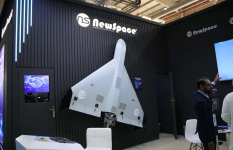
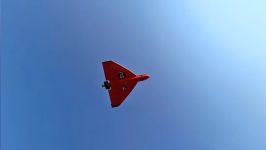
The configuration shown at WDS is a compact, low-aspect delta wing with a central dorsal fin and a rear propulsion section, a layout optimized for simple manufacture, internal fuel volume, and stable long-range cruise. While NewSpace has not publicly detailed the propulsion type or launch method, the endurance figures emerging from multiple reports suggest an efficient small engine architecture rather than a purely electric design. Sheshnaag-150 has been described as a 150 kg-class long-range precision strike UAV with an endurance of around five hours, while retaining the payload bracket seen in the Riyadh brochure.
What makes Sheshnaag-150 more than another one-way strike drone is the project’s emphasis on autonomy and collaborative behaviors, which NewSpace openly frames as the core deliverable. The company highlights work on intelligent cyber-physical uncrewed systems, including self-healing swarms, dynamic retasking, and advanced mesh networking, all of which align with a concept of launching multiple vehicles that cooperate rather than merely fly the same route. During early flight activity, the system reportedly demonstrated target engagement with an indicated CEP of 5 m, a detail that, if replicated in user trials, would place Sheshnaag-150 closer to cruise-missile-like accuracy than legacy loitering munitions.
Operationally, a 1000+ km loitering munition with a 25-40 kg warhead class sits in the deep-strike gap between tactical backpack systems and expensive stand-off missiles. In a conventional campaign, Sheshnaag-150 would be most valuable for pre-emptive and follow-on strikes against air defense nodes, command posts, fuel and ammunition points, airfield infrastructure, and fixed high-value assets where a single hit creates cascading disruption. The loitering attribute adds a tactical edge: launched on a permissive route, the munition can wait for time-sensitive cues, refine aimpoints through onboard sensors, and strike when the target pattern confirms, reducing wasted salvos compared with purely pre-planned one-way drones.
NewSpace’s marketing of “collaborative attack” points to a specific method of employment: forcing defenders into an economic and tactical dilemma by presenting many simultaneous problems. A country could disperse launchers on trucks or trailer-based racks, fire mixed packages, and use networked coordination to split roles between decoys, ISR scouts, electronic support collectors, and lethal strikers. In practice, this allows a commander to shape an air defense picture, provoke radar emissions, map engagement zones, and then drive a saturation wave through a seam. The same architecture also supports maritime coercion, with loitering munitions used to hold chokepoints and coastal approaches at risk, or to complicate naval air defenses through multi-axis arrivals.
As of early 2026, there is no public, confirmed list of Sheshnaag-150 operational users, and NewSpace has not announced a signed procurement contract for this specific munition. What is visible is intent: the system is consistently described in Indian reporting as a private development aimed at emerging Indian Armed Forces long-range swarm requirements, and NewSpace itself states it develops multiple defense programs for Indian government customers while pursuing global markets, a dual-track that explains its decision to bring Sheshnaag-150 to Riyadh.
In the competitive landscape, Sheshnaag-150 is closest in concept to Israel’s Harop class of loitering munitions, which has long-range reach and a warhead designed for high-value target sets. Public reporting on Harop describes an operational range around 1,000 km and endurance up to roughly six hours, putting it in the same mission envelope, but Sheshnaag-150 is being pitched with a heavier payload bracket and a stronger focus on multi-vehicle swarm behaviors as a primary design goal. Compared with Iran’s Shahed-136 family, widely assessed to carry a 20-40 kg warhead class and used for mass strikes that trigger costly defensive interceptions, Sheshnaag-150 is being framed as a more actively coordinated, mission-adaptable system with ISR and electronic warfare growth paths rather than a single-purpose attrition drone. Against tactical competitors like AeroVironment’s Switchblade 600, which is optimized for frontline units with tens of kilometers of range, Sheshnaag-150 is a theater-level strike tool intended to reach deep targets from outside most counter-battery and short-range air defense threats.
If NewSpace can translate its autonomy claims into robust performance under jamming, intermittent connectivity, and contested air defense conditions, Sheshnaag-150 signals a strategic shift: the arrival of relatively low-cost deep strike and saturation options for militaries that cannot stockpile large numbers of cruise missiles. Army Recognition will continue tracking test milestones, export marketing, and any official user announcements that clarify where Sheshnaag-150 will first enter service.
WDS 2026: India Unveils 1,000 km Sheshnaag 150 Swarm Drone for Deep Strike Missions
11 Feb 2026 - 4:15
India’s NewSpace Research and Technologies showcased its Sheshnaag 150 long-range collaborative loitering munition at the World Defense Show in Riyadh, claiming a 1,000+ km range and 25 to 40 kg payload class. If validated, the system could offer a lower-cost deep-strike alternative to cruise missiles while reshaping how emerging militaries conduct saturation attacks and air defense suppression.
At the World Defense Show in Riyadh, Army Recognition was on the floor as India’s NewSpace Research and Technologies put its Sheshnaag-150 collaborative attack concept in front of an international audience, displaying a full-scale airframe and product material aimed squarely at the long-range loitering munition market. The company has publicly stated that Sheshnaag-150 has already flown as part of ongoing work to mature the autonomy stack designed for massed and saturation employment. The brochure reviewed by Army Recognition at WDS lists a 1000+ km range with a 25-40 kg payload class, positioning the system as a theater-level strike tool rather than a short-range tactical munition.
NewSpace's Sheshnaag-150 long-range collaborative loitering munition is designed for 1000+ km deep-strike missions with a 25-40 kg warhead class, enabling networked swarm attacks that can overwhelm air defenses while also supporting ISR and electronic warfare roles through coordinated multi-vehicle tactics (Picture source: Army Recognition Group).
The configuration shown at WDS is a compact, low-aspect delta wing with a central dorsal fin and a rear propulsion section, a layout optimized for simple manufacture, internal fuel volume, and stable long-range cruise. While NewSpace has not publicly detailed the propulsion type or launch method, the endurance figures emerging from multiple reports suggest an efficient small engine architecture rather than a purely electric design. Sheshnaag-150 has been described as a 150 kg-class long-range precision strike UAV with an endurance of around five hours, while retaining the payload bracket seen in the Riyadh brochure.
What makes Sheshnaag-150 more than another one-way strike drone is the project’s emphasis on autonomy and collaborative behaviors, which NewSpace openly frames as the core deliverable. The company highlights work on intelligent cyber-physical uncrewed systems, including self-healing swarms, dynamic retasking, and advanced mesh networking, all of which align with a concept of launching multiple vehicles that cooperate rather than merely fly the same route. During early flight activity, the system reportedly demonstrated target engagement with an indicated CEP of 5 m, a detail that, if replicated in user trials, would place Sheshnaag-150 closer to cruise-missile-like accuracy than legacy loitering munitions.
Operationally, a 1000+ km loitering munition with a 25-40 kg warhead class sits in the deep-strike gap between tactical backpack systems and expensive stand-off missiles. In a conventional campaign, Sheshnaag-150 would be most valuable for pre-emptive and follow-on strikes against air defense nodes, command posts, fuel and ammunition points, airfield infrastructure, and fixed high-value assets where a single hit creates cascading disruption. The loitering attribute adds a tactical edge: launched on a permissive route, the munition can wait for time-sensitive cues, refine aimpoints through onboard sensors, and strike when the target pattern confirms, reducing wasted salvos compared with purely pre-planned one-way drones.
NewSpace’s marketing of “collaborative attack” points to a specific method of employment: forcing defenders into an economic and tactical dilemma by presenting many simultaneous problems. A country could disperse launchers on trucks or trailer-based racks, fire mixed packages, and use networked coordination to split roles between decoys, ISR scouts, electronic support collectors, and lethal strikers. In practice, this allows a commander to shape an air defense picture, provoke radar emissions, map engagement zones, and then drive a saturation wave through a seam. The same architecture also supports maritime coercion, with loitering munitions used to hold chokepoints and coastal approaches at risk, or to complicate naval air defenses through multi-axis arrivals.
As of early 2026, there is no public, confirmed list of Sheshnaag-150 operational users, and NewSpace has not announced a signed procurement contract for this specific munition. What is visible is intent: the system is consistently described in Indian reporting as a private development aimed at emerging Indian Armed Forces long-range swarm requirements, and NewSpace itself states it develops multiple defense programs for Indian government customers while pursuing global markets, a dual-track that explains its decision to bring Sheshnaag-150 to Riyadh.
In the competitive landscape, Sheshnaag-150 is closest in concept to Israel’s Harop class of loitering munitions, which has long-range reach and a warhead designed for high-value target sets. Public reporting on Harop describes an operational range around 1,000 km and endurance up to roughly six hours, putting it in the same mission envelope, but Sheshnaag-150 is being pitched with a heavier payload bracket and a stronger focus on multi-vehicle swarm behaviors as a primary design goal. Compared with Iran’s Shahed-136 family, widely assessed to carry a 20-40 kg warhead class and used for mass strikes that trigger costly defensive interceptions, Sheshnaag-150 is being framed as a more actively coordinated, mission-adaptable system with ISR and electronic warfare growth paths rather than a single-purpose attrition drone. Against tactical competitors like AeroVironment’s Switchblade 600, which is optimized for frontline units with tens of kilometers of range, Sheshnaag-150 is a theater-level strike tool intended to reach deep targets from outside most counter-battery and short-range air defense threats.
If NewSpace can translate its autonomy claims into robust performance under jamming, intermittent connectivity, and contested air defense conditions, Sheshnaag-150 signals a strategic shift: the arrival of relatively low-cost deep strike and saturation options for militaries that cannot stockpile large numbers of cruise missiles. Army Recognition will continue tracking test milestones, export marketing, and any official user announcements that clarify where Sheshnaag-150 will first enter service.
WDS 2026: India Unveils 1,000 km Sheshnaag 150 Swarm Drone for Deep Strike Missions

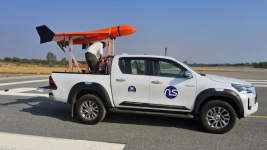

Good post on how this design was adopted by various nations.