Japan : News, Updates & Discussions.


China has warned its citizens against traveling to Japan as it escalates a backlash over comments by the country’s prime minister about the island of Taiwan.

The dictum is Beijing’s most substantive retaliation yet to Sanae Takaichi’s remarks. Even as it may be more symbolic than anything, the move suggests Beijing is willing to wield its economic heft to press geopolitical points, a well-worn playbook.

Recent “blatantly provocative remarks on Taiwan” have “further damaged the atmosphere for people-to-people exchanges… creating additional risks to the safety and security of Chinese citizens in Japan,” a statement published by the Chinese Foreign Ministry said Friday.

The ministry and its missions “remind Chinese citizens to refrain from visiting Japan for the time being,” it said.
 

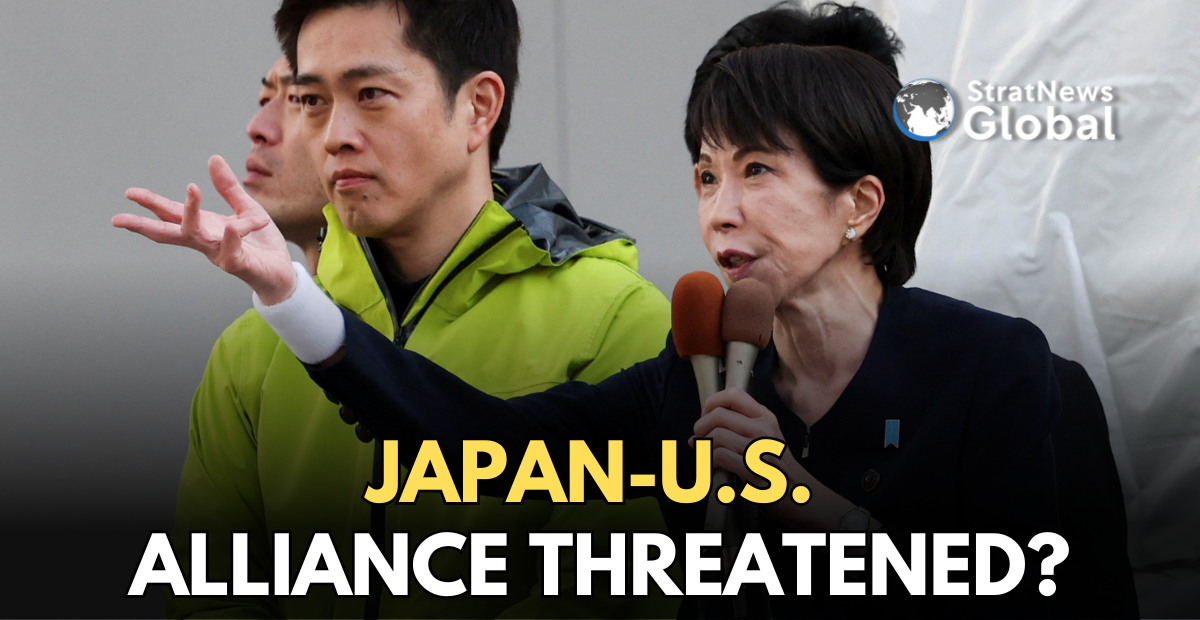
Prime Minister Sanae Takaichi said Japan’s strategic alliance with the U.S. would collapse if Tokyo were to turn away from a conflict in Taiwan, but distanced herself from previous comments that suggested a possible military response in such an event.

Takaichi expressed her latest views on a nationally broadcast TV programme late on Monday, where an opposition party leader criticised her for igniting tensions with China with the earlier remarks.

Ties between Japan and China have sunk to the worst level in years after Takaichi said in November that a hypothetical Chinese attack on Taiwan could bring about a Japanese military response. Beijing has responded with export curbs, flight cancellations and vitriolic commentaries, repeatedly demanding a retraction.

China claims sovereignty over the democratically-governed island of Taiwan.

“I want to make it absolutely clear that this is not about Japan going out and taking military action if China and the United States come into conflict (over Taiwan),” Takaichi said on the live TV show, referring to the comments she made in parliament in November.
 
  • Like
Reactions: spice

Amid tensions with China and in the Taiwan Strait, Japan reportedly wants its own long-range strike missile similar to America's Tomahawk missiles. A prototype cruise missile has been designed to test the technologies behind this potential future Japanese strike weapon.
 

Takaichi began her first term in office by promoting a modified version of “Abenomics,” relying heavily on government spending financed by debt. Already Japan’s public debt had risen to roughly $9 trillion—240% of GDP or more than double the size of its economy. New borrowing funded 40% of the 2025 supplementary budget, pushing the national debt to a record high. Financial markets took fright: bond yields spiked and the yen slid. For ordinary Japanese, the consequences were tangible: higher mortgage rates and rising prices, as a weaker currency drove up the cost of imported food and fuel.

But the prime minister showed no sign of fiscal restraint. Her promise to cut taxes on food threatens to reduce government revenue further, worsening the deficit. She vows to abandon what she calls “excessive austerity” and channel strategic investments to 17 industries, promising to revive the economy and deliver a brighter future. Takaichi remains vague on how all this will be funded, though she has tried to reassure markets that she will pursue disciplined fiscal policies. Her wildly optimistic logic is that fiscal stimulus will spark growth, and that the private sector will raise long-stagnant wages, thereby increasing tax revenues.

The stock market has soared in anticipation of lavish public spending, but bond markets remain wary. Her plan for strategic investments is also raising questions about the likely effectiveness of such state intervention. And her rush to boost defense spending to meet White House targets is fueling concern that a numbers-driven process may prove counterproductive in terms of what Japan actually needs to enhance its military capacity.

As she juggles priorities in a rapidly aging society, the spotlight is on surging medical care and pension payments, which account for roughly one third of the budget. These costs are defrayed by the consumption tax—which Takaichi promises to slash on food—and by income taxes paid by a shrinking labor force. Other rapidly aging societies face a similar conundrum: require workers to pay higher taxes to maintain social security, or pare back benefits and make seniors pay more for medical treatment. The other option is to mortgage the future by borrowing, the politically easiest path, and one she seems to favor.
 
  • Like
Reactions: spice

Japan has drawn up plans for investments in US oil, gas and critical mineral projects worth about $36bn under the first wave of a deal with Donald Trump.

The US president and Sanae Takaichi, Japan’s prime minister, announced a trio of projects including a power plant in Portsmouth, Ohio, billed by the Trump administration as the largest natural gas-fired generating facility in US history.

As a diplomatic row between Japan and China over the security of Taiwan continues, testing the Japanese economy, Takaichi said the projects would strengthen her country’s ties with the US.

“Our massive trade deal with Japan has just launched,” Trump declared in a social media post. The White House said Japan would also invest in a deepwater crude oil export facility off the coast of Texas, and a synthetic industrial diamond manufacturing site.

The projects are the first batch of the $550bn Japan committed to invest under a trade deal with the US last year. In return, Trump agreed to reduce US tariffs on Japanese exports including cars.
 
Labour shortage is having an impact in certain sectors in JP. CNN report about the vending m/cs being impacted due to the same.


TOKYO - The Japanese government said it will start releasing 30 days' worth of state-held oil from Thursday to cushion the impact on the economy as concerns over supply mount and oil prices soar amid the ongoing U.S.-Israeli war with Iran.

On Tuesday, the industry ministry announced that the government plans to sell a total of about 8.5 million kiloliters of oil from 11 storage bases across the country, following the private sector's release of 15 days' worth of oil stockpiles last week.

According to the ministry, Middle Eastern countries such as the United Arab Emirates will discharge five days' worth of oil reserves in Japan by next Tuesday to provide to Japanese oil wholesalers.

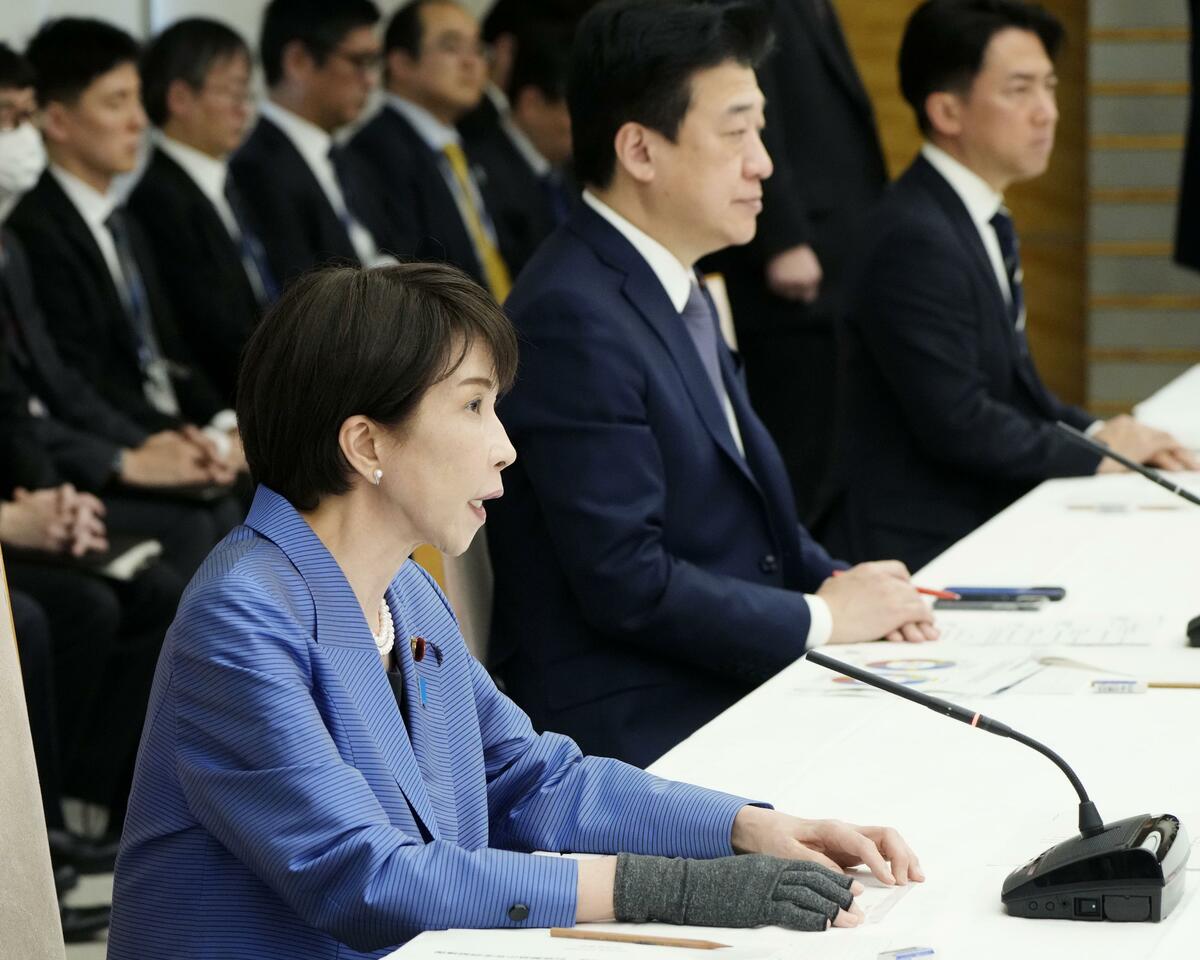
The government will continue to "make all necessary diplomatic efforts in close coordination with related countries" and try to "minimize the impact on economic activities," Prime Minister Sanae Takaichi said in the first meeting of Cabinet members in charge of measures to address the Middle East crisis.
 
https://www.asahi.com/ajw/articles/16413377

Koizumi to push warship, radar exports during S.E. Asia trip​

Defense Minister Shinjiro Koizumi plans to visit the Philippines and Indonesia in early May, where he is expected to discuss the expansion of security cooperation and defense equipment exports.

According to multiple Defense Ministry sources, Koizumi plans to travel to the two countries during the Golden Week holidays in May for talks with Philippine Defense Minister Gilberto Teodoro and Indonesian Defense Minister Sjafrie Sjamsoeddin.

The visits come as the Japanese government plans to revise, as early as April, the operational guidelines for the Three Principles on Transfer of Defense Equipment and Technology.

The revision will start with abolishing the five categories that limit the purpose of arms exports to rescue, transport, warning, surveillance and minesweeping.


Koizumi is expected to discuss Japan's defense equipment exports during the visits, with the abolishment of the five categories in mind.

The Philippines urgently needs to strengthen its naval power due to confrontations with China in the South China Sea.

The country has shown an interest in used Abukuma-class frigates from the Maritime Self-Defense Force, and it is expected that discussions on their export will accelerate during the talks.

Japan has already exported air surveillance radar systems to the Philippines and is also arranging to export a system for information processing and command and control.

Indonesia has also reportedly shown an interest in used Japanese submarines.

Separately, Koizumi is arranging a trip to Melbourne, Australia, in mid-April for talks with Richard Marles, the Australian deputy prime minister and defense minister.

A contract is expected to be signed by the end of March for an enhanced version of the MSDF Mogami-class frigate, which was selected for the Royal Australian Navy's new ship acquisition plan.

The two ministers are also expected to discuss a maintenance and servicing framework for the frigates.
 
A sizeable investment in the AI sector.


Microsoft said Friday it will invest $10 billion in Japan over the next four years to build artificial intelligence data centres and related infrastructure.
 

A Pakistani national has been arrested on suspicion of smuggling stimulant drugs with an estimated street value of 14.3 billion yen, or 90 million dollars, from the United Arab Emirates to Tokyo Port.

Butt Shafqat Mushtaq, a 53-year-old used car dealer without a known address, is said to be denying the charge.

Tokyo police and other officials suspect him of smuggling 270 kilograms of stimulant drugs in a container from December 30, 2025, to January 1, 2026.

They say Tokyo Customs officials inspected the container after it was left unattended for three months and found the drugs in bags used for cosmetic products.
 
  • Like
Reactions: spice

Koizumi to push warship, radar exports during S.E. Asia trip​

Defense Minister Shinjiro Koizumi plans to visit the Philippines and Indonesia in early May, where he is expected to discuss the expansion of security cooperation and defense equipment exports.

According to multiple Defense Ministry sources, Koizumi plans to travel to the two countries during the Golden Week holidays in May for talks with Philippine Defense Minister Gilberto Teodoro and Indonesian Defense Minister Sjafrie Sjamsoeddin.

The visits come as the Japanese government plans to revise, as early as April, the operational guidelines for the Three Principles on Transfer of Defense Equipment and Technology.

In a major policy shift, Japan has abolished restrictions limiting military equipment transfers to five nonlethal categories, paving the way for the export of lethal weapons — a move that could help the country’s defense industry compete on the global stage.

Based on a proposal from the ruling coalition, the Cabinet of Prime Minister Sanae Takaichi approved the changes at a meeting on Tuesday, classifying defense equipment into two categories: “weapons,” or lethal systems such as warships, tanks and missiles, and “nonweapons,” or nonlethal equipment such as radars and protective gear.

Decisions on whether to export lethal weapons will be examined by the National Security Council, which includes the prime minister and relevant ministers, and be limited to countries that have defense equipment and tech transfer deals with Japan.

Tokyo currently maintains such arrangements with 17 nations, a number that government officials expect to grow.


While weapon exports to countries engaged in active armed conflicts will, in principle, be prohibited, the new policy includes a provision for “exceptional circumstances” based on Japan’s security needs. Notably, no such restrictions will apply to transfers of nonlethal equipment.

Chief Cabinet Secretary Minoru Kihara told a regular news conference Tuesday that the aim is to deepen cooperation with allies and like-minded partners and improve “sustained combat capabilities” in the event of an emergency.

“These decisions are intended to ensure Japan’s security and further contribute to the peace and stability of the region and the international community amid accelerating changes in the security environment surrounding our country,” the government’s top spokesman said.

“Today, no country can safeguard its own peace and security on its own.”

In a post to X Tuesday afternoon, Takaichi countered criticism that the eased rules represent a break from Japan’s postwar pacifism and its “exclusively defense-oriented policy.”

“There is absolutely no change in our commitment to upholding the path we have taken as a peaceful nation over the past 80 years since the end of the war, as well as our fundamental principles,” she wrote.

Government officials say they “intend to further solidify” Japan’s defense export plans as discussions ramp up on revising the country’s three strategic security documents by the year-end.

Intensifying geopolitical rivalries, Japan’s growing engagement in international defense-industrial projects and a winning bid to sell warships to Australia presented Takaichi with a unique opportunity to enact these changes, particularly after the bloc’s landslide election victory in February.

The revisions, which do not require parliamentary authorization, will also allow transfers of jointly developed weapons and systems to third countries following Cabinet approval. This would include the sale of the sixth-generation fighter aircraft Japan is developing alongside Britain and Italy under the Global Combat Air Program (GCAP).

The government did, however, announce plans to strengthen the monitoring of lethal weapons after export to prevent their diversion to other countries.

In the event inspections are deemed necessary, the revised guidelines also allow for on-site probes in recipient nations.

“We intend to verify the status of weapons’ management and maintenance measures, as well as procedures for handling the loss of weapons,” a senior Cabinet official said. “If possible, we plan to send staff from Tokyo to visit the sites in person to conduct these checks.”

At Tuesday’s news conference, Kihara responded to questions about the effectiveness of these safeguards by saying that the arms transfers “will be subject to even stricter case-by-case scrutiny.”

“We will ensure the implementation of these measures for strict review and proper management, and we intend to explain the necessity and significance of these reforms to the public more thoroughly than ever before,” he said.

Separate from the guideline revisions, the government also plans to create a “control tower” framework overseen by high-level bureaucrats from the National Security Council as well as several ministries and agencies.

Officials admitted, however, that the monitoring apparatus is something they only expect to take shape “gradually” as transfers proceed.

PS India is one of the 17 nations.

 
  • Informative
  • Like
Reactions: Shan and batman

Japan has ended long-standing restrictions on lethal weapons exports in one of its biggest defence policy changes since the Second World War. Tokyo can now approve overseas sales of missiles, destroyers, fighter jets and drones under new rules. Officials say the move will strengthen deterrence and help allies amid regional tensions involving China, North Korea and Russia. Japan also sees economic benefits for its defence industry and research sector. The Philippines and European partners have shown interest in cooperation, while Australia signed a major frigate deal. China criticised the decision, and domestic critics warned about Japan’s pacifist identity.
 

Ukraine’s Ambassador to Japan Yurii Lutovinov has said that Tokyo’s relaxation of its weapons export rules could open the door to future discussions on supplying military equipment to Ukraine.

In an interview with Reuters at the Ukrainian embassy, Lutovinov said, “This allows us to talk. Theoretically, it’s a very big step forward.”

The comments come after Japanese Prime Minister Sanae Takaichi moved last week to ease export restrictions, marking another shift away from Japan’s postwar pacifist stance.

The decision has drawn attention as ongoing conflicts in Ukraine and the West Asia continue to strain Western defence production capacity.

While the revised policy maintains limits on exports to active conflict zones, it introduces exceptions tied to Japan’s security interests — provisions that Ukraine hopes could eventually support its defence needs.