

ISRO's engines : Designs , Components & Prototypes.
- Thread starter Gautam
- Start date
You are using an out of date browser. It may not display this or other websites correctly.
You should upgrade or use an alternative browser.
You should upgrade or use an alternative browser.


ISRO’s ‘Bahubali’ draws big industry interest as L&T, Adani, others eye rocket technology - The Economic Times
Larsen & Toubro, JSW, Adani Group and Mahindra are among companies considering bids to manufacture and operate ISRO’s LVM3 heavy-lift rocket. The technology-transfer programme is part of ISRO’s push to shift routine launches to private industry. The move comes as global launch demand grows and...
Larsen & Toubro, JSW, Adani Group and Mahindra are among at least half a dozen home-grown companies or consortiums looking to partner the Indian Space Research Organisation (ISRO) on its heavy-lift launch vehicle mark-3 (LVM3), also known as Bahubali, said people aware of the matter.
These private entities are considering plans to submit expressions of interest (EoIs) for technology transfer from ISRO to manufacture and operate LVM3, the people told ET.
Those interested include an alliance between JSW and startup Ethereal Exploration Guild (EtherealX), a consortium led by Nagpur-based Solar Industries, Bharat Forge and Inox India, the people said.
For Inox India, a maker of cryogenic and propellant-handling equipment, a new aerospace certification would allow it to bid for in-flight equipment, including “propellant tanks, which are part of the rocket,” said chief executive Deepak Acharya on a recent earnings call. He termed the EoI for LVM3 manufacturing as a potential opportunity for Inox.
The selected company or consortium will have 42 months, or two realised launch vehicles, to complete the technology-transfer process. It will initially work with ISRO and IN-SPACe to absorb the technology before establishing the necessary infrastructure to independently manufacture LVM3 systems and subsystems.
These private entities are considering plans to submit expressions of interest (EoIs) for technology transfer from ISRO to manufacture and operate LVM3, the people told ET.
Those interested include an alliance between JSW and startup Ethereal Exploration Guild (EtherealX), a consortium led by Nagpur-based Solar Industries, Bharat Forge and Inox India, the people said.
For Inox India, a maker of cryogenic and propellant-handling equipment, a new aerospace certification would allow it to bid for in-flight equipment, including “propellant tanks, which are part of the rocket,” said chief executive Deepak Acharya on a recent earnings call. He termed the EoI for LVM3 manufacturing as a potential opportunity for Inox.
The selected company or consortium will have 42 months, or two realised launch vehicles, to complete the technology-transfer process. It will initially work with ISRO and IN-SPACe to absorb the technology before establishing the necessary infrastructure to independently manufacture LVM3 systems and subsystems.


ISRO successfully conducts hot test of Semicryogenic Engine Power Head Test Article at full thrust level
ISRO successfully conducts hot test of Semicryogenic Engine Power Head Test Article at full thrust level
www.isro.gov.in
Indian Space Research Organisation (ISRO) demonstrated successful hot test of the Semi-Cryogenic Engine Power Head Test Article (PHTA) at full thrust level of 200Tonne at the ISRO Propulsion Research Complex (IPRC), Mahendragiri, Tamil Nadu on September 05, 2026. The Power Head Test Article (PHTA) encompasses all engine systems except thrust chamber. This is the 9th test in a series of hot tests using the PHTA. This is the first time that the PHTA is tested at 100% or full thrust level i.e. 200 tonnes. Previously, the tests were conducted at 47% (94 tonnes), 60% (120 tonnes) and 88% (175 tonnes) thrust levels successfully.
The test proceeded as predicted and all the engine parameters were as expected. The test duration was 35 seconds including operation of the engine powerhead at 200 tonne (100%) thrust level for a duration of 5 seconds. The switch over of propellant supply from a low pressure start tank to medium pressure run tank was also validated in order to enable long duration testing of PHTA in subsequent hot tests.
The Semi-Cryogenic Propulsion Stage (SC120), powered by the 2000 kN-class SE2000 engine, is being developed to replace the current L110 core stage of the LVM3 launch vehicle. The integration of the Semicryogenic stage along with the uprated cryogenic upper stage (C32) will enhance the LVM3 payload capability.
The test proceeded as predicted and all the engine parameters were as expected. The test duration was 35 seconds including operation of the engine powerhead at 200 tonne (100%) thrust level for a duration of 5 seconds. The switch over of propellant supply from a low pressure start tank to medium pressure run tank was also validated in order to enable long duration testing of PHTA in subsequent hot tests.
The Semi-Cryogenic Propulsion Stage (SC120), powered by the 2000 kN-class SE2000 engine, is being developed to replace the current L110 core stage of the LVM3 launch vehicle. The integration of the Semicryogenic stage along with the uprated cryogenic upper stage (C32) will enhance the LVM3 payload capability.

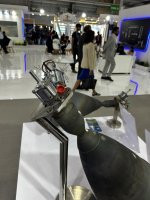
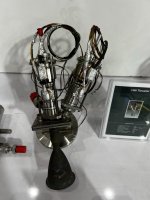
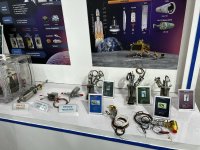
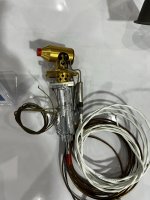
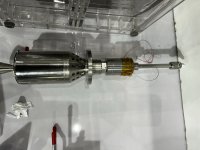
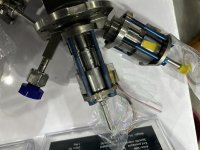
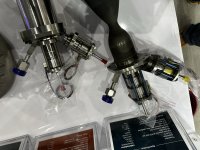
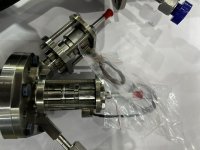
The nozzle extension on this engine (the black part) will likely use a Carbon-Carbon composite. The advantage of this type of nozzle is lower weight, easier re-furbishing for re-use etc.Enhanced image of the LME-110:
View attachment 53889
This tech will probably be seen in all future ISRO engines. SCE-200 is a legacy Soviet/Russian design, so it retains the metallic nozzle. That might change in the future.
This tech was prototyped & tested with the L-2.5 engine used on the 4th stage of PSLV. That prototype C-C nozzle managed to reduce the weight by 67% compared to the older metallic nozzle. This alone had increased the PSLV's payload capacity by 15 kgs.
ISRO Develops Lightweight Carbon-Carbon Nozzle for Rocket Engines, Enhancing Payload Capacity
April 15, 2024
View attachment 33034
ISRO has achieved a breakthrough in rocket engine technology with the development of a lightweight Carbon-Carbon (C-C) nozzle for rocket engines. This innovation accomplished by Vikram Sarabhai Space Centre (VSSC) promises to enhance the vital parameters of rocket engines, including thrust levels, specific impulse, and thrust-to-weight ratios, thereby boosting the payload capacity of launch vehicles.
VSSC, continuing its pioneering work in space research, has leveraged advanced materials like Carbon-Carbon (C-C) Composites to create a nozzle divergent that offers exceptional properties. By utilizing processes such as carbonization of green composites, Chemical Vapor Infiltration, and High-Temperature Treatment, it has produced a nozzle with low density, high specific strength, and excellent stiffness, capable of retaining mechanical properties even at elevated temperatures.
View attachment 33036
A key feature of the C-C nozzle is its special anti-oxidation coating of Silicon Carbide, which extends its operational limits in oxidizing environments. This innovation not only reduces thermally induced stresses but also enhances corrosion resistance, allowing for extended operational temperature limits in hostile environments.
The potential impact of this development is significant, particularly for the Indian Space Research Organization (ISRO)'s workhorse launcher, the Polar Satellite Launch Vehicle (PSLV). The PS4, the fourth stage of the PSLV, currently employs twin engines with nozzles made from Columbium alloy. However, by replacing these metallic divergent nozzles with C-C counterparts, a mass reduction of approximately 67% can be achieved. This substitution is projected to increase the payload capability of the PSLV by 15 kg, a notable enhancement for space missions.
View attachment 33035
The successful testing of the C-C nozzle divergent marked a major milestone for ISRO. On March 19, 2024, a 60-second hot test was conducted at the High-Altitude Test (HAT) facility in ISRO Propulsion Complex (IPRC), Mahendragiri, confirming the system's performance and hardware integrity. Subsequent tests, including a 200-second hot test on April 2, 2024, further validated the nozzle's capabilities, with temperatures reaching 1216K, matching predictions.
The collaborative effort involved the Liquid Propulsion Systems Centre (LPSC) at Valiamala which designed and configured the tested at IPRC, Mahendragiri which conducted the instrumentation and execution of the tests at their HAT facility.
Video:
View attachment 33033
ISRO Develops Lightweight Carbon-Carbon Nozzle for Rocket Engines, Enhancing Payload Capacity

Enhanced image of the LME-110:
View attachment 53889
Development of LOX-Methane engine in ISRO
October 16, 2026
Liquid propulsion activities in ISRO had a humble beginning with development and delivery of small thrusters for SLV-3 and Secondary Injection Thrust Vector Control (SITVC) systems and later delivery of similar control system for ASLV. A quantum jump in liquid propulsion came through the collaborative development of the 800kN Vikas engine for PSLV, which is today the workhorse liquid engine of ISRO used in PSLV, GSLV & LVM3. Subsequently, India mastered the much-coveted Cryogenic propulsion by developing indigenous cryogenic engines & stages for the GSLV and LVM3 launch vehicles, thereby making the nation self-reliant in launching communication satellites. Similarly, on the satellite front, ISRO started with the development & delivery of monopropellant thrusters, moved on to bi-propellant Liquid Apogee Motors (LAM) needed for the INSAT communication satellites. ISRO has also developed throttle-able propulsion systems for Chandrayaan-3 lander mission that enabled the nation to be the first to land a spacecraft near the south pole of the Moon.
Globally, liquid propulsion systems have witnessed a shift towards LOX-Methane engines, considering the clean combustion, low maintenance (useful for reusability) and the ability to be synthesized on Mars from CO2 and water ice (useful for future Mars missions and human colonization). In this context, ISRO has also identified LOX-Methane engines as the primary propulsion systems for its Next Generation Launch Vehicle (NGLV) and also the future heavy lift launch vehicle required for the Indian crewed lunar landing mission targeted for 2040.
Considering the potential of LOX-Methane propulsion systems in future launch vehicles, ISRO initiated development activities in this area in 2019, to understand critical aspects of liquid oxygen–liquid methane (LOX-methane) propellants combination on engine operation. A a 20-ton thrust technology demonstrator engine (designated as LM20-TD engine) was developed & tested using the existing CE-20 LOX/LH2 cryogenic engine subsystems during the 2019-2020 timeframe. Suitable modifications were carried out in the propellant flow control system and the engine start-up system of CE20 engine to convert the engine to the demonstrator engine. The demonstrator engine operated on the gas generator cycle with major subsystems including Thrust Chamber, fuel rich gas generator, Fuel Turbopump, LOX Turbopump, Igniter, Start-up system, Control components, Flow control elements, mixture ratio control valve with electric drive. The design adequacy of all subsystems was assessed through theoretical analysis prior to the development tests. Test sequence was derived using an in-house developed mathematical model.
The existing cryogenic engine test facility at IPRC was augmented for the purpose of testing the LM20 demonstrator engine and one cold flow test and five hot tests were carried out successfully. With the data obtained from these tests, vital inputs were derived on chill down characteristics, thrust chamber and gas generator ignition, engine starting, combustion and rotor-dynamic systems performance for a LOX- Methane engine.
The inputs derived from the Technology Demonstrator engine have been gainfully utilized in the design of LOX-Methane engine that is under development in ISRO.
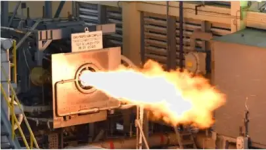
Hot test of Technology Demonstrator Engine (LM20-TD) at IPRC
In 2023, ISRO formally initiated the development of key technologies for a 1100kN LOX-Methane engine (LME1100), that focused on the development & validation of key technologies leading to the different subsystems of the engine viz. turbopumps, igniter, gas generator and thrust chamber.
LME1100 engine is designed as a Gas Generator Cycle (GGC) based engine where the design is optimized for industry friendliness and cost effectiveness. With the active involvement of industrial partners across the nation, more than 70% of the LME1100 engine components have been realized through Additive Manufacturing.
The Gas Generator (GG) is realized through additive manufacturing and is under qualification tests at IPRC. The sub-scale version was subjected to extensive testing at lab level to derive the ignition sequence using the spark torch igniter and to characterize the additively manufactured injector elements during ignition. The first ignition test of the full-scale Gas Generator was successfully carried out on October 9, 2026 and a series of similar tests are planned to evaluate the performance under different conditions.
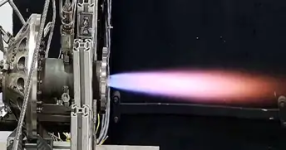
Sub-scale GG Hot Test
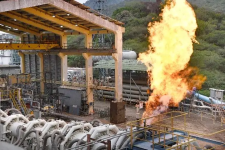
Full scale GG Cold Flow Test
Sub-scale thrust chamber hot test campaign was also carried out. The test series was used to demonstrate the novel realization techniques planned to be eventually adopted in the full scale thrust chamber. The hot test campaign was also used to characterize the injector elements designed for LME1100 thrust chamber in actual operating conditions for varying design and operating parameters. The hot test campaign carried out at IPRC not only helped in finalizing the optimal injector configuration, but also helped in demonstrating the working of oxidizer rich and fuel rich spark torch igniters.
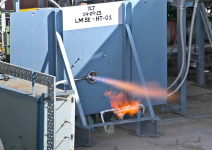
Sub-scale thrust chamber hot test
The LOX and Methane turbo-pump systems are also realized through various industries across the nation and the hardware are under different levels of sub-system testing at LPSC and IPRC. The 3D printed LOX pump impeller was subjected to spin test up to the rated operating speed at LPSC. Dynamic sealing systems and turbo-pump bearings have also been realized through Indian industries and are under qualification testing at LPSC and IPRC. Cold flow characterization of the integrated turbo-pump systems are under progress at IPRC.
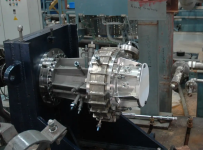
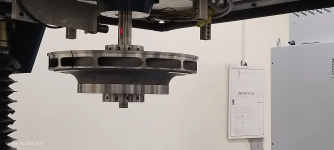
LOX Turbo pump at cold flow test facility and spin test facility
The sub-system testing activities were initiated with the ignition trials and extensive testing of the GOX-GCH4 based spark torch igniter. Both oxidizer rich and fuel rich versions of spark torch igniters were developed and tested successfully. Alternatively, an igniter using a semiconductor-based spark plug was also developed by LPSC along with VSSC and the Indian Institute of Space Science & Technology (IIST). Laser based ignition system has also been developed at LPSC and has been successfully demonstrated in igniting GOX-GH2 and GOX-GCH4 propellant combinations.
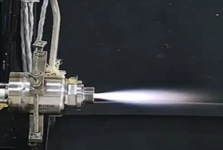
Spark torch igniter hot tests
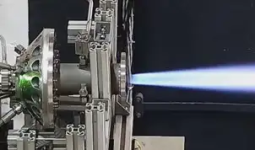
Laser igniter hot test
The integrated LME1100 engine is targeted to be ready by the middle of next year and will be subjected to a series of hot tests to qualify the same for the prescribed operating conditions including different thrust throttling profiles. Concurrently, the design activities towards the development of a 2400kN LOX-Methane engine are also completed, which is based on the Full Flow Staged Combustion Cycle (FFSCC). The 2400kN engine will enable the development of a future heavy lift human rated launch vehicle for crewed lunar landing missions.
Development of LOX-Methane engine in ISRO
The integrated LME1100 engine is targeted to be ready by the middle of next year and will be subjected to a series of hot tests to qualify the same for the prescribed operating conditions including different thrust throttling profiles. Concurrently, the design activities towards the development of a 2400kN LOX-Methane engine are also completed, which is based on the Full Flow Staged Combustion Cycle (FFSCC). The 2400kN engine will enable the development of a future heavy lift human rated launch vehicle for crewed lunar landing missions.


I mean they were quite clear about this lol, the 240T engine has been in the pipeline for a early 2030s launch for quite a while. What i really want is a public private coop btw ISRO and astrobase for their FFSC tech and validation.
I thought they had a staged development plan. So, they will work on the LME-20, then the LME-110 & then on the LME-240/LME-300. Each stage will overcome some hurdles.I mean they were quite clear about this lol, the 240T engine has been in the pipeline for a early 2030s launch for quite a while.
LME-20: Open cycle engine, derived from the CE-20. Will provide data on ignition procedures, combustion & pressure dynamics etc.
LME-110: Scaled up open cycle engine. Will incorporate 3D printed powerhead & heat exchangers. Will provide data on manufacturability, throttle-ability, combustion stability, restartability, engine refurbishment etc.
LME-240: FFSC cycle. Will incorporate the lessons from the previous engines. Will prove out the new complex cycle.
They seem to be running the development parallelly. I mean it is a good plan & it will save time. I hope they have the manpower & budget for this.
Some people on twitter seem to believe the NGLV & LMLV are separate programs. NGLV will use the LME-110 & the LME-240/300 will be reserved for the LMLV.
I think these two programs have merged, NGLV will be the core alone variant & the LMLV will have 3 core boosters. NGLV will be a heavy lift class LV & the LMLV will be a super-heavy class. I believe the fact the ISRO is pushing the LME-240 is evidence of this merger.
Agreed.What i really want is a public private coop btw ISRO and astrobase for their FFSC tech and validation.