

ISRO's engines : Designs , Components & Prototypes.
- Thread starter Gautam
- Start date
You are using an out of date browser. It may not display this or other websites correctly.
You should upgrade or use an alternative browser.
You should upgrade or use an alternative browser.
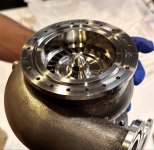
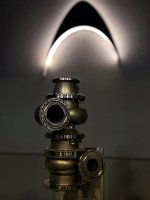
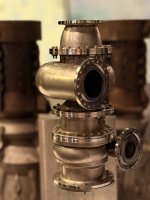

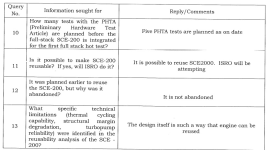

so will this become the 2nd stage engine on the NGLV or will the LME 2400 be based of this ? because the i thought it was confirmed that the LME 1100 would be our engine for the NGLV ?
Yeah LME-2400 will probably be based on the SCE-200. It will probably use the same engine cycle & borrow many components directly from the SCE.so will this become the 2nd stage engine on the NGLV or will the LME 2400 be based of this ?
That was before the NGLV & the LMLV was effectively merged. Now it seems the LME-110 will be used to prove out pre-burner & main burner ignition hydrodynamics, pre-burner staging, mixture ratios etc.because the i thought it was confirmed that the LME 1100 would be our engine for the NGLV ?
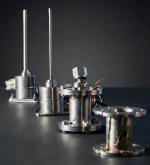

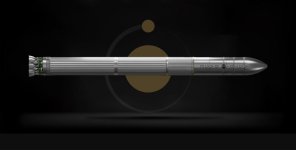
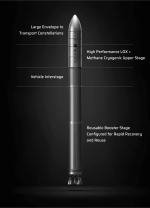
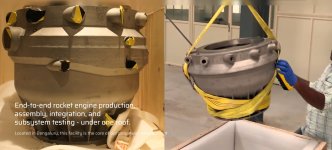
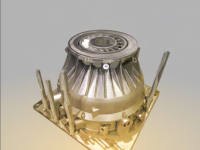
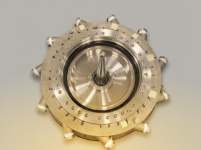

Insane stuff, really hope they succeed and get a lot of support from both ISRO and the gov.

considering the fact that they just started, it will improve with time and experienceFinishing is not good.

Private startups want to do serious volume. I hope they succeed:
ISRO conducts testing of sub-scale thrust chamber for LOX-Methane Engine
January 27, 2026
ISRO is developing a LOX-Methane engine for induction in the next generation of launch vehicles, and the development of the essential engine subsystems is progressing at the Liquid Propulsion Systems Centre of ISRO. The testing of these subsystems at a smaller scale (sub-scale) has commenced. An optimally designed thrust chamber with injector head is key to the success of any cryogenic engine. ISRO has successfully conducted the first hot test of the high thrust LOX-Methane Engine at thrust chamber level with a single element injector.
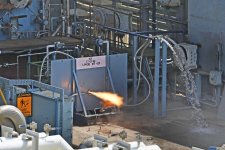
The test was conducted at the Thrust Chamber Test facility at ISRO Propulsion Complex (IPRC), Mahendragiri on January 27, 2026. The sub-scale thrust chamber and single element injector head were successfully tested to a chamber pressure of 56 bar. The sub-scale thrust chamber and single element injector head were realized through additive manufacturing route. Ignition and flame sustenance inside the thrust chamber were achieved and performance of all systems were normal.
The test article will be further used to select the optimal injector configuration through a series of further hot tests.
ISRO conducts testing of sub-scale thrust chamber for LOX-Methane Engine
January 27, 2026
ISRO is developing a LOX-Methane engine for induction in the next generation of launch vehicles, and the development of the essential engine subsystems is progressing at the Liquid Propulsion Systems Centre of ISRO. The testing of these subsystems at a smaller scale (sub-scale) has commenced. An optimally designed thrust chamber with injector head is key to the success of any cryogenic engine. ISRO has successfully conducted the first hot test of the high thrust LOX-Methane Engine at thrust chamber level with a single element injector.
The test was conducted at the Thrust Chamber Test facility at ISRO Propulsion Complex (IPRC), Mahendragiri on January 27, 2026. The sub-scale thrust chamber and single element injector head were successfully tested to a chamber pressure of 56 bar. The sub-scale thrust chamber and single element injector head were realized through additive manufacturing route. Ignition and flame sustenance inside the thrust chamber were achieved and performance of all systems were normal.
The test article will be further used to select the optimal injector configuration through a series of further hot tests.
LMSE HT-03 Hot Test Flame
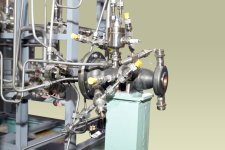
3D Printed Single Element Thrust Chamber
ISRO conducts testing of sub-scale thrust chamber for LOX-Methane Engine
Private startups want to do serious volume. I hope they succeed:
ISRO conducts sea level test of cryogenic engine at 22 tonne thrust level with full area nozzle
Sea-level static testing of rocket propulsion stages conducted at ISRO test facilities.
www.isro.gov.in
March 12, 2026
ISRO successfully conducted a sea level hot test of its Cryogenic engine (CE20) at 22 tonne thrust using nozzle protection system and multi-element igniter, on March 10, 2026 at ISRO Propulsion Complex, Mahendragiri. Earlier, the sea level tests utilizing nozzle protection system was being carried out at 19 tonne thrust level.
The CE20 cryogenic engine powers the upper cryogenic stage of LVM3 launch vehicle. In order to enhance the payload capability of the LVM3 vehicle, future missions of LVM3 are planned to be operated with an uprated C32 stage with 22 tonne thrust for the CE20 engine. In view of this, the flight acceptance test of the CE20 engine also needs to be conducted at 22 tonne thrust level. Therefore, the present test qualified the sea level testing of the engine with a test duration of 165 seconds at 22t thrust level using the Nozzle Protection System (NPS). The performance of the engine as well as the test facility was as expected during the entire test duration.
Testing the CE20 engine at sea-level possess considerable challenges primarily due to high area ratio nozzle, which has an exit pressure of ~50 mbar. Main concern during testing at sea-level include flow separation inside the nozzle, which leads to severe vibrations & thermal problems at the flow separation plane leading to possible mechanical damage of the nozzle.
The Cryogenic engine utilized for this test has undergone a record maximum number of hot tests (20 No.s) successfully, that has enabled the demonstration of several key technologies using a single engine such as engine ignition using multi element igniter, ignition margin demonstration for Gaganyaan over a wide range of propellants tank pressure and pre-ignition chamber pressure, engine qualification for Gaganyaan at 20 tonne thrust level, demonstration & qualification of 22tonne thrust level operation, boot-strap mode starting of CE20 engine without start-up system for enabling re-start in flight, indigenous turbopumps bearings qualification, indigenous sensor qualification and Nozzle Protection System qualification for high area ratio nozzle hot test at sea level
The CE20 cryogenic engine powers the upper cryogenic stage of LVM3 launch vehicle. In order to enhance the payload capability of the LVM3 vehicle, future missions of LVM3 are planned to be operated with an uprated C32 stage with 22 tonne thrust for the CE20 engine. In view of this, the flight acceptance test of the CE20 engine also needs to be conducted at 22 tonne thrust level. Therefore, the present test qualified the sea level testing of the engine with a test duration of 165 seconds at 22t thrust level using the Nozzle Protection System (NPS). The performance of the engine as well as the test facility was as expected during the entire test duration.
Testing the CE20 engine at sea-level possess considerable challenges primarily due to high area ratio nozzle, which has an exit pressure of ~50 mbar. Main concern during testing at sea-level include flow separation inside the nozzle, which leads to severe vibrations & thermal problems at the flow separation plane leading to possible mechanical damage of the nozzle.
The Cryogenic engine utilized for this test has undergone a record maximum number of hot tests (20 No.s) successfully, that has enabled the demonstration of several key technologies using a single engine such as engine ignition using multi element igniter, ignition margin demonstration for Gaganyaan over a wide range of propellants tank pressure and pre-ignition chamber pressure, engine qualification for Gaganyaan at 20 tonne thrust level, demonstration & qualification of 22tonne thrust level operation, boot-strap mode starting of CE20 engine without start-up system for enabling re-start in flight, indigenous turbopumps bearings qualification, indigenous sensor qualification and Nozzle Protection System qualification for high area ratio nozzle hot test at sea level
