

Indo-Pacific : News & Discussion
- Thread starter dray
- Start date
You are using an out of date browser. It may not display this or other websites correctly.
You should upgrade or use an alternative browser.
You should upgrade or use an alternative browser.


aukus to invade GuadalcanalSalomon Islands: 3,2,1…


The Great Game is on . There won't be any invasion but a coup can't be ruled out . This is where China will see herself constrained . Unlike the US , she has no real allies in the world except N Korea & Pakistan & both of them are more of nuisance value & liabilities instead of assets .aukus to invadeGuadalcanalSalomon Islands: 3,2,1…

Yep. Malaita, the most populated island of the archipelago, has been considering secession since 2019, due to the pro-Chinese policy of the central government. The US have a project to build a port there (at Bina).The Great Game is on . There won't be any invasion but a coup can't be ruled out . This is where China will see herself constrained . Unlike the US , she has no real allies in the world except N Korea & Pakistan & both of them are more of nuisance value & liabilities instead of assets .
EastAsiaForum, apr.06
Yet unlike the 2021 interim strategy that conceded the need to ‘chart a new course’, the document does not signal a significant break from the past. It was not lost on the Pacific audience that the visitors had come directly from a meeting of the Quad, a regional grouping whose entire rationale is to curb rising Chinese influence. The leaders may have wondered if Washington’s seemingly uncompromising desire to preserve US regional hegemony might ultimately prove incompatible with Blinken’s assurance that they alone will be able to choose ‘who they partner with’.
Blinken’s team understands that Pacific leaders are unlikely to be swayed by attempts to frame China purely as a bad actor, since their interactions have been generally positive. They also regard climate change, not China, as their primary security threat. Nor are the leaders necessarily impressed by appeals to shared values, since not all US partners are shining examples of liberal democracy. The emphasis on human rights and a ‘rules-based order’ also rings hollow in the wake of failed wars in Iraq and Afghanistan, drone strikes of dubious legality and the continued operation of the Guantanamo Bay offshore prison facility.
Perhaps the most striking example of US hypocrisy in a region of self-described large ocean states is regular US criticism of China for violating the UN Convention on the Law of the Sea, when Washington itself has never ratified this UN convention.
Despite these reservations, the US pitch in Fiji was welcomed because it highlighted issues of immediate concern to island leaders, such as climate change, illegal fishing and the impacts of the COVID-19 pandemic. But the question was whether the United States could follow through on its commitments, given inconsistency on climate change policy, as well as the episodic and fleeting nature of high-level US attention. They remember the lack of follow-up to Secretary of State Hillary Clinton’s participation in the 2012 Pacific Islands Forum in the Cook Islands, as well as the Obama administration’s largely vacuous Asia Pacific pivot.
Moreover, significant bilateral issues dating back more than a half century remain unresolved. These include unexploded American ordnance from World War II, and the troubling health and environmental legacies of nuclear testing in the Marshall Islands.
While US officials downplay the China threat with Pacific leaders, they take the opposite tack in Washington. US National Security Council staff recognise that raising the Pacific’s profile domestically in order to mobilise resources requires emphasising competition with China as a zero-sum challenge to US global power.
One danger of such tactics is that they become self-fulfilling, dimming the prospects for much needed cooperation with China on issues of particular concern in Oceania, including climate change, nuclear proliferation and pandemic response. Even with such overt strategic framing of competition with China, the bitterly divided US Congress has yet to act on major legislation, including Biden’s Build Back Better initiative, and the Ensuring American Global Leadership and Engagement (EAGLE) Act, designed to bolster US economic, technological and diplomatic assets.
In addition, despite promises of an expanded Peace Corps presence, infrastructure development and enhanced educational opportunities for students, the Biden administration still has little to show for its Pacific Initiatives.
Perhaps most significant is the stalled progress on renewing the economic provisions of US compacts of free association with the Marshall Islands, Federated States of Micronesia and Palau. Due to expire in 2023 (2024 for Palau), the compacts are described in the Indo-Pacific Strategy as ‘the bedrock of the US role in the Pacific’. Insiders blame the impasse on the difficulty of focusing the many federal agencies involved, the lack of Pacific expertise in US government bureaucracy, as well as COVID-19 related travel restrictions.
The administration recognises that establishing a better on the ground presence in the region is essential for improved relations and seeks to open as many as four new embassies starting in Solomon Islands. A lesson for the United States suggested by New Zealand’s diplomatic missions is that a small representational footprint with skilful soft power diplomacy may be more effective than fortress-like mega-embassies. Pending the deployment of additional resources, the United States remains only superficially engaged in the South Pacific.
The polite scepticism with which Pacific leaders may have listened to Mr Blinken might not stem from the inherent contradictions of the US position, any impulse to see the United States falter, or their own desire to interact with China. Rather, it is likely grounded in a clear-eyed understanding of the challenges a lumbering empire faces as it attempts to revitalise its own economy, democracy and regional alliances in order to extend what has been described as its exceptional ‘unipolar moment’.
Domestic gridlock and attention to developments in Europe will undoubtedly continue to frustrate the administration’s ability to progress its Indo-Pacific agenda. Perhaps more important is the need to skilfully navigate the uncomfortable reality of China’s increasing regional clout, bearing in mind the reluctance of the Pacific Islands and other countries in the region to become entangled in escalating geopolitical competition.
Terence Wesley-Smith is the former director of the Center for Pacific Islands Studies at the University of Hawai‘i at Manoa.
Gerard A Finin is the former director of the Pacific Islands Development Program at the East–West Center, Hawai‘i, and is currently affiliated with the Centre for Australian, New Zealand, and Pacific Studies at Georgetown University.

 www.eastasiaforum.org
Pacific leaders may be sceptical of US engagement
US Secretary of State Antony Blinken’s 12 February 2022 visit to Fiji for a virtual summit with Pacific leaders occurred shortly after the White House released its new Indo-Pacific Strategy. Blinken made no mention of China in his public comments, and, to its credit, the strategy minimises China-bashing to focus on a positive vision for the region under continued US stewardship.Yet unlike the 2021 interim strategy that conceded the need to ‘chart a new course’, the document does not signal a significant break from the past. It was not lost on the Pacific audience that the visitors had come directly from a meeting of the Quad, a regional grouping whose entire rationale is to curb rising Chinese influence. The leaders may have wondered if Washington’s seemingly uncompromising desire to preserve US regional hegemony might ultimately prove incompatible with Blinken’s assurance that they alone will be able to choose ‘who they partner with’.
Blinken’s team understands that Pacific leaders are unlikely to be swayed by attempts to frame China purely as a bad actor, since their interactions have been generally positive. They also regard climate change, not China, as their primary security threat. Nor are the leaders necessarily impressed by appeals to shared values, since not all US partners are shining examples of liberal democracy. The emphasis on human rights and a ‘rules-based order’ also rings hollow in the wake of failed wars in Iraq and Afghanistan, drone strikes of dubious legality and the continued operation of the Guantanamo Bay offshore prison facility.
Perhaps the most striking example of US hypocrisy in a region of self-described large ocean states is regular US criticism of China for violating the UN Convention on the Law of the Sea, when Washington itself has never ratified this UN convention.
Despite these reservations, the US pitch in Fiji was welcomed because it highlighted issues of immediate concern to island leaders, such as climate change, illegal fishing and the impacts of the COVID-19 pandemic. But the question was whether the United States could follow through on its commitments, given inconsistency on climate change policy, as well as the episodic and fleeting nature of high-level US attention. They remember the lack of follow-up to Secretary of State Hillary Clinton’s participation in the 2012 Pacific Islands Forum in the Cook Islands, as well as the Obama administration’s largely vacuous Asia Pacific pivot.
Moreover, significant bilateral issues dating back more than a half century remain unresolved. These include unexploded American ordnance from World War II, and the troubling health and environmental legacies of nuclear testing in the Marshall Islands.
While US officials downplay the China threat with Pacific leaders, they take the opposite tack in Washington. US National Security Council staff recognise that raising the Pacific’s profile domestically in order to mobilise resources requires emphasising competition with China as a zero-sum challenge to US global power.
One danger of such tactics is that they become self-fulfilling, dimming the prospects for much needed cooperation with China on issues of particular concern in Oceania, including climate change, nuclear proliferation and pandemic response. Even with such overt strategic framing of competition with China, the bitterly divided US Congress has yet to act on major legislation, including Biden’s Build Back Better initiative, and the Ensuring American Global Leadership and Engagement (EAGLE) Act, designed to bolster US economic, technological and diplomatic assets.
In addition, despite promises of an expanded Peace Corps presence, infrastructure development and enhanced educational opportunities for students, the Biden administration still has little to show for its Pacific Initiatives.
Perhaps most significant is the stalled progress on renewing the economic provisions of US compacts of free association with the Marshall Islands, Federated States of Micronesia and Palau. Due to expire in 2023 (2024 for Palau), the compacts are described in the Indo-Pacific Strategy as ‘the bedrock of the US role in the Pacific’. Insiders blame the impasse on the difficulty of focusing the many federal agencies involved, the lack of Pacific expertise in US government bureaucracy, as well as COVID-19 related travel restrictions.
The administration recognises that establishing a better on the ground presence in the region is essential for improved relations and seeks to open as many as four new embassies starting in Solomon Islands. A lesson for the United States suggested by New Zealand’s diplomatic missions is that a small representational footprint with skilful soft power diplomacy may be more effective than fortress-like mega-embassies. Pending the deployment of additional resources, the United States remains only superficially engaged in the South Pacific.
The polite scepticism with which Pacific leaders may have listened to Mr Blinken might not stem from the inherent contradictions of the US position, any impulse to see the United States falter, or their own desire to interact with China. Rather, it is likely grounded in a clear-eyed understanding of the challenges a lumbering empire faces as it attempts to revitalise its own economy, democracy and regional alliances in order to extend what has been described as its exceptional ‘unipolar moment’.
Domestic gridlock and attention to developments in Europe will undoubtedly continue to frustrate the administration’s ability to progress its Indo-Pacific agenda. Perhaps more important is the need to skilfully navigate the uncomfortable reality of China’s increasing regional clout, bearing in mind the reluctance of the Pacific Islands and other countries in the region to become entangled in escalating geopolitical competition.
Terence Wesley-Smith is the former director of the Center for Pacific Islands Studies at the University of Hawai‘i at Manoa.
Gerard A Finin is the former director of the Pacific Islands Development Program at the East–West Center, Hawai‘i, and is currently affiliated with the Centre for Australian, New Zealand, and Pacific Studies at Georgetown University.
Pacific leaders may be sceptical of US engagement | East Asia Forum
The United States will struggle to overcome domestic gridlock and scepticism among its regional partners in building its Pacific strategy, write Terence Wesley-Smith and Gerard Finin.
www.eastasiaforum.org
US leadership beginning with Irish Joe downwards was already compromised as far as China goes at the very top & since the war in Ukraine has been further compromised on the pretext of bringing China on board w.r.t Russia .EastAsiaForum, apr.06
Pacific leaders may be sceptical of US engagement
US Secretary of State Antony Blinken’s 12 February 2022 visit to Fiji for a virtual summit with Pacific leaders occurred shortly after the White House released its new Indo-Pacific Strategy. Blinken made no mention of China in his public comments, and, to its credit, the strategy minimises China-bashing to focus on a positive vision for the region under continued US stewardship.
Yet unlike the 2021 interim strategy that conceded the need to ‘chart a new course’, the document does not signal a significant break from the past. It was not lost on the Pacific audience that the visitors had come directly from a meeting of the Quad, a regional grouping whose entire rationale is to curb rising Chinese influence. The leaders may have wondered if Washington’s seemingly uncompromising desire to preserve US regional hegemony might ultimately prove incompatible with Blinken’s assurance that they alone will be able to choose ‘who they partner with’.
Blinken’s team understands that Pacific leaders are unlikely to be swayed by attempts to frame China purely as a bad actor, since their interactions have been generally positive. They also regard climate change, not China, as their primary security threat. Nor are the leaders necessarily impressed by appeals to shared values, since not all US partners are shining examples of liberal democracy. The emphasis on human rights and a ‘rules-based order’ also rings hollow in the wake of failed wars in Iraq and Afghanistan, drone strikes of dubious legality and the continued operation of the Guantanamo Bay offshore prison facility.
Perhaps the most striking example of US hypocrisy in a region of self-described large ocean states is regular US criticism of China for violating the UN Convention on the Law of the Sea, when Washington itself has never ratified this UN convention.
Despite these reservations, the US pitch in Fiji was welcomed because it highlighted issues of immediate concern to island leaders, such as climate change, illegal fishing and the impacts of the COVID-19 pandemic. But the question was whether the United States could follow through on its commitments, given inconsistency on climate change policy, as well as the episodic and fleeting nature of high-level US attention. They remember the lack of follow-up to Secretary of State Hillary Clinton’s participation in the 2012 Pacific Islands Forum in the Cook Islands, as well as the Obama administration’s largely vacuous Asia Pacific pivot.
Moreover, significant bilateral issues dating back more than a half century remain unresolved. These include unexploded American ordnance from World War II, and the troubling health and environmental legacies of nuclear testing in the Marshall Islands.
While US officials downplay the China threat with Pacific leaders, they take the opposite tack in Washington. US National Security Council staff recognise that raising the Pacific’s profile domestically in order to mobilise resources requires emphasising competition with China as a zero-sum challenge to US global power.
One danger of such tactics is that they become self-fulfilling, dimming the prospects for much needed cooperation with China on issues of particular concern in Oceania, including climate change, nuclear proliferation and pandemic response. Even with such overt strategic framing of competition with China, the bitterly divided US Congress has yet to act on major legislation, including Biden’s Build Back Better initiative, and the Ensuring American Global Leadership and Engagement (EAGLE) Act, designed to bolster US economic, technological and diplomatic assets.
In addition, despite promises of an expanded Peace Corps presence, infrastructure development and enhanced educational opportunities for students, the Biden administration still has little to show for its Pacific Initiatives.
Perhaps most significant is the stalled progress on renewing the economic provisions of US compacts of free association with the Marshall Islands, Federated States of Micronesia and Palau. Due to expire in 2023 (2024 for Palau), the compacts are described in the Indo-Pacific Strategy as ‘the bedrock of the US role in the Pacific’. Insiders blame the impasse on the difficulty of focusing the many federal agencies involved, the lack of Pacific expertise in US government bureaucracy, as well as COVID-19 related travel restrictions.
The administration recognises that establishing a better on the ground presence in the region is essential for improved relations and seeks to open as many as four new embassies starting in Solomon Islands. A lesson for the United States suggested by New Zealand’s diplomatic missions is that a small representational footprint with skilful soft power diplomacy may be more effective than fortress-like mega-embassies. Pending the deployment of additional resources, the United States remains only superficially engaged in the South Pacific.
The polite scepticism with which Pacific leaders may have listened to Mr Blinken might not stem from the inherent contradictions of the US position, any impulse to see the United States falter, or their own desire to interact with China. Rather, it is likely grounded in a clear-eyed understanding of the challenges a lumbering empire faces as it attempts to revitalise its own economy, democracy and regional alliances in order to extend what has been described as its exceptional ‘unipolar moment’.
Domestic gridlock and attention to developments in Europe will undoubtedly continue to frustrate the administration’s ability to progress its Indo-Pacific agenda. Perhaps more important is the need to skilfully navigate the uncomfortable reality of China’s increasing regional clout, bearing in mind the reluctance of the Pacific Islands and other countries in the region to become entangled in escalating geopolitical competition.
Terence Wesley-Smith is the former director of the Center for Pacific Islands Studies at the University of Hawai‘i at Manoa.
Gerard A Finin is the former director of the Pacific Islands Development Program at the East–West Center, Hawai‘i, and is currently affiliated with the Centre for Australian, New Zealand, and Pacific Studies at Georgetown University.
Pacific leaders may be sceptical of US engagement | East Asia Forum
The United States will struggle to overcome domestic gridlock and scepticism among its regional partners in building its Pacific strategy, write Terence Wesley-Smith and Gerard Finin.
It's funny the kind of slander Trump was subjected to on his election to office being facilitated by Putin but nobody mentions a word on mainstream media on the kind of relationship Irish Joe's son Hunter Biden enjoys with the Chinese . In fact during the US presidential elections in 2020 Twitter & FB censored a number of tweets & articles on that relationship .
The seeds for a smooth takeover or at least a less troubled & contested takeover of Taiwan by China are being laid & greatly facilitated today by the US administration . By the time the day of reckoning arrives the US administration in charge then won't be able to do anything even if it wanted to .
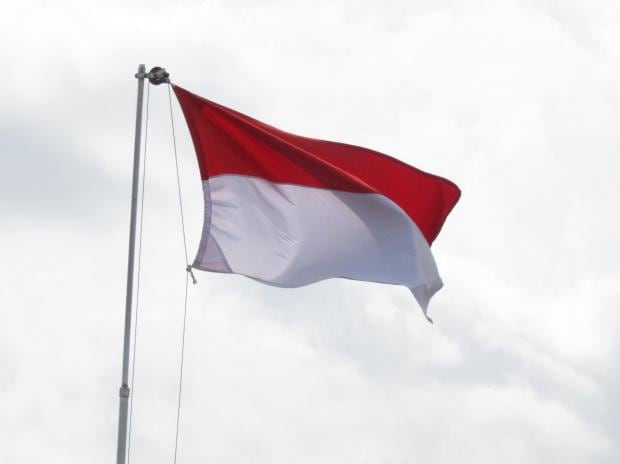
India, Indonesia agree to improve connectivity; cooperation in Indo-Pacific
India and Indonesia on Thursday emphasised the need for greater bilateral maritime cooperation in the Indo-Pacific and agreed to improve connectivity between Andaman and Nicobar Islands and Aceh province.
The two sides held extensive discussions on boosting bilateral cooperation at the seventh round of India-Indonesia foreign office consultations in Jakarta.
The Ministry of External Affairs (MEA) said the two sides exchanged views on recent regional and global developments, and cooperation within the G20, ASEAN framework, the Indo-Pacific Oceans Initiative (IPOI) and ASEAN Outlook on Indo-Pacific (AOIP).
The Association of Southeast Asian Nations (ASEAN) is a 10-nation grouping comprising Indonesia, Malaysia, Philippines, Singapore, Thailand, Brunei, Vietnam, Myanmar and Cambodia.
"The two delegations emphasised the need for greater maritime cooperation in the Indo-Pacific, and their continued commitment to strengthen India-Indonesia comprehensive strategic partnership," the MEA said in a statement.
"They reviewed their overall bilateral relationship, covering political exchanges, defence and security cooperation, trade and economic matters, and consular issues," it said.
The MEA said the talks were held in a "friendly and cordial" atmosphere.
"The two sides agreed to improve connectivity between Andaman & Nicobar Islands and Aceh province, as well as to enhance people to people exchange, and cultural cooperation," it said.
The Indonesian province of Aceh is located at the tip of Sumatra, with Banda Aceh being its capital and largest city.
The meeting was co-chaired by Saurabh Kumar, Secretary (East) in the MEA, and Abdul Kadir Jailani, Director General for the Asia Pacific and Africa division at Indonesia's Foreign Ministry.
 www.business-standard.com
India and Indonesia on Thursday emphasised the need for greater bilateral maritime cooperation in the Indo-Pacific and agreed to improve connectivity between Andaman and Nicobar Islands and Aceh province.
The two sides held extensive discussions on boosting bilateral cooperation at the seventh round of India-Indonesia foreign office consultations in Jakarta.
The Ministry of External Affairs (MEA) said the two sides exchanged views on recent regional and global developments, and cooperation within the G20, ASEAN framework, the Indo-Pacific Oceans Initiative (IPOI) and ASEAN Outlook on Indo-Pacific (AOIP).
The Association of Southeast Asian Nations (ASEAN) is a 10-nation grouping comprising Indonesia, Malaysia, Philippines, Singapore, Thailand, Brunei, Vietnam, Myanmar and Cambodia.
"The two delegations emphasised the need for greater maritime cooperation in the Indo-Pacific, and their continued commitment to strengthen India-Indonesia comprehensive strategic partnership," the MEA said in a statement.
"They reviewed their overall bilateral relationship, covering political exchanges, defence and security cooperation, trade and economic matters, and consular issues," it said.
The MEA said the talks were held in a "friendly and cordial" atmosphere.
"The two sides agreed to improve connectivity between Andaman & Nicobar Islands and Aceh province, as well as to enhance people to people exchange, and cultural cooperation," it said.
The Indonesian province of Aceh is located at the tip of Sumatra, with Banda Aceh being its capital and largest city.
The meeting was co-chaired by Saurabh Kumar, Secretary (East) in the MEA, and Abdul Kadir Jailani, Director General for the Asia Pacific and Africa division at Indonesia's Foreign Ministry.
India, Indonesia agree to improve connectivity; cooperation in Indo-Pacific
India and Indonesia emphasised the need for greater bilateral maritime cooperation in the Indo-Pacific and agreed to improve connectivity between Andaman and Nicobar Islands and Aceh province.