In a major push toward localising core defence propulsion systems, Rolls-Royce has partnered with two defence PSUs and is awaiting Ministry of Defence (MoD) clearances to begin manufacturing engines for the Arjun Main Battle Tank (MBDT) as well as for the light tank, the future infantry combat vehicle (FICV), the future ready combat vehicle (FRCV) and heavy motor vehicles (HMVs).
Simultaneously, the company is advancing plans to localise its high-end Series 4000 naval engines, for which it has already identified a domestic partner for future projects of Indian Navy.
These developments emerged during businessline’s exclusive interaction with Giovanni Spadaro, President, Global Markets, Rolls-Royce Power Systems and Managing Director, Rolls-Royce Solutions Asia, along with G. S. Selwyn, Executive Vice President, Rolls-Royce India and Managing Director, MTU India.
The initiatives mark a significant shift in Rolls-Royce’s defence business strategy—from a source-and-sell approach to a deep localisation model. This reorientation is designed to capitalise on India’s rapidly expanding defence market and to align with the government’s aatmanirbharta (self-reliance) agenda by producing key propulsion systems for land and naval platforms within the country.
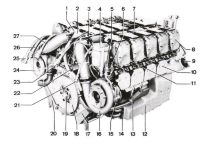
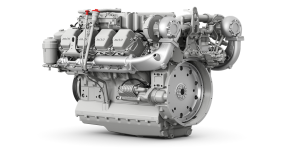
“There are two different defence PSU partners—one for the Arjun tank engines and the other for the Series 199 family of engines,” Spadaro said, joining the conversation virtually from Singapore. “For Arjun, it’s the MB838, while the Series 199 (S199) is meant for a range of platforms, starting with the light tank, FICV, FRCV and HMV, with multiple cylinder variants from 450 horsepower to 1,500 horsepower.”
According to the company, they are in talks with private players like L&T, which has already got first orders for manufacturing of light tank Zorawar, Tata and Mahindra, offering them their S199 family of engines. But, the selection of engine by the MoD will come through prescribed procurement process.
According to Selwyn, the S199 family will offer multiple configurations—six-cylinder, eight-cylinder, and potentially ten-cylinder variants—providing a flexible suite of engine options for diverse military requirements.
Since its induction into the Indian Army, the Arjun MBT has been powered by MB838 engines built by MTU, a Rolls-Royce Power Systems subsidiary. The four-stroke engine delivers 1,400 HP. Rolls-Royce Power Systems is now offering to manufacture it in India, with Spadaro emphasising that the company is proposing a “full transfer” of technology, including intellectual property transfer. If the project is awarded, the Indian partner will gain the capability to manufacture engineering parts locally, eliminating the need for global sourcing and enabling complete indigenous assembly of the tank engine.
Spadaro, however, wondered: whether the domestic ecosystem has the capacity to manufacture specialised components in the required quantities.
For the S199 engines—already deployed in top-tier global programmes such as the UK’s Boxer, the US Army’s M10 Booker, and platforms in Germany and Israel—localisation will initially stand at 27–30 percent. Spadaro noted that the initiative goes beyond technology transfer. “It’s about capabilities too,” he said, indicating that Indian manufacturers will need to meet demanding global standards.
Under the “Buy (Indian-IDDM)” procurement category, the government prioritises defence systems that are indigenously designed, developed and manufactured, with a minimum of 50 percent local content—a benchmark Rolls-Royce will ultimately be expected to match.
Spadaro declined to speculate on when the MoD approval might come, but stressed readiness on the company’s part. “What’s important is to understand that we have both the readiness and the capability, and the right partnerships in-country for us to progress as and when the MoD decides to move forward.”
When asked why Rolls-Royce chose PSUs—despite many foreign OEMs being cautious about such partnerships—Selwyn said the company carried out a detailed evaluation. “We found them progressive and interesting because of the position they wield and their local capabilities,” he said.
Selwyn also highlighted Rolls-Royce’s long-standing presence in India’s defence ecosystem, with over 1,400 Rolls-Royce engines powering Indian military aircraft, the Arjun tank fleet and numerous naval and Coast Guard vessels. “Power Systems alone has about 650 engines across naval ships, Coast Guard ships and the Arjun MBT. In naval platforms, for example, we power the generators of P-17 Alpha frigates and propel the Anti-Submarine Warfare Shallow Water Crafts. We also propel Coast Guard vessels—so much so that more than 70 percent of Coast Guard vessels are powered by MTU engines,” he said.
Beyond defence, Rolls-Royce’s civilian footprint in India—built over nine decades—is also widening. The company has already relocated a complete production line for the Series 1600 reciprocating engine to India. This line, operated through a joint venture with Force Motors in Pune, manufactures engines for power generation and rail powerpacks.
Rolls-Royce engines are also providing power backup to key national infrastructure such as Delhi Airport’s Terminal 3 and the Yashobhoomi International Convention Centre.