So just like Electron? They should not throw away that fairing but rather just use open and close approach which is being planned for Rocket Lab Neutron.They are developing these engines to use in their 2-stage small satellite launcher named "ASTRA".
View attachment 29846
This launcher will be capable of launching 300kg to LEO. That would make it a direct competitor of the Skyroot's Vikram 1 launcher & the ISRO's SSLV.
The ASTRA launcher would use the same engine on both the stages. The 9 units of the Potentia C-1 METHALOX engine are going to power the 1st stage. Each engine would produce a sea-level thrust of 24kN with a sea-level Isp of 300 sec. The 9 engines combined would produce 200kN of lift-off thrust.
View attachment 29847
The 2nd stage will have 1 vacuum optimized Potentia C-1 engine with peak thrust of 25kN & vacuum Isp of 330 sec.
View attachment 29848
The last kick stage will have some hypergolic reaction control thrusters:
View attachment 29849
We don't know if the engine is going to be throttleable or if the launcher is planned to be partially re-usable. Given it's their 1st engine & 1st launcher the answer is probably no.
Small satellite launch market is going to have a lot of new players in a decade or so.
Indian Space Industry : Updates & Discussions
- Thread starter Ashwin
- Start date
You are using an out of date browser. It may not display this or other websites correctly.
You should upgrade or use an alternative browser.
You should upgrade or use an alternative browser.

Last edited:


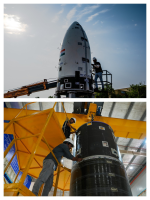
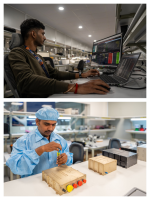
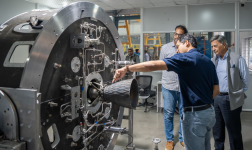
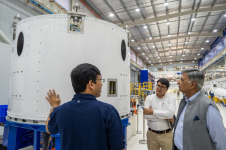
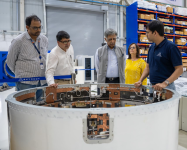
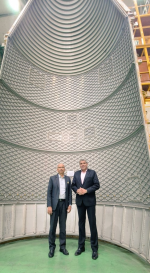

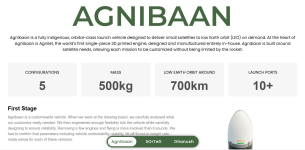
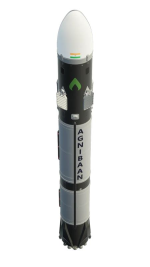
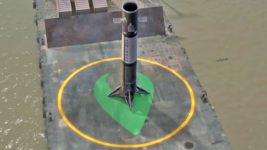
Agnikul Cosmos is planning to land their Agnibaan rocket first stages on a DRONESHIP in the ocean.

India's Private Space Race Lifts Off with Singapore
India's private space sector is set for a major lift-off, with Singapore emerging as a key partner in this new era of collaboration and innovation. Read more at straitstimes.com. Read more at straitstimes.com.
Agnikul Cosmos is planning to land their Agnibaan rocket first stages on a DRONESHIP in the ocean.
India's Agnikul Cosmos readying Falcon-9-like reusable rocket, flight test soon
By Sibu Tripathi
New Delhi
UPDATED: Sep 29, 2025, 12:14 IST
The company revealed its roadmap at the International Astronautical Congress (IAC) 2025 in Sydney, Australia, where it also highlighted its recent success in securing multiple patents across the US, Europe, and India.
These patents cover breakthrough designs in reusable propulsion systems. (Photo: Agnikul)
India’s private space startup Agnikul Cosmos has unveiled its ambitious leap into the global reusable rocket race, announcing plans to build a Falcon 9–like launch vehicle that is fully reusable and cost-efficient.
The company revealed its roadmap at the International Astronautical Congress (IAC) 2025 in Sydney, Australia, where it also highlighted its recent success in securing multiple patents across the US, Europe, and India.
These patents cover breakthrough designs in reusable propulsion systems and multi-purpose launch technologies, setting the stage for India’s next big entry into sustainable space transportation.
At the heart of Agnikul’s push is a patent for a combined launch vehicle–satellite system along with semi-cryogenic propellant technology, chosen to minimise costs and enable easy refurbishment between flights.
The company has already demonstrated key enablers of this vision, including a successful test of its proprietary autopilot software designed for controlled ascent, marking a major milestone in its journey toward reusable operations.
“We are working on plans for full booster recovery post-launch and also enhancing the life of the upper stage in space. We have consistently designed our vehicles to ensure that affordability and flexibility are never afterthoughts but are built in from day one,” s Srinath Ravichandran, Co-founder and CEO of Agnikul Cosmos, told IndiaToday.in.
He emphasised the strong support the company has received from ISRO and India’s regulator IN-SPACe, which have opened the doors for experimentation on rocket stage recovery and reuse, a crucial element for commercial viability in space launch.
The effort echoes global trends pioneered by SpaceX’s Falcon 9, which has redefined launch economics through reusability.
Agnikul’s strategy aims to meet stringent global standards on space debris mitigation. (Photo: Agnikul)
Agnikul’s upcoming rockets aim to bring similar capabilities to India’s small satellite launch sector, offering cost-effective, rapid, and customizable launch services.
Srinath added that the company will likely attempt the booster recovery in the next flight test of the Agnibaan rocket.
Co-founder and COO Moin SPM noted that India’s small rocket segment needs innovation at scale to remain competitive. “Unless we embrace new technologies, small rockets cannot achieve the commercial viability our customers will need,” he said, highlighting how even their earlier test flights were designed not as simple experiments, but as comprehensive demonstrations of reusability-focused technologies.
Reusability also ties into wider sustainability goals. Agnikul’s strategy aims to meet stringent global standards on space debris mitigation while lowering the cost of accessing orbit. As part of this, the company recently inaugurated a sophisticated additive manufacturing facility in Chennai dedicated entirely to aerospace systems.
India's Agnikul Cosmos readying Falcon-9-like reusable rocket, flight test soon
By Sibu Tripathi
New Delhi
UPDATED: Sep 29, 2025, 12:14 IST
The company revealed its roadmap at the International Astronautical Congress (IAC) 2025 in Sydney, Australia, where it also highlighted its recent success in securing multiple patents across the US, Europe, and India.
These patents cover breakthrough designs in reusable propulsion systems. (Photo: Agnikul)
India’s private space startup Agnikul Cosmos has unveiled its ambitious leap into the global reusable rocket race, announcing plans to build a Falcon 9–like launch vehicle that is fully reusable and cost-efficient.
The company revealed its roadmap at the International Astronautical Congress (IAC) 2025 in Sydney, Australia, where it also highlighted its recent success in securing multiple patents across the US, Europe, and India.
These patents cover breakthrough designs in reusable propulsion systems and multi-purpose launch technologies, setting the stage for India’s next big entry into sustainable space transportation.
At the heart of Agnikul’s push is a patent for a combined launch vehicle–satellite system along with semi-cryogenic propellant technology, chosen to minimise costs and enable easy refurbishment between flights.
The company has already demonstrated key enablers of this vision, including a successful test of its proprietary autopilot software designed for controlled ascent, marking a major milestone in its journey toward reusable operations.
“We are working on plans for full booster recovery post-launch and also enhancing the life of the upper stage in space. We have consistently designed our vehicles to ensure that affordability and flexibility are never afterthoughts but are built in from day one,” s Srinath Ravichandran, Co-founder and CEO of Agnikul Cosmos, told IndiaToday.in.
He emphasised the strong support the company has received from ISRO and India’s regulator IN-SPACe, which have opened the doors for experimentation on rocket stage recovery and reuse, a crucial element for commercial viability in space launch.
The effort echoes global trends pioneered by SpaceX’s Falcon 9, which has redefined launch economics through reusability.
Agnikul’s strategy aims to meet stringent global standards on space debris mitigation. (Photo: Agnikul)
Agnikul’s upcoming rockets aim to bring similar capabilities to India’s small satellite launch sector, offering cost-effective, rapid, and customizable launch services.
Srinath added that the company will likely attempt the booster recovery in the next flight test of the Agnibaan rocket.
Co-founder and COO Moin SPM noted that India’s small rocket segment needs innovation at scale to remain competitive. “Unless we embrace new technologies, small rockets cannot achieve the commercial viability our customers will need,” he said, highlighting how even their earlier test flights were designed not as simple experiments, but as comprehensive demonstrations of reusability-focused technologies.
Reusability also ties into wider sustainability goals. Agnikul’s strategy aims to meet stringent global standards on space debris mitigation while lowering the cost of accessing orbit. As part of this, the company recently inaugurated a sophisticated additive manufacturing facility in Chennai dedicated entirely to aerospace systems.
India's Agnikul Cosmos readying Falcon-9-like reusable rocket, flight test soon

I so desperately want them and Skyroot to succeed! Once NGLV becomes operational PSLV must be given to these guys.

Agnikul Cosmos test-fired 2 x Agnilet engines in a clustered configuration:

These kind of comments come out as very silly. " No launch from pvt sector yet". Ofcourse! It's not a diwali rocket. They are working since only recently.
They have done so much in a bureaucratic country like India is a feat in itself.
As for Chinese.. duh! They are competing with America, have tested quantum communication through satellite and lot more. This is basic stuff for them now. Let's see how forces handle it next time. But blaming it on ISRO is classic example of huthiyapapa. DRDO needs to take lead with ISROs help to develop Anti-Sat measures. There are reports of forces using decoys, keeping track of Chinese statelite etc.
They have done so much in a bureaucratic country like India is a feat in itself.
As for Chinese.. duh! They are competing with America, have tested quantum communication through satellite and lot more. This is basic stuff for them now. Let's see how forces handle it next time. But blaming it on ISRO is classic example of huthiyapapa. DRDO needs to take lead with ISROs help to develop Anti-Sat measures. There are reports of forces using decoys, keeping track of Chinese statelite etc.

Apparently for some people India shouldn't work on national prestige projects and should abandon everything for military shit. @South block saheb, there exists a world outside of military field, and India is right to pursue a manned spaceflight program. But at the same time it is also true ISRO budget and focus for military space sats is needed,These kind of comments come out as very silly. " No launch from pvt sector yet". Ofcourse! It's not a diwali rocket. They are working since only recently.
They have done so much in a bureaucratic country like India is a feat in itself.
As for Chinese.. duh! They are competing with America, have tested quantum communication through satellite and lot more. This is basic stuff for them now. Let's see how forces handle it next time. But blaming it on ISRO is classic example of huthiyapapa. DRDO needs to take lead with ISROs help to develop Anti-Sat measures. There are reports of forces using decoys, keeping track of Chinese statelite etc.

I'm confident mining on moon will begin within this century.Apparently for some people India shouldn't work on national prestige projects and should abandon everything for military shit. @South block saheb, there exists a world outside of military field, and India is right to pursue a manned spaceflight program. But at the same time it is also true ISRO budget and focus for military space sats is needed,
more developed space sector will help in getting the bigger pie.
Apparently for some people India shouldn't work on national prestige projects and should abandon everything for military shit. @South block saheb, there exists a world outside of military field, and India is right to pursue a manned spaceflight program. But at the same time it is also true ISRO budget and focus for military space sats is needed,
Note: in-Space, the reason for startups presence was formalized in 2020. NSIL ( the primary commercial arm of ISRO) came into being in 2019. It hasn't even been 5 years.
And that's where the dual approach plays a significant role. Public + pvt. But we need to let startups mature. ISRO has been providing real ground support to these startups. ToT for small things, ISRO scientists visiting and probably clarifying doubts etc..
Also govt has already initiated SBS-52 program. That will be the backbone of our future space domain. So, ISRO can focus on leading the rocket science while startups fulfills the needs of market including govt.
But before that our startups are indeed making satellites and launching it. They have used services of Elon Musk to launch their satellite due to its cost efficiency and continuous launch schedules. But they work as important moral booster and TD for them.
It hasn't even been 10 years since startups were roped in and people are like headless chickens now. I wonder what those young minds at startups must be thinking.
The DRDO is plauged by same issue diverting it's focus and bringing unscientific issues in day to day operations.
Last edited: