
Indian Sonar and Torpedo developments
- Thread starter ni8mare
- Start date
-
- Tags
- drdo indian navy
You are using an out of date browser. It may not display this or other websites correctly.
You should upgrade or use an alternative browser.
You should upgrade or use an alternative browser.
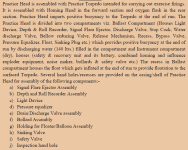
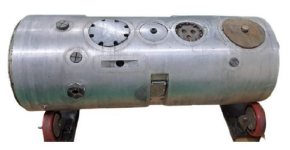
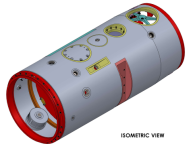


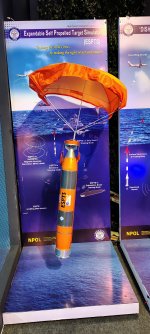

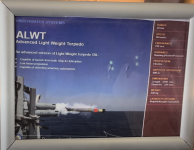
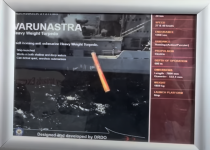
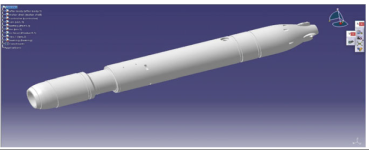
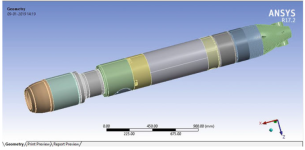
For the Indian Navy, AoN for procurement of Varunastra Torpedoes (Combat) was accorded by DAC. Varunastra Torpedo is an indigenously-developed ship-launched anti-submarine torpedo developed by Naval Science & Technological Laboratory. Induction of additional quantities of this torpedo would enhance the Navy's capability against adversaries' submarine threats.

DAC clears capital acquisition proposals worth over Rs 54,000 crore to enhance defence capabilities
Under the chairmanship of Raksha Mantri Shri Rajnath Singh, the Defence Acquisition Council (DAC), o
pib.gov.in
Italian 'Black Shark' surfaces as top torpedo contender
The Italian 'Black Shark' torpedo, previously embroiled in controversy, is now a leading contender for an Indian Navy contract after its German competitor withdrew.
The Italian 'Black Shark' torpedo, which courted controversy over a decade ago after allegations of irregularities, has emerged as the top contender for an Indian Navy requirement of heavy weight torpedoes after its German competitor dropped out of the race.
Sources told ET that Germany's ThyssenKrupp Marine Systems (TKMS) has dropped out of the competition to supply 48 heavyweight torpedoes to the Indian Navy for its Kalvari class submarines. This leaves only France's Naval Group in the competition, but its offer could be more expensive than the Italian option.
The Black Shark has a controversial past-it was the frontrunner for a requirement of 98 torpedoes in 2008-09. However, the project was dropped in 2013 and the case was referred to the Central Bureau of Investigation (CBI) by the ministry of defence. The Italian torpedo was last tested by India in 2009 and the current competition does not mandate fresh trials.
The Black Shark torpedo belonged to a Finmeccanica company (now called Leonardo), which was being investigated for corruption in the AgustaWestland chopper scandal. The Italian company was on an official blacklist for almost a decade and is now trying to re-enter the Indian market.
However, the torpedo business has recently been acquired by another Italian company, Fincantieri, which has had a long presence in India. The company has also supplied two fleet tankers to the Indian Navy in the past.
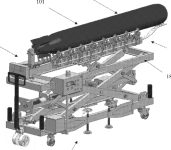

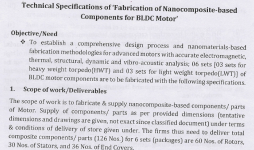
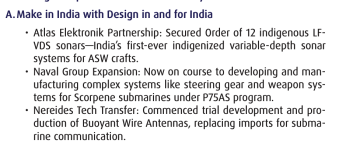
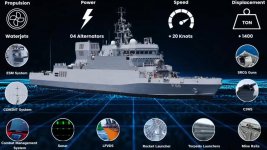
CFF Fluid Control Ltd has partnered with Atlas Elektronik to indigenise and deliver Low Frequency Variable Depth Sonar to Indian Navy. Most likely used for ASW corvettes.

Italian 'Black Shark' surfaces as top torpedo contender
The Italian 'Black Shark' torpedo, previously embroiled in controversy, is now a leading contender for an Indian Navy contract after its German competitor withdrew.
The Italian 'Black Shark' torpedo, which courted controversy over a decade ago after allegations of irregularities, has emerged as the top contender for an Indian Navy requirement of heavy weight torpedoes after its German competitor dropped out of the race.
Sources told ET that Germany's ThyssenKrupp Marine Systems (TKMS) has dropped out of the competition to supply 48 heavyweight torpedoes to the Indian Navy for its Kalvari class submarines. This leaves only France's Naval Group in the competition, but its offer could be more expensive than the Italian option.
The Black Shark has a controversial past-it was the frontrunner for a requirement of 98 torpedoes in 2008-09. However, the project was dropped in 2013 and the case was referred to the Central Bureau of Investigation (CBI) by the ministry of defence. The Italian torpedo was last tested by India in 2009 and the current competition does not mandate fresh trials.
The Black Shark torpedo belonged to a Finmeccanica company (now called Leonardo), which was being investigated for corruption in the AgustaWestland chopper scandal. The Italian company was on an official blacklist for almost a decade and is now trying to re-enter the Indian market.
However, the torpedo business has recently been acquired by another Italian company, Fincantieri, which has had a long presence in India. The company has also supplied two fleet tankers to the Indian Navy in the past.
Top-of-the-line torpedoes for Navy's Kalvari-class subs soon? Why it's a close race ahead
The Indian Navy’s long-delayed process to acquire heavyweight torpedoes for its Kalvari-class (Scorpene) submarines has gained momentum and reached a crucial stage. The ministry of defence (MoD) is preparing to begin cost negotiations for the procurement of 48 torpedoes. Only two contenders remain in the race—France’s Naval Group and Italy’s Whitehead Alenia Sistemi Subacquei (WASS).
While the initial procurement provides for 48 torpedoes, the navy plans to acquire more than 200 under the Make in India initiative in the years to come. Currently, six Kalvari-class (Scorpne-class) diesel-electric submarines—built by Mazagon Dock Shipbuilders Limited (MDL) in collaboration with France’s Naval Group—are operating with limited primary offensive weapon systems.
The absence of heavyweight torpedoes has forced the navy to rely on legacy systems from older submarines for anti-submarine and anti-ship warfare missions. Naval experts have warned that this compromises the combat effectiveness of these submarines, which are designed for intelligence gathering, long-range precision strikes and special operations.
Torpedoes are essential for both offensive and defensive submarine warfare; their absence creates significant challenges for the newly commissioned Kalvari-class boats more vulnerable in the event of a conflict.
Simultaneously, the government is pursuing the Varunastra, an indigenous heavyweight torpedo developed by the Defence Research and Development Organisation (DRDO) and intended for deployment on Indian submarines. However, it remains unclear how long the navy will have to wait before Varunastra is fully operational and integrated for undersea platforms.
In February 2024, the Defence Acquisition Council had approved the purchase of 48 heavyweight torpedoes through a global tender as an interim measure until the indigenous solution is ready. The contract, estimated to be worth Rs 3,000 crore (around $345 million), was opened to international manufacturers.
The Italian-origin Black Shark torpedo, produced by WASS, now part of the Fincantieri Group, is currently considered a cost-effective solution known well to the navy, while its competitor Naval Group’s offering was reportedly deemed too expensive during preliminary evaluations. Germany’s ThyssenKrupp Marine Systems withdrew from the competition at an early stage.
The Black Shark torpedo is a 533-mm dual-purpose heavyweight torpedo featuring a 50-km range, a top speed of 50 knots, and a 350-kg high-explosive warhead. It is equipped with Advanced Sonar Transmitting and Receiving Architecture (ASTRA) for precise guidance using both wire-guided and acoustic homing capabilities. The system is effective in both deep and littoral waters and incorporates a rechargeable lithium-polymer battery that allows for up to 100 training launches, significantly enhancing cost-effectiveness. The Indian Navy had evaluated the Black Shark way back in 2008-09 and initially selected it under a deal for 98 torpedoes, but things could not move further.
The competing F21 torpedo, offered by the Naval Group, is a new generation 6-metre, 1.5-tonne heavyweight torpedo with a 250-kg warhead. It uses a silver oxide-aluminium seawater battery and comes equipped with a comprehensive sonar suite and advanced mission systems for autonomous target detection in noisy, cluttered coastal environments. Insiders claim that while it’s costlier than the Black Shark, it represents a new solution that has been developed for the French navy.
The Black Shark is seen as a potential breakthrough in the current bid. It is believed that camaraderie between Prime Minister Narendra Modi and Italian Prime Minister Giorgia Meloni set the stage for a significant strengthening of defence ties between India and Italy.
As bilateral relations continue to warm up, strategic cooperation between the two nations is gaining momentum, paving the way for enhanced collaboration in the defence sector. Sources indicate that the rapport between the two leaders has been instrumental in fostering a stronger defence partnership, with both countries exploring new avenues for cooperation.
According to insiders, the Indian Navy is looking at a solution which has an adaptability clause to a multiplicity of platforms.
While both companies are committed to India as an export hub, WASS has made its intention clear to make India its manufacturing hub for torpedoes for its global fleet. For the same, the Italian firm is reportedly looking to partner with Indian entities, either in the private or public sector, to transfer production and maintenance technology.
This collaboration will not only enable local manufacturing but also integrate these Indian partners into the firm’s global supply chain for Black Shark torpedoes. According to sources close to the development, the Italian firm has proposed a phased transfer of technology (ToT) arrangement for future batches. This would include stages ranging from fully assembled units, semi-knocked-down kits, completely knocked-down systems to full-scale indigenous manufacturing in India.
Additionally, WASS is reportedly committed to enabling the end user—Indian Navy—to become autonomous in managing the entire lifecycle of the torpedoes, from maintenance and training to operational use and long-term support.
A senior defence official said both the glaring lacunae in submarine acquisition and torpedo shortfall need urgent attention. “The way our neighbouring navies are strengthening their underwater capability swiftly, we need an urgent stopgap requirement for our submarines. This can be met by an additional three Kalveri-class submarines along with a more ambitious Project 75 India (six advanced submarines) that will truly transform us into a blue water navy having force projection well beyond the littoral. This is good not only for our shipbuilders, such as MDL, but also the Indian Navy,” the official said.
It is notable that while Pakistan is building its underwater capabilities massively with the help of China, the PLA Navy is currently operating the world’s largest and most rapidly expanding navy. Its submarine fleet is projected to reach 65 this year and 80 by 2035.

Top-of-the-line torpedoes for Navy's Kalvari-class subs soon? Why it's a close race ahead
The Indian Navy’s long-delayed process to acquire heavyweight torpedoes for its Kalvari-class (Scorpene) submarines has gained momentum and reached a crucial stage. The ministry of defence (MoD) is preparing to begin cost negotiations for the procurement of 48 torpedoes. Only two contenders remain in the race—France’s Naval Group and Italy’s Whitehead Alenia Sistemi Subacquei (WASS).
While the initial procurement provides for 48 torpedoes, the navy plans to acquire more than 200 under the Make in India initiative in the years to come. Currently, six Kalvari-class (Scorpne-class) diesel-electric submarines—built by Mazagon Dock Shipbuilders Limited (MDL) in collaboration with France’s Naval Group—are operating with limited primary offensive weapon systems.
The absence of heavyweight torpedoes has forced the navy to rely on legacy systems from older submarines for anti-submarine and anti-ship warfare missions. Naval experts have warned that this compromises the combat effectiveness of these submarines, which are designed for intelligence gathering, long-range precision strikes and special operations.
Torpedoes are essential for both offensive and defensive submarine warfare; their absence creates significant challenges for the newly commissioned Kalvari-class boats more vulnerable in the event of a conflict.
Simultaneously, the government is pursuing the Varunastra, an indigenous heavyweight torpedo developed by the Defence Research and Development Organisation (DRDO) and intended for deployment on Indian submarines. However, it remains unclear how long the navy will have to wait before Varunastra is fully operational and integrated for undersea platforms.
In February 2024, the Defence Acquisition Council had approved the purchase of 48 heavyweight torpedoes through a global tender as an interim measure until the indigenous solution is ready. The contract, estimated to be worth Rs 3,000 crore (around $345 million), was opened to international manufacturers.
The Italian-origin Black Shark torpedo, produced by WASS, now part of the Fincantieri Group, is currently considered a cost-effective solution known well to the navy, while its competitor Naval Group’s offering was reportedly deemed too expensive during preliminary evaluations. Germany’s ThyssenKrupp Marine Systems withdrew from the competition at an early stage.
The Black Shark torpedo is a 533-mm dual-purpose heavyweight torpedo featuring a 50-km range, a top speed of 50 knots, and a 350-kg high-explosive warhead. It is equipped with Advanced Sonar Transmitting and Receiving Architecture (ASTRA) for precise guidance using both wire-guided and acoustic homing capabilities. The system is effective in both deep and littoral waters and incorporates a rechargeable lithium-polymer battery that allows for up to 100 training launches, significantly enhancing cost-effectiveness. The Indian Navy had evaluated the Black Shark way back in 2008-09 and initially selected it under a deal for 98 torpedoes, but things could not move further.
The competing F21 torpedo, offered by the Naval Group, is a new generation 6-metre, 1.5-tonne heavyweight torpedo with a 250-kg warhead. It uses a silver oxide-aluminium seawater battery and comes equipped with a comprehensive sonar suite and advanced mission systems for autonomous target detection in noisy, cluttered coastal environments. Insiders claim that while it’s costlier than the Black Shark, it represents a new solution that has been developed for the French navy.
The Black Shark is seen as a potential breakthrough in the current bid. It is believed that camaraderie between Prime Minister Narendra Modi and Italian Prime Minister Giorgia Meloni set the stage for a significant strengthening of defence ties between India and Italy.
As bilateral relations continue to warm up, strategic cooperation between the two nations is gaining momentum, paving the way for enhanced collaboration in the defence sector. Sources indicate that the rapport between the two leaders has been instrumental in fostering a stronger defence partnership, with both countries exploring new avenues for cooperation.
According to insiders, the Indian Navy is looking at a solution which has an adaptability clause to a multiplicity of platforms.
While both companies are committed to India as an export hub, WASS has made its intention clear to make India its manufacturing hub for torpedoes for its global fleet. For the same, the Italian firm is reportedly looking to partner with Indian entities, either in the private or public sector, to transfer production and maintenance technology.
This collaboration will not only enable local manufacturing but also integrate these Indian partners into the firm’s global supply chain for Black Shark torpedoes. According to sources close to the development, the Italian firm has proposed a phased transfer of technology (ToT) arrangement for future batches. This would include stages ranging from fully assembled units, semi-knocked-down kits, completely knocked-down systems to full-scale indigenous manufacturing in India.
Additionally, WASS is reportedly committed to enabling the end user—Indian Navy—to become autonomous in managing the entire lifecycle of the torpedoes, from maintenance and training to operational use and long-term support.
A senior defence official said both the glaring lacunae in submarine acquisition and torpedo shortfall need urgent attention. “The way our neighbouring navies are strengthening their underwater capability swiftly, we need an urgent stopgap requirement for our submarines. This can be met by an additional three Kalveri-class submarines along with a more ambitious Project 75 India (six advanced submarines) that will truly transform us into a blue water navy having force projection well beyond the littoral. This is good not only for our shipbuilders, such as MDL, but also the Indian Navy,” the official said.
It is notable that while Pakistan is building its underwater capabilities massively with the help of China, the PLA Navy is currently operating the world’s largest and most rapidly expanding navy. Its submarine fleet is projected to reach 65 this year and 80 by 2035.
Imagine having Blackshark for P75, DM2A4 for TKMS design P75I and some sort of Varunastra for indigenous ssk line.

Did the Shreyas MKII ever go into production? Or is this referring to ALWT?