Indian Science and Technology Developments : Updates and Discussions

India doubles down on state-backed venture capital, approving $1.1B fund

By Jagmeet Singh
8:23 AM PST · February 14, 2026

India has cleared a $1.1 billion state-backed venture capital program that will channel government money into startups through private investors, doubling down on its effort to finance high-risk areas such as artificial intelligence, advanced manufacturing and other sectors broadly referred to by the industry as deep tech.

First outlined in the January 2025 budget speech by India’s finance minister, the ₹100 billion fund won cabinet approval this week (more than a year after the speech), allowing the government to move ahead with deployment. A previous iteration of the program, launched in 2016, committed ₹100 billion to 145 private funds that have invested more than ₹255 billion (about $2.8 billion) in over 1,370 startups, according to official data released on Saturday.

The program is structured as a fund of funds, a common venture capital model in which governments back startups indirectly by committing capital to private investment firms. It is designed to take a more targeted approach than its 2016 counterpart, focusing on deep-tech and manufacturing startups that typically require longer time horizons and larger amounts of capital, while also backing early-stage founders, expanding investment beyond major cities and strengthening India’s domestic venture capital industry, particularly smaller funds, per the Indian government.

At the announcement on Saturday, IT minister Ashwini Vaishnaw highlighted the scale of India’s startup expansion, pointing to figures shown on a presentation slide indicating the number of startups has grown from fewer than 500 in 2016 to more than 200,000 today. The slide said more than 49,000 startups were registered in 2025 alone, the highest annual total on record.

The cabinet approval follows recent changes to India’s startup rules aimed at easing pressure on deep-tech companies. New Delhi doubled the period for which such firms are classified as startups to 20 years and raised the revenue threshold for startup-specific tax, grant and regulatory benefits to ₹3 billion, or about $33 million, up from ₹1 billion previously.

The approval comes just ahead of the government-backed India AI Impact Summit, where global AI companies including OpenAI, Anthropic, Google, Meta, Microsoft, and Nvidia are set to participate alongside Indian corporates such as Reliance Industries and Tata Group. India, the world’s most populous country and one of its largest internet markets with more than a billion online users, has become an increasingly attractive arena for global tech companies looking to expand their user base.

At the same time, private capital has become harder to secure. India’s startup ecosystem raised $10.5 billion in 2025, down just over 17% from a year earlier, even as investors grew more selective and sharply reduced the number of deals. The number of funding rounds fell nearly 39% to 1,518 transactions, according to data from Tracxn.

Vaishnaw said the new venture capital program would remain flexible, adding that “extensive consultations have taken place with all stakeholders.”

India doubles down on state-backed venture capital, approving $1.1B fund | TechCrunch
 
(A little old, but critical tech I didn't see posted here.)

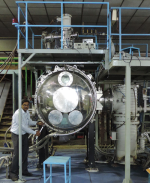
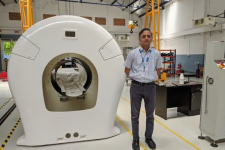
BARC Electron Beam Melting (EBM) Gun

100kW, 35kV Electron Beam Melting (EBM) Gun Column for Metallurgical Application
Link: 100kW, 35kV Electron Beam Melting (EBM) Gun Column for Metallurgical Application – Bhabha Atomic Research Centre ( BARC )

1771278635688.png

Large EB guns are integrated into vacuum furnaces to melt and refine reactive and refractory metals like titanium, niobium, tantalum, molybdenum, hafnium and zirconium. The vacuum atmosphere removes impurities and gases from the melt, producing ultra-high-purity ingots for aerospace, electronics, and specialty alloys.
 
  • Like
Reactions: spice

Galgotias University has been asked to vacate the expo area of the India AI Impact Summit in New Delhi, sources said. The Greater Noida-based institution faced immediate action after a viral video from the event showed its representatives presenting a Chinese-made robotic dog as a product developed by the university's Centre of Excellence.

The robot in question is the Unitree Go2, a commercially available model from the Chinese robotics company Unitree that is sold online in India for between Rs 2 lakh and Rs 3 lakh.

At the summit the machine was displayed and referred to as "Orion". A video that spread rapidly on social media captured a woman, identified in reports as a university representative, explaining the robot's features during a media interaction at the summit.

She stated that Galgotias University's Centre of Excellence had developed "Orion".

A separate clip from an interview showed a university professor making the same claim, telling a reporter that the robot had been built at the Centre of Excellence. Social media users quickly identified the machine as the imported Unitree Go2 and accused the university of passing off foreign technology as an Indian innovation.

In response, Galgotias University posted a statement on X, formerly Twitter. It said the robotic dog had been procured from Unitree and was being used purely as a learning tool for students. The university insisted it had never claimed to have built the device, despite its staff claiming on camera that it did.

"The recently acquired robodog from Unitree is one such step in that journey," the statement read. "It is not merely a machine on display; it is a classroom in motion. Our students are experimenting with it, testing its limits and, in the process, expanding their own knowledge. Let us be clear: Galgotias has not built this robodog, nor have we ever claimed to. Let us be clear - Galgotias has not built this robodog, neither have we claimed. But what we are building are minds that will soon design, engineer, and manufacture such technologies right here in Bharat."

A later statement from the university described the criticism as part of a "propaganda campaign" against it. The post itself incurred a Community Note on X.

The note stated that the claim of never having presented the robodog as its own was incorrect and misleading. It pointed out that the university had named the robot "Orion" and that its representatives had explicitly claimed it was developed by their team.

"By one misinterpretation, the internet has gone by storm. It might be that I could not convey well what I had wanted to say, or you could not understand well what I wanted to say. I am a faculty member in communications at the School of Management, not in AI. Only you (the media) have heard what the government has said, as far as I know we are here at the expo. As a university, we are standing tall. The robot was brought here only for projection," said the university's communications professor, Neha, who had earlier made the claim that the robot dogs were a Galgotias innovation.
 
  • Haha
Reactions: FenicromovCW

Galgotias University has been asked to vacate the expo area of the India AI Impact Summit in New Delhi, sources said. The Greater Noida-based institution faced immediate action after a viral video from the event showed its representatives presenting a Chinese-made robotic dog as a product developed by the university's Centre of Excellence.

The robot in question is the Unitree Go2, a commercially available model from the Chinese robotics company Unitree that is sold online in India for between Rs 2 lakh and Rs 3 lakh.

At the summit the machine was displayed and referred to as "Orion". A video that spread rapidly on social media captured a woman, identified in reports as a university representative, explaining the robot's features during a media interaction at the summit.

She stated that Galgotias University's Centre of Excellence had developed "Orion".

A separate clip from an interview showed a university professor making the same claim, telling a reporter that the robot had been built at the Centre of Excellence. Social media users quickly identified the machine as the imported Unitree Go2 and accused the university of passing off foreign technology as an Indian innovation.

In response, Galgotias University posted a statement on X, formerly Twitter. It said the robotic dog had been procured from Unitree and was being used purely as a learning tool for students. The university insisted it had never claimed to have built the device, despite its staff claiming on camera that it did.

"The recently acquired robodog from Unitree is one such step in that journey," the statement read. "It is not merely a machine on display; it is a classroom in motion. Our students are experimenting with it, testing its limits and, in the process, expanding their own knowledge. Let us be clear: Galgotias has not built this robodog, nor have we ever claimed to. Let us be clear - Galgotias has not built this robodog, neither have we claimed. But what we are building are minds that will soon design, engineer, and manufacture such technologies right here in Bharat."

A later statement from the university described the criticism as part of a "propaganda campaign" against it. The post itself incurred a Community Note on X.

The note stated that the claim of never having presented the robodog as its own was incorrect and misleading. It pointed out that the university had named the robot "Orion" and that its representatives had explicitly claimed it was developed by their team.

"By one misinterpretation, the internet has gone by storm. It might be that I could not convey well what I had wanted to say, or you could not understand well what I wanted to say. I am a faculty member in communications at the School of Management, not in AI. Only you (the media) have heard what the government has said, as far as I know we are here at the expo. As a university, we are standing tall. The robot was brought here only for projection," said the university's communications professor, Neha, who had earlier made the claim that the robot dogs were a Galgotias innovation.
चिरकुट is the word in Hindi for such peoples, wondering why we Indian inclined to do such petty things...🤢

PS: As we don't have right emoji to react to your post, so using :ROFLMAO: emoji, but real feeling in above para.
 
Last edited:
चिरकुट is the word in Hindi for such peoples, wondering why we Indian inclined to do such petty things...🤢

PS: As we don't have right emoji to react to your post, so using :ROFLMAO: emoji, but real feeling in above para.

They both probably live in a bubble... As if people attending or keeping an eye on THE AI SUMMIT wouldn't have been keeping up with major advancements in robotics. Especially when the Robot Conference just concluded in China a few months back.

Pretty stupid of them to do so.
 
They both probably live in a bubble... As if people attending or keeping an eye on THE AI SUMMIT wouldn't have been keeping up with major advancements in robotics. Especially when the Robot Conference just concluded in China a few months back.

Pretty stupid of them to do so.
Additionally, Event Planning 101: Check background of orgs. and items being displayed. SMEs can review the items for rebadging. In case of suspicions, ask demos to be removed from halls before event starts. Bad event mgmt skills tbh.
 
Real indigenously developed robodog made by IIT Kanpur based startup. Yeah it's not as fancy as the Chinese one. But it is a good start.

Just education cum real estate business things. Treating an international summit as an inter/intra- department function. 🤷.

The lesser capable but indian Robot is way way better than the antics galgotia pulled.
The one who approved the Stall needs to come under scanner too. On what basis did Galgotia qualify to have a stall there? What they were meant to present?
Surely, even if they didn't claim it as their own..Unitree robo had nothing to do with our summit. As far as I know.. "Orion" aka Unitree wasn't part of their own larger system or had any software/hardware tweaks either.


Additionally, Event Planning 101: Check background of orgs. and items being displayed. SMEs can review the items for rebadging. In case of suspicions, ask demos to be removed from halls before event starts. Bad event mgmt skills tbh.
 
An Indian company is set to build a $2 billion AI hub with Nvidia’s GPUs and go public. Here’s what we know so far

Published Fri, Feb 27 202612:54 AM EST
By Priyanka Salve
1772379961673.png
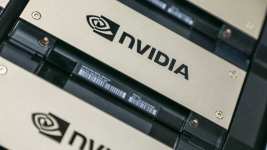
Nvidia H100 chips inside a server room at the Yotta Data Services Pvt. data center, in Navi Mumbai, India, March 14, 2024.
Dhiraj Singh | Bloomberg | Getty Images.

Key Points:
  • India’s Yotta Data Services is building a $2 billion AI hub using Nvidia’s chips.
  • Yotta says demand for GPUs exceeds supply in India.
  • India’s total data center capacity is projected to reach 1.93GW in 2025, then double to nearly 4GW by 2028.
India’s Yotta Data Services, which is building a $2 billion artificial intelligence hub using Nvidia’s chips, said demand for graphic processing units in the country is exceeding supply as domestic AI models prepare to scale and the local user base surges.

At present, India trails the U.S. and China in the race to develop a native AI foundational model and lacks large domestic AI infrastructure. That is beginning to shift.

Last week, during the India AI summit, a few Indian companies launched early or limited versions of their AI models, such as Sarvam AI’s Indus chatbot.

“We’re gradually rolling out Indus on a limited compute capacity, so you may hit a waitlist at first. We will expand access over time,” Pratyush Kumar, co-founder of Sarvam AI, said in a post on X.

Most Indian AI models launched at the AI summit were trained on Nvidia’s GPUs hosted in Yotta’s facilities, Sunil Gupta, co-founder, managing director and CEO of the company told CNBC’s Inside India on Thursday.

The Mumbai-based data center company, which began sourcing Nvidia GPUs in 2023, now owns 60% to 70% of India’s GPU capacity, Gupta said. He added that demand is also expected to come from global AI companies as their user base in India expands.

Push for more data centers

In recent months, U.S. tech majors such as OpenAI, Google, and Perplexity have offered their AI tools at low or no cost to millions of users in India.

Among hyperscalers, Google has firmed up its plans to invest $15 billion to build a data center hub in southern India, while Microsoft will invest $17.5 billion to expand its data center footprint.

Last week, OpenAI became the first customer of India’s Tata Consultancy Services’ data center business, signing up for 100 MW of capacity, with an option to scale to 1 GW.

“Through OpenAI for India, we’re working together to build the infrastructure, skills, and local partnerships needed to build AI with India, for India, and in India,” said Sam Altman, CEO of OpenAI, in a statement on Feb. 19.

As the Indian user base of leading global AI companies expands, Gupta said they will require local data centers and GPU capacity. Yotta plans to fund additional GPU purchases through a $1.2 billion to $1.5 billion pre-IPO round and aims to list within the next 12 months, Gupta added.

India has a total data center capacity of 1.93 gigawatt in 2025 and is projected to nearly double to 4 gigawatts by 2028, according to a Feb. 20 report by Nomura.

During the AI Summit, many companies announced plans to invest $277 billion over the next five to seven years, most of which will be directed towards building AI infrastructure in India, the brokerage said.

“Majority of these investments will flow into data centers, with domestic and US firms leading hyperscale buildouts and positioning India as a key US technology partner,” the brokerage said.

An Indian company is set to build a $2 billion AI hub with Nvidia’s GPUs and go public. Here's what we know so far
 
Kirloskar Pneumatic Launches India's First Oil-Free Water-Injected Screw Compressor

Developed with government funding and support from IISc's Pravriddhi programme, the HYDRINO targets sectors where contamination-free compressed air is critical.

By Angitha Suresh
26 Feb 2026
1772386340403.png

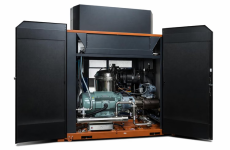
Kirloskar Pneumatic Company Limited (KPCL) has commercially launched what it describes as India's first oil-free water-injected screw compressor, branded HYDRINO. The announcement was made in Bengaluru on 25 February 2026, with the Foundation for Science Innovation and Development (FSID) at the Indian Institute of Science (IISc) citing its role in the product's development.

The compressor meets ISO 8573 Class 0 standards — the industry benchmark for oil-free air — making it applicable to pharmaceuticals, food and beverage processing, and electronics manufacturing, where air contaminants can compromise product quality or safety.

HYDRINO uses water in place of oil for cooling, sealing, and lubrication within the compression chamber and bearing system. According to KPCL, this design delivers contaminant-free compressed air while maintaining energy efficiency, low noise levels, and a compact footprint suited to continuous industrial operation.

The technology was developed indigenously by KPCL with grant funding from India's Ministry of Heavy Industries. Technical mentorship was provided through Pravriddhi, a pan-India product accelerator run by FSID at IISc, Bengaluru, which supports domestic manufacturing development in alignment with the government's Viksit Bharat 2047 initiative.

Neeraj Asati, General Manager and Head of Hydrogen Business and Technology at KPCL, said the structured support from Pravriddhi helped the company accelerate development and validate the technology against global standards.

Oil-free compressors have historically been dominated by European and Japanese manufacturers. The domestic development of a compressor meeting ISO Class 0 standards represents a shift in India's industrial manufacturing capability, reducing reliance on imported equipment in a segment where demand has grown with the expansion of pharmaceutical and food processing industries.

Pravriddhi was established by FSID to bridge the gap between academic research and commercial manufacturing. The programme works with industry partners across sectors to bring domestically developed products to market and strengthen India's position as a manufacturing base.

India's Freight Sector Needs Coordinated Policy, Not Just Incentives, Say Experts | Autocar Professional