
Indian Science and Technology Developments : Updates and Discussions
- Thread starter Gautam
- Start date
You are using an out of date browser. It may not display this or other websites correctly.
You should upgrade or use an alternative browser.
You should upgrade or use an alternative browser.


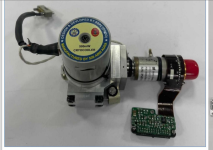

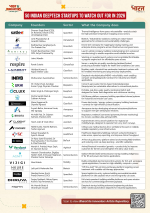
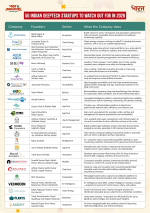
Indian startup "Quanfluence" is building quantum computers using photonics instead of cryo-cooled super-conductors.

Key Features
- Scalable Photonic Architecture: Leveraging the power of light, our photonic platform enables seamless scalability and integration with existing optical technologies.
- Reduced Cooling Requirements: Unlike superconducting quantum computers, our photonic approach significantly reduces the need for extreme cooling, making it more energy-efficient and cost-effective.
- Robust Error Correction: Our advanced error correction techniques ensure the accuracy and reliability of quantum computations, mitigating the impact of noise and imperfections.
- Versatile Gate-Based Model: Our gate-based model provides flexibility and programmability, allowing for the execution of a wide range of quantum algorithms.
Our 1000-qubit CV photonic quantum computer will open up new frontiers in fields such as:
- Materials Science: Discovering novel materials with extraordinary properties.
- Drug Discovery: Accelerating the development of life-saving medications.
- Artificial Intelligence: Revolutionizing AI algorithms and machine learning.
- Cryptography: Securing sensitive information with quantum-resistant encryption.
- Optimization: Solving complex optimization problems with unprecedented efficiency.
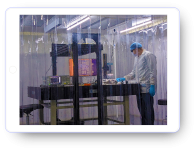
They are currently testing their photonics chips:

They are currently selling Quantum Random Number Generators (QRNG):

Indian firm demonstrates 20km, 10Gbps indigenous wireless laser comms system
Indian firm olee.space successfully demonstrated a wireless laser communication system capable of transmitting data at 10Gbps over 20km distance with 85% locally sourced components.
The system offers independence from radio-frequency spectrum, low probability of interception, and resistance to electronic jamming - making it ideal for defense applications.
The system achieved 99.9% carrier-grade link availability under Indian operating conditions, meeting mission-critical communication requirements.
The entire design, integration, and field demonstration were completed within four months of project funding, showcasing India's growing defense manufacturing capabilities.
The system's architecture is adaptable across terrestrial, maritime, aerial, and high-altitude platforms, with potential for future space-based applications.
Indian firm olee.space successfully demonstrated a wireless laser communication system capable of transmitting data at 10Gbps over 20km distance with 85% locally sourced components.
The system offers independence from radio-frequency spectrum, low probability of interception, and resistance to electronic jamming - making it ideal for defense applications.
The system achieved 99.9% carrier-grade link availability under Indian operating conditions, meeting mission-critical communication requirements.
The entire design, integration, and field demonstration were completed within four months of project funding, showcasing India's growing defense manufacturing capabilities.
The system's architecture is adaptable across terrestrial, maritime, aerial, and high-altitude platforms, with potential for future space-based applications.

New ‘PM Research Chair’ scheme to bring 120 global Indian scientists back to IITs
In addition to expanding the survey to all IITs, the council has also recommended that the reasons for “IIT graduates taking up PhD and postdoctoral programmes outside India” be analysed, and measures be proposed to strengthen research pathways and academic retention.
 indianexpress.com
A “Prime Minister Research Chair (PMRC)” scheme to attract top Indian-origin researchers and scientists is in the works, with a proposal to engage 120 research fellows and research chairs over five years. The IIT Council — the apex coordination body of the IITs — was informed of this at its last meeting.
An official in the Education Ministry presented the proposal on the Prime Minister Research Chair scheme to “attract and engage global talent of Indian origin” – at the IIT council meeting in August last year, going by the minutes of the meeting, which were released on Monday.
The scheme aims to attract top Indian-origin researchers and scientists to “strengthen India’s higher education and research ecosystem,” according to the minutes.
The scheme proposes to engage 120 fellows across three categories – ‘Young Research Fellows’, ‘Senior Research Fellows’, and ‘Research Chairs’ over five years.
“The scheme will focus on 14 nationally significant priority sectors, including semiconductors, AI, clean energy, and advanced materials. The scheme seeks to improve institutional research capacity, boost innovation, and enhance India’s global standing in science, technology, and academic excellence,” the minutes stated.
It added that “the Council was made aware of the in-principle agreement for the Prime Minister Research Chair Scheme, with the understanding that the initiative will be launched soon in a structured, large-scale way to attract and engage global talent of Indian origin.”


Paperwork and red-tape are killing India's scientific research. IISc offers a viable model
When flexibility is denied, grants cease to be instruments of discovery and instead become compliance exercises.
 theprint.in




It's good that we're getting experience in manufacturing high-precision optics thanks to our participation in the program but I think the TMT program itself is now in a bit of trouble:

NSF Likely to Drop One of Two Giant Telescopes From Consideration for Construction Funds
NSF’s board anticipates the agency will not have enough funds to support construction of both the TMT and GMT, which are competing against an array of other proposed infrastructure projects.ww2.aip.org
The good thing is, we now have the technical expertise to build our own telescope (probably in Hanle, Ladakh), just a matter of funding it.
...and now, that funding is here!

FM reaches for the stars, gives cosmic boost to India’s astronomy sphere | Pune News - The Times of India
Pune/Bengaluru: India's expanding contributions to astronomy research appear to have prompted a significant policy and funding push from the Centre, w.
 timesofindia.indiatimes.com
Two new telescopes are coming up - the National Large Solar Telescope (NLST) & the National Large Optical-infrared Telescope (NLOT). Along with an upgrade to the existing Himalayan Chandra Telescope (HCT) at Hanle, Ladakh. The NLST will come up close to Pangong Lake while the NLOT, a 12-13m segmented-mirror telescope, will also come up at the Hanle location, both in Ladakh.
Swarajya has a brilliant piece on how the ITOFF facility outside Bengaluru which was set up to serve the TMT project will now be utilized for these indigenous telescopes:
Apparently, the design of NLOT was specifically done to take advantage of ITOFF's expertise developed under the international TMT project.
@Gautam
This is an Area where India needs a lot of catching up to do

This is an Area where India needs a lot of catching up to do
NAL was working on T800 grade carbon fibre. Issue is the usual lack of private industry participation in R&D. And lack of faith and usual misery. Imagine NAL achieving something that was 80% close to T800, yet these guys abandoned it. Rather, than pushing ahead.
Last edited:
Tbh after re-reading the report a bit more calmly it kinda make sense why they didn't went ahead. Even, though I still think it was mostly because of their misery and lack of faith. Their reasoning are genuine. It was simply too expensive to scale up for them. It was basically a T700 grade carbon fibre that was more costly than imported Japanese T700 grade carbon fibre...(It was costing as much as imported T800 grade carbon fibre).
NAL was working on T800 grade carbon fibre. Issue is the usual lack of private industry participation in R&D. And lack of faith and usual misery. Imagine NAL achieving something that was 80% close to T800, yet these guys abandoned it. Rather, than pushing ahead.
Perhaps, focusing first on rapid commercialisation and large-scale production of T100 and T300 carbon fibre is the more sensible path. These grades have broad industrial demand, lower certification barriers, and allow India to build the PAN precursor supply chain, process control, workforce skills, and cost discipline that ultimately determine success in high-end fibres. And private industry would be much more eager to participate for such low entry barrier projects.
please look at the K series missile thread
NAL was working on T800 grade carbon fibre. Issue is the usual lack of private industry participation in R&D. And lack of faith and usual misery. Imagine NAL achieving something that was 80% close to T800, yet these guys abandoned it. Rather, than pushing ahead.
post 82.
Yeah just saw it. Thanks for the information. Damn, I had went into deep depression after reading that Sansad report. But reading your post I feel a bit relievedplease look at the K series missile thread
post 82.
 .
.
Sarvam AI conversational platform "Samvaad" threads: