
looks like RR may help with Kaveri core
Indian Indigenous Aero Engine Developments
- Thread starter Ashwin
- Start date
-
- Tags
- hal htfe-25 htse-1200 manik nal
You are using an out of date browser. It may not display this or other websites correctly.
You should upgrade or use an alternative browser.
You should upgrade or use an alternative browser.

There is nothing wrong with Kaveri core, all issues have been resolved by Indians themselves. If they want to help transfer information about ceramic matrix composites, bonding cmc components together, data about modeling and optimization of blade geometries and fractional fire control.
As well manufacturing techniques for brushless seals, modeling software, empirical data on non-linear excusions on engine starts. People have no idea what it takes to develop and certify a jet engine and keep banging on "the core" because they watched a youtube video.
As well manufacturing techniques for brushless seals, modeling software, empirical data on non-linear excusions on engine starts. People have no idea what it takes to develop and certify a jet engine and keep banging on "the core" because they watched a youtube video.

Read the twitter post again.There is nothing wrong with Kaveri core, all issues have been resolved by Indians themselves. If they want to help transfer information about ceramic matrix composites, bonding cmc components together, data about modeling and optimization of blade geometries and fractional fire control.
As well manufacturing techniques for brushless seals, modeling software, empirical data on non-linear excusions on engine starts. People have no idea what it takes to develop and certify a jet engine and keep banging on "the core" because they watched a youtube video.
Rolls-Royce India
@RollsRoyceIndia
The India–UK defence and technology collaboration is expected to advance significantly under the Vision 2035 roadmap, moving beyond intent towards execution, particularly in advanced and complex systems like the Jet Engine ***Advance Core Technologies (JEACT),**** aimed at #CreatingIndiasNext national security capabilities.
========
Jet Engine Advanced Core Technologies (JEACT) is a strategic India-UK partnership focused on co-developing high-performance military jet engine cores
======
@Sudoroot127 just assumed its for Kaveri.

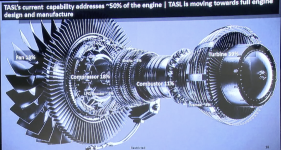
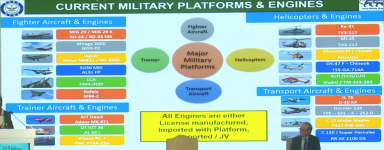
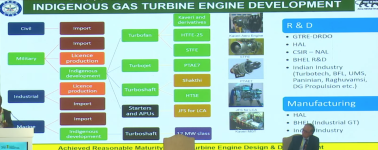
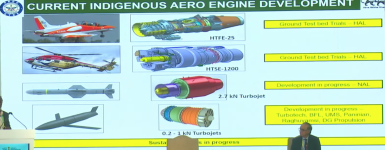
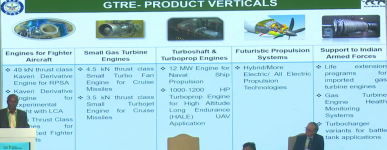
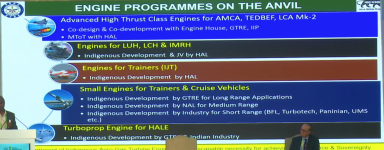
In the 3rd slide, do they mean to say HTFE-25 has been integrated with a HJT-36 trainer and undergoing ground tests?
No, engine ground run. That was also 2-3 years back. No significant progress after that.In the 3rd slide, do they mean to say HTFE-25 has been integrated with a HJT-36 trainer and undergoing ground tests?
I dont think this engine is even designed for HJT-36. It will go to Jaguar or Hawk first.
- Kaveri Dry Engine : Order placed for 6 with Godrej, received 3 both and running at GTRE facility.
- GTRE Twin cell test facility will be operational in one year.
- High altitude test facility, possible location in telangana.
- STFE: Placed order for 25 engines with BATL. Received 8 engines so far.
- Kaveri-2: Discussions are ongoing.
- The unmanned UAV project Remotely Piloted Strike Aircraft (RPSA) has not yet been approved. FUFA is a technology development program to develop technologies and prove them before government sanction. ADE and GTRE working towards that.

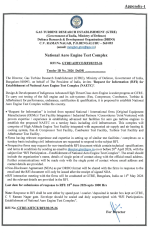
Exclusive : India’s Big Step Toward Indigenous Aero Engine Testing
India is moving forward with a strong push toward self-reliance in defence aviation technology. The Gas Turbine Research Establishment, a leading lab under the Defence Research and Development Organisation and the Ministry of Defence, has released a Request for Information (RFI) to set up a National Aero Engine Test Complex (NAETC).
This proposed facility aims to bring complete, end-to-end aero engine testing capabilities within India, reducing the need to depend on foreign infrastructure.
Why This Matters: Building an Indigenous Aero Engine
A key driver behind this initiative is India’s effort to develop a high-thrust aero engine domestically. GTRE, based in Bengaluru, is leading work on an Indigenous Advanced High Thrust Class Aero Engine, which is essential for future combat aircraft.
Before such engines can be deployed, they must go through extensive testing. This includes validating performance, durability, and safety across all major components such as the fan, compressor, combustor, turbine, and afterburner.
At present, India does not have a single integrated facility capable of handling this full range of tests at the required scale. The NAETC is intended to address this gap.
What the NAETC Will Include
The National Aero Engine Test Complex is planned as a fully integrated, world-class testing hub within India. It will include:
- A High Altitude Engine Test Facility to simulate real flight conditions at extreme altitudes
- A Fan and Compressor Test Facility for evaluating compression stages
- A Combustor Test Facility to assess combustion performance and durability
-A Turbine Test Facility for testing turbine components under realistic stress conditions
- An Afterburner Test Facility to validate
thrust augmentation systems
Beyond supporting GTRE, this complex is expected to serve as a national resource for India’s wider aerospace ecosystem.
Call for Global Participation
Through RFI, GTRE is inviting interest from both Indian and international players. This includes:
Original Equipment Manufacturers
- Test facility developers and integrators
Industrial partners
- Joint ventures and consortiums
Interested organizations should have proven experience in setting up advanced aero engine test facilities and be capable of delivering the entire project, including infrastructure, on a turnkey basis and this is where it appears Safran and Rolls Royce have edge.
Strategic Importance
The NAETC is not just another infrastructure project. It represents a major step in India’s defence capability building.
- Stronger self-reliance: Domestic testing reduces dependence on foreign facilities and safeguards sensitive technologies
- Support for indigenous engines: Provides critical infrastructure for testing and certification
- Technology collaboration: Opens opportunities for global partnerships and knowledge transfer
- Long-term national asset: Will benefit public sector units, private companies, and research institutions across India
With this RFI, India is clearly signaling its intent to build world-class aerospace capabilities within the country. Once operational, the NAETC will play a central role in enabling India to design, test, and certify advanced aero engines independently.
For global and domestic players in aerospace, this presents a significant opportunity to be part of a long-term, high-impact national program.
With the NAETC set to anchor India’s aero-engine design, testing, and certification ecosystem, the logical next step is the development of a dedicated Flying Test Bed (FTB). While ground-based facilities will validate core performance parameters, an FTB is indispensable for real-world evaluation enabling in-flight testing of engines across varying altitudes, speeds, and operational conditions. It bridges the critical gap between lab validation and operational deployment, allowing engineers to assess reliability, integration challenges, and performance under dynamic flight loads. For India, investing in an indigenous flying test bed would not only accelerate engine development cycles but also significantly reduce dependence on foreign platforms for flight certification, reinforcing true aerospace self-reliance.
India is moving forward with a strong push toward self-reliance in defence aviation technology. The Gas Turbine Research Establishment, a leading lab under the Defence Research and Development Organisation and the Ministry of Defence, has released a Request for Information (RFI) to set up a National Aero Engine Test Complex (NAETC).
This proposed facility aims to bring complete, end-to-end aero engine testing capabilities within India, reducing the need to depend on foreign infrastructure.
Why This Matters: Building an Indigenous Aero Engine
A key driver behind this initiative is India’s effort to develop a high-thrust aero engine domestically. GTRE, based in Bengaluru, is leading work on an Indigenous Advanced High Thrust Class Aero Engine, which is essential for future combat aircraft.
Before such engines can be deployed, they must go through extensive testing. This includes validating performance, durability, and safety across all major components such as the fan, compressor, combustor, turbine, and afterburner.
At present, India does not have a single integrated facility capable of handling this full range of tests at the required scale. The NAETC is intended to address this gap.
What the NAETC Will Include
The National Aero Engine Test Complex is planned as a fully integrated, world-class testing hub within India. It will include:
- A High Altitude Engine Test Facility to simulate real flight conditions at extreme altitudes
- A Fan and Compressor Test Facility for evaluating compression stages
- A Combustor Test Facility to assess combustion performance and durability
-A Turbine Test Facility for testing turbine components under realistic stress conditions
- An Afterburner Test Facility to validate
thrust augmentation systems
Beyond supporting GTRE, this complex is expected to serve as a national resource for India’s wider aerospace ecosystem.
Call for Global Participation
Through RFI, GTRE is inviting interest from both Indian and international players. This includes:
Original Equipment Manufacturers
- Test facility developers and integrators
Industrial partners
- Joint ventures and consortiums
Interested organizations should have proven experience in setting up advanced aero engine test facilities and be capable of delivering the entire project, including infrastructure, on a turnkey basis and this is where it appears Safran and Rolls Royce have edge.
Strategic Importance
The NAETC is not just another infrastructure project. It represents a major step in India’s defence capability building.
- Stronger self-reliance: Domestic testing reduces dependence on foreign facilities and safeguards sensitive technologies
- Support for indigenous engines: Provides critical infrastructure for testing and certification
- Technology collaboration: Opens opportunities for global partnerships and knowledge transfer
- Long-term national asset: Will benefit public sector units, private companies, and research institutions across India
With this RFI, India is clearly signaling its intent to build world-class aerospace capabilities within the country. Once operational, the NAETC will play a central role in enabling India to design, test, and certify advanced aero engines independently.
For global and domestic players in aerospace, this presents a significant opportunity to be part of a long-term, high-impact national program.
With the NAETC set to anchor India’s aero-engine design, testing, and certification ecosystem, the logical next step is the development of a dedicated Flying Test Bed (FTB). While ground-based facilities will validate core performance parameters, an FTB is indispensable for real-world evaluation enabling in-flight testing of engines across varying altitudes, speeds, and operational conditions. It bridges the critical gap between lab validation and operational deployment, allowing engineers to assess reliability, integration challenges, and performance under dynamic flight loads. For India, investing in an indigenous flying test bed would not only accelerate engine development cycles but also significantly reduce dependence on foreign platforms for flight certification, reinforcing true aerospace self-reliance.


Wait when the deal will be signed , after that things will be cleared.What would be the timeline for this, if things go as planned 4-5 years?

Not aero-engine turbines, but still counts as relevant experience:

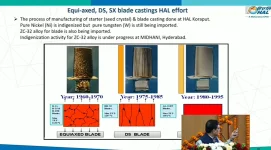
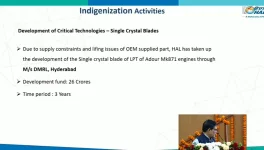
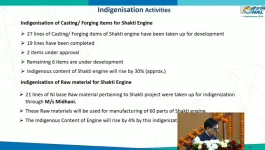
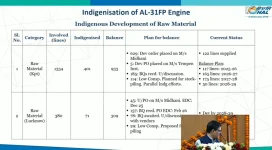
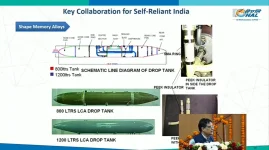
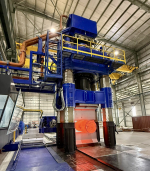
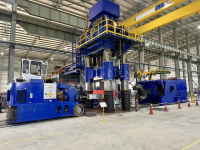
I don't know which engine this is. Maybe someone here can identify it.
REQUEST FOR EXPRESSION ON INTEREST (RFI) FOR IDENDTIFICATION OF PRODUCTION AGENCIES FOR MANUFACTURE OF COMPRESSOR BLADES FOR AERO-ENGINE APPLICATION.
The Tentative number of engine sets required per year would 6 Engine Sets. The Development batch would be 2.5 Engine Sets. This data is tentative and the exact engine sets as indicated in the RFQ after pre-bid meeting would be final and the IIPs needs to consider the same during submission of the offer for the RFQ.
List of desirable Machine/Facilities available for executing the scope of work
REQUEST FOR EXPRESSION ON INTEREST (RFI) FOR IDENDTIFICATION OF PRODUCTION AGENCIES FOR MANUFACTURE OF COMPRESSOR BLADES FOR AERO-ENGINE APPLICATION.
The Tentative number of engine sets required per year would 6 Engine Sets. The Development batch would be 2.5 Engine Sets. This data is tentative and the exact engine sets as indicated in the RFQ after pre-bid meeting would be final and the IIPs needs to consider the same during submission of the offer for the RFQ.
List of desirable Machine/Facilities available for executing the scope of work
- 100-250 TON PRESS
- 160-250 TON TRIMMING PRESS
- 160 ECCENTRIC PRESS
- 250-400 TON PRESS
- 400-800 TON PRESS
- 1000-2500 TON PRESS
- 1000-4000 TON PRESS
- 1500-4000 TON PRESS
- 2500-4000 TON PRESS
- 4000 TON PRESS
Attachments
HTFE/HTSE, I think. What would they do with 6 HTFEs per year? Is the design work of the larger Ghatak powered by 2 HTFEs complete?I don't know which engine this is. Maybe someone here can identify it.
REQUEST FOR EXPRESSION ON INTEREST (RFI) FOR IDENDTIFICATION OF PRODUCTION AGENCIES FOR MANUFACTURE OF COMPRESSOR BLADES FOR AERO-ENGINE APPLICATION.
The Tentative number of engine sets required per year would 6 Engine Sets. The Development batch would be 2.5 Engine Sets. This data is tentative and the exact engine sets as indicated in the RFQ after pre-bid meeting would be final and the IIPs needs to consider the same during submission of the offer for the RFQ.
List of desirable Machine/Facilities available for executing the scope of work
- 100-250 TON PRESS
- 160-250 TON TRIMMING PRESS
- 160 ECCENTRIC PRESS
- 250-400 TON PRESS
- 400-800 TON PRESS
- 1000-2500 TON PRESS
- 1000-4000 TON PRESS
- 1500-4000 TON PRESS
- 2500-4000 TON PRESS
- 4000 TON PRESS
CATS warrior mk2 maybe? i mean wasnt their plan to have a 5 tonne class CCA powered by 2 HTFEs for high subsonic or supersonic flight and good payload? If its HTFE then its prolly that.HTFE/HTSE, I think. What would they do with 6 HTFEs per year? Is the design work of the larger Ghatak powered by 2 HTFEs complete?
the HTFE is a 25KN engine while the KDE is a 52-54KN engine. Dont see how 2 HTFEs make a enhanced ghatakCATS warrior mk2 maybe? i mean wasnt their plan to have a 5 tonne class CCA powered by 2 HTFEs for high subsonic or supersonic flight and good payload? If its HTFE then its prolly that.