
You are using an out of date browser. It may not display this or other websites correctly.
You should upgrade or use an alternative browser.
You should upgrade or use an alternative browser.


Frankly in the light of the FAL to be set up by the EMBRAER Adani JV , I don't know what quite to make of this development.
Arguably there's a market which can absorb both these planes & more but given this would take more than a decade to fructify & the first mover's advantage of EMBRAER Adani , marketing this to local civil action cos will be an uphill task what to speak of the international market.
If all else fails, GoI can always lean on the IAF to pick up a few dozen. Iirc, there was an IAF requirement for ~15 Saras ac for transport, target towing and other roles which went nowhere.
Frankly in the light of the FAL to be set up by the EMBRAER Adani JV , I don't know what quite to make of this development.
Arguably there's a market which can absorb both these planes & more but given this would take more than a decade to fructify & the first mover's advantage of EMBRAER Adani , marketing this to local civil action cos will be an uphill task what to speak of the international market.
Once proven in military service, the civil aviation sector might be more willing to look at it. Ofc, all this is 12-15 years into the future.
It's not Saras, but RTA-90. I posted the details here.If all else fails, GoI can always lean on the IAF to pick up a few dozen. Iirc, there was an IAF requirement for ~15 Saras ac for transport, target towing and other roles which went nowhere.
Once proven in military service, the civil aviation sector might be more willing to look at it. Ofc, all this is 12-15 years into the future.
I get that. I'm just surmising that the IAF might chose RTA-90 instead of the Saras now.It's not Saras, but RTA-90. I posted the details here.
If all else fails, GoI can always lean on the IAF to pick up a few dozen. Iirc, there was an IAF requirement for ~15 Saras ac for transport, target towing and other roles which went nowhere.
Once proven in military service, the civil aviation sector might be more willing to look at it. Ofc, all this is 12-15 years into the future.
That ship has sailed. For that you've the MTA. No doubt GoI would lean on the services to buy a few . I don't see how that'd affect the sales performance of the said aircraft.I get that. I'm just surmising that the IAF might chose RTA-90 instead of the Saras now.
I'm of the opinion this is the same Russian Sukhoi passenger aircraft which the former offered during Putin's latest visit , we'd be building with some modifications so as to pass it out as a JV & get western certification. In all probability NAL & HAL will be involved.
Quite frankly I don't see what learnings will both the aforementioned entities derive from this JV or Adani from its JV with EMBRAER.
That ship has sailed. For that you've the MTA. No doubt GoI would lean on the services to buy a few . I don't see how that'd affect the sales performance of the said aircraft.
Whn buying a new ac, airlines mostly look for fuel economy, speed, pax/payload capacity, etc. Data from the IAF would enable prospective airline buyers to benchmark performance against E-Jet/Q400 and make an informed decision.
Possible. In the 2000s, NAL had collaborated with a Russian bureau on the Saras Mk1 design.I'm of the opinion this is the same Russian Sukhoi passenger aircraft which the former offered during Putin's latest visit , we'd be building with some modifications so as to pass it out as a JV & get western certification. In all probability NAL & HAL will be involved.
HAL too had a tie-up with Ilyushin on the Il-214 based MTA which was cancelled later. Russia is our best bet right now to develop a new RTA, imo. They are already collaborating with the Chinese on the COMAC CRC 929 wide body airliner.
Adani is likely happy just being a local assembly partner to Embraer. Same with the Tatas. They likely wouldn't want invest in R&D w/o GoI assuring minimum order quantities + PLI benefits.Quite frankly I don't see what learnings will both the aforementioned entities derive from this JV or Adani from its JV with EMBRAER.

Any Indian Airlines CEO ordering the Russian/HAL aeroplane will be promptly fired by the board and rightfully so!! Embraer-Adani plane makes sense for smaller UDAN routes and some airlines already operate these and along with some financial incentives it could be a decent buy for the new startup airlines.

Flamingo Aerospace is not an airliner. It is new aerospace manufacturer.

What do they do?Flamingo Aerospace is not an airliner. It is new aerospace manufacturer.
So far nothing much. They want to make commercial planes in India.What do they do?

Russia Agrees to Sell First Six Il-114-300 Aircraft Abroad
Deliveries to India may begin in 2028
 www1.ru
The United Aircraft Corporation (UAC, part of Rostec) has entered into a preliminary agreement with the private Indian company Flamingo Aerospace for the supply of six Il-114-300 turboprop aircraft. The signing ceremony took place on January 28, 2026, on the sidelines of the Wings India international aviation exhibition.
The head of the corporation, Vadim Badeha, clarified that deliveries could begin in as little as two years.
Given the extremely high demand in the Indian market, our partners require us to start deliveries in a very short time. Today, the start of deliveries in 2028 is being discussed.
UAC will also provide Flamingo Aerospace with a roadmap for the development of aviation competencies. This will allow the Indian company to gradually increase its capabilities in the assembly, modification, maintenance and repair of aircraft, as well as infrastructure development.
Public sector aerospace major HAL is aiming to start rolling-out semi knock-down SuperJet 100 (SJ100) aircraft in its existing facilities in the next three years, the company CMD, DK Sunil said on Wednesday.
Addressing a press conference, he said the company aims to achieve 25 per cent of its revenues from the civil aviation vertical in the next ten years from the existing 4-5 per cent.
Hindustan Aeronautics Ltd (HAL) recently signed an agreement with Russia's Public Joint Stock Company United Aircraft Corporation (PJSC-UAC) for the production of SJ-100 aircraft.
Sunil said the idea is to not wait for the production, but to deploy the aircraft as soon as possible. HAL would like to lease about 10 to 20 which can be bought from Russia directly in flyaway condition.
“The leasing is a separate track because we buy out the aircraft directly. Manufacturing is setting up the facilities. And, as I said, in three years we will do the roll-out in a semi knock-down condition. Bring all the assemblies, assemble it. That is the target in three years. So, bring in all the facilities, bring in the test equipment and get it going. That is the target for three years,” he said.
“In the next year or so, year and a half, we can get in about 10 aircraft. So, that is the idea that we are bringing in,” he said, adding that he is expecting a demand for over 200 SJ100 aircraft for Indian regional connectivity push.
“We see a good market of upwards of 200 aircraft for this size of India and you know in the local region. So, there is enough market for an aircraft of this size.
The HAL official said the company would commence production of SJ100 in its existing facilities in the next three-four years.
Sunil said the aerospace major is in touch with some companies in GIFT City in Gujarat on leasing issues.
Going forward, in the next three to four years down the line, the SJ 100 and helicopters are going to become a significant component of the company’s revenues.
Russian UAC, Indian HAL companies sign agreement on production of SJ-100 aircraft
Moscow, Jan 28 (UNI/SPUTNIK) Russia''s United Aircraft Corporation (UAC, part of the Rostec state corporation) and Indian state corporation Hindustan Aeronautics Limited (HAL) signed an agreement on Wednesday on joint activities to license the production of SJ-100 aircraft, a Sputnik reported. .
www.uniindia.com

Air India pilot flags possible defect with fuel control switch on a Boeing 787, airline grounds aircraft
The crew of the Boeing 787 reported abnormal behaviour of the left engine fuel control switch on Monday, as during engine start, the switch failed to remain locked in the RUN position on two attempts, moving towards CUTOFF.
 indianexpress.com
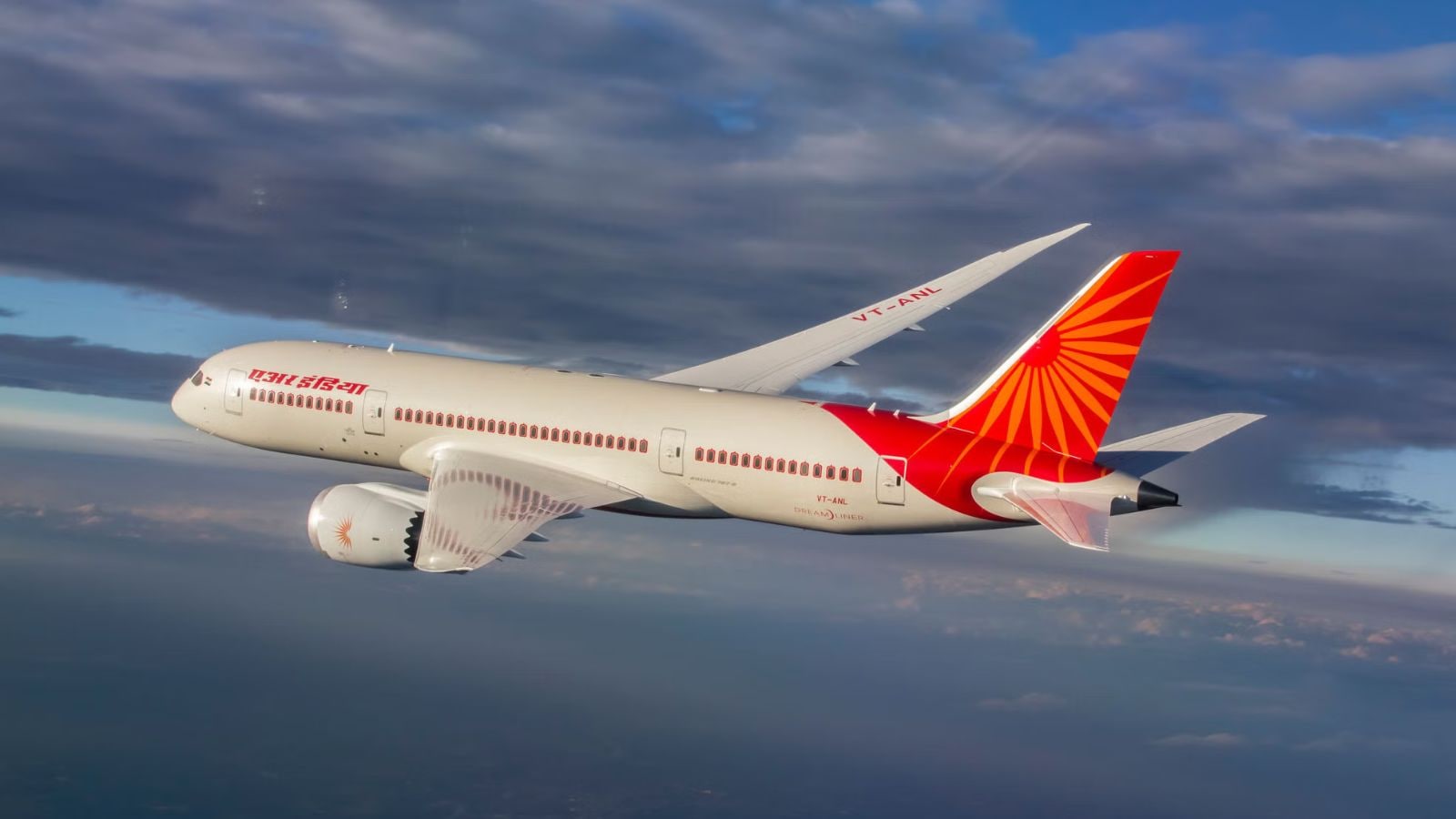
An Air India pilot has flagged a possible defect with one of the engine fuel control switches of one of the airline’s Boeing 787 aircraft, following which that specific plane has been grounded by the airline. Engine fuel control switches have been at the focus of the investigation into the fatal crash of an Air India Boeing 787 jet in Ahmedabad in June last year, with the preliminary probe report saying that the accident occurred after both engines of the ill-fated aircraft were starved as both its fuel control switches transitioned from ‘RUN’ to ‘CUTOFF’ position within a second of each other moments after lift-off.
According to a statement by aviation safety advocacy group Safety Matters Foundation, the crew of the Boeing 787 (registration: VT-ANX) reported abnormal behaviour of the left engine fuel control switch on Monday, as during engine start, the switch failed to remain locked in the RUN position on two attempts, moving towards CUTOFF. These switches control the flow of fuel to the aircraft’s engines, and such a malfunction could lead to inadvertent engine shutdown under specific conditions, Safety Matters Foundation said. The nine-year-old aircraft was operating a London-Bengaluru flight.
“We are aware that one of our pilots has reported a possible defect on the fuel control switch of a Boeing 787-8 aircraft. After receiving this initial information, we have grounded the aircraft and are involving the OEM (original equipment manufacturer) to get the pilot’s concerns checked on a priority basis. The matter has been communicated to the aviation regulator, DGCA. Air India had checked the fuel control switches on all Boeing 787 aircraft in its fleet after a directive from the DGCA, and had found no issues. At Air India, the safety of our passengers and crew remains top priority,” an Air India spokesperson said.
The airline did not provide details regarding the likely defect reported by the pilot. The OEM for the aircraft is Boeing, while the fuel control switch manufacturer is Honeywell.
“The Foundation notes that this incident comes against the backdrop of the ongoing investigation into the tragic loss of Air India Flight AI171 on 12 June 2025, which also involved a Boeing 787. While no connection is implied, the repeated emergence of issues with a critical flight control system on the same aircraft type demands the highest level of scrutiny,” Safety Matters Foundation said. It also called for immediate and transparent disclosure from DGCA and Air India of the findings from the plane’s inspection, re-evaluation of precautionary checks of the fuel control switches, an urgent regulatory review by the DGCA, and proactive communication by airlines and regulators to pilots on this issue.
Sounds like a manufacturing defect? Like.. is that not important enough to not be affected due to "improper pressing using fingers"?
Can some knowledgeable on aircraft systems help clarify this pls?