
India - United States Relations
- Thread starter Butter Chicken
- Start date
You are using an out of date browser. It may not display this or other websites correctly.
You should upgrade or use an alternative browser.
You should upgrade or use an alternative browser.


Remember:
India got certainty in tariff reduction. Rest is all up in the air. LOL!
LOL!
Its like a boyfriend *censored*ing a girl with promise of marriage and then telling her that they have manglik dosh. LOL!


Bhai document to ane de pehle rone se pehle. Professor saab itna to samjhte hi honge karmachari jo hain JNU mein.
Our FM & EAM akso from jnu.
What I meant was, JNU is one of the premiere institute. One would expect a professor like Mr. Ranganathan from there to understand that a tweet is not the same as an official document or a formal policy statement. Especially when the Indian side has only spoken about tarriff reduction, not "any other extravagent deal" as claimed by the American President, Mr. Trump.
Last edited:

Interesting turn in the Venezuelan crude story:
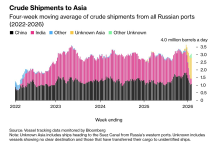
India has reduced its oil purchase from Russia "officially" according to vessel tracking data. A new reporting entity called "unknown Asia" has emerged around the same time as Indian crude oil reduction. There is no good info on how India is meeting its shortfall after reducing Russian supply. There is no noticeable spike in crude oil purchases from any other supplier. So, either consumption has suddenly fallen through the roof (economic numbers say otherwise) or India has been receiving oil from an unreported supplier.
Conversely, if this "unknown Asia" is a single market, it must be one of the largest markets in Asia. The 3 largest crude oil markets in Asia are China, India & Japan. Chinese consumption of Russian crude has been reported as stable with seasonal swings (no sudden spikes or drops). Japan doesn't buy a lot from Russia due to political reasons. So that leaves India.
If you add up India's reported purchase of Russian crude with this "unknown Asia", you get India's previous levels of Russian oil consumption. So, in all due probability India hasn't actually reduced Russian oil consumption in any substantial way. We've just stopped officially reporting it.
Trump needed to show something. So, India just moved it from official to unofficial?
View attachment 49467
India has reduced its oil purchase from Russia "officially" according to vessel tracking data. A new reporting entity called "unknown Asia" has emerged around the same time as Indian crude oil reduction. There is no good info on how India is meeting its shortfall after reducing Russian supply. There is no noticeable spike in crude oil purchases from any other supplier. So, either consumption has suddenly fallen through the roof (economic numbers say otherwise) or India has been receiving oil from an unreported supplier.
Conversely, if this "unknown Asia" is a single market, it must be one of the largest markets in Asia. The 3 largest crude oil markets in Asia are China, India & Japan. Chinese consumption of Russian crude has been reported as stable with seasonal swings (no sudden spikes or drops). Japan doesn't buy a lot from Russia due to political reasons. So that leaves India.
If you add up India's reported purchase of Russian crude with this "unknown Asia", you get India's previous levels of Russian oil consumption. So, in all due probability India hasn't actually reduced Russian oil consumption in any substantial way. We've just stopped officially reporting it.
And it's unofficial but it's not a secret, so publicly, India maintains its own stand too.
Itna drama LMAO.

Its simple. Ships are transfering oil in mid ocean.... After crossing suez canal. Wonder who is taking delivery.....
View attachment 49467
India has reduced its oil purchase from Russia "officially" according to vessel tracking data. A new reporting entity called "unknown Asia" has emerged around the same time as Indian crude oil reduction. There is no good info on how India is meeting its shortfall after reducing Russian supply. There is no noticeable spike in crude oil purchases from any other supplier. So, either consumption has suddenly fallen through the roof (economic numbers say otherwise) or India has been receiving oil from an unreported supplier.
Conversely, if this "unknown Asia" is a single market, it must be one of the largest markets in Asia. The 3 largest crude oil markets in Asia are China, India & Japan. Chinese consumption of Russian crude has been reported as stable with seasonal swings (no sudden spikes or drops). Japan doesn't buy a lot from Russia due to political reasons. So that leaves India.
If you add up India's reported purchase of Russian crude with this "unknown Asia", you get India's previous levels of Russian oil consumption. So, in all due probability India hasn't actually reduced Russian oil consumption in any substantial way. We've just stopped officially reporting it.
India is operating some kind of ghost fleet of tankers.

We should trust Modi ji to do whatever is right for us even if it means buying cheap oil from Russia. But did we

View attachment 49467
India has reduced its oil purchase from Russia "officially" according to vessel tracking data. A new reporting entity called "unknown Asia" has emerged around the same time as Indian crude oil reduction. There is no good info on how India is meeting its shortfall after reducing Russian supply. There is no noticeable spike in crude oil purchases from any other supplier. So, either consumption has suddenly fallen through the roof (economic numbers say otherwise) or India has been receiving oil from an unreported supplier.
Conversely, if this "unknown Asia" is a single market, it must be one of the largest markets in Asia. The 3 largest crude oil markets in Asia are China, India & Japan. Chinese consumption of Russian crude has been reported as stable with seasonal swings (no sudden spikes or drops). Japan doesn't buy a lot from Russia due to political reasons. So that leaves India.
If you add up India's reported purchase of Russian crude with this "unknown Asia", you get India's previous levels of Russian oil consumption. So, in all due probability India hasn't actually reduced Russian oil consumption in any substantial way. We've just stopped officially reporting it.
In any case I don't think Russian oil will ever go back to being a tiny, irrelevant share of India's oil basket. We may offer a temporary slowdown in crude oil purchases as a face-saving measure to the US. But the oil trade with Russia is here to stay, with or without US tariffs, with or without a trade deal with US.
Russia offers something that no other major oil exporter offers, trade in local currencies instead of USD/EUR. As long as that remains, New Delhi has very good reasons to not rock the boat with Russia. Of course, there will be problems of trade balance with Russia in the short to medium term. These are minor issues as long as there are weapons, financial & industrial trade links.
Multiple important websites have started to report on this:
It wasn't just a missed call: The currency clash behind the stalled US-India trade deal
India Has Created a Petro-Rupee. The Dollar Monopoly Has Been Breached.
By Ashmodhrav Vaswani
Published 28-01-2026, 05:52 pm
The global oil trade has operated under a single rule for fifty years. Oil is bought in dollars. Payments clear through US-controlled systems. Surpluses flow back into American debt. This structure funds US power and enforces financial obedience.
India has now broken that structure.
This is not a diplomatic gesture or an academic proposal. India has operationalised a petro-rupee and embedded it into real energy flows, balance sheets, and payment systems.
Oil Is Being Bought in Rupees
India is the world’s third-largest crude importer. When a buyer of this scale changes settlement currency, the system moves.
India now settles large volumes of crude imports in rupees, including oil from Russia and transactions with the UAE. These are not symbolic trades. At peak periods, over one-third of India’s crude imports were sourced from Russia and settled outside the dollar system.
Oil exporters accept rupees because India forced the next step.
Oil Money Is Being Recycled Inside India
The decisive move was not settlement. It was recycling. Foreign oil exporters hold rupee balances in Special Rupee Vostro Accounts. On August 12, 2025, the RBI issued a quiet but revolutionary circular. It authorized foreign holders of "Special Rupee Vostro Accounts" (SRVAs) to invest their surplus balances into Indian Government Securities and Treasury Bills. By permitting Russia to channel its oil earnings directly into Indian government bonds, New Delhi established a closed-loop financial mechanism. Russian oil revenues stopped flowing into U.S. Treasuries and instead began financing Indian infrastructure.
This creates a closed loop:
- Oil sold to India
- Paid in rupees
- Rupees invested in Indian debt
- Debt finances Indian growth
The Dollar Is No Longer Mandatory for Energy Trade
The power of the petrodollar was never about pricing. It was about compulsion.
Every country needed dollars to buy energy. That forced dollar reserves, dollar clearing, and dollar dependence.
India has eliminated that compulsion for its own imports. Energy trade can now occur without dollars at any stage. No dollar invoicing. No dollar clearing. No dollar recycling.
This directly weakens the structural demand for the US currency.
BRICS and Digital Settlement Make the System Durable
India is not operating alone.
As a central player in BRICS, India has pushed for interoperability between central bank digital currencies. This enables cross-border settlement outside SWIFT and outside Western correspondent banking. An oil shipment settled in rupees, cleared through a BRICS CBDC bridge, and invested into Indian bonds does not touch the US financial system.
That is not reform. That is bypass.
This Is perhaps Why the US India Trade Deal Collapsed
When U.S. Commerce Secretary Howard Lutnick stated in January that a landmark trade deal with India had stalled because Prime Minister Narendra Modi “did not call” President Trump to finalize it, the explanation was convenient but implausible. The real cause could well be monetary confrontation.
The United States can tolerate tariffs disputes. It cannot tolerate challenges to dollar dominance in energy markets. History shows that attempts to challenge this system have carried heavy consequences. Saddam Hussein’s decision to price Iraqi oil in euros in 2000 and Muammar Gaddafi’s 2011 push for a gold-backed African currency both triggered serious geopolitical fallouts.
India’s currency strategy crossed a strategic red line. Trade negotiations stalled. Tariff threats escalated. Warnings were issued against BRICS currency initiatives.
India did not reverse course. That confirms intent.
This Is Not About Sanctions or Russia
Sanctions created the opening. India converted it into infrastructure.
Even without sanctions, the petro-rupee holds. It lowers India’s dollar exposure, stabilizes its import bill, and converts energy trade into domestic capital formation.
Oil exporters holding rupees become financially tied to India’s bond market, growth trajectory, and political stability. That is leverage without force.
Reserve Currencies Are Built This Way
Reserve currencies do not emerge from speeches. They emerge from necessity.
When trade requires a currency, reserves follow.
When reserves follow, influence follows.
India has created a use case where oil exporters must hold rupees to access one of the world’s largest energy markets.
That is how monetary power is built.
The Shift Is Already Locked In
Indian refiners now negotiate with currency optionality. Foreign banks maintain rupee liquidity as a requirement. Energy settlement has been structurally diversified away from the dollar.
These changes are operational, not political. They do not unwind easily.
Conclusion
India has not attacked the petrodollar. It has rendered it optional.
For a system built on monopoly, optionality is fatal.
The petro-rupee exists. The breach has occurred. The financial order has shifted.
https://in.investing.com/analysis/i...e-dollar-monopoly-has-been-breached-200634166
India gave off ramp for Trump to climb down. When the deals he signed is not honored what makes you think his words are true ?
Either way this is just a temporary truce, he signed the deal bcos he dint want to lose out to other countries. We gave him complements and he returned back the same. Nothing much has changed, continue to expect friction and jostling will continue behind the public view.
Another thing is that Trump wants to have a go against Iran , so he is just being coy for the time being. If he succeeds against Iran things will change again.
Dollar trade is not just about trading in dollars , it gives the foreign agencies/countries the ringside view of our production/consumption of our goods/services.Multiple important websites have started to report on this:
It wasn't just a missed call: The currency clash behind the stalled US-India trade deal
India Has Created a Petro-Rupee. The Dollar Monopoly Has Been Breached.
By Ashmodhrav Vaswani
Published 28-01-2026, 05:52 pm
The global oil trade has operated under a single rule for fifty years. Oil is bought in dollars. Payments clear through US-controlled systems. Surpluses flow back into American debt. This structure funds US power and enforces financial obedience.
India has now broken that structure.
This is not a diplomatic gesture or an academic proposal. India has operationalised a petro-rupee and embedded it into real energy flows, balance sheets, and payment systems.
Oil Is Being Bought in Rupees
India is the world’s third-largest crude importer. When a buyer of this scale changes settlement currency, the system moves.
India now settles large volumes of crude imports in rupees, including oil from Russia and transactions with the UAE. These are not symbolic trades. At peak periods, over one-third of India’s crude imports were sourced from Russia and settled outside the dollar system.
Oil exporters accept rupees because India forced the next step.
Oil Money Is Being Recycled Inside India
The decisive move was not settlement. It was recycling. Foreign oil exporters hold rupee balances in Special Rupee Vostro Accounts. On August 12, 2025, the RBI issued a quiet but revolutionary circular. It authorized foreign holders of "Special Rupee Vostro Accounts" (SRVAs) to invest their surplus balances into Indian Government Securities and Treasury Bills. By permitting Russia to channel its oil earnings directly into Indian government bonds, New Delhi established a closed-loop financial mechanism. Russian oil revenues stopped flowing into U.S. Treasuries and instead began financing Indian infrastructure.
This creates a closed loop:
This is exactly how the petrodollar works in the United States. India has copied the mechanism, removed the dollar, and executed it at scale. That is a petro-rupee.
- Oil sold to India
- Paid in rupees
- Rupees invested in Indian debt
- Debt finances Indian growth
The Dollar Is No Longer Mandatory for Energy Trade
The power of the petrodollar was never about pricing. It was about compulsion.
Every country needed dollars to buy energy. That forced dollar reserves, dollar clearing, and dollar dependence.
India has eliminated that compulsion for its own imports. Energy trade can now occur without dollars at any stage. No dollar invoicing. No dollar clearing. No dollar recycling.
This directly weakens the structural demand for the US currency.
BRICS and Digital Settlement Make the System Durable
India is not operating alone.
As a central player in BRICS, India has pushed for interoperability between central bank digital currencies. This enables cross-border settlement outside SWIFT and outside Western correspondent banking. An oil shipment settled in rupees, cleared through a BRICS CBDC bridge, and invested into Indian bonds does not touch the US financial system.
That is not reform. That is bypass.
This Is perhaps Why the US India Trade Deal Collapsed
When U.S. Commerce Secretary Howard Lutnick stated in January that a landmark trade deal with India had stalled because Prime Minister Narendra Modi “did not call” President Trump to finalize it, the explanation was convenient but implausible. The real cause could well be monetary confrontation.
The United States can tolerate tariffs disputes. It cannot tolerate challenges to dollar dominance in energy markets. History shows that attempts to challenge this system have carried heavy consequences. Saddam Hussein’s decision to price Iraqi oil in euros in 2000 and Muammar Gaddafi’s 2011 push for a gold-backed African currency both triggered serious geopolitical fallouts.
India’s currency strategy crossed a strategic red line. Trade negotiations stalled. Tariff threats escalated. Warnings were issued against BRICS currency initiatives.
India did not reverse course. That confirms intent.
This Is Not About Sanctions or Russia
Sanctions created the opening. India converted it into infrastructure.
Even without sanctions, the petro-rupee holds. It lowers India’s dollar exposure, stabilizes its import bill, and converts energy trade into domestic capital formation.
Oil exporters holding rupees become financially tied to India’s bond market, growth trajectory, and political stability. That is leverage without force.
Reserve Currencies Are Built This Way
Reserve currencies do not emerge from speeches. They emerge from necessity.
When trade requires a currency, reserves follow.
When reserves follow, influence follows.
India has created a use case where oil exporters must hold rupees to access one of the world’s largest energy markets.
That is how monetary power is built.
The Shift Is Already Locked In
Indian refiners now negotiate with currency optionality. Foreign banks maintain rupee liquidity as a requirement. Energy settlement has been structurally diversified away from the dollar.
These changes are operational, not political. They do not unwind easily.
Conclusion
India has not attacked the petrodollar. It has rendered it optional.
For a system built on monopoly, optionality is fatal.
The petro-rupee exists. The breach has occurred. The financial order has shifted.
https://in.investing.com/analysis/i...e-dollar-monopoly-has-been-breached-200634166
Once we stop trading in dollars they are literally blind about the actual economic reality on the ground. Their ability to guess our economic strength degrades severely. They have to instead use the govt produced reports or publicly available info. This is what is happening wrt russia , these ppl constantly keep shouting that russian economy has collapsed but dont have any real data to back that up.
And funny thing is, they initiated it by sanctioning Russia till it had no option than to create a bypass mechanism. Then they became militarily hostile to Russia, losing whatever leverage they had, short of full blown war.Dollar trade is not just about trading in dollars , it gives the foreign agencies/countries the ringside view of our production/consumption of our goods/services.
Once we stop trading in dollars they are literally blind about the actual economic reality on the ground. Their ability to guess our economic strength degrades severely. They have to instead use the govt produced reports or publicly available info. This is what is happening wrt russia , these ppl constantly keep shouting that russian economy has collapsed but dont have any real data to back that up.
They gave China best excuse or space.. to convince others to decrease western reliance. And finally, the left lobby led by Biden Officials put the nail the coffin of their hegemony by alienating the only major non-west consumer. Giving enough reason for GOI and RBI to work on long time strategy to bypass dollars.
And this is just initial stages where the effects are being visible. More and more mechanisms will be employed by BRICS in next 2-3 years.
No wonder the western left ecosystem ( Meta, NGOs, "Ranking" agency, and a desperate opposition) is dropping all pretenses on anti-GOI, anti-India narratives.

A lot of Russian economic data is censored so there's no data period.Dollar trade is not just about trading in dollars , it gives the foreign agencies/countries the ringside view of our production/consumption of our goods/services.
Once we stop trading in dollars they are literally blind about the actual economic reality on the ground. Their ability to guess our economic strength degrades severely. They have to instead use the govt produced reports or publicly available info. This is what is happening wrt russia , these ppl constantly keep shouting that russian economy has collapsed but dont have any real data to back that up.
People buy in dollars because the people selling want a strong currency and buyers don't want to be holding vast amounts of depreciating currency. The Petro-dollar won't change unless the reality of the US's growing $31tr economy suddenly changes.
