

This is blatant violation of seperation of power by SCMuch bigger problem than you can think of
India - United States Relations
- Thread starter Butter Chicken
- Start date
You are using an out of date browser. It may not display this or other websites correctly.
You should upgrade or use an alternative browser.
You should upgrade or use an alternative browser.


BECA might be signed as early as April itself as final terms are getting documented upon. That was the chatter two backs back.India and USA begin work on BECA draft agreement
Srinjoy Chowdhury| National Affairs Editor
Updated Mar 06, 2020 | 22:12 IST
Days after US President Donald Trump's maiden India visit; New Delhi and Washington have started working on the draft of BECA, the third foundational agreements between the two countries.
View attachment 14527
New Delhi: India and the United States have begun work on the draft paper of the Basic Exchange and Cooperation Agreement (BECA), the third of the "foundational" pacts that aims to bring the armed forces of the two countries closer. Work on the drafts has just begun after a successful meeting on BECA in Washington DC on 2-3 March. After several rounds of discussions led by the Indian ministry of defence and the U.S. National Geospatial Agency, it was decided to begin work on the draft.
Indian and U.S. armed forces officials were part of the meeting.
BECA is the third of the agreements, India already having signed the Logistics Exchange Memorandum of Agreement (LEMOA) and the Communications Compatibility and Security Agreement (COMCASA). Both sides are confident that the agreement could be signed by the end of the year. In fact, both sides are working towards signing the agreement with the Trump administration before the November US Presidential polls. BECA would lead to sharing information relating to various kind of data, whether it is imagery, hydrological, topographical or other kinds of data.
The meeting in Washington DC was considered successful and the BECA agreement is seen as easier to achieve that COMCASA, which is about communications interoperability. It came right after the Trump visit to India. During the visit, the US President announced the sale of 3 billion US dollars worth of naval helicopters, Apache attack choppers and a protection system for the Prime Minister's plane.
The BECA agreement could also come up for discussions when the US defence secretary, Mark Esper, arrives on March 17. But no new defence deals are likely to be announced during the visit.
India and USA begin work on BECA draft agreement
U.S. Department of Energy Signs Memorandum of Understanding with India for Solar Decathlon India Competition in 2021
WASHINGTON, DC - This week, the U.S. Department of Energy (DOE) signed a Memorandum of Understanding (MOU) to provide collaboration and support to India in the establishment of Solar Decathlon India in 2021.
“India is joining an international family of Solar Decathlons that is preparing students all over the world to design and build homes integrated with advanced energy technologies while ensuring affordability and comfort,” said Daniel R Simmons, Assistant Secretary for the Office of Energy Efficiency and Renewable Energy. “Following President Trump and Secretary Brouillette’s visit to India, we are excited to continue collaborating with India on science and technologies that foster innovation through the power of competition.”
The U.S. Department of Energy Solar Decathlon® is a longstanding collegiate competition that challenges students to design and build high-performance, energy-efficient homes powered by renewable energy. Solar Decathlon India joins five other international competitions in Europe, China, Colombia, the United Arab Emirates, and Africa.
The MOU, signed today by Assistant Secretary of DOE’s Office of Energy Efficiency and Renewable Energy, Daniel R Simmons, and the Executive Director of the India U.S. Science and Technology Forum (IUSSTF), Dr. Nandini Kannan, allows DOE to collaborate with IUSSTF and its partners on the framework for the 2021 competition.
As part of the competition, university teams compete in 10 contests ranging from architecture and engineering to resilience and market potential. The winners are those teams that best blend architectural and engineering excellence with innovation in how their building interacts with the world around it. To date, more than 40,000 students have participated in U.S. and international Solar Decathlon editions. The competition is a vehicle for workforce development, clean energy outreach, and technology demonstration.
The next U.S. Solar Decathlon will be held on the National Mall in Washington, D.C. from June 24 through July 5, 2020 as a part of the Smithsonian Folklife Festival. For more information, visit www.solardecathlon.com.
U.S. Department of Energy Signs Memorandum of Understanding with India for Solar Decathlon India Competition in 2021
WASHINGTON, DC - This week, the U.S. Department of Energy (DOE) signed a Memorandum of Understanding (MOU) to provide collaboration and support to India in the establishment of Solar Decathlon India in 2021.
“India is joining an international family of Solar Decathlons that is preparing students all over the world to design and build homes integrated with advanced energy technologies while ensuring affordability and comfort,” said Daniel R Simmons, Assistant Secretary for the Office of Energy Efficiency and Renewable Energy. “Following President Trump and Secretary Brouillette’s visit to India, we are excited to continue collaborating with India on science and technologies that foster innovation through the power of competition.”
The U.S. Department of Energy Solar Decathlon® is a longstanding collegiate competition that challenges students to design and build high-performance, energy-efficient homes powered by renewable energy. Solar Decathlon India joins five other international competitions in Europe, China, Colombia, the United Arab Emirates, and Africa.
The MOU, signed today by Assistant Secretary of DOE’s Office of Energy Efficiency and Renewable Energy, Daniel R Simmons, and the Executive Director of the India U.S. Science and Technology Forum (IUSSTF), Dr. Nandini Kannan, allows DOE to collaborate with IUSSTF and its partners on the framework for the 2021 competition.
As part of the competition, university teams compete in 10 contests ranging from architecture and engineering to resilience and market potential. The winners are those teams that best blend architectural and engineering excellence with innovation in how their building interacts with the world around it. To date, more than 40,000 students have participated in U.S. and international Solar Decathlon editions. The competition is a vehicle for workforce development, clean energy outreach, and technology demonstration.
The next U.S. Solar Decathlon will be held on the National Mall in Washington, D.C. from June 24 through July 5, 2020 as a part of the Smithsonian Folklife Festival. For more information, visit www.solardecathlon.com.
U.S. Department of Energy Signs Memorandum of Understanding with India for Solar Decathlon India Competition in 2021

No CAATSA guarantees for India despite growing defence-trade ties with US
Jon Grevatt - Jane's Defence Industry
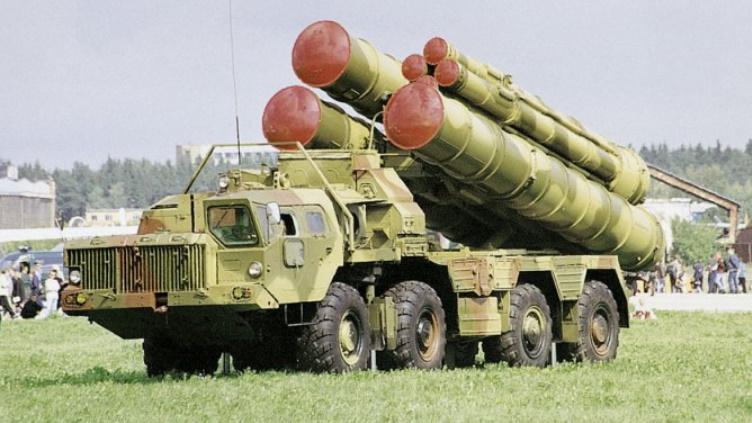
India’s contract to procure the Almaz-Antei S-400 air defence system from Russia (pictured) has put the country at risk of sanctions under the Countering America's Adversaries Through Sanctions Act. Source: Jane’s/Peter Felstead
As the United States and India continue to strengthen their defence trade partnership, the spectre of penalties related to the Countering America's Adversaries Through Sanctions Act (CAATSA) remains a risk that India is not safeguarded against, it has been confirmed to Jane's .
Despite some media reports in India suggesting that the Asian country has been awarded 'waiver' status under CAATSA - effectively shielding it from US sanctions linked to purchases of Russian military equipment - a US Department of State official told Jane's such country-specific dispensations are not made available under the Act.
"While we cannot prejudge whether a specific transaction would result in sanctions, it is important to note that CAATSA does not have any blanket or country-specific waiver provision," said the official. "There are strict criteria for considering a waiver, and each transaction is evaluated on a case-by-case basis. The Secretary of State has not made any determination regarding the significance of any transaction involving India."
CAATSA was enacted in 2017 in response to Russia's alleged interference in the 2016 US presidential election and the annexation of Crimea. Since its introduction the US government has imposed penalties on China and Turkey over their respective procurements of Russian Almaz-Antei S-400 air defence systems. In October 2019 India ordered five S-400 systems for USD5.5 billion.
In the spirit of CAATSA, the US Department of State official urged US allies to cease such military procurements from Russia. However, the official did not confirm whether CAATSA-related penalties were the subject of discussions between the two governments during high-level diplomatic meetings in New Delhi in late February.
"Without commentating on private diplomatic conversations, I can confirm that we urge all of our allies and partners to forgo transactions with Russia that risk triggering sanctions under CAATSA," said the US Department of State official.
Jon Grevatt - Jane's Defence Industry
India’s contract to procure the Almaz-Antei S-400 air defence system from Russia (pictured) has put the country at risk of sanctions under the Countering America's Adversaries Through Sanctions Act. Source: Jane’s/Peter Felstead
As the United States and India continue to strengthen their defence trade partnership, the spectre of penalties related to the Countering America's Adversaries Through Sanctions Act (CAATSA) remains a risk that India is not safeguarded against, it has been confirmed to Jane's .
Despite some media reports in India suggesting that the Asian country has been awarded 'waiver' status under CAATSA - effectively shielding it from US sanctions linked to purchases of Russian military equipment - a US Department of State official told Jane's such country-specific dispensations are not made available under the Act.
"While we cannot prejudge whether a specific transaction would result in sanctions, it is important to note that CAATSA does not have any blanket or country-specific waiver provision," said the official. "There are strict criteria for considering a waiver, and each transaction is evaluated on a case-by-case basis. The Secretary of State has not made any determination regarding the significance of any transaction involving India."
CAATSA was enacted in 2017 in response to Russia's alleged interference in the 2016 US presidential election and the annexation of Crimea. Since its introduction the US government has imposed penalties on China and Turkey over their respective procurements of Russian Almaz-Antei S-400 air defence systems. In October 2019 India ordered five S-400 systems for USD5.5 billion.
In the spirit of CAATSA, the US Department of State official urged US allies to cease such military procurements from Russia. However, the official did not confirm whether CAATSA-related penalties were the subject of discussions between the two governments during high-level diplomatic meetings in New Delhi in late February.
"Without commentating on private diplomatic conversations, I can confirm that we urge all of our allies and partners to forgo transactions with Russia that risk triggering sanctions under CAATSA," said the US Department of State official.
Gusto in Gujarat: President Trump Goes to India
On February 24th Air Force One touched down in India, marking President Donald Trump’s first trip to one of the pillars of America’s Indo-Pacific Strategy. State visits offer a unique opportunity to take stock of a relationship and the India-U.S. strategic partnership proved to be in good health. However, the modest expectations surrounding the visit, and an outbreak of violence in the Indian capital during the president’s stay, ensured some of the symbolic and substantive progress made was lost in the headlines.
In some ways it was a tale of two visits, or at least two very different weeks in Delhi. After paying homage to Mahatma Gandhi, the president began his visit with a rousing, inspiring speech to a crowd of over 120,000 in the world’s largest cricket stadium in Gujarat. The following day in the national capital, he and Indian Prime Minister Narendra Modi signed over $3.5 billion in defense deals and signaled growing geopolitical alignment on a range of salient strategic issues, from the Indo-Pacific, to the Quad, the rules-based order, the South China Sea, and the burgeoning India-U.S. energy partnership.
Contrasting sharply with the pageantry of the state visit was a lamentable spasm of violence in the capital that left over 50 people dead. It was the product of months of simmering tensions and protests from government critics opposed to recent and rumored changes in Indian citizenship laws that they charge could be abused to disadvantage or disenfranchise India’s 200 million Muslims. As in the past, President Trump largely avoided commenting on India’s internal strife, though the violence pushed Indian politics further into the spotlight after months of criticism of the Modi government from US media outlets and several prominent Democrats.
UPGRADING THE RELATIONSHIP
India-U.S. relations arguably received a boost the moment the president touched down in Gujarat. It was not simply his first state visit to the country, it was the first time any U.S. president traveled abroad exclusively to visit India. Despite a public appeal from Pakistani Prime Minister Imran Khan, President Trump passed on a trip to Islamabad, consistent with the policy of “de-hyphenation” practiced by the Obama administration. (President Jimmy Carter also skipped a trip to Pakistan when visiting India. Presidents Eisenhower, Nixon, Clinton, and George W. Bush all visited both).
President Trump’s visit carried tempered expectations from the outset when it became clear a modest but painfully elusive trade deal would fail to materialize. Additionally, there were few big-ticket takeaways expected, though this was arguably a product of the success of the previous three years. Rather than waiting for a leader summit, the Trump and Modi governments have been quietly adding new layers to the strategic partnership, from changing U.S. export control laws to facilitate arms sales to India; to reviving and upgrading the “Quad;” launching a new “2+2” foreign and defense ministers dialogue; signing a foundational military agreement that allows for the sharing of encrypted communications and equipment; inaugurating the first-ever tri-service India-US military exercise; strengthening coordination between the Indian military and CENTCOM; getting the U.S. invited to India’s MILAN naval exercise, and concluding a pact to facilitate private sector defense cooperation.
The headline event of the president’s trip was an address to a massive cricket stadium in Gujarat that drew comparisons to last year’s Howdy Modi event in Houston, Texas. Largely praised in Delhi, the president’s speech underscored the unique bond between the two democracies: “America loves India, America respects India, and America will always be faithful and loyal friends to the Indian people.”
President Trump praised Prime Minister Modi’s rags-to-riches story, “you are living proof that with hard work and devotion, Indians can accomplish anything,” and drew sharp contrasts between India and its autocratic neighbor, China:
"India’s rise as a prosperous and independent nation is an example to every nation all over the world and one of the most outstanding achievements of our century. It is all the more inspiring because you have done it as a democratic country, you have done it as a peaceful country, you have done it as a tolerant country, and you have done it as a great free country. There is all the difference in the world between a nation that seeks power through coercion, intimidation, and aggression, and a nation that rises by setting its people free and unleashing them to chase their dreams. And that is India," said Trump.
Prime Minister Modi reciprocated the plaudits, identifying the India-U.S. relationship as “the most important partnership of the 21st Century.” His choice of words, and the two leaders’ decision to upgrade the relationship to a “Comprehensive Global Strategic Partnership,” sent an important diplomatic signal. Among other things, it informs the Indian bureaucracy that the U.S. partnership is increasingly global in scope and character and should be treated as second-to-none. “It’s a kind of ratings process,” explained External Affairs Minister S. Jaishankar.
In their the fifth meeting in eight months, President Trump and Prime Minister Modi also built on a seemingly strong personal connection, continuing a tradition begun by Presidents Bush and Obama with Prime Ministers Vajpayee, Singh, and Modi. President Trump described Modi as a “very religious man.” “He’s a very calm man, but he’s actually a very, very strong person…I’ve seen him in action.”
DEFENSE
The biggest tangible takeaway from the trip was a pair of arms sales to India totaling over $3.5 billion, including a deal for six Apache attack helicopters ($930 million) and 24 Seahawk anti-submarine warfare helicopters ($2.6 billion). The two sales likely pushed the total volume of defense trade to over $20 billion over the past 10 years, after decades of virtually non-existent defense ties. “I believe that the United States should be India’s premier defense partner,” President Trump declared, “and that’s the way it’s working out.” According to the joint statement, the two leaders also:
Pledged to deepen defense and security cooperation, especially through greater maritime and space domain awareness and information sharing; joint cooperation; exchange of military liaison personnel; advanced training and expanded exercises between all services and special forces; closer collaboration on co-development and co-production of advanced defense components, equipment, and platforms; and partnership between their defense industries.
The joint statement also noted Delhi and Washington expect to soon complete a fourth and final foundational “enabling” military agreement this year, the Basic Exchange and Cooperation Agreement (BECA), which facilitates the sharing of geospatial intelligence. Finally, the two leaders agreed to “reinvigorate” an existing Homeland Security Dialogue as well as establish a new Counter-Narcotics Working Group.
VIOLENCE IN DELHI
In recent months U.S. media outlets and prominent Democrats in Washington have grown more vocal in criticizing the Modi government and the rise of Hindu nationalism since it revoked the autonomous status of Kashmir in August. By contrast, President Trump has adopted a more muted approach and in Delhi largely declined to comment on the eruption of violence during his stay. He admitted that he was aware of the reports but “didn’t discuss that with [Prime Minister Modi]. That’s up to India.” The president did suggest that he and Prime Minister talked about the topic of religious freedom “for a long time,” adding: “the Prime Minister was incredible on what he told me. He wants people to have religious freedom, and very strongly…And if you look back and look at what’s going on, relative to other places especially, they have really worked hard on religious freedom… And I really believe that’s what he wants.”
This sentiment was echoed in President Trump’s speech in Gujarat, where he praised India’s pluralistic traditions: “India is a country that proudly embraces freedom, liberty, individual rights, the rule of law, and the dignity of every human being. Your nation has always been admired around the Earth as the place where millions upon millions of Hindus and Muslims and Sikhs and Jains, Buddhists, Christians, and Jews worship side by side in harmony; where you speak more than 100 languages and come from more than two dozen states, yet you have always stood strong as one great Indian nation. Your unity is an inspiration to the world,” said Trump.
If communal violence and concerns about Hindu nationalism accelerate in the months ahead, the subject could feature more prominently in India-U.S. relations in 2021, following the U.S. presidential elections.
THE QUAD AND THE INDO-PACIFIC
In recent years, members of the “Quad”—Australia, Japan, India, and the U.S.—have begun to adopt a new paradigm for approaching the region. Geographically, the focus has shifted from viewing the Asia-Pacific and Indian Ocean as separate entities to viewing them as one interconnected space, the Indo-Pacific. In parallel, the four capitals have begun articulating a strategic vision for the region, one built atop a rules-based order, dubbed the Free and Open Indo-Pacific.
Once viewed as the most reluctant, but in some ways the most important, member of the Quad, in recent years India has been drawing closer to the U.S. and its allies in embracing this vision and abandoning some of the Non-Aligned dogmas of the past. This has led to a quickening of the quantity and quality of military engagements, an improvement in defense and intelligence ties, joint opposition to China’s Belt and Road Initiative, and shared vision for what connectivity initiatives in the region should look like.
This was most evident in India’s decision to revive, and then upgrade, the Quadrilateral Dialogue in late 2017. Last year, the Quad added a new counterterrorism exercise to its agenda and elevated discussions from the level of joint/assistant secretary to full minister/cabinet secretary.
The Quad got a short but important leader-level endorsement during President Trump’s trip when gave the grouping a rare personal plug during a joint press conference, approvingly recognizing the Quad’s “revitalization.”
During his speech in Gujarat, President Trump portrayed a vision of India and the U.S. uniting to secure of their shared values and interests: “Together, we will defend our sovereignty, security, and protect a free and open Indo-Pacific region for our children and for many, many generations to come.” The joint statement issued by the Indian and U.S. leaders characterized the two countries as “sovereign and vibrant democracies recognizing the importance of freedom, equal treatment of all citizens, human rights, and a commitment to the rule of law.” As expected, President Trump reaffirmed America’s support for Indian entry into the Nuclear Suppliers Group and a permanent seat for India on the UN Security Council.
TRADE
The failure to complete an India-U.S. trade agreement following months of tense negotiations was an obvious point of disappointment during the president’s trip. The Office of the U.S. Trade Representative (USTR) has identified numerous barriers to market access in India that it wants to see eased and the two sides have substantive differences to resolve on emerging technology issues like e-commerce and data localization. Over the past two years, trade tensions have resulted in the Trump administration imposing tariffs on steel and aluminum imports that impacted India, revoking India’s benefits under the Generalized System of Preferences (GSP), and threatening further punitive actions. The May 2019 Indian elections and the appointment of a new Indian commerce minister reinvigorated stalled trade talks but the two sides have yet to come to terms on roughly five of the thirty outstanding issues under negotiation.
Looking ahead, President Trump and Prime Minister Modi “agreed to promptly conclude the ongoing [trade] negotiations, which they hope can become phase one of a comprehensive bilateral trade agreement that reflects the true ambition and full potential of the bilateral commercial relations, advancing prosperity, investment, and job creation in both countries.” Prime Minister Modi later said he and President Trump “agreed to initiate negotiations for a bigger [trade] deal.”
Not all the news on the trade front was bleak. As President Trump noted, since his inauguration trade between India and the U.S. has “increased by more than 40 percent” while “the U.S. is India’s largest export market.” Indeed, bilateral trade reached record breaking heights in 2019, likely topping $150 billion dollars.
ENERGY
While it’s garnered few headlines, India-U.S. energy cooperation has grown exponentially in recent years, adding a new component to the strategic partnership. At their joint press conference, Prime Minister Modi declared total energy trade between the two countries had reached $20 billion over the last four years, calling America a “very important oil and gas source for India.” President Trump noted U.S. energy exports to India have increased 60% since he took office. (In 2019, U.S. exports of crude oil to India likely surpassed 90 million barrels, up from zero barrels in 2016, 9.6 million barrels in 2017, and 48 million barrels in 2018).
During the visit, officials from Exxon Mobil signed an agreement with Chart Industries and the Indian Oil Corporation to improve India’s liquefied natural gas (LNG) infrastructure by pioneering “virtual gas pipelines” to transport LNG within India by road, rail and waterways. Finally, in the slow-moving nuclear arena, the two leaders “encouraged the Nuclear Power Corporation of India Limited and [America’s] Westinghouse Electric Company to finalize the techno-commercial offer for the construction of six nuclear reactors in India at the earliest date.” Negotiations on this topic have been ongoing since India and the U.S. operationalized a groundbreaking nuclear deal in 2008.
INFRASTRUCTURE
In one of the more surprising announcements of the trip, the joint statement noted that America’s new International Development Finance Corporation (DFC) would be establishing a “permanent presence in India this year,” while the DFC would provide a “$600 million financing facility for renewable energy projects in India.” The DFC is intended to expand the U.S. government’s authorities and capabilities to support U.S. private sector infrastructure investments abroad.
At a time China’s Belt and Road Initiative has attracted growing global scrutiny, the U.S., together with Australia and Japan, have also unveiled a new Blue Dot Network (BDN) designed to promote “high-quality trusted standards for global infrastructure development.” The BDN was discussed by the two leaders, who “expressed interest in the concept.” Finally, President Trump and Prime Minister Modi supported a “partnership between USAID and India’s Development Partnership Administration for cooperation in third countries.”
5G
The Trump administration has been engaged in an intensive global public diplomacy campaign to warn foreign capitals about the dangers of allowing “untrusted vendors”—such as Chinese telecom giant Huawei—to build their new 5G infrastructure. While India has allowed Huawei to participate in 5G test trials, it is taking a patient approach and is unlikely to make a final decision on vendors for at least another year. Notably, Indian security firms were raising espionage concerns about Huawei over a decade ago, before many western intelligence agencies began raising red flags.
President Trump’s 5G point-person, National Security Advisor Robert O'Brien, accompanied the president on his India visit and was expected to hold technical discussions with his counterparts. During a press briefing, President Trump noted he and Prime Minister Modi "discussed the importance of a secure 5G wireless network and the need for this emerging technology to be a tool for freedom, progress, prosperity -- not to do anything where it could be even conceived as a conduit for suppression and censorship."
SOUTH CHINA SEA
In recent years India has gradually grown more vocal about its concerns in the South China Sea, and the need to respect international law and maintain freedom of navigation there. Indian oil firm ONGC has for years held the hydrocarbon rights to a Vietnamese offshore bloc which falls within China’s “Nine Dash Line” claim. While India is still a long way from conducting freedom of navigation operations there (as are most U.S. treaty allies), the South China Sea got an interesting mention in the joint statement: “The United States and India took note of efforts toward a meaningful Code of Conduct in the South China Sea [between ASEAN and China], and solemnly urged that it not prejudice the legitimate rights and interests of all nations according to international law.”
AFGHANISTAN
Afghanistan was not a main point of focus during President Trump’s trip, despite India’s intense interest in the unfolding peace deal between the U.S. and the Taliban. Delhi has historically been skeptical of the intentions of the Taliban and their patrons in Pakistan, and the efficacy of negotiations with the group. Nevertheless, the Indian government has stressed that it supports Afghan-led peace negotiations and shares America’s principal objectives in the country, as articulated in the joint statement:
The United States and India share interest in a united, sovereign, democratic, inclusive, stable, and prosperous Afghanistan. They support an Afghan-led and Afghan-owned peace and reconciliation process that results in a sustainable peace, cessation of violence, elimination of terrorist safe havens, and preservation of the gains of the last 18 years. President Trump welcomed India’s role in continuing to provide development and security assistance to help stabilize and provide connectivity in Afghanistan.
PAKISTAN AND TERRORISM
India largely welcomed the Trump administration’s early decision to suspend U.S. military aid to Pakistan, to launch new unilateral and multilateral sanctions on Pakistani-based terrorists, and seek to hold Pakistan more accountable at various international watchdogs like the Financial Action Task Force (FATF), a terrorism finance watchdog.
By contrast, Delhi has been more skeptical of the relative thaw in Pakistan-U.S. relations over the past six months, as Pakistan has positioned itself as kingmaker in negotiations with the Taliban. President Trump likely raised some eyebrows when, during his speech in Gujarat, he described America’s relationship with Pakistan as “a very good one,” pointed to “signs of big progress with Pakistan,” and said his “administration is working in very positive way with Pakistan to crack down on the terrorist organizations” operating on Pakistan’s border. During a press conference the U.S. president added that he had a “very good” relationship with Prime Minister Khan.
The joint statement issued by both sides was more critical of Pakistan and terrorist organizations operating on its soil. President Trump and Prime Minister Modi:
[D]enounced any use of terrorist proxies and strongly condemned cross-border terrorism in all its forms. They call on Pakistan to ensure that no territory under its control is used to launch terrorist attacks, and to expeditiously bring to justice the perpetrators of such attacks, including 26/11Mumbai and Pathankot. They called for concerted action against all terrorist groups, including Al-Qa’ida, ISIS, Jaish-e-Mohammad, Lashkar-e-Tayyiba, Hizb-ul Mujahideen, the Haqqani Network, TTP, D-Company, and all their affiliates.
CONCLUSION
The India-U.S. relationship has taken several strides forward during the first three-plus years of the Trump administration. In the waning months of the president’s term, the priority should be consolidating the gains already made and banking a few more “wins” before the year is out.
First, the two sides should commit themselves to completing a modest trade deal before U.S. elections in November. They have begun flirting with the idea of a larger trade deal post-elections but they should build on the considerable work already done to complete the more limited package in the near-term.
Second, Washington and Delhi should commit to finishing the pending BECA defense agreement before the elections. Third, the two should agree to establish a new joint military exercise that breaks new ground. A joint army exercise in the Himalayas or a joint naval exercise near India’s Andaman and Nicobar Islands would both be strategically desirable. Fourth, if possible, the two sides should work toward operationalizing a new defense co-development project under the Defense Trade and Technology Initiative (DTTI) and commit to collaborating on a new joint infrastructure project in South Asia in partnership with America’s new International Development Finance Corporation.
Gusto in Gujarat: President Trump Goes to India
On February 24th Air Force One touched down in India, marking President Donald Trump’s first trip to one of the pillars of America’s Indo-Pacific Strategy. State visits offer a unique opportunity to take stock of a relationship and the India-U.S. strategic partnership proved to be in good health. However, the modest expectations surrounding the visit, and an outbreak of violence in the Indian capital during the president’s stay, ensured some of the symbolic and substantive progress made was lost in the headlines.
In some ways it was a tale of two visits, or at least two very different weeks in Delhi. After paying homage to Mahatma Gandhi, the president began his visit with a rousing, inspiring speech to a crowd of over 120,000 in the world’s largest cricket stadium in Gujarat. The following day in the national capital, he and Indian Prime Minister Narendra Modi signed over $3.5 billion in defense deals and signaled growing geopolitical alignment on a range of salient strategic issues, from the Indo-Pacific, to the Quad, the rules-based order, the South China Sea, and the burgeoning India-U.S. energy partnership.
Contrasting sharply with the pageantry of the state visit was a lamentable spasm of violence in the capital that left over 50 people dead. It was the product of months of simmering tensions and protests from government critics opposed to recent and rumored changes in Indian citizenship laws that they charge could be abused to disadvantage or disenfranchise India’s 200 million Muslims. As in the past, President Trump largely avoided commenting on India’s internal strife, though the violence pushed Indian politics further into the spotlight after months of criticism of the Modi government from US media outlets and several prominent Democrats.
UPGRADING THE RELATIONSHIP
India-U.S. relations arguably received a boost the moment the president touched down in Gujarat. It was not simply his first state visit to the country, it was the first time any U.S. president traveled abroad exclusively to visit India. Despite a public appeal from Pakistani Prime Minister Imran Khan, President Trump passed on a trip to Islamabad, consistent with the policy of “de-hyphenation” practiced by the Obama administration. (President Jimmy Carter also skipped a trip to Pakistan when visiting India. Presidents Eisenhower, Nixon, Clinton, and George W. Bush all visited both).
President Trump’s visit carried tempered expectations from the outset when it became clear a modest but painfully elusive trade deal would fail to materialize. Additionally, there were few big-ticket takeaways expected, though this was arguably a product of the success of the previous three years. Rather than waiting for a leader summit, the Trump and Modi governments have been quietly adding new layers to the strategic partnership, from changing U.S. export control laws to facilitate arms sales to India; to reviving and upgrading the “Quad;” launching a new “2+2” foreign and defense ministers dialogue; signing a foundational military agreement that allows for the sharing of encrypted communications and equipment; inaugurating the first-ever tri-service India-US military exercise; strengthening coordination between the Indian military and CENTCOM; getting the U.S. invited to India’s MILAN naval exercise, and concluding a pact to facilitate private sector defense cooperation.
The headline event of the president’s trip was an address to a massive cricket stadium in Gujarat that drew comparisons to last year’s Howdy Modi event in Houston, Texas. Largely praised in Delhi, the president’s speech underscored the unique bond between the two democracies: “America loves India, America respects India, and America will always be faithful and loyal friends to the Indian people.”
President Trump praised Prime Minister Modi’s rags-to-riches story, “you are living proof that with hard work and devotion, Indians can accomplish anything,” and drew sharp contrasts between India and its autocratic neighbor, China:
"India’s rise as a prosperous and independent nation is an example to every nation all over the world and one of the most outstanding achievements of our century. It is all the more inspiring because you have done it as a democratic country, you have done it as a peaceful country, you have done it as a tolerant country, and you have done it as a great free country. There is all the difference in the world between a nation that seeks power through coercion, intimidation, and aggression, and a nation that rises by setting its people free and unleashing them to chase their dreams. And that is India," said Trump.
Prime Minister Modi reciprocated the plaudits, identifying the India-U.S. relationship as “the most important partnership of the 21st Century.” His choice of words, and the two leaders’ decision to upgrade the relationship to a “Comprehensive Global Strategic Partnership,” sent an important diplomatic signal. Among other things, it informs the Indian bureaucracy that the U.S. partnership is increasingly global in scope and character and should be treated as second-to-none. “It’s a kind of ratings process,” explained External Affairs Minister S. Jaishankar.
In their the fifth meeting in eight months, President Trump and Prime Minister Modi also built on a seemingly strong personal connection, continuing a tradition begun by Presidents Bush and Obama with Prime Ministers Vajpayee, Singh, and Modi. President Trump described Modi as a “very religious man.” “He’s a very calm man, but he’s actually a very, very strong person…I’ve seen him in action.”
DEFENSE
The biggest tangible takeaway from the trip was a pair of arms sales to India totaling over $3.5 billion, including a deal for six Apache attack helicopters ($930 million) and 24 Seahawk anti-submarine warfare helicopters ($2.6 billion). The two sales likely pushed the total volume of defense trade to over $20 billion over the past 10 years, after decades of virtually non-existent defense ties. “I believe that the United States should be India’s premier defense partner,” President Trump declared, “and that’s the way it’s working out.” According to the joint statement, the two leaders also:
Pledged to deepen defense and security cooperation, especially through greater maritime and space domain awareness and information sharing; joint cooperation; exchange of military liaison personnel; advanced training and expanded exercises between all services and special forces; closer collaboration on co-development and co-production of advanced defense components, equipment, and platforms; and partnership between their defense industries.
The joint statement also noted Delhi and Washington expect to soon complete a fourth and final foundational “enabling” military agreement this year, the Basic Exchange and Cooperation Agreement (BECA), which facilitates the sharing of geospatial intelligence. Finally, the two leaders agreed to “reinvigorate” an existing Homeland Security Dialogue as well as establish a new Counter-Narcotics Working Group.
VIOLENCE IN DELHI
In recent months U.S. media outlets and prominent Democrats in Washington have grown more vocal in criticizing the Modi government and the rise of Hindu nationalism since it revoked the autonomous status of Kashmir in August. By contrast, President Trump has adopted a more muted approach and in Delhi largely declined to comment on the eruption of violence during his stay. He admitted that he was aware of the reports but “didn’t discuss that with [Prime Minister Modi]. That’s up to India.” The president did suggest that he and Prime Minister talked about the topic of religious freedom “for a long time,” adding: “the Prime Minister was incredible on what he told me. He wants people to have religious freedom, and very strongly…And if you look back and look at what’s going on, relative to other places especially, they have really worked hard on religious freedom… And I really believe that’s what he wants.”
This sentiment was echoed in President Trump’s speech in Gujarat, where he praised India’s pluralistic traditions: “India is a country that proudly embraces freedom, liberty, individual rights, the rule of law, and the dignity of every human being. Your nation has always been admired around the Earth as the place where millions upon millions of Hindus and Muslims and Sikhs and Jains, Buddhists, Christians, and Jews worship side by side in harmony; where you speak more than 100 languages and come from more than two dozen states, yet you have always stood strong as one great Indian nation. Your unity is an inspiration to the world,” said Trump.
If communal violence and concerns about Hindu nationalism accelerate in the months ahead, the subject could feature more prominently in India-U.S. relations in 2021, following the U.S. presidential elections.
THE QUAD AND THE INDO-PACIFIC
In recent years, members of the “Quad”—Australia, Japan, India, and the U.S.—have begun to adopt a new paradigm for approaching the region. Geographically, the focus has shifted from viewing the Asia-Pacific and Indian Ocean as separate entities to viewing them as one interconnected space, the Indo-Pacific. In parallel, the four capitals have begun articulating a strategic vision for the region, one built atop a rules-based order, dubbed the Free and Open Indo-Pacific.
Once viewed as the most reluctant, but in some ways the most important, member of the Quad, in recent years India has been drawing closer to the U.S. and its allies in embracing this vision and abandoning some of the Non-Aligned dogmas of the past. This has led to a quickening of the quantity and quality of military engagements, an improvement in defense and intelligence ties, joint opposition to China’s Belt and Road Initiative, and shared vision for what connectivity initiatives in the region should look like.
This was most evident in India’s decision to revive, and then upgrade, the Quadrilateral Dialogue in late 2017. Last year, the Quad added a new counterterrorism exercise to its agenda and elevated discussions from the level of joint/assistant secretary to full minister/cabinet secretary.
The Quad got a short but important leader-level endorsement during President Trump’s trip when gave the grouping a rare personal plug during a joint press conference, approvingly recognizing the Quad’s “revitalization.”
During his speech in Gujarat, President Trump portrayed a vision of India and the U.S. uniting to secure of their shared values and interests: “Together, we will defend our sovereignty, security, and protect a free and open Indo-Pacific region for our children and for many, many generations to come.” The joint statement issued by the Indian and U.S. leaders characterized the two countries as “sovereign and vibrant democracies recognizing the importance of freedom, equal treatment of all citizens, human rights, and a commitment to the rule of law.” As expected, President Trump reaffirmed America’s support for Indian entry into the Nuclear Suppliers Group and a permanent seat for India on the UN Security Council.
TRADE
The failure to complete an India-U.S. trade agreement following months of tense negotiations was an obvious point of disappointment during the president’s trip. The Office of the U.S. Trade Representative (USTR) has identified numerous barriers to market access in India that it wants to see eased and the two sides have substantive differences to resolve on emerging technology issues like e-commerce and data localization. Over the past two years, trade tensions have resulted in the Trump administration imposing tariffs on steel and aluminum imports that impacted India, revoking India’s benefits under the Generalized System of Preferences (GSP), and threatening further punitive actions. The May 2019 Indian elections and the appointment of a new Indian commerce minister reinvigorated stalled trade talks but the two sides have yet to come to terms on roughly five of the thirty outstanding issues under negotiation.
Looking ahead, President Trump and Prime Minister Modi “agreed to promptly conclude the ongoing [trade] negotiations, which they hope can become phase one of a comprehensive bilateral trade agreement that reflects the true ambition and full potential of the bilateral commercial relations, advancing prosperity, investment, and job creation in both countries.” Prime Minister Modi later said he and President Trump “agreed to initiate negotiations for a bigger [trade] deal.”
Not all the news on the trade front was bleak. As President Trump noted, since his inauguration trade between India and the U.S. has “increased by more than 40 percent” while “the U.S. is India’s largest export market.” Indeed, bilateral trade reached record breaking heights in 2019, likely topping $150 billion dollars.
ENERGY
While it’s garnered few headlines, India-U.S. energy cooperation has grown exponentially in recent years, adding a new component to the strategic partnership. At their joint press conference, Prime Minister Modi declared total energy trade between the two countries had reached $20 billion over the last four years, calling America a “very important oil and gas source for India.” President Trump noted U.S. energy exports to India have increased 60% since he took office. (In 2019, U.S. exports of crude oil to India likely surpassed 90 million barrels, up from zero barrels in 2016, 9.6 million barrels in 2017, and 48 million barrels in 2018).
During the visit, officials from Exxon Mobil signed an agreement with Chart Industries and the Indian Oil Corporation to improve India’s liquefied natural gas (LNG) infrastructure by pioneering “virtual gas pipelines” to transport LNG within India by road, rail and waterways. Finally, in the slow-moving nuclear arena, the two leaders “encouraged the Nuclear Power Corporation of India Limited and [America’s] Westinghouse Electric Company to finalize the techno-commercial offer for the construction of six nuclear reactors in India at the earliest date.” Negotiations on this topic have been ongoing since India and the U.S. operationalized a groundbreaking nuclear deal in 2008.
INFRASTRUCTURE
In one of the more surprising announcements of the trip, the joint statement noted that America’s new International Development Finance Corporation (DFC) would be establishing a “permanent presence in India this year,” while the DFC would provide a “$600 million financing facility for renewable energy projects in India.” The DFC is intended to expand the U.S. government’s authorities and capabilities to support U.S. private sector infrastructure investments abroad.
At a time China’s Belt and Road Initiative has attracted growing global scrutiny, the U.S., together with Australia and Japan, have also unveiled a new Blue Dot Network (BDN) designed to promote “high-quality trusted standards for global infrastructure development.” The BDN was discussed by the two leaders, who “expressed interest in the concept.” Finally, President Trump and Prime Minister Modi supported a “partnership between USAID and India’s Development Partnership Administration for cooperation in third countries.”
5G
The Trump administration has been engaged in an intensive global public diplomacy campaign to warn foreign capitals about the dangers of allowing “untrusted vendors”—such as Chinese telecom giant Huawei—to build their new 5G infrastructure. While India has allowed Huawei to participate in 5G test trials, it is taking a patient approach and is unlikely to make a final decision on vendors for at least another year. Notably, Indian security firms were raising espionage concerns about Huawei over a decade ago, before many western intelligence agencies began raising red flags.
President Trump’s 5G point-person, National Security Advisor Robert O'Brien, accompanied the president on his India visit and was expected to hold technical discussions with his counterparts. During a press briefing, President Trump noted he and Prime Minister Modi "discussed the importance of a secure 5G wireless network and the need for this emerging technology to be a tool for freedom, progress, prosperity -- not to do anything where it could be even conceived as a conduit for suppression and censorship."
SOUTH CHINA SEA
In recent years India has gradually grown more vocal about its concerns in the South China Sea, and the need to respect international law and maintain freedom of navigation there. Indian oil firm ONGC has for years held the hydrocarbon rights to a Vietnamese offshore bloc which falls within China’s “Nine Dash Line” claim. While India is still a long way from conducting freedom of navigation operations there (as are most U.S. treaty allies), the South China Sea got an interesting mention in the joint statement: “The United States and India took note of efforts toward a meaningful Code of Conduct in the South China Sea [between ASEAN and China], and solemnly urged that it not prejudice the legitimate rights and interests of all nations according to international law.”
AFGHANISTAN
Afghanistan was not a main point of focus during President Trump’s trip, despite India’s intense interest in the unfolding peace deal between the U.S. and the Taliban. Delhi has historically been skeptical of the intentions of the Taliban and their patrons in Pakistan, and the efficacy of negotiations with the group. Nevertheless, the Indian government has stressed that it supports Afghan-led peace negotiations and shares America’s principal objectives in the country, as articulated in the joint statement:
The United States and India share interest in a united, sovereign, democratic, inclusive, stable, and prosperous Afghanistan. They support an Afghan-led and Afghan-owned peace and reconciliation process that results in a sustainable peace, cessation of violence, elimination of terrorist safe havens, and preservation of the gains of the last 18 years. President Trump welcomed India’s role in continuing to provide development and security assistance to help stabilize and provide connectivity in Afghanistan.
PAKISTAN AND TERRORISM
India largely welcomed the Trump administration’s early decision to suspend U.S. military aid to Pakistan, to launch new unilateral and multilateral sanctions on Pakistani-based terrorists, and seek to hold Pakistan more accountable at various international watchdogs like the Financial Action Task Force (FATF), a terrorism finance watchdog.
By contrast, Delhi has been more skeptical of the relative thaw in Pakistan-U.S. relations over the past six months, as Pakistan has positioned itself as kingmaker in negotiations with the Taliban. President Trump likely raised some eyebrows when, during his speech in Gujarat, he described America’s relationship with Pakistan as “a very good one,” pointed to “signs of big progress with Pakistan,” and said his “administration is working in very positive way with Pakistan to crack down on the terrorist organizations” operating on Pakistan’s border. During a press conference the U.S. president added that he had a “very good” relationship with Prime Minister Khan.
The joint statement issued by both sides was more critical of Pakistan and terrorist organizations operating on its soil. President Trump and Prime Minister Modi:
[D]enounced any use of terrorist proxies and strongly condemned cross-border terrorism in all its forms. They call on Pakistan to ensure that no territory under its control is used to launch terrorist attacks, and to expeditiously bring to justice the perpetrators of such attacks, including 26/11Mumbai and Pathankot. They called for concerted action against all terrorist groups, including Al-Qa’ida, ISIS, Jaish-e-Mohammad, Lashkar-e-Tayyiba, Hizb-ul Mujahideen, the Haqqani Network, TTP, D-Company, and all their affiliates.
CONCLUSION
The India-U.S. relationship has taken several strides forward during the first three-plus years of the Trump administration. In the waning months of the president’s term, the priority should be consolidating the gains already made and banking a few more “wins” before the year is out.
First, the two sides should commit themselves to completing a modest trade deal before U.S. elections in November. They have begun flirting with the idea of a larger trade deal post-elections but they should build on the considerable work already done to complete the more limited package in the near-term.
Second, Washington and Delhi should commit to finishing the pending BECA defense agreement before the elections. Third, the two should agree to establish a new joint military exercise that breaks new ground. A joint army exercise in the Himalayas or a joint naval exercise near India’s Andaman and Nicobar Islands would both be strategically desirable. Fourth, if possible, the two sides should work toward operationalizing a new defense co-development project under the Defense Trade and Technology Initiative (DTTI) and commit to collaborating on a new joint infrastructure project in South Asia in partnership with America’s new International Development Finance Corporation.
Gusto in Gujarat: President Trump Goes to India

This is Modi Effect. He cleared HCQ after this was accepted by USA.
Relief for Indian pharma as US FDA green lights the way
 www.thepharmaletter.com
Relief for Indian pharma as US FDA green lights the way
Relief for Indian pharma as US FDA green lights the way
An independent body mandated by the US congress to monitor the state of religious freedom around the world may have unwittingly given away its historical bias against India by inviting expert testimony from an adviser to the Pakistani prime minister at a public hearing on India’s controversial citizenship laws.“The new citizenship law is aimed at Muslims and those from the poorest sections of India’s caste system, (and) undermines the non- confessional basis of the Indian constitution,” said the expert, Azeem Ibrahim, of the Center for Global Policy that focuses exclusively on US foreign policy implications for Muslim-majority countries.And the law, “will create identifiable groups who are denied the basic right of citizenship”, the expert argued.Here is how Ibrahim’s homepage (www.azeemibrahim.com) describes him: “Over the years, Dr Ibrahim has advised numerous world leaders on strategy and policy development with his most recent role being the Strategic Policy Advisor to the Chairman of Pakistan’s PTI party, Prime Minister Imran Khan.”Prime Minister Khan’s alarmist views on the Citizenship Amendment Act and everything Indian, including cricket, are well known by now.But, just to recap, he had raised the specter of a nuclear war in December conference on refugees in Geneva.“We are worried there not only could be a refugee crisis, we are worried it could lead to a conflict between two nuclear-armed countries,” Imran had said.The United States Commission on International Religious Freedom or USCIRF, which has struggled to find the kind of global recognition and respect commanded by other genuinely bipartisan US bodies, had a chance of setting it right. Indian-descent Anurima Bhargava, one of the USCIRF commissioners, set the tone for the hearing with a searing critique of the CAA, saying that together with the planned National Population Register (NPR) and the potential National Register of Citizens (NRC), it was feared to “result in the wide-scale disenfranchisement of Indian Muslims”.Ashutosh Varshney, a widely respected Indian-descent academic, was even more critical in his testimony.“The threat is serious and the implications quite horrendous,” he said referring to the joint impact of the three government programmes.“Something deeply injurious to the Muslim minority can happen, once their citizenship rights are taken away,” Varshney added.“The Indian Constitution in its Preamble emphasizes the ideals of justice, liberty, equality, fraternity and secularism,” said Aman Wadud, a human rights lawyer from Assam.“The steps proposed by the Indian government are a direct attack on these constitutional ideals, and defeat the demand that every Indian citizen has the right to a life of dignity. The Indian Constitution, which is an unparalleled document in the history of modern nations, guarantees the right to live with dignity. The NRC exercise if implemented will deny this very right to live a dignified life.”The USCIRF insinuated itself into the CAA controversy very early urging the Trump administration to sanction Union home minister Amit Shah if the amendment law passed parliament. It did, and the administration has still to act on that recommendation if the USCIRF did indeed make it.The USCIRF had wanted to send a team to India in 2016 to “discuss and assess religious freedom conditions in that nation”, but India had blocked it by denying visas. Though the body had then said it would continue to pursue the visit, it could not be immediately ascertained if it tried again.
US supports firms weighing India as alternative to China
NEW DELHI: India could emerge as an alternative investment destination for US companies doing business in China in the aftermath of the coronavirus pandemic, a view that the US government’s Department of State is supporting.
In a meeting held last week between a senior official of the US Department of State and representatives of large American companies operating in India, through the American Chamber of Commerce in India, the importance of India as a potential destination for businesses shifting from China was underlined.
“India can quickly become a favourable jurisdiction for more of the industrial activities that are happening currently in China,” Thomas Vajda, assistant secretary of state for South Asia in the US Department of State, is learnt to have told representatives who attended the virtual meeting.
Representatives of several US-based companies have also been advised to propose to the Indian government to offer incentives that would facilitate proliferation of US businesses in India, thus creating aready environment for more businesses to come to the country. “Government relations between the two countries will be supportive,” Vajda is learnt to have said. ET spoke to three people who attended the meeting but they did not want to be named as the meeting was confidential.
The US embassy spokesperson in New Delhi declined to comment on the matter. The American Chamber of Commerce in India did not respond to ET's detailed query as of Tuesday. The move would be well timed with the Indian government developing strategies to attract investment from overseas, including that coming out from China. Sources said that the Department for Promotion of Industry and Internal Trade (DPIIT) has set up a committee of joint secretaries from across ministries and other departments ..
On Monday, Prime Minister Narendra Modi is learnt to have asked state chief ministers to explore possibility of attracting investments from companies exiting from China and that they should have ready strategies to welcome industries on a state-level.
The government wants to get more investment into India, with ministries such as road transport, highways and MSMEs eager to fast track permissions to companies wanting to shift their operations from China to India.

 economictimes.indiatimes.com
NEW DELHI: India could emerge as an alternative investment destination for US companies doing business in China in the aftermath of the coronavirus pandemic, a view that the US government’s Department of State is supporting.
In a meeting held last week between a senior official of the US Department of State and representatives of large American companies operating in India, through the American Chamber of Commerce in India, the importance of India as a potential destination for businesses shifting from China was underlined.
“India can quickly become a favourable jurisdiction for more of the industrial activities that are happening currently in China,” Thomas Vajda, assistant secretary of state for South Asia in the US Department of State, is learnt to have told representatives who attended the virtual meeting.
Representatives of several US-based companies have also been advised to propose to the Indian government to offer incentives that would facilitate proliferation of US businesses in India, thus creating aready environment for more businesses to come to the country. “Government relations between the two countries will be supportive,” Vajda is learnt to have said. ET spoke to three people who attended the meeting but they did not want to be named as the meeting was confidential.
The US embassy spokesperson in New Delhi declined to comment on the matter. The American Chamber of Commerce in India did not respond to ET's detailed query as of Tuesday. The move would be well timed with the Indian government developing strategies to attract investment from overseas, including that coming out from China. Sources said that the Department for Promotion of Industry and Internal Trade (DPIIT) has set up a committee of joint secretaries from across ministries and other departments ..
On Monday, Prime Minister Narendra Modi is learnt to have asked state chief ministers to explore possibility of attracting investments from companies exiting from China and that they should have ready strategies to welcome industries on a state-level.
The government wants to get more investment into India, with ministries such as road transport, highways and MSMEs eager to fast track permissions to companies wanting to shift their operations from China to India.
US supports firms weighing India as alternative to China
Narendra Modi is learnt to have asked states to roll out red carpet for firms exiting Beijing.

@Ashwin @_Anonymous_ @randomradio @vstol Jockey @Ginvincible et al.
USCIRF Against India: Prejudice And Hate In The Time of Coronavirus
by Arvind Kumar
Published: May 9, 2020, 8:58 pm

REPRESENTATIONAL PHOTO: Priests perform rituals before the opening of portals of the Kedarnath temple on 29 April. (ANI) ‘The USCIRF has launched yet another barely concealed fusillade on Hinduism in its latest report by using what has come to be known as fake facts’.
Professors affiliated with the University of California at Davis, Butler University, St. Michael’s College at Toronto, and Elon University are planning to hold an overwhelmingly Hindu-phobic conference in July this year at the University of Madras that is deceptively titled the ‘Conference in the Study of Religions of India’.
Houston: The United States Commission for International Religious Freedom (USCIRF) has launched yet another barely concealed fusillade on Hinduism in its latest report by using what has come to be known as “Fake Facts”. Elsewhere in the United States, professors affiliated with the University of California at Davis, Butler University, St. Michael’s College at Toronto, and Elon University are planning to hold an overwhelmingly Hindu-phobic conference in July this year at the University of Madras that is deceptively titled the “Conference in the Study of Religions of India”. To spread hatred among different faiths is a crime in India, yet somehow many such activities have escaped attention.
These two events may seem unrelated to each other on the face of it, but they are deeply intertwined. Both of them have their origins in the foreign policy agenda of the American establishment and are tools in the larger game plan to alter the religious character of the population of the country. Converting entire countries has proven to be a time-tested way to subjugate nations and ensure the compliance of the people, who, upon changing their religious affiliations, turn into passive supporters of western foreign policy.
While subjects like South Asia Studies, which are generally categorized under “Area Studies” were created in American universities after the Second World War in order to generate literature targeting other cultures, USCIRF was started with the explicit aim of targeting India and furthering Christianity as described in the 1997 report entitled “United States Policies in Support of Religious Freedom: Focus on Christians.”
Both the USCIRF and the members of the academia have been aggressive in pushing their objectives even if it has meant they had to use fake information to advance their aims. The previous edition of the so-called academic conference was hosted by the University of California at Davis and the webpage calling for papers against Hinduism carried the announcement, which said, “We invite proposals representing a range of disciplinary and methodological approaches that focus on dishonesty, trickery or concealment by or by means of religious texts, practices, institutions, and individuals. Possible topics could include the changeable appearance of deities, religious charlatans, the question of the authenticity or inauthenticity of religious practices or entities, the theological concept of māyā, issues of religious identity such as hidden or false conversions, the elaborate ploys and deceptions of the Epics, secrecy, etc.” There is no history of any university hosting a similar conference spewing hostility against any other religion.
When the Office of the Provost at the University of California at Davis was contacted and asked if professors at the university could be approached for co-hosting a similar conference along with an assurance that the Provost’s office would green-light topics with near identical wording but related to another faith, they flatly refused. Clearly, the university knew that these topics amounted to hate-speech and the university reserved such vituperative attacks only for Hinduism.
This controversial conference now comes to India, and the Convener is listed as James Ponniah of the Department of Christian Studies who is also a priest of the Diocese of Sivagangai.
His co-convener is Brian Pennington of Elon University, which was started as a Christian university. Other organizers include Chad Bauman of Butler University, which is yet another Christian university that offers joint programs with, and houses, the Christian Theological Seminary, which states that its mission is “to form disciples of Jesus Christ for church and community leadership to serve God’s transforming of the world”. The website of the seminary, in a moment of candour, goes on to admit that “CTS is a sanctuary that welcomes both peacemakers and troublemakers”. Another person listed as a key organizer of the anti-Hindu conference is Reid Locklin of St. Michael’s College at Toronto, a Roman Catholic college.
As in the case of the academic conference, the USCIRF too has embarked on a religious crusade to attack Hindus. USCIRF has carefully suppressed the truth that the Citizenship Amendment Act in India that was passed in 2019 is meant to grant asylum to those who faced religious persecution in three specific countries and applies to those who arrived in India from those countries before the end of 2014. Instead, it falsely claims that the law targets Muslims within India and reduces them to the state of second-rate citizens. USCIRF also conceals the fact that India’s law is consistent with the laws and practices of the United Nations, United States and the European Union.
The fact that USCIRF uses a religious test to hire staff members is well documented. An earlier article here in The Sunday Guardian exposed the fact that while cardinals, rabbis, imams, bishops, televangelists, and even convicts and pedophiles had become USCIRF Commissioners, not a single person sympathetic to Hindus had become its Commissioner during its two decades of existence. Additionally, a lawsuit against USCIRF by a person of Indian descent named Safiya Ghori-Ahmad exposed their inner workings and pointed out that they rescinded an offer of employment to her on account of, among other things, her Indian origin.
Ghori-Ahmad’s complaint exposes the fact that two USCIRF Commissioners, Nina Shea and Felice Gaer, were virulently opposed to criticizing either Switzerland for banning minarets on mosques or France for banning headscarves worn by Muslim women. Such criticisms would have turned the fictional claims of USCIRF upside down and shattered their false claims that Hindu-majority India accorded fewer rights for Muslims than Christian nations. Ghori-Ahmad’s complaint points out that Shea had argued in internal USCIRF meetings that “Switzerland had the right to resist the Islamification of Christian nations”.
Interestingly, the complaint also points out that “USCIRF—an entity created by Congress to promote religious freedom—argued that it could discriminate against employees on the basis of religion without sanction…because it was not subject to…the Civil Rights Act of 1964”. This nugget of information is not at all surprising and proves that those who created the USCIRF and those who cite their reports use the term “religious freedom” to mean “freedom of White Christians to oppress others”.
Just as the USCIRF uses the term “religious freedom” selectively to ensure that the West maintain a stranglehold over power in global affairs, the term “academic freedom” is used by its carefully chosen university professors to mean the same thing. Claiming exemption from the purview of the law for racist actions has been par for the course for these university professors for a long time. Although they constantly demand legislation to curb “hate-speech” and are involved in drafting laws against “hate-speech”, these laws always have a clause exempting university professors in the name of “academic freedom”.
It is using this term that professors at the University of California at Davis have repeatedly sought shelter for their own biased actions. When Nancy McTygue, a White Christian professor at the university was given the task of leading a team to draft a framework to teach history to school students in California, she included fantastic claims that amount to biblical indoctrination of children. Among the claims included in the framework was one that described the Exodus in the Old Testament as a true historical event. McTygue’s framework even assigned dates to the stories, even though the Exodus includes descriptions of a conversation with God and Moses parting the Red Sea by waving a staff. On the other hand, Hinduism has been described as an artificial construct of Brahmins who assumed authority and invented the religion. When these descriptions led to a lawsuit, the State Board of Education of California argued just like the USCIRF that even if they used the offensive racial epithet “*censored*” to describe black people, they were exempt from the law and even the Equality clauses of the United States Constitution from being applied to them!
Among the claims in California’s framework document to teach history to school children is one which claims that Hinduism is a British colonial creation. This claim is similar to the propaganda of Brian Pennington, who is the key person behind the anti-Hindu conference that has been scheduled to be held at the University of Madras. Ironically, it is a book of his own religion, the King James Bible, which was created by the British and approved by British Parliament.
It is not just in their racism that the USCIRF and the organizers of the anti-Hindu conference are united. Just as USCIRF Commissioner Cardinal Theodore McCarrick is a pedophile and other Commissioners have been convicted of various crimes, the universities with which the professors behind the anti-Hindu conference are affiliated too have their share of similar troubles. The religious order controlling Reid Locklin’s St. Michael’s College was sued by a former student who had been molested by a priest, a former Professor of Brian Pennington’s Elon University was arrested in October 2019 and charged with trafficking minors for sex, another Religious Studies professor at the same university was caught sending suggestive texts to female students, and a discussion with the subject line “Do NOT send your kids to Elon” on collegeconfidential.com, a popular forum for college students, describes how Elon University is meant for under-performing high school students and that students at Elon are evaluated on “how much they can drink and who can get them the most drugs” and that a fraternity at the university is known by the racist moniker “the plantation,” an allusion to the days of slavery in the Antebellum South.
It might seem that the conference organizers and the USCIRF Commissioners run on parallel tracks, but the two tracks actually meet, with the meeting point being Georgetown University. Located in Washington DC, Georgetown University is a Catholic University which is a hotbed of activities related to the US government with which its employees share a revolving door. It is here that mentions of God becomes a mere pawn to be used to advance the foreign policy goals of the United States, most of which are hidden from the public and do not have their approval. A number of people involved with the US government including the CIA and the State Department such as former Secretary of State Madeleine Albright hold positions at the university.
Exposes of intelligence connections with universities are incomplete without Georgetown University being named. An article in the New York Times published in June 1986, “Campus Recruiting and the CIA”, mentioned that the school that provided the most recruits for the CIA was Georgetown University. A 2009 audit of the finances of Georgetown University revealed that the university had received secret funds from the CIA, and a 2017 article in London’s Guardian newspaper described how the CIA has spent millions of dollars staging conferences and recruits academics and how “conferences lend themselves to espionage” and went on to describe a conference at the university.
The pedophile Commissioner of USCIRF, Theodore McCarrick, is the recipient of an honorary doctorate degree from Georgetown University and has been associated with the university’s Berkley Center for Religion. The Berkley Center has also funded James Ponniah and Chad Bauman, two organizers of the forthcoming anti-Hindu conference at the University of Madras. To highlight the deep ties between Georgetown’s Berkley Center and the US State Department, one should note that Berkley Center’s Director Shaun Casey was previously US special representative for religion and global affairs and director of the US Department of State’s Office of Religion and Global Affairs.
The money trail in the audit reports of Georgetown University shows that the university shares a very close relationship with the University of California at Davis, with the latter being described as a “passthrough entity” for resources meant for various programs. Additionally, the Georgetown Journal of International Affairs also lent itself to Hinduphobic professors who defended California’s pro-Bible curriculum and argued in favor of the idea of an Aryan race migrating to India, a theory that is based on treating biblical accounts of Noah’s Ark and the Tower of Babel as proven historical facts.
According to this theory, the descendants of Noah’s son Ham who was cursed by Noah were dark-skinned while the descendants of Ham’s brother Japhet were the light-skinned Aryans who were blessed by Noah to conquer the world and enslave Ham’s descendants.
The actions of USCIRF and the professors are not unlike the actions of their violent crusader ancestors in the seventeenth and eighteenth centuries when they waged wars on the people of other cultures and killed them. The methods used today are more subtle than those used in the bygone eras as today’s professors and Commissioners hide behind titles, institutions and associated ‘reputations’ they have constructed using their marketing skills.
Conventional wisdom in the United States has it that some Americans or Europeans who choose to spend time in India or other Asian countries in the name of “research” or other activities are suspected of doing so with the purpose of molesting young children. It is for this reason that Elon Musk, the founder of SpaceX and Tesla, prevailed in a lawsuit when he was sued for calling a British national in Thailand a “pedo guy” despite having no evidence to support his accusation. Many members of the academia who attack Hinduism have spent a few years in India and this should certainly raise eyebrows. Anti-Hindu conference organizer Chad Bauman too lived in Chhattisgarh in 2004 and this should sound the alarm bells as it was an election year and violence was high in the state.
Neither USCIRF nor the university professors can succeed in their propaganda without people in India supporting them either out of naiveté or because they receive money from foreign organizations that want to destabilize India.
The academia lending itself as a tool for advancing the foreign policy of the US and getting entangled with the world of intelligence is a shameful side of America and there is no reason that India should cooperate in this effort. It is time to relook the permission for the conference in Chennai, not on the grounds that Covid-19 has brought the world to a standstill, but on the grounds that India will no longer put up with academia indulging in subversive activities by external forces.
Before the era of globalization in the 1990s, the American academia did not enjoy the kind of access to India that they now have. The academia’s access to India was negotiated by successive administrations starting with the Clinton administration. Just as USCIRF Commissioners are no longer welcome in India, it is time to roll back access. The people of India are the gatekeepers to the oldest living civilization on the planet and there is no reason to open it up to those who want to undermine it and visit India for suspicious purposes. It is the right time to act now as the Donald Trump administration faces the same kind of dishonest attacks that India faces from motivated and Hindu-phobic university professors.
Arvind Kumar can be reached at [email protected]

USCIRF Against India: Prejudice And Hate In The Time of Coronavirus
by Arvind Kumar
Published: May 9, 2020, 8:58 pm
REPRESENTATIONAL PHOTO: Priests perform rituals before the opening of portals of the Kedarnath temple on 29 April. (ANI) ‘The USCIRF has launched yet another barely concealed fusillade on Hinduism in its latest report by using what has come to be known as fake facts’.
Professors affiliated with the University of California at Davis, Butler University, St. Michael’s College at Toronto, and Elon University are planning to hold an overwhelmingly Hindu-phobic conference in July this year at the University of Madras that is deceptively titled the ‘Conference in the Study of Religions of India’.
Houston: The United States Commission for International Religious Freedom (USCIRF) has launched yet another barely concealed fusillade on Hinduism in its latest report by using what has come to be known as “Fake Facts”. Elsewhere in the United States, professors affiliated with the University of California at Davis, Butler University, St. Michael’s College at Toronto, and Elon University are planning to hold an overwhelmingly Hindu-phobic conference in July this year at the University of Madras that is deceptively titled the “Conference in the Study of Religions of India”. To spread hatred among different faiths is a crime in India, yet somehow many such activities have escaped attention.
These two events may seem unrelated to each other on the face of it, but they are deeply intertwined. Both of them have their origins in the foreign policy agenda of the American establishment and are tools in the larger game plan to alter the religious character of the population of the country. Converting entire countries has proven to be a time-tested way to subjugate nations and ensure the compliance of the people, who, upon changing their religious affiliations, turn into passive supporters of western foreign policy.
While subjects like South Asia Studies, which are generally categorized under “Area Studies” were created in American universities after the Second World War in order to generate literature targeting other cultures, USCIRF was started with the explicit aim of targeting India and furthering Christianity as described in the 1997 report entitled “United States Policies in Support of Religious Freedom: Focus on Christians.”
Both the USCIRF and the members of the academia have been aggressive in pushing their objectives even if it has meant they had to use fake information to advance their aims. The previous edition of the so-called academic conference was hosted by the University of California at Davis and the webpage calling for papers against Hinduism carried the announcement, which said, “We invite proposals representing a range of disciplinary and methodological approaches that focus on dishonesty, trickery or concealment by or by means of religious texts, practices, institutions, and individuals. Possible topics could include the changeable appearance of deities, religious charlatans, the question of the authenticity or inauthenticity of religious practices or entities, the theological concept of māyā, issues of religious identity such as hidden or false conversions, the elaborate ploys and deceptions of the Epics, secrecy, etc.” There is no history of any university hosting a similar conference spewing hostility against any other religion.
When the Office of the Provost at the University of California at Davis was contacted and asked if professors at the university could be approached for co-hosting a similar conference along with an assurance that the Provost’s office would green-light topics with near identical wording but related to another faith, they flatly refused. Clearly, the university knew that these topics amounted to hate-speech and the university reserved such vituperative attacks only for Hinduism.
This controversial conference now comes to India, and the Convener is listed as James Ponniah of the Department of Christian Studies who is also a priest of the Diocese of Sivagangai.
His co-convener is Brian Pennington of Elon University, which was started as a Christian university. Other organizers include Chad Bauman of Butler University, which is yet another Christian university that offers joint programs with, and houses, the Christian Theological Seminary, which states that its mission is “to form disciples of Jesus Christ for church and community leadership to serve God’s transforming of the world”. The website of the seminary, in a moment of candour, goes on to admit that “CTS is a sanctuary that welcomes both peacemakers and troublemakers”. Another person listed as a key organizer of the anti-Hindu conference is Reid Locklin of St. Michael’s College at Toronto, a Roman Catholic college.
As in the case of the academic conference, the USCIRF too has embarked on a religious crusade to attack Hindus. USCIRF has carefully suppressed the truth that the Citizenship Amendment Act in India that was passed in 2019 is meant to grant asylum to those who faced religious persecution in three specific countries and applies to those who arrived in India from those countries before the end of 2014. Instead, it falsely claims that the law targets Muslims within India and reduces them to the state of second-rate citizens. USCIRF also conceals the fact that India’s law is consistent with the laws and practices of the United Nations, United States and the European Union.
The fact that USCIRF uses a religious test to hire staff members is well documented. An earlier article here in The Sunday Guardian exposed the fact that while cardinals, rabbis, imams, bishops, televangelists, and even convicts and pedophiles had become USCIRF Commissioners, not a single person sympathetic to Hindus had become its Commissioner during its two decades of existence. Additionally, a lawsuit against USCIRF by a person of Indian descent named Safiya Ghori-Ahmad exposed their inner workings and pointed out that they rescinded an offer of employment to her on account of, among other things, her Indian origin.
Ghori-Ahmad’s complaint exposes the fact that two USCIRF Commissioners, Nina Shea and Felice Gaer, were virulently opposed to criticizing either Switzerland for banning minarets on mosques or France for banning headscarves worn by Muslim women. Such criticisms would have turned the fictional claims of USCIRF upside down and shattered their false claims that Hindu-majority India accorded fewer rights for Muslims than Christian nations. Ghori-Ahmad’s complaint points out that Shea had argued in internal USCIRF meetings that “Switzerland had the right to resist the Islamification of Christian nations”.
Interestingly, the complaint also points out that “USCIRF—an entity created by Congress to promote religious freedom—argued that it could discriminate against employees on the basis of religion without sanction…because it was not subject to…the Civil Rights Act of 1964”. This nugget of information is not at all surprising and proves that those who created the USCIRF and those who cite their reports use the term “religious freedom” to mean “freedom of White Christians to oppress others”.
Just as the USCIRF uses the term “religious freedom” selectively to ensure that the West maintain a stranglehold over power in global affairs, the term “academic freedom” is used by its carefully chosen university professors to mean the same thing. Claiming exemption from the purview of the law for racist actions has been par for the course for these university professors for a long time. Although they constantly demand legislation to curb “hate-speech” and are involved in drafting laws against “hate-speech”, these laws always have a clause exempting university professors in the name of “academic freedom”.
It is using this term that professors at the University of California at Davis have repeatedly sought shelter for their own biased actions. When Nancy McTygue, a White Christian professor at the university was given the task of leading a team to draft a framework to teach history to school students in California, she included fantastic claims that amount to biblical indoctrination of children. Among the claims included in the framework was one that described the Exodus in the Old Testament as a true historical event. McTygue’s framework even assigned dates to the stories, even though the Exodus includes descriptions of a conversation with God and Moses parting the Red Sea by waving a staff. On the other hand, Hinduism has been described as an artificial construct of Brahmins who assumed authority and invented the religion. When these descriptions led to a lawsuit, the State Board of Education of California argued just like the USCIRF that even if they used the offensive racial epithet “*censored*” to describe black people, they were exempt from the law and even the Equality clauses of the United States Constitution from being applied to them!
Among the claims in California’s framework document to teach history to school children is one which claims that Hinduism is a British colonial creation. This claim is similar to the propaganda of Brian Pennington, who is the key person behind the anti-Hindu conference that has been scheduled to be held at the University of Madras. Ironically, it is a book of his own religion, the King James Bible, which was created by the British and approved by British Parliament.
It is not just in their racism that the USCIRF and the organizers of the anti-Hindu conference are united. Just as USCIRF Commissioner Cardinal Theodore McCarrick is a pedophile and other Commissioners have been convicted of various crimes, the universities with which the professors behind the anti-Hindu conference are affiliated too have their share of similar troubles. The religious order controlling Reid Locklin’s St. Michael’s College was sued by a former student who had been molested by a priest, a former Professor of Brian Pennington’s Elon University was arrested in October 2019 and charged with trafficking minors for sex, another Religious Studies professor at the same university was caught sending suggestive texts to female students, and a discussion with the subject line “Do NOT send your kids to Elon” on collegeconfidential.com, a popular forum for college students, describes how Elon University is meant for under-performing high school students and that students at Elon are evaluated on “how much they can drink and who can get them the most drugs” and that a fraternity at the university is known by the racist moniker “the plantation,” an allusion to the days of slavery in the Antebellum South.
It might seem that the conference organizers and the USCIRF Commissioners run on parallel tracks, but the two tracks actually meet, with the meeting point being Georgetown University. Located in Washington DC, Georgetown University is a Catholic University which is a hotbed of activities related to the US government with which its employees share a revolving door. It is here that mentions of God becomes a mere pawn to be used to advance the foreign policy goals of the United States, most of which are hidden from the public and do not have their approval. A number of people involved with the US government including the CIA and the State Department such as former Secretary of State Madeleine Albright hold positions at the university.
Exposes of intelligence connections with universities are incomplete without Georgetown University being named. An article in the New York Times published in June 1986, “Campus Recruiting and the CIA”, mentioned that the school that provided the most recruits for the CIA was Georgetown University. A 2009 audit of the finances of Georgetown University revealed that the university had received secret funds from the CIA, and a 2017 article in London’s Guardian newspaper described how the CIA has spent millions of dollars staging conferences and recruits academics and how “conferences lend themselves to espionage” and went on to describe a conference at the university.
The pedophile Commissioner of USCIRF, Theodore McCarrick, is the recipient of an honorary doctorate degree from Georgetown University and has been associated with the university’s Berkley Center for Religion. The Berkley Center has also funded James Ponniah and Chad Bauman, two organizers of the forthcoming anti-Hindu conference at the University of Madras. To highlight the deep ties between Georgetown’s Berkley Center and the US State Department, one should note that Berkley Center’s Director Shaun Casey was previously US special representative for religion and global affairs and director of the US Department of State’s Office of Religion and Global Affairs.
The money trail in the audit reports of Georgetown University shows that the university shares a very close relationship with the University of California at Davis, with the latter being described as a “passthrough entity” for resources meant for various programs. Additionally, the Georgetown Journal of International Affairs also lent itself to Hinduphobic professors who defended California’s pro-Bible curriculum and argued in favor of the idea of an Aryan race migrating to India, a theory that is based on treating biblical accounts of Noah’s Ark and the Tower of Babel as proven historical facts.
According to this theory, the descendants of Noah’s son Ham who was cursed by Noah were dark-skinned while the descendants of Ham’s brother Japhet were the light-skinned Aryans who were blessed by Noah to conquer the world and enslave Ham’s descendants.
The actions of USCIRF and the professors are not unlike the actions of their violent crusader ancestors in the seventeenth and eighteenth centuries when they waged wars on the people of other cultures and killed them. The methods used today are more subtle than those used in the bygone eras as today’s professors and Commissioners hide behind titles, institutions and associated ‘reputations’ they have constructed using their marketing skills.
Conventional wisdom in the United States has it that some Americans or Europeans who choose to spend time in India or other Asian countries in the name of “research” or other activities are suspected of doing so with the purpose of molesting young children. It is for this reason that Elon Musk, the founder of SpaceX and Tesla, prevailed in a lawsuit when he was sued for calling a British national in Thailand a “pedo guy” despite having no evidence to support his accusation. Many members of the academia who attack Hinduism have spent a few years in India and this should certainly raise eyebrows. Anti-Hindu conference organizer Chad Bauman too lived in Chhattisgarh in 2004 and this should sound the alarm bells as it was an election year and violence was high in the state.
Neither USCIRF nor the university professors can succeed in their propaganda without people in India supporting them either out of naiveté or because they receive money from foreign organizations that want to destabilize India.
The academia lending itself as a tool for advancing the foreign policy of the US and getting entangled with the world of intelligence is a shameful side of America and there is no reason that India should cooperate in this effort. It is time to relook the permission for the conference in Chennai, not on the grounds that Covid-19 has brought the world to a standstill, but on the grounds that India will no longer put up with academia indulging in subversive activities by external forces.
Before the era of globalization in the 1990s, the American academia did not enjoy the kind of access to India that they now have. The academia’s access to India was negotiated by successive administrations starting with the Clinton administration. Just as USCIRF Commissioners are no longer welcome in India, it is time to roll back access. The people of India are the gatekeepers to the oldest living civilization on the planet and there is no reason to open it up to those who want to undermine it and visit India for suspicious purposes. It is the right time to act now as the Donald Trump administration faces the same kind of dishonest attacks that India faces from motivated and Hindu-phobic university professors.
Arvind Kumar can be reached at [email protected]
USCIRF against India: prejudice and hate in the time of coronavirus - The Sunday Guardian Live
Professors affiliated with the University of California at Davis, Butler University, St. Michael’s College at Toronto, and Elon University are planning to
www.sundayguardianlive.com