India - Indonesia Relations

RATHORE

Lion of Rajputana
Banned
Dec 2, 2017
1,652
1,950
USA
Indonesia gives India access to strategic port of Sabang

Sabang, also known as Weh island, is located 710 km southeast of the Andaman Islands and less than 500 km from the entrance of the Malacca Strait, through which almost 40% of India’s trade passes.

Indonesia has agreed to give India economic and military access to the strategic island of Sabang at the northern tip of Sumatra and close to the Malacca Strait, an Indonesian minister said on Thursday.

Luhut Pandjaitan, Indonesia’s coordinating minister for maritime affairs and a former military officer, said India will invest in the port and economic zone of Sabang and build a hospital.

He noted the port’s 40-metre depth is good for all types of vessels, “including submarines”. In time, he said, the coast guards of the two countries could also work together.

Sabang, also known as Weh island, is located 710 km southeast of the Andaman Islands and less than 500 km from the entrance of the Malacca Strait, through which almost 40% of India’s trade passes.

Pandjaitan made the remarks while speaking on India-Indonesia maritime cooperation at the Nehru Memorial Museum and Library in New Delhi, days ahead of Prime Minister Narendra Modi’s visit to Indonesia on May 31.

An Indonesian official accompanying Pandjaitan said his understanding was that besides development of the port, Indian naval ships would be allowed to visit Sabang under the understanding.

“It’s a verbal understanding at this stage. The Indonesian side will hold a meeting next week to seek ways to turn it into a reality,” said another official familiar with discussions on the issue.

An Indian diplomat, who didn’t want to be named, said the Sabang arrangement would “logically follow the Act East policy of the government”.

The Malacca Strait is considered one of six choke points, or narrow channels, along widely used global sea routes. They are critical for global energy security because of the high volume of oil transported through narrow straits. At least 15 million bpd of oil flows through the Malacca Strait from West Asia and West Africa.

India and Indonesia began exploring the idea of developing Sabang in 2014-15, said India’s former envoy to Indonesia, Gurjit Singh. However, the economic viability of the port was questioned.

Common concerns about Chinese assertiveness in the Indo-Pacific region have led both governments to again take up the island-port’s development.

Pandjaitan outlined the reasons for closer bilateral cooperation. He was critical of China’s Belt and Road Initiative, saying: “We do not want to be controlled by BRI.” He also questioned China’s unilateral claims on the South China Sea, noting this includes parts of Indonesia’s maritime exclusive economic zone.

Indonesia had positioned a plan called the “global maritime fulcrum” that is “designed to balance the BRI”, he said. Indonesia and India are big enough that “we don’t have to lean towards any superpower, and this makes India a sensible partner for Indonesia”, he added.

Pandjaitan said the two countries, which held naval exercises most recently in 2017, should also cooperate in counter-terrorism initiatives and maritime safety.

This marks a major shift in Indonesia’s attitude towards China and India. Until recently, Jakarta had been reluctant to seek strategic alignment with New Delhi and was in two minds about Beijing’s role in the region.

The Sabang arrangement will seal a new strategic partnership in the Indian Ocean. Admitting that Indonesia had ignored the Indian Ocean until recently, Pandjaitan said, “India and Indonesia relations are important to the balance of power in Asia.”

Link: Indonesia gives India access to strategic port of Sabang
 
  • Like
Reactions: Ironhide
Closer India-Indonesia ties make sense
Ahead of Prime Minister Narendra Modi’s visit to Indonesia, Jakarta is indicating that it is starting to take India’s growing profile in the wider Indo-Pacific seriously.
In a recent speech in New Delhi, Luhut Pandjaitan, Indonesia’s coordinating minister for maritime affairs, has indicated that Indonesia will be providing India access to the strategic island of Sabang at the northern tip of Sumatra and close to the Malacca Strait where India is likely to invest in the port and the economic zone.
Closer India-Indonesia ties make sense
 
Eyeing Southeast Asia, India builds port in Indonesia
India is developing its maiden deep-sea port in Indonesia's Sabang close to Andaman and Nicobar Islands making its maiden foray in the southeast Asian amid China’s slew of connectivity plans for ASEAN under BRI.

The Sabang port is being developed in partnership with neighbour and strategic partner Indonesia. An Indian Coast Guard Ship Vijit, is currently on a visit to Sabang, Indonesia, from March 17-20. The deep sea port will give India wide access to Southeast Asia as a counter-balancing force. The port will be a key element in India's Indo-Pacific strategy, persons familiar with the project told ET.

A joint initiative to develop deep-sea port in Sabang in Indonesia’s Aceh province to enhance maritime connectivity as part of respective Indo-Pacific strategies was launched last year. India and Indonesia are trying to complement each other with proposed connectivity and infrastructure projects in the region.

During the visit of Prime Minister of India to Indonesia in May 2018, both sides had arrived at a “Shared Vision of Maritime Cooperation in the Indo Pacific” under which deepening economic and people-to-people exchanges, including connectivity with port of Sabang was identified as a key priority area. A series of steps have since been undertaken by both sides to implement the joint vision.

This visit of “VIJIT” follows from the first ever visit of Naval ship - INS Sumitra to Sabang in July 2018. The visit of the ship to Sabang highlights the close maritime proximity between India and Indonesia and the strengthening cooperation in the area of maritime security and safety, officials here told ET.

The VIJIT is commanded by Comdt T Ashish (0532-J), who is a long Navigation Direction officer. ICGS Vijit is the 2nd in the series of 90 meter Offshore Patrol Vessels, and was commissioned at Goa on 11 Dec 2010. 'Vijit' meaning "Winner or Victorious" is the testimony of India’s ship building capabilities and the resolve of Govt of India to safeguard country’s maritime interests. The ship’s complement includes a team of 15 Officers and 90 men who are highly motivated and fully trained to excel excel at all tasks with alacrity and élan in keeping with Coast Guard’s motto “Vayam Rakshamah”.

The ship is the fastest in its category with a designed speed of 26 knots at a displacement of 2393 tons. This new generation ship is equipped with the advanced Navigational and Communicational equipment, sensors and machinery including an Integrated Bridge System (IBS), Integrated Machinery Control System (IMCS), Power Management System (PMS), High Power External Fire Fighting System (ABS Fi-Fi Class-1) and one indigenous Close Range Naval (CRN) 91 Gun Mount along with an IR/ UV fire control system for day and night usage.

The ship is designed to carry one twin engine HAL built Advance Light Helicopter and five high speed boats for Search and Rescue, Maritime Law Enforcement and Marine Pollution Response. The ship is fitted with advanced Global Maritime Distress and Safety System (GMDSS) making it a very versatile platform to carryout Search and Rescue operations in Indian Search and Rescue Region (ISRR) besides carrying out other tasks as mandated in CG Charter. The sustenance and reach coupled with most modern weapons, sensors and communication systems, provides her the capabilities of performing the role of a command platform for the conduct of Coast Guard operations at high seas and near the coast.

Last November the first bilateral naval exercise named “Samudra Shakti” between the Indian and the Indonesian Navies was inaugurated on Tuesday in Surabaya were held in Java Sea.

The commencement of this bilateral naval exercise marked a significant forward step in the operational engagement between the two navies following the Ind-Indo Corpat which have been ongoing since 2002. INS Rana ( a destroyer class vessel) commanded participated from the Indian Navy and from the Indonesian Navy the units that participated included KRI Sultan Iskandar Muda and Maritime Patrol Aircrafts. The exercise was held in two phases: the harbour phase and followed by the sea phase.
Eyeing Southeast Asia, India builds port in Indonesia
 
India and Indonesia agree to further enhance bilateral defence cooperation in Defence Ministers’ Dialogue today
Defence Ministers’ Dialogue between India and Republic of Indonesia was held here today. Indian delegation was headed by Raksha Mantri Shri Rajnath Singh while the Indonesian delegation was led by its Defence Minister General Prabowo Subianto, who is in India for strengthening the ties between the two maritime neighbours.

During the talks, Raksha Mantri reiterated the long history of mutually beneficial interactions between the two countries with a tradition of close political dialogue, economic and trade linkages as well as cultural and people to people interactions.

Conveying satisfaction on the military to military interactions, Shri Rajnath Singh indicated that the defence cooperation between India and Indonesia has witnessed an upswing in the recent years, which is in consonance with the Comprehensive Strategic Partnership between the two sides. Both the Ministers agreed to further enhance the bilateral defence cooperation in mutually agreed areas.

Potential areas of cooperation in the field of defence industries and defence technology were also identified by the two countries. Both the Ministers committed themselves to further strengthen bilateral cooperation in these areas and take them to the next level of deliverables.

The meeting ended on a positive note with a commitment to further strengthen and widen the scope of the bilateral cooperation between the two countries.

Chief of Defence Staff & Secretary Department of Military Affairs General Bipin Rawat, Chief of Army Staff General M M Naravane, Chief of Naval Staff Admiral Karambir Singh, Chief of Air Staff Air Chief Marshal R K S Bhadauria and Defence Secretary Dr Ajay Kumar and other senior civil and military officials also took part in the bilateral meeting.

General Subianto was given ceremonial Guard of Honour on the lawns of South Block when he arrived for the Dialogue. He was personally received by Raksha Mantri Shri Rajnath Singh at the venue. Earlier, General Subianto visited the National War Memorial and laid a wreath as a mark of respect to the fallen heroes.
 
On 22nd July, 1947. A former Commander of the then Royal Air Force was having dinner with his wife at his residence. At about 10pm the phone rang. Within minutes after lifting the phone, he could well understand that the call was from none other than the PM designate Shri Jawahar Lal Nehru. Nehru, who incidentally was one of his close friends & well wishers too. After talking to him for few minutes he returned to the dining table visibly extremely disturbed. Finding him in a state of absent mindedness, his wife asked him " What is the matter? Why you appear to be so tense ? Whose phone call was it ? "The officer replied: " I have to immediately rush to Indonesia with my personal plane. I have to rescue a VIP secretly from the Dutch Army & fly back with him.When the directive is from Nehruji, I consider it of utmost importance&necessity. In that case,a Co-Pilot has to accompany me but how do I involve a person knowing about the risks associated with this secret Op? Smilingly his wife replied: Darling, do you not consider me who has a license of flying 900 hours as a Pilot worthy of accompanying you? Don't worry, I shall accompany you in the operation.” The Officer became dumbfounded at this proposal coming from his wife He asked her how could they proceed leaving their nine month old baby? The wife replied : “Oh, don't worry. It is a matter of few hours only. The Nanny shall look after the baby till the time we return. She said it confidently as if they were out for a night party ! What happened thereafter has become history.They left their residence for Palam Airport where his personal Dakota plane awaited their arrival. ATC granted clearance for flying on special instruction from higher authority&the Wing Commander flew to Djakarta with his wife beside him Indonesia, a county of islands,under the clutches of the Dutch since 1816. Japan captured the country during WW-2. When the Dutch surrendered, Sukarno of the Nationalist Party of Indonesia declared independence though in majority islands the Dutch kept their control. However, under pressure from various parts, they agreed for total independence of Indonesia effective 25th March,1947 but delayed their tactics under various pretexts. Ultimately the Dutch forces gheraoed the Mardeka Palace on 21st July and imprisoned all ministers. Sukorno and the Prime Minister Sultan Jahirir though went underground but could not leave the country as they were under strong vigil of the Dutch Army. Jaharir's release were of utmost importance for the UN & the world and to ascertain the exact situation in Indonesia. It was under such a prevalent situation Nehru’s help was sought for and hence this operation. On 24th July, the Dakota landed at the Palam Airport with a lone passenger Sultan Jahirir & thus ended the spine chilling mission. After receiving independence from Holland, as a symbol of gratitude, love and affection, Indonesia conferred the highest civilian award of their country " Son of the Soil " to the Wing Commander which so far has not been awarded to anybody. After Indian independence in 1947, the said Wing Commander cum Pilot was inducted in the cabinet of ministers to look after the Steel and Mines ministry and later on served as the Chief Minister of Odisha. The Pilot was Shri Biju Patnaik and the co- pilot his Punjabi wife from Lahore Jnan Sethi who was incidentally the first commercial lady pilot of the country. And the nine month baby: Shri Naveen Patnaik , present Chief Minister of Odisha !

Source:- Twitter.
 
  • Like
Reactions: vstol Jockey
On 22nd July, 1947. A former Commander of the then Royal Air Force was having dinner with his wife at his residence. At about 10pm the phone rang. Within minutes after lifting the phone, he could well understand that the call was from none other than the PM designate Shri Jawahar Lal Nehru. Nehru, who incidentally was one of his close friends & well wishers too. After talking to him for few minutes he returned to the dining table visibly extremely disturbed. Finding him in a state of absent mindedness, his wife asked him " What is the matter? Why you appear to be so tense ? Whose phone call was it ? "The officer replied: " I have to immediately rush to Indonesia with my personal plane. I have to rescue a VIP secretly from the Dutch Army & fly back with him.When the directive is from Nehruji, I consider it of utmost importance&necessity. In that case,a Co-Pilot has to accompany me but how do I involve a person knowing about the risks associated with this secret Op? Smilingly his wife replied: Darling, do you not consider me who has a license of flying 900 hours as a Pilot worthy of accompanying you? Don't worry, I shall accompany you in the operation.” The Officer became dumbfounded at this proposal coming from his wife He asked her how could they proceed leaving their nine month old baby? The wife replied : “Oh, don't worry. It is a matter of few hours only. The Nanny shall look after the baby till the time we return. She said it confidently as if they were out for a night party ! What happened thereafter has become history.They left their residence for Palam Airport where his personal Dakota plane awaited their arrival. ATC granted clearance for flying on special instruction from higher authority&the Wing Commander flew to Djakarta with his wife beside him Indonesia, a county of islands,under the clutches of the Dutch since 1816. Japan captured the country during WW-2. When the Dutch surrendered, Sukarno of the Nationalist Party of Indonesia declared independence though in majority islands the Dutch kept their control. However, under pressure from various parts, they agreed for total independence of Indonesia effective 25th March,1947 but delayed their tactics under various pretexts. Ultimately the Dutch forces gheraoed the Mardeka Palace on 21st July and imprisoned all ministers. Sukorno and the Prime Minister Sultan Jahirir though went underground but could not leave the country as they were under strong vigil of the Dutch Army. Jaharir's release were of utmost importance for the UN & the world and to ascertain the exact situation in Indonesia. It was under such a prevalent situation Nehru’s help was sought for and hence this operation. On 24th July, the Dakota landed at the Palam Airport with a lone passenger Sultan Jahirir & thus ended the spine chilling mission. After receiving independence from Holland, as a symbol of gratitude, love and affection, Indonesia conferred the highest civilian award of their country " Son of the Soil " to the Wing Commander which so far has not been awarded to anybody. After Indian independence in 1947, the said Wing Commander cum Pilot was inducted in the cabinet of ministers to look after the Steel and Mines ministry and later on served as the Chief Minister of Odisha. The Pilot was Shri Biju Patnaik and the co- pilot his Punjabi wife from Lahore Jnan Sethi who was incidentally the first commercial lady pilot of the country. And the nine month baby: Shri Naveen Patnaik , present Chief Minister of Odisha !

Source:- Twitter.

Reads like propaganda...??
 

FE Exclusive: Indonesia to buy BrahMos Missile from India? Talks in advance stage​

Indonesia will become the second Asean member country after the Philippines to import missiles from India.
brahmos missiles
The BrahMos missile that Indonesia is expected to import from India is going to be fitted onboard its warships.​

India’s Act east Policy will get a boost when another export order for shore based anti-ship variant of the BrahMos supersonic cruise missile by year end is Inked. Sources have confirmed to Financial Express Online “Talks with Indonesia are in advanced stage for the export of the Indo-Russian BrahMos supersonic cruise missile. The deal could have been signed earlier, however, due to internal matters of that country, by year end, or early next year the deal is expected to be sealed.”
Indonesia will become the second Asean member country after the Philippines to import missiles from India.

FinancialExpress.com was the first to report in 2018, that Indonesia was among the other countries in the region to have expressed interest in the BrahMos Missile.

The Asean nations had approached India for the BrahMos and Akash Missiles during the 10 ASEAN leaders met during the ASEAN-India Commemorative Summit in New Delhi in January 2018.

Fast Forward
Earlier this year, India and the Philippines had inked a USD 374.96 million contract for the supply of shore based anti-ship variant of the BrahMos supersonic cruise missile. This made the Philippines the first Asean member country to import missiles from India.

The BrahMos missile that Indonesia is expected to import from India is going to be fitted onboard its warships. A team from BrahMos Aerospace joint venture between New Delhi and Moscow has already visited Indonesia shipyard to study the possibility of fitting the missile.

The BrahMos is a short-range ramjet supersonic cruise missile and according to the company it can be launched from aircraft, ships, land platforms and submarines. And this missile can fly at a speed of 2.8 Mach, or equivalent to three times the speed of sound.

The BrahMos which has been developed at a low budget of $300 million is also sought by other countries in the region including: Malaysia which is set to announce its final decision to buy Light Combat Aircraft (LCA), Singapore, Thailand, and Vietnam.

Financial Express Online had reported earlier that Vietnam was in negotiations with India for both BrahMos and Akash missiles. Talks are also going on with Malaysia for BrahMos Missile, those it’s just in the initial stage.

With the deal with Indonesia expected to be sealed year end/early next year, it will give India a strategic hold in the region as well as give a boost to the economy.

The announcement of the sale of BrahMos Missile to the Philippines was initially made by the Russian side in New Delhi. Russia will have no objection to exporting to Indonesia as it is already selling Su-27 fighter jets as well as Kilo Class submarines to that country.

Indonesia & India Military Cooperation
The bilateral relations between the two countries have been deepening over the years. Indonesia is considered to be an important partner in India’s “Act East” policy.In 2018, Financial Express Online had reported that the bilateral relations between the two countries have been elevated to “‘Comprehensive Strategic Partnership’ when Prime Minister Narendra Modi had visited that country.

The main pillar of this partnership is based on maritime security and defence and security cooperation. And in 2018, the first ever Indian Navy – Indonesian Navy Bilateral Exercise ‘Samudra Shakti’ took place. This maiden drill focused on enhancing interoperability, expanding maritime co-operation, and to exchange best practices.

India and Indonesia are Indian Ocean Littoral neighbours and the two sides have been working towards strengthening military ties.
In view of the growing Chinese presence in the Indian Ocean Region (IOR), and its activities near Natuna Islands, both India and Indonesia are working towards deepening maritime cooperation and ensuring secure sea lanes of communication in the larger Indo-Pacific.
 
  • Like
Reactions: Sathya

FE Exclusive: Indonesia to buy BrahMos Missile from India? Talks in advance stage​

Indonesia will become the second Asean member country after the Philippines to import missiles from India.
brahmos missiles
The BrahMos missile that Indonesia is expected to import from India is going to be fitted onboard its warships.​

India’s Act east Policy will get a boost when another export order for shore based anti-ship variant of the BrahMos supersonic cruise missile by year end is Inked. Sources have confirmed to Financial Express Online “Talks with Indonesia are in advanced stage for the export of the Indo-Russian BrahMos supersonic cruise missile. The deal could have been signed earlier, however, due to internal matters of that country, by year end, or early next year the deal is expected to be sealed.”
Indonesia will become the second Asean member country after the Philippines to import missiles from India.

FinancialExpress.com was the first to report in 2018, that Indonesia was among the other countries in the region to have expressed interest in the BrahMos Missile.

The Asean nations had approached India for the BrahMos and Akash Missiles during the 10 ASEAN leaders met during the ASEAN-India Commemorative Summit in New Delhi in January 2018.

Fast Forward
Earlier this year, India and the Philippines had inked a USD 374.96 million contract for the supply of shore based anti-ship variant of the BrahMos supersonic cruise missile. This made the Philippines the first Asean member country to import missiles from India.

The BrahMos missile that Indonesia is expected to import from India is going to be fitted onboard its warships. A team from BrahMos Aerospace joint venture between New Delhi and Moscow has already visited Indonesia shipyard to study the possibility of fitting the missile.

The BrahMos is a short-range ramjet supersonic cruise missile and according to the company it can be launched from aircraft, ships, land platforms and submarines. And this missile can fly at a speed of 2.8 Mach, or equivalent to three times the speed of sound.

The BrahMos which has been developed at a low budget of $300 million is also sought by other countries in the region including: Malaysia which is set to announce its final decision to buy Light Combat Aircraft (LCA), Singapore, Thailand, and Vietnam.

Financial Express Online had reported earlier that Vietnam was in negotiations with India for both BrahMos and Akash missiles. Talks are also going on with Malaysia for BrahMos Missile, those it’s just in the initial stage.

With the deal with Indonesia expected to be sealed year end/early next year, it will give India a strategic hold in the region as well as give a boost to the economy.

The announcement of the sale of BrahMos Missile to the Philippines was initially made by the Russian side in New Delhi. Russia will have no objection to exporting to Indonesia as it is already selling Su-27 fighter jets as well as Kilo Class submarines to that country.

Indonesia & India Military Cooperation
The bilateral relations between the two countries have been deepening over the years. Indonesia is considered to be an important partner in India’s “Act East” policy.In 2018, Financial Express Online had reported that the bilateral relations between the two countries have been elevated to “‘Comprehensive Strategic Partnership’ when Prime Minister Narendra Modi had visited that country.

The main pillar of this partnership is based on maritime security and defence and security cooperation. And in 2018, the first ever Indian Navy – Indonesian Navy Bilateral Exercise ‘Samudra Shakti’ took place. This maiden drill focused on enhancing interoperability, expanding maritime co-operation, and to exchange best practices.

India and Indonesia are Indian Ocean Littoral neighbours and the two sides have been working towards strengthening military ties.
In view of the growing Chinese presence in the Indian Ocean Region (IOR), and its activities near Natuna Islands, both India and Indonesia are working towards deepening maritime cooperation and ensuring secure sea lanes of communication in the larger Indo-Pacific.

Indonesia on the Cusp of BrahMos Missile Purchase: Report​

Indonesia could soon become the second Southeast Asian nation to order the potent Indian-Russian BrahMos supersonic cruise missile, according to an Indian media report. India’s FinancialExpress.com reported on July 19 that Indonesia was in the final stages of talks for the possible order of the shore-based anti-ship variant of the BrahMos weapons system.

“Talks with Indonesia are in advanced stage for the export of the Indo-Russian BrahMos supersonic cruise missile,” the report cited one source as saying. “The deal could have been signed earlier, however, due to internal matters of that country, by year end, or early next year the deal is expected to be sealed.”

The BrahMos missile, which has been developed by BrahMos Aerospace, a joint venture between India and Russia that was set up in India in 1998, is the world’s fastest supersonic cruise missile. It can be launched from submarines, ships, aircraft, or from land platforms, and flies at nearly three times the speed of sound, making it nearly impossible for targets to evade.

These capabilities have made it highly attractive to Southeast Asian nations that seek to defend large and dispersed maritime domains, particularly from Chinese incursions. In January, the Philippines officially closed a $374 million deal to acquire the BrahMos weapons system, strengthening its navy’s ability to safeguard its sovereign claims in the South China Sea.

While the Armed Forces of the Philippines opted for the shore-based anti-ship variant, Indonesia is reportedly hoping to fit the missile onboard its warships. According to FinancialExpress.com, a team from BrahMos has already visited an Indonesian shipyard to study the possibility of installing the missile.

The purchase, should it proceed according to the timeline proposed by the Indian media report, would represent a fillip for New Delhi’s Act East policy, which seeks to deepen its economic and strategic ties to Southeast Asia. A second BrahMos sale to the region would consolidate India’s status as the region’s second significant player in the supersonic missile game, after Russia.

Indonesia has had a confirmed interest in purchasing the Indo-Russian system since at least 2018, while Thailand, Malaysia, and Vietnam have also shown interest in acquiring BrahMos missiles. Indeed, with Russia’s reputation as an arms supplier of first resort thrown into uncertainty by the ongoing aggression in Ukraine, India has an opportunity even to establish itself as the region’s partner of choice.

The sale would also frank the growing strategic partnership between New Delhi and Jakarta, the core of which focuses on maritime security and defense cooperation. Two of the primary anchors of maritime Asia, the two nations share a concern about China’s growing power and assertiveness, and a commitment to maintaining a non-aligned and staunchly independent foreign policy.

As Don McLean Gill noted in these pages last year, India and Indonesia have historically tended to focus inward at the expense of outward power projection, but this is changing quickly in an era of resurgent Chinese power. In 2018, India and Indonesia established a comprehensive strategic partnership and held for the first time a bilateral naval exercise known as the Samudera Shakti.

For Indonesia, the benefits of acquiring this powerful new weapons system are not hard to discern. While the country’s navy has operated the ship-based Russian-origin Yakhont supersonic anti-ship cruise missile since 2011, the purchase of the more advanced BrahMos system would represent a significant upgrade to its maritime deterrent capability in the waters around the Natuna islands, which overlap with China’s expansive “nine-dash line” claim, and which over the past decade have seen repeated incursions by Chinese fishing boats and maritime militia vessels.

Above all, the purchase, which could see other Southeast Asian nations move in Indonesia’s footsteps, would be yet another sign of the regional arms buying spree that has been prompted by China’s maritime assertiveness.
 

India-Indonesia naval cooperation stepped up significantly: Ina Krisnamurthi​

Indonesia has significantly stepped up naval cooperation with India, including joint exercises and port visits by warships, as part of Jakarta’s focus on maritime security across the Indian Ocean, Indonesian ambassador Ina Krisnamurthi has said.

With Indonesia the current president of G20 and India set to take over the position in December, Jakarta and New Delhi are working closely at the highest levels like “never before” to manoeuvre through an increasingly fluid and dynamic global scenario in the aftermath of the Ukraine war, Krisnamurthi said in an exclusive interview.

“For the first time in the history of our bilateral relations, we have a very senior officer – a commodore from the navy – as the defence attaché. It is very clear that it is being further strengthened to the level that maybe in one or two years, we will have a full-fledged defence attaché here with (officers from) the air force and army. Now we are strengthening cooperation with the navy first,” she said.

For the first time, India and Indonesia will conduct two joint exercises in 2022, instead of just one wargame, and there have been about six port visits since March. Following a trip to Jakarta by India’s national security adviser, Indonesia’s coordinating minister will visit India soon, she said.

Krisnamurthi said the issue of enhancing security cooperation with India was postponed for too long because of Indonesia’s earlier focus on the Pacific Ocean. “I think we need to take care of the Indian Ocean more...in cooperation with the ministry of external affairs. We also organised something with the Indian Ocean Rim Association (IORA) because we want to start thinking about more on the Indian Ocean, not only as passing through Suez [or] Africa...it really needs to be dealt with in a very serious manner because the Indian Ocean is very substantial for us,” she said.

Amid growing concerns about the fallout of the Ukraine war affecting consensus within the G20 grouping, Krisnamurthi said India and Indonesia are working in close coordination for the bloc’s upcoming summit to be held in Bali in November.

“I have said that never before at the highest levels, we have had such a very close relationship on a daily basis because the global dynamics are very fluid. That is why coordination between the top management of countries such as ours is very important to manoeuvre the dynamics,” she said.

In the context of Indonesia’s invitation to both Russian President Vladimir Putin and Ukrainian President Volodymyr Zelenskyy to attend the G20 Summit, the envoy said the presence of both leaders at the meeting will be a sign of hope for the international community.


“I think what we want is not attendance but for everyone to sit together and think about what will happen to the world, to the management of the world...To see the leaders sit down together now, it’s also a challenge,” she added.

“So if they come and sit together with the other leaders, that’s a plus. That’s hope, just to give a hope that everyone will sit at the same table, thinking about the future of the earth,” Krisnamurthi said, adding that the invitation to both leaders that Indonesia and other emerging economies “remain neutral in managing a prime framework such as G20, that we set aside one issue in one certain area or certain region, and think about the future of the earth.”


All the key preparatory meetings held ahead of the G20 Summit have ended without joint statements or consensus outcomes because of differences over the Ukraine war, though Krisnamurthi said implementation of policies is more important than consensus.

“Consensus outcome is one thing, but first, continuity of discussions on certain issues is more important than the consensus...If you remember (at) the beginning of the (Ukraine) war, the word boycott was used by some, (but) it didn’t happen. That’s a positive way of looking at what happened with our presidency...I think consensus in joint communiqués is not as important as implementation of the policy itself,” she said.
 

India And Indonesia Takes Stock Of Connectivity Projects Between Nicobar And Aceh​

India's Andaman and Nicobar Islands and Indonesia’s Aceh province are separated by the Great Channel. The distance between the two countries here is just around 160 km.

Higher official of both Asian nations discussed the ways to promote connectivity, trade and tourism between the two regions.


India and Indonesia on Monday (19 December) discussed the proposed development of connectivity between Andaman and Nicobar Islands and Aceh province as well as ways to promote trade and tourism between the two regions.
The issue was discussed at a meeting of the Joint Task Force that took place in Port Blair, according to the Ministry of External Affairs (MEA).
The Indian delegation was led by Vishvas Sapkal, Joint Secretary (South) in the MEA, while the Indonesian delegation was headed by Jatmiko H Prasetyo, Director for South and Central Asian Affairs in the Indonesian Foreign Ministry.

"The second edition of the Joint Task Force (JTF) meeting on development of connectivity between Andaman and Nicobar Islands and Aceh Province, Indonesia, took place in Port Blair on December 19,” the MEA said.

It said the two sides took stock of the progress made and the challenges faced in developing connectivity between Andaman and Nicobar Islands and Aceh since the first JTF meeting in 2019.

“To unleash the economic potential of Andaman and Nicobar Islands and Aceh, the two sides also discussed ways to further promote trade, tourism and people to people contacts between the two regions, and the status of projects for port related infrastructure in and around Sabang,” the MEA said in a statement.

To improve trade and investment, the JTF agreed to enhance opportunities for interaction between business chambers and potential investors on both sides.

"With international tourism reviving after the pandemic, the two sides agreed to encourage sail tourism, cruise ship visits, and interaction between tour operators,” it said.

The MEA said the development of connectivity between Andaman and Nicobar Islands and Aceh province is a key element of the shared vision of maritime cooperation in the Indo-Pacific, agreed in May 2018 by Prime Minister Narendra Modi and Indonesian President Joko Widodo.

The third edition of the JTF is expected to take place in Aceh in 2023.

The Andaman and Nicobar Islands are a cluster of about 836 islands in the eastern Bay of Bengal.

The clusters consist of two island groups, the Andaman Islands and the Nicobar Islands, separated by the 150-km wide Ten Degree Channel.

Aceh is a semi-autonomous Indonesian province on the northwest tip of Sumatra Island.

Both Andaman and Nicobar Islands and Indonesia’s Aceh province are separated by the Great Channel. The distance between India and Indonesia here is just around 160 km.

Development of Andaman and Nicobar Islands

The union government is implementing many infrastructure projects in Andaman and Nicobar Islands which are expected to transform the local economy.

Construction of roads under Andaman and Nicobar Islands Dweep Connectivity Programme, development of Veer Savarkar International Airport at Port Blair and Rs 72,000 crore project on Great Nicobar Island are some major initiatives.

The Great Nicobar Island (GNI) project includes ‘interlinked’ projects that together constitute the new Greenfield city at Great Nicobar.

The four projects are the International Container Transshipment Terminal (ICTT), Greenfield International Airport, a power plant, and a township.

The idea behind the development of GNI is based on leveraging the locational advantage of being on the international sea route and developing GNI as a sustainable, green, global destination for business, trade, and leisure.
 

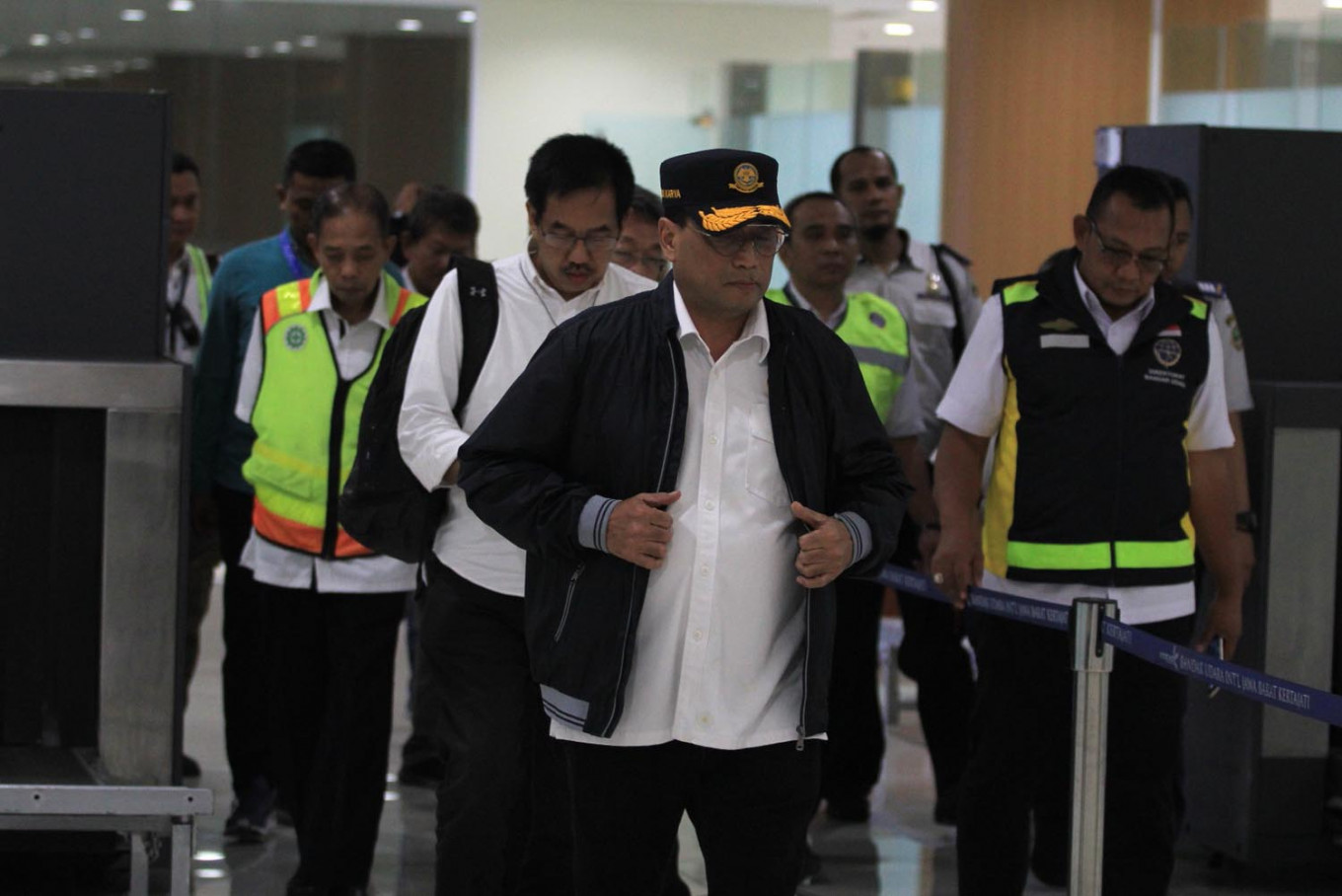
India, Saudi Arabia offered stakes in Kertajati airport​

The government is offering India and Saudi Arabia a chance to purchase stakes in Kertajati International Airport, also known as West Java International Airport (BIJB), in a move to boost the under-used facility.

Transportation Minister Budi Karya Sumadi told reporters that if both countries took up the offer, it would dilute the BIJB ownership of both the central government and West Java provincial administration, which both are willing to accept.

“India and Saudi Arabia are interested in purchasing stakes in Kertajati,” Budi said on Tuesday. “Hopefully, this will increase interest from the international community and will spur connectivity in Kertajati,” he added.

Since the beginning of its operation in 2018, Kertajati airport has experienced many setbacks, as there are few flights to and from the airport with many regarding the location as too distant and lacking in transportation access.

The Rp 4.9 trillion (US$327.2 million) West Java airport was initially designed to reduce congestion at Halim Perdanakusuma Airport in Jakarta and Soekarno Hatta International Airport in Tangerang, Banten, but to no avail.

Many efforts to jumpstart the airport included shifting domestic flights from Husein Sastranegara International Airport, building the Cisumdawu toll road, redirecting umrah (minor haj) flights to Kertajati and planning the airport as a maintenance hub.

The government later planned to utilize the airport alongside nearby Patimban Deep Sea Port to enhance the region’s logistics chain.

“To Saudi Arabia, we also made a special request for them to allocate more direct flights to Kertajati,” Budi said.

Aside from Kertajati, the government also offered India the operation of Kuala Tanjung Port in North Sumatra, Budi said, adding an Indian private company was also keen to take up the offer, as the port acted as one of many important gateways for coal and crude palm oil (CPO) shipments that the South Asian country needed.

The government also extended investment offers to other sectors in land and railway transportation, hoping to repeat the success it achieved with South Korea and Japan, but Budi said those offers had so far only been responded to well by India.

South Korea and Japan have also committed to extending their investment in the mass rapid transit (MRT) and light rail transit (LRT) in Jakarta with both signing an agreement with the government during the Group of 20 Summit in Bali in November.