India-EU Relations.


India has quietly become one of the most important players in Europe’s diesel market, a role that was once dominated by Russia and the United States. Recent data from August 2026 shows that Indian refineries supplied about 60 percent of all diesel shipments passing through the Bab el-Mandeb strait and heading to Europe.

This shift comes at a time when Russian diesel exports have fallen sharply due to ongoing disruptions, and American shipments have also started to weaken. The result is a new chapter in global energy trade, where India’s refining capacity is being relied upon more than ever before.

The story begins with the Bab el-Mandeb, a narrow but vital shipping route connecting the Red Sea to the Gulf of Aden. In August, around 2,00,000 barrels of diesel per day moved through this passage on vessels bound for Europe. This volume was close to what was seen a year earlier, after flows had nearly stopped in March and April due to regional tensions.

What stood out was the source of this fuel. Indian refineries accounted for roughly 60 percent of the total, making them the largest single supplier of diesel to eastern Europe during this period. This was not a one-off event but part of a broader trend that has been building over the past year.

Russian diesel, which used to be a major source of supply for Europe, has largely disappeared from the market. In the first 25 days of August, Russia’s seaborne diesel and gasoil exports averaged only about 1,50,000 barrels per day. This was down by more than 6,00,000 barrels per day compared to the same time last year and stood 81 percent below the five-year seasonal average.

The decline was so severe that Russia itself began importing gasoline to meet domestic needs. In August, Russia’s seaborne gasoline imports hit a record 1,25,000 barrels per day, with India, Turkey and Morocco among the suppliers. This reversal highlighted how much the global energy landscape had changed.

At the same time, the United States, which had been another major source of incremental diesel supply for Europe, also showed signs of pulling back. American shipments, which had helped fill the gap left by Russia in earlier years, began to weaken in 2026.

This created an opening that Indian refineries were quick to occupy. The ability of Indian plants to process large volumes of crude oil, including discounted Russian barrels, and turn them into refined products like diesel gave them a competitive edge. This was not just about volume but also about timing and reliability, which mattered greatly to European buyers.
 
India's Jindal, Italy's Arvedi bid for former Ilva steelworks

By Giselda Vagnoni
November 9, 20263:16 PM GMT+5:30
Updated November 9, 2026
1794338120477.png
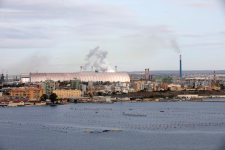
The Ilva steel plant is seen in Taranto, Italy, November 11, 2019. REUTERS/Ciro De Luca/File Photo

Summary

  • Commissioners to assess whether offers are complete and meet tender requirements
  • Taranto shutdown order last month complicates sale of site employing about 8,000 people directly
  • Unions urge government to disclose bids' details and keep direct state stake
ROME, Nov 9 (Reuters) - India's ‌Jindal and Italian steelmaker Arvedi Group have submitted binding bids for Italy's largest steelworks, the special commissioners overseeing the company said on Monday, as the government seeks a buyer for the industrial group.

The commissioners will now assess whether the offers are complete and meet the tender requirements, according to a statement.

The business of Italy's steel group Ilva, now Acciaierie d'Italia (AdI), centred on the vast Taranto plant ⁠in southern Italy, is currently run by government-appointed commissioners after years of financial and operational difficulties.

Prime Minister Giorgia Meloni’s government has been seeking a new owner to safeguard steel production and thousands of jobs at the site, which directly employs around 8,000 people. The Taranto site is Italy's only integrated steelworks and is considered a key part of its manufacturing base.

A Supreme Court ruling last month ordering the shutdown of blast furnaces at the site on health and environmental grounds has complicated the sales process.

AdI also operates plants in the northern regions of Liguria and Piedmont, employing around another 1,500 people.

Arvedi's bid envisages building a first electric ‌arc furnace ⁠within two to three years, followed by a second, a person close to the matter said.

Subject to local approval, the plan also includes a direct reduced iron plant using Arvedi's proprietary technology It would allow steel to be produced from raw material within a 180-m (200 yards) production line, sharply reducing CO2 emissions compared with the previous process, ⁠according to that person.

Italy's main metalworkers' unions Fim, Fiom and Uilm said Arvedi's offer was an important development but that it was too early to assess both bids impact on the group's industrial strategy, production and jobs.

The unions urged the ⁠government to hold talks with them as soon as possible and disclose details of the offers, including planned investments, production plans for individual plants and employment guarantees. They also reiterated their demand for the ⁠state to retain a direct stake in the steelmaker.

Last week, Michael Flacks, chairman of US-based turnaround investor Flacks Group, told Reuters he would not bid for the Taranto steelworks without a government commitment of at least €1 billion ($1.1 billion) in financial support.

Reporting by Giselda Vagnoni, editing by Giulia Segreti and Tomasz Janowski

https://www.reuters.com/world/india...arvedi-bid-former-ilva-steelworks-2026-11-09/

I am not sure buying up European steel plants is such a great idea. TATA Steel has had plenty of trouble running their UK plant. That should have been a cautionary tale.
 
  • Like
Reactions: Photon Vish