

India’s MALE Unmanned Aerial Vehicle Projects Take Wing
By Sriram Thiagarajan - February 26, 2025

Overcoming a period of developmental challenges, India’s medium altitude long endurance (MALE) unmanned aerial vehicle (UAV) programs have entered a year that will mark quite a few significant milestones. India’s leading large drone development laboratory- the Aeronautical Development Establishment (ADE), a part of the Defence Research & Development Organization (DRDO), is now progressing key projects at a hitherto unseen pace. Not only is the Archer NG, a MALE UAV designed to meet performance benchmarks that the legacy TAPAS BH-2021 failed to meet, set for its first flight, the TAPAS itself is being reengined with a domestic power plant that will lead to better availability rates via supply chain security.
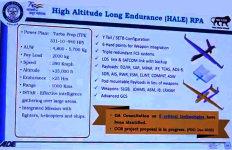
In early 2022, ADE had launched a new UAV program, initially called the Single Engine Twin Boom (SETB) project which was designed to meet the Indian Armed Forces requirement for a MALE UAV that would have an endurance greater close to 24 hours and the ability to credibly fly at an altitude of 30,000 feet with a significant payload. These were of course performance benchmarks that the TAPAS BH-201 failed to meet. By 2023, the SETB, which has a new airframe and lighter aerostructures had been rechristened the Archer-NG and seemed all set to take to the skies.

Image Source: Publicly Distributed Flyer at Aero India 2023
However, owing to unforeseen programme challenges that did not materialize. Circa early 2025, ADE has left these challenges behind and at the time of writing in February 2025, the lab had already built two Archer-NG prototype vehicles. The prototypes have completed their engine ground run test, low and high-speed taxi trials. These are significant milestones in a development program prior to the first flight of any aircraft. The first flight of the Archer-NG is expected to be conducted before the end of financial year 2024-25 (FY 25). This flight would mark a significant development since the Archer-NG is ADE’s second iteration in MALE UAV design and is expected to reflect significant progress towards achieving desired goals in airframe weight and aerodynamic performance as compared to the earlier effort in the form of the TAPAS program.
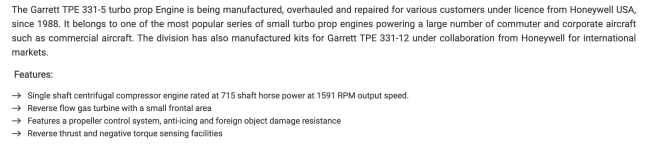
Be that as it may, the TAPAS programme itself is seeing some iterative changes of its own. Two units of an indigenously developed 2.2L, 4-cylinder Inline Turbocharged CRDi engines have been installed on some Tapas prototypes and ground testing has been completed, after significant standalone testing. This new indigenous engine, developed by VRDE in partnership with JAYEM Automotives Ltd, provides a max power of 180 HP at an altitude of 11,000 feet and is rated to operate up to an altitude of 32,000 feet. It has a FADEC system which of course provides fully automatic control without requiring pilot control over engine operations alongside dual redundancy. The flight testing of this engine is expected to be wrapped up by the middle of 2025. Subsequently, units of this new engine built by JAYEM will replace the stand-in engines currently imported for the Archer-NG prototypes.

Image Source: Publicly Distributed Material at Aero India 2025
Incidentally, Prior to project completion in late 2024, ADE had worked on improving the performance of the Tapas UAV and the new indigenous engine will help consolidate those improvements.
India’s MALE Unmanned Aerial Vehicle Projects Take Wing | Delhi Defence Review
By Sriram Thiagarajan - February 26, 2025
Overcoming a period of developmental challenges, India’s medium altitude long endurance (MALE) unmanned aerial vehicle (UAV) programs have entered a year that will mark quite a few significant milestones. India’s leading large drone development laboratory- the Aeronautical Development Establishment (ADE), a part of the Defence Research & Development Organization (DRDO), is now progressing key projects at a hitherto unseen pace. Not only is the Archer NG, a MALE UAV designed to meet performance benchmarks that the legacy TAPAS BH-2021 failed to meet, set for its first flight, the TAPAS itself is being reengined with a domestic power plant that will lead to better availability rates via supply chain security.
In early 2022, ADE had launched a new UAV program, initially called the Single Engine Twin Boom (SETB) project which was designed to meet the Indian Armed Forces requirement for a MALE UAV that would have an endurance greater close to 24 hours and the ability to credibly fly at an altitude of 30,000 feet with a significant payload. These were of course performance benchmarks that the TAPAS BH-201 failed to meet. By 2023, the SETB, which has a new airframe and lighter aerostructures had been rechristened the Archer-NG and seemed all set to take to the skies.
Image Source: Publicly Distributed Flyer at Aero India 2023
However, owing to unforeseen programme challenges that did not materialize. Circa early 2025, ADE has left these challenges behind and at the time of writing in February 2025, the lab had already built two Archer-NG prototype vehicles. The prototypes have completed their engine ground run test, low and high-speed taxi trials. These are significant milestones in a development program prior to the first flight of any aircraft. The first flight of the Archer-NG is expected to be conducted before the end of financial year 2024-25 (FY 25). This flight would mark a significant development since the Archer-NG is ADE’s second iteration in MALE UAV design and is expected to reflect significant progress towards achieving desired goals in airframe weight and aerodynamic performance as compared to the earlier effort in the form of the TAPAS program.
Be that as it may, the TAPAS programme itself is seeing some iterative changes of its own. Two units of an indigenously developed 2.2L, 4-cylinder Inline Turbocharged CRDi engines have been installed on some Tapas prototypes and ground testing has been completed, after significant standalone testing. This new indigenous engine, developed by VRDE in partnership with JAYEM Automotives Ltd, provides a max power of 180 HP at an altitude of 11,000 feet and is rated to operate up to an altitude of 32,000 feet. It has a FADEC system which of course provides fully automatic control without requiring pilot control over engine operations alongside dual redundancy. The flight testing of this engine is expected to be wrapped up by the middle of 2025. Subsequently, units of this new engine built by JAYEM will replace the stand-in engines currently imported for the Archer-NG prototypes.
Image Source: Publicly Distributed Material at Aero India 2025
Incidentally, Prior to project completion in late 2024, ADE had worked on improving the performance of the Tapas UAV and the new indigenous engine will help consolidate those improvements.
India’s MALE Unmanned Aerial Vehicle Projects Take Wing | Delhi Defence Review




 Highlights
 90% Indigenous Content – Airframe, LG, Avionics, MW & SW, SBAS-based ATOL