

Democratic Socialist Republic of Sri Lanka : News & DIscussions
- Thread starter RISING SUN
- Start date
You are using an out of date browser. It may not display this or other websites correctly.
You should upgrade or use an alternative browser.
You should upgrade or use an alternative browser.
Sri Lanka’s media clarification reveals two recent defence pacts with India
A media clarification issued by Sri Lanka’s Ministry of Defence has brought to light two recent defence pacts it has signed with India that neither side officially announced.“The recently signed maritime security pacts with the Government of India will not result in hindrance or threat to the national security of Sri Lanka,” said a media statement issued by the Ministry on Tuesday. It referred to the “the receipt of Floating Dock Facility from the Government of India at no cost” and the provision of “Dornier Reconnaissance Aircraft” by India to Sri Lanka “free of charge”.
Ministry of Defence spokesman Colonel Nalin Herath told The Hindu on Tuesday that both pacts were signed on March 16, by the Secretary to the Ministry of Defence from the Sri Lankan side, and an official of the Indian High Commission in Colombo.
Opposition concerns
The apparent secrecy around the development until now comes even as some in Sri Lanka’s political opposition flagged the agreements as “threats” to Sri Lanka’s national security and sovereignty. Sri Lanka “has sold its air space”, alleged Harin Fernando, a vocal MP from the main opposition party Samagi Jana Balavegaya (SJB).“Sri Lanka runs the risk of getting involved in a regional war owing to these agreements as India will get the opportunity of controlling Sri Lankan waters and skies, while China controls the port in Hambantota,” Mr. Fernando told Parliament. The Janatha Vimukthi Peramuna (JVP), also in opposition, has accused the government of signing key defence agreements with India in return for the $1 billion assistance extended recently.
India has extended $ 2.4 billion support to Sri Lanka since the beginning of this year, to help the island nation cope with a severe economic meltdown. Since January, India has also signed several key bilateral agreements with Sri Lanka, including the joint development of the Trincomalee Oil Tank Farms, and three major power projects in the north and east, involving the National Thermal Power Corporation (NTPC) and the Adani Group, apart from the recent pacts on maritime security.
While both the floating dock, and the Dornier aircraft have figured in bilateral discussions for some time, the actual signing of the agreements a fortnight ago was not officially confirmed until Tuesday. “The receipt of Floating Dock Facility from the Government of India at no cost has been projected to reduce the annual outlay of LKR. 600 million for outsourced docking repairs and this proposal has been in the pipeline since year 2015,” the MoD said.
The Dornier Reconnaissance Aircraft is deployed for maritime surveillance, search and rescue operations and to deliver information to various required platforms. “The unavailability of this capability was the motive for bilateral dialogues between the Governments of India and Sri Lanka during the last couple of years and it was agreed upon to provide one Dornier Reconnaissance Aircraft to Sri Lanka free of charge,” the MoD statement said. An Indian training team will stay in the island until the Sri Lanka Air Force gains required expertise, it added.
India’s assistance for greater maritime surveillance in Sri Lanka coincides with New Delhi’s own efforts to enhance Indian Ocean security, regional cooperation and intelligence sharing, as was underscored at the NSA-level meet of the Colombo Security Conclave. Addressing the forum held in the Maldives recently, NSA Ajith Doval called for a regional response to maritime challenges.
Meanwhile, a third maritime security pact was signed on Monday, when visiting External Affairs Minister S. Jaishankar met Sri Lankan Foreign Minister G.L. Peiris. It found specific mention in the Indian High Commission’s press release, listed among the “MOU for providing Maritime Rescue Coordination Center (MRCC)” among agreements signed. The MRCC’s network, to be set up by Bharat Electronics Ltd, will span seven sub-unit naval bases across the Sri Lankan coast, including in the southern port town of Hambantota, where China runs a large port.

Sri Lanka’s media clarification reveals two recent defence pacts with India
The maritime security deals for a floating dock and surveillance aircraft had not been mentioned by either country

Ensuring energy security during foreign reserves crisis in Sri Lanka
Sri Lanka has reached 100% electricity accessibility and almost 99.9 % electrification. Yet uninterrupted power supply to the whole country is far from reality.A scheduled power cut has become a daily phenomenon in the country amidst the ongoing foreign reserves crisis. As Sri Lanka’s foreign reserves have declined to the lowest in its history,the import-dependent energy sector has suffered heavily. The lack of foreign currency is making it difficult for the Sri Lankan government to clear the consignment of fuel docked at the Colombo Port immediately causing acute shortages of fuel in the country including domestic Liquified Petroleum Gas (LPG). In the absence of the crude, many of the power plants have to be shut causing disruption in the power supply. Lack of fuel in the county has also disrupted transportation and impacted the manufacturing industries and service sector.Import dependent energy sector
The present total installed capacity of Sri Lanka’s national grid is 4587 MW, which consists of 57% energy renewable sources (31% hydro, 26% includes wind, solar, solid waste, dendro, and biomass) and 43% fossil fuels (20 % coal and 23% from fuel oils), according to Sri Lankan Power Ministry.56% of total energy consumption in the country is from indigenous (biomass + hydro) and 44% is imported. This requires importing 02 MMT of crude oil, 04 MMT of refined petroleum products, and 2.25 MMT of coal to the country annually, costing approximately US$ 5 billion in foreign exchange. The average annual total bill of imported fossil fuel is 25% of Sri Lanka’s import expenditure, and nearly 50% of total export income. Therefore, the power and energy sector has a huge bearing on the country’s balance of trade and exchange rates.
Dwindling foreign reserves and fuel crisis
Sri Lanka’s foreign reserves dipped to a precarious level of US$ 1.6 billion in November 2021, which was just enough for meeting one month’s import. In December 2021, there was a slight increase but even then, it was not enough for two months’ import. The gross foreign reserves dropped 24% further in January 2022 and since then it is stuck at around US$2.3 billion. Declining foreign reserves has impacted the import of fuel and cooking gas into the country. On more than one occasion this year, fuel shipments docked in the Colombo Port could not be cleared immediately due to a lack of foreign currency.The Ceylon Electricity Board (CEB) is also facing financial issues to purchase sufficient stocks of fuel from the Ceylon Petroleum Corporation (CPC). In the absence of adequate fuel, Sri Lanka has used hydropower to run the power plants. Nonetheless, due to the lack of rain reservoirs are getting empty. There is a fear that excessive use of the waters from the reservoirs to run the power plant may cause water shortages for irrigation purposes in case of inadequate rain and will affect agricultural production. The foreign reserves crisis, lack of fuel, inadequate supply from renewable energy sources cumulatively resulted in the shutting of many of the power plants causing long-hour power cuts across Sri Lanka.
India came to the rescue of Sri Lanka to pay the import bill of fuel during this crisis period. India offered US$ 500 million Credit Line to buy fuel from India. Sri Lanka started receiving fuel under the Indian Credit Line from 13 March onwards. A stock of Jet fuel for aviation use was the first to arrive under that facility. Additionally, Indian Oil Corporation had supplied 40,000 Metric Tonnes of fuels on 60 days credit.
National energy policy and strategies
Anticipating crisis in the energy sector due to too much reliance on imported resources, Sri Lanka’s National Energy Policy and Strategies, adopted in 2019, does talk about the need for strategies to achieve self-reliance by developingindigenous energy resources to optimum levels and minimise the vulnerability of energy supplies to external situations and to attain a higher degree of resilience in the energy sector. The strategies adopted in this regard include: 1)exploration of oil, natural gas resources of the country as well as exploration ofindigenous mineral resources such as Thorianite and other similar nuclear fuels with commercial resource potential and kept ready for development at the appropriate time when conversion technologies are available;2) enhancing the availability of biomass by establishing dedicated energy plantations or plantations with residue as a potential fuel, in prescribed biomass energy development areas; 3) gradual diversification of transport energy in both rail and road transport from present oil dominance to electricity.
To reduce pressure on foreign exchange, the National Energy Policy emphasises energy supply from renewable energy resources in the country’s energy mix. The Sri Lankan government has set an ambitious target of generating 70% of the country’s electricity demand using renewable sources by 2030 and achieving Carbon neutrality by 2050. To achieve the target, the government has commissioned a 100 MW wind power park in Mannar and commenced construction of the first 300 MW LNG power plant in 2021. Government has several other plans to implement its energy policy. Sri Lanka is a full-fledged member of the International Solar Alliance (ISA). Sri Lanka was also a co-sponsor of the “No New Coal” compact during the COP26. Sri Lanka is looking for partners to implement its energy policies.
Energy security partners
India has emerged as an important partner to ensure Sri Lanka’s energy security. India is involved in Sri Lanka’s Solar Energy Electrification Project Since 2009.SLR 13 million worth of Solar Energy Electrification Project at Galgamuwa village in Monaragala District of Uva Province was a gift from the government of India to Sri Lanka, which provided solar lighting for 300 households and 50 street lights. India has offered US$ 100 million concessional financing for undertaking solar projects in Sri Lanka. This Credit Linewill help finance various projects in the solar energy sector in Sri Lanka, including rooftop solar photovoltaic systems for households and government buildings. On 11 March this year, Joint Venture & Shareholders’ Agreement (JVSHA) for the Trincomalee Power Company Limited (TPCL) which is a joint venture between NTPC Limited from India and the CEB was signed for developing a 100 MW Solar Power Plant at Sampoor in Sri Lanka. Indian technical experts extended their expertise for the development of a 100 MW wind power project at Thambapawani in Mannar.
The signing of the MOU on the Joint development of the Trincomalee Oil Tank Farm is an important step in the energy security cooperation between the two countries. Early implementation of the MOU will facilitate Sri Lanka to make use of the 99 oil tanks and reserve oils for a longer period.Talk has been going on for India-Sri Lanka grid connectivity. A feasibility study conducted by the CEB and India’s power grid corporation found that connecting the two countries through undersea cable would be an expensive affair. Reportedly, The option of an overhead electricity link between the two countries is being explored. But no decision has been taken yet in this regard, even though; it is mentioned in the priority plan of the national energy policy of Sri Lanka.
Sri Lanka is partnering with other countries as well including the USA, China, Japan, Iran, Kuwait, Austria, and also with the Asian Development Bank (ADB) to enhance its energy security, particularly in the field of renewable energies. In other words, policy, plans, and strategies to ensure energy security in the country are in place. The problem, however, is the lack of effective implementation of the policies and strategies.
Issues and Challenges
The new energy policy and strategies adopted in 2019 could not be implemented due to the Covid-19 pandemic. Several major power sector developments, particularly in the field of renewable energy, that were scheduled to be commissioned in 2021 have been delayed due to the pandemic. There are several other factors responsible for the non-implementation of the energy projects including issues associated with land acquisition and getting clearance from various departments due to lack of coordination and cooperation. In addition to the bureaucratic issues, political and diplomatic opposition is a major hindrance in the immediate implementation of the bilateral energy projects.
Due to political reasons, the MoU to jointly develop Trincomalee Oil Tank Farm between India and Sri Lanka signed in 2001 remained unimplemented for years. A new MOU in this regard was signed between the two countries as Sri Lanka is grappling with an economic and fuel crisis. Even now, there are protests within Sri Lanka against India jointly developing the Oil Tank Farm. Thus, uncertainties loom large on the implementation of the MOU, even though it has been widely acknowledged that the development of the farm will significantly enhance Sri Lanka’s capacity to store the fuel for the crisis period. Sri Lanka’s decision to sign an agreement with U.S. infrastructure firm New Fortress Energy to invest in a gas-fired power plant and proposed liquefied natural gas (LNG) supply terminal in Sri Lanka is also facing public protest. An agreement to develop a hybrid energy project by the Chinese in the Northern Province of Sri Lanka was scrapped, reportedly due to India’s objection.
Conclusion
Delay or non-implementation of many of the policy decisions have reduced Sri Lanka’s resilience to face any crisis in the energy sector. The timely implementation of all the strategies probably would have reduced some challenges the country is facing in the power and energy sector due to the foreign reserve crisis.
While the National policy and strategy of Sri Lanka has recognized some of the major hindrances and formulated plans to minimise those hindrances, the main focus of the government at this moment is ensuring the availability of fuel and cooking gas in the country for daily use.
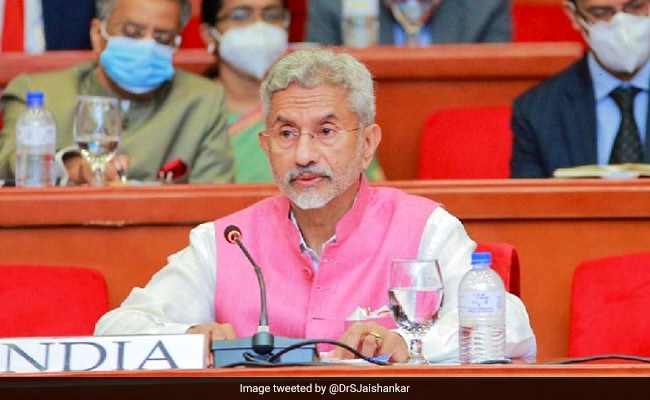
S Jaishankar, "Disturbed" By Lankan Hospital's Crisis, Asks Envoy To Help
Foreign Minister S Jaishankar today asked the Indian High Commissioner in Sri Lanka to help a hospital that has suspended surgeries because of the shortage of medicines.
 www.ndtv.com
S Jaishankar, "Disturbed" By Lankan Hospital's Crisis, Asks Envoy To Help
Foreign Minister S Jaishankar today asked the Indian High Commissioner in Sri Lanka to help a hospital that has suspended surgeries because of the shortage of medicines.
www.ndtv.com
Sri Lanka President Gotabaya Rajapaksa thanks India for ‘invaluable assistance’
External Affairs Minister S Jaishankar with Sri Lankan President Gotabaya Rajapaksa during a meeting. File | Photo Credit: PTI
Assured Sri Lankan President of continued cooperation and understanding, says S. Jaishankar
President Gotabaya Rajapaksa on Monday thanked visiting External Affairs Minister S. Jaishankar for India’s “invaluable assistance” to Sri Lanka, which is grappling with one of its worst economic crises.Since January, India has extended $2.4 billion assistance by way of a currency swap, loan deferment and credit lines for essential imports to help the island nation cope with a stifling dollar crisis and shortages. Following Mr. Jaishankar’s meetings with President Gotabaya, Prime Minister Mahinda Rajapaksa and Finance Minister Basil Rajapaksa on Monday, Reuters news agency, citing “two sources” in Colombo, reported that Sri Lanka has sought a further $1 billion line of credit. However, when The Hindu sought confirmation of the development, a top Sri Lankan official — familiar with the ongoing negotiations — denied that Colombo has made such a request. The countries had earlier agreed to be in close touch on broader cooperation going forward, the official said.
“Met with Indian Foreign Minister @DrSJaishankar today, and I expressed my gratitude to the Government of #India for the invaluable assistance provided recently via the line of credit, on behalf of the people of #lka,” President Gotabaya said in a tweet. In his tweet on the meeting, Mr. Jaishankar said he ‘assured’ the President “of India’s continued cooperation and understanding”.
India–built Jaffna Cultural Centre launched
Mr. Jaishankar, who is in Colombo for the BIMSTEC summit that Sri Lanka is hosting this year, held a series of bilateral meetings, ahead of his engagement at the regional forum. Along with PM Mahinda, he launched the India–built Jaffna Cultural Centre virtually. Built with an Indian grant of $11 million, the building with 11 floors and facilities including a 600–capacity auditorium, conference hall, amphitheatre and a digital library was completed in early 2020 to serve as a public space for sharing art and culture in the war–affected area and was awaiting inauguration for two years.Mr. Jaishankar met several other members in the government and the Opposition including delegations of the Tamil National Alliance (TNA), representing Tamils in the north and east and led by its leader R. Sampanthan, and the Tamil Progressive Alliance (TNA), a group of legislators representing the Malaiyaha Tamils led by Mano Ganesan.
TNA spokesman M.A. Sumanthiran said: “The Indian External Affairs Minister encouraged us to continue engaging with the President, as we recently did in a meeting, and ensure that the government’s promises on addressing Tamils’ specific concerns are implemented.”
On the TPA’s discussions, Mr. Mano Ganesan said he laid out their recent proposal for a “Non-Territorial Community Council” for hill country Tamils, to represent the interests and aspirations of the community that is geographically scattered across the island.
Mr. Jaishankar, in his tweets on the meetings, said he discussed the “realisation of the aspirations of the Tamils of Sri Lanka for equality, justice, peace and dignity,” with the TNA, and “socio-economic issues of the [ Malaiyaha Tamil] Indian origin Tamil community” with the TPA, reiterating India’s commitment to development partnership with the community.
Earlier, Mr. Jaishankar visited a fuel station run by the Indian Oil Corporation subsidiary Lanka IOC to view the situation of supply in Sri Lanka amid frequent shortages. “Indian LoC of $500 million is helping Sri Lankan people in their everyday life,” he said, referring to the credit line extended in February for emergency fuel imports.

Sri Lanka President Gotabaya Rajapaksa thanks India for ‘invaluable assistance’
Assured Sri Lankan President of continued cooperation and understanding, says S. Jaishankar


India to build Sri Lanka wind farms after China pushed aside
A $12 million project to build wind turbines on three small islands in the Palk Strait between southern India and Sri Lanka was awarded to a Chinese firm in 2019, with funding lined up from the Asian Development Bank (ADB).

India to send 40,000 tonnes of diesel to crisis-hit Sri Lanka
India has acceded to a request from Sri Lanka to urgently provide a consignment of diesel in addition to monthly fuel supplies under a $500-million line of credit to tide over a severe shortage amid the island nation’s economic crisis.
Eyes in ocean, unique ID, culture ties: India, Lanka seal pacts beyond aid
DAYS AFTER finalising an agreement for Indian Dornier aircraft for the Sri Lankan Air Force, Delhi and Colombo are stepping up their cooperation in the Indian Ocean with a Maritime Rescue Co-ordination Centre (MRCC) to be set up by Bharat Electronics Ltd at the Sri Lankan Naval Headquarters in Colombo.The Memorandum of Understanding for MRCC is among the host of agreements signed in the Sri Lankan capital Monday during the visit of External Affairs Minister S Jaishankar, who met Sri Lankan President Gotabaya Rajapaksa, Prime Minister Mahinda Rajapaksa and Finance Minister Basil Rajapaksa.
Another MoU is for India to set up a hybrid solar and wind farm in the three islands off Jaffna, where Sri Lanka cancelled a similar Chinese project after Delhi objected to it on security grounds. The islands are very close to Rameswaram on the Tamil Nadu coastline.
Jaishankar also inaugurated a cultural centre in Jaffna, to be run by the local municipality. Conceived as a “reconciliation” project, it has been built with Indian financial assistance. India will also provide a grant of $15 million for the maintenance of Buddhist sites in Sri Lanka. Another agreement is for collaboration between the Sushma Swaraj Institute of Foreign Service and the Colombo-based Bandaranaike International Diplomatic Training Institute.
Under the terms of the MRCC agreement, a maritime rescue sub-centre will come up at Hambantota, where the Chinese state-owned shipping and logistics company, China Merchants Port Holdings, runs the second largest Sri Lankan port after Colombo.
BEL will set up an MRCC network of seven sub-units in naval bases along the entire Sri Lankan coast: Galle in the south, Argum Bay, Batticaloa, Trincomalee, Kallawa on the eastern coast, and Mullikulam and Point Pedro in the north. This will, crucially, give India eyes in a part of the Indian Ocean where it has no presence.
The MRCC network is meant to give Sri Lanka’s present search and rescue operations more capacity and depth, and improve direct
communications in case India’s help is required. Last year, the Indian Coast Guard helped out with two ships that went up in flames in Sri Lankan waters.
Earlier this month, during the visit of Finance Minister Basil Rajapaksa, the two sides finalised an agreement under which India is to provide three Dornier aircraft to the SLAF. During the same visit, Sri Lanka also accepted from India the gift of a 4,000-m floating dock for its Navy.
The two countries, along with the Maldives, and the recently added Mauritius, are also in the Colombo Security Conclave, which envisages close cooperation on maritime security to combat smuggling, terrorism, drug trafficking, and illegal fishing and poaching.
Jaishankar is on a visit to Colombo for the ministerial meet of the BIMSTEC regional grouping whose other members are Bangladesh, Myanmar, Thailand and Sri Lanka. As the chair, Sri Lanka hosts the summit March 30.
But the visit has included a substantial bilateral component, coming as it does amid India’s involvement in assisting Sri Lanka during an unprecedented economic crisis.
Delhi has provided a $2.4-bn package of financial assistance in February and March. It is also appointing experts to assist Sri Lanka’s economic recovery, and for various joint projects. The Indian Express has learnt that Colombo has reached out to New Delhi for an additional $1-billion assistance, over and above the $1-billion line of credit announced March 17.
Jaishankar also visited the office of Indian I-T major HCL Technologies with Lanka’s Youth and Sports Minister Namal Rajapaksa, who is the PM’s son. HCL Technologies commenced operations in Sri Lanka in 2020 after it joined hands with the Board of Investment (BOI) of Sri Lanka.
Jaishankar and Peiris also witnessed the signing of an MoU on implementation of the Sri Lanka Unique Digital Identity (SL-UDI) programme with India’s grant assistance. This will be modelled on India’s Aadhaar. Another MoU signed on Monday was for the establishment of computer labs in 200 schools in Galle district.
Jaishankar also met a group of Sri Lankan Tamil leaders. Last Friday, President Rajapaksa had met with Tamil MPs for the first time since the 2020 parliamentary elections. There were no discussions at the two-hour meeting on the political question of devolution to the North and East.
Rajapaksa announced a development fund for the Tamil majority region and a statement from the President’s office said he had briefed MPs, all from the Tamil National Alliance, on several issues including the release of suspects, the launch of a “truth-finding mechanism,” and “resolving of issues related to missing persons.”
The meeting was scheduled twice before in the last two years but was cancelled both times. The TNA recently wrote to Prime Minister Narendra Modi asking India to get Rajapaksa to implement the 13th amendment for political devolution to the provinces, a constitutional provision inserted on India’s insistence in 1987.
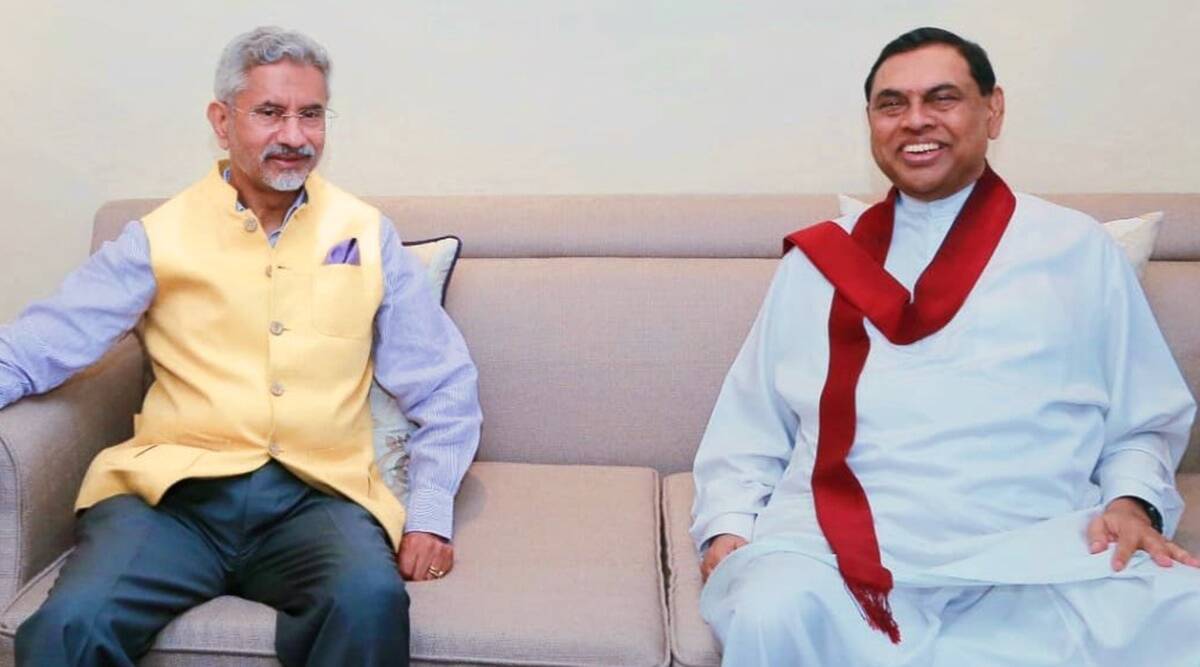
Eyes in ocean, unique ID, culture ties: India, Lanka seal pacts beyond aid
The Memorandum of Understanding for MRCC is among the host of agreements signed in the Sri Lankan capital Monday during the visit of External Affairs Minister S Jaishankar, who met Sri Lankan President Gotabaya Rajapaksa, Prime Minister Mahinda Rajapaksa and Finance Minister Basil Rajapaksa.
indianexpress.com

Sri Lanka economic crisis: India on reports of dispatching of soldiers
As the country is facing unprecedented economic crisis, President Gotabaya Rajapaksa-led government has issued an extraordinary gazette to declare a 36-hour public emergency in island nation
 www.livemint.com
IMF better choice than costly loans from friends, says former Sri Lanka Central Bank executive
Dr WA Wijewardena holds the government and the Central Bank accountable for the crisis

India sends fourth tranche of diesel as island nation fights power crisis | India News - Times of India
India News: A consignment of 40,000 metric tonnes of diesel from India reached Sri Lanka on Saturday, the fourth such assistance from New Delhi, to mitigate the s.
 timesofindia.indiatimes.com


To those who aren't aware - SL ranks very high on the happiness index & has one of the very best social indices of South Asia. So Modi's critics in India keep telling us.
Instrument of Accession sign karwa Lena chahiye. Baat khatam.
To those who aren't aware - SL ranks very high on the happiness index & has one of the very best social indices of South Asia. So Modi's critics in India keep telling us.

Some people on social media are saying it's the doings of R&AW to topple the current govt which is pro china and install a pro India govt instead by leveraging the energy crisis. Thoughts? @_Anonymous_ @Ankit Kumar
My right wing rants apart , it would be wrong to assume so in my opinion.Some people on social media are saying it's the doings of R&AW to topple the current govt which is pro china and install a pro India govt instead by leveraging the energy crisis. Thoughts? @_Anonymous_ @Ankit Kumar
Much of the crisis is due to the easier path taken by dynastic political class of Srilanka. The easier path being the immediate infusion of dollars and funds from China. Into projects which neither were socially or economically feasible.
Srilanka owns very little to India compared to what it owns to China. Japan also has lots of credits, more than India but had rolled over a lot during Covid era.
But they will need to pay up sometime.
Mismanagement of decades and dynastic politics. These are the two reasons in my opinion.
PS. Only one rant
 : We should work to get them under our Rep and break them into two or 3 states.
They must be asked who initiated the 100% organic agriculture concept to be implemented within a year against expert advice . One of the reasons for food shortage which coupled with lack of forex thanks to the Wuhan virus severely impacting tourism has left them in such dire straits.Some people on social media are saying it's the doings of R&AW to topple the current govt which is pro china and install a pro India govt instead by leveraging the energy crisis. Thoughts? @_Anonymous_ @Ankit Kumar