

Democratic Socialist Republic of Sri Lanka : News & DIscussions
- Thread starter RISING SUN
- Start date
You are using an out of date browser. It may not display this or other websites correctly.
You should upgrade or use an alternative browser.
You should upgrade or use an alternative browser.

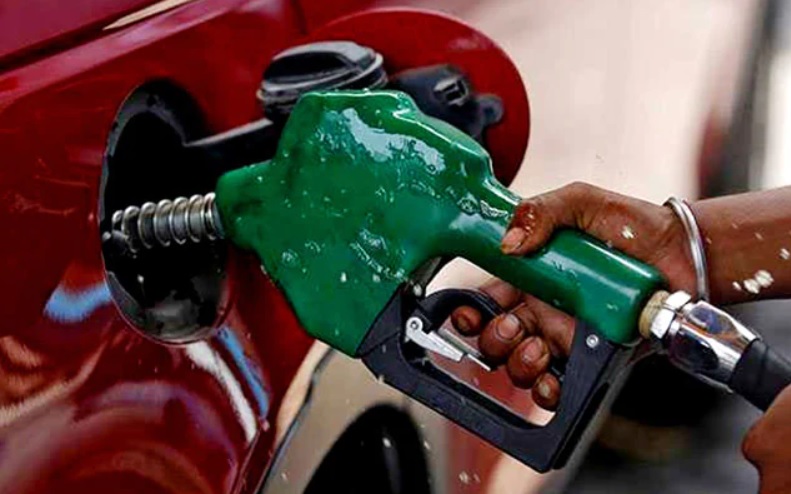
Sri Lanka seeks $500 million loan from India for fuel purchase
Sri Lanka has sought a USD 500 million credit line from India to pay for its crude oil purchases amid a severe foreign exchange crisis in the island nation.The move came few days after energy minister Udaya Gammanpila warned that the current availability of fuel in the country can be guaranteed only till next January.
The state-run Ceylon Petroleum Corporation (CPC) owes nearly USD 3.3 billion to the two main government banks — Bank of Ceylon and People’s Bank. The state oil distributors imports crude from the Middle East and refined products from other areas, including Singapore.
“We are currently engaged with the Indian High Commission here to obtain the facility (USD 500 million credit line) under the India-Sri Lanka economic partnership arrangement,” the Press Trust of India quoted CPC Chairman Sumith Wijesinghe as saying.
He said the facility would be utilised for purchasing petrol and diesel requirements.
The energy secretaries of both India and Lanka are expected to sign an agreement for the loan soon, the report quoted Finance Secretary SR Attygalle as saying.
The government has put on hold the expected retail price hike of fuel despite the last week’s increase in cooking gas and other essentials.
The price hike in the global oil prices has forced Lanka to spend more on oil imports this year. The country’s oil bill has jumped 41.5 per cent to USD 2 billion in the first seven months of this year, compared to last year.
Lanka is facing a severe foreign exchange crisis after the pandemic hit the nation’s earnings from tourism and remittances, Finance Minister Basil Rajapaksa had said last month.
The country’s GDP contracted by a record 3.6 per cent in 2020 and its foreign exchange reserves plunged by over a half in one year through July to just USD 2.8 billion. This has led to a 9 per cent depreciation of the Sri Lankan rupee against the dollar over the past one year, making imports more expensive. (Colombo Gazette)
Sri Lanka seeks $500 million loan from India for fuel purchase
Sri Lanka has sought a USD 500 million credit line from India to pay for its crude oil purchases amid a severe foreign exchange crisis in the island nation. The move came few days after energy minister Udaya Gammanpila warned that the current availability of fuel in the country can be guaranteed
 colombogazette.com

High-level Indian visits bridged trust deficit: Sri Lankan envoy
High-level visits by foreign secretary Harsh Shringla and army chief M M Naravane have helped bridge a trust deficit and prepare the ground for re-energising relations, Sri Lankan high commissioner Milinda Moragoda said on Saturday.It is just a “perception” that China has strengthened its position in Sri Lanka at the cost of India, Moragoda said in an interview. New Delhi and Colombo were close to improving cooperation in areas ranging from trade to defence and energy.
Bilateral ties were buffeted in February when Sri Lanka scrapped a trilateral agreement with India and Japan to build a shipping container terminal in Colombo port. Delays in several other projects and lack of movement in efforts to devolve powers to Sri Lanka’s Tamil minority added to issues faced by the two countries. An “integrated country strategy” document prepared by Moragoda before he assumed office in India acknowledged that bilateral ties were dominated by a “transactional approach” because of geopolitical changes that had resulted in a “growing trust deficit”.
The recent high-level visits and the presence of leaders in the Indian government who understand Sri Lanka, such as external affairs minister S Jaishankar and petroleum minister Hardeep Puri, have helped address this trust deficit, Moragoda said on Saturday.
“The foreign secretary’s visit has helped a lot...The senior officials on the Indian side...understand us warts and all, and that helps,” he said. “We have the basis now to start building through the transactions on to a strategic relationship.”
A visit by 100 Buddhist monks and government functionaries led by sports minister Namal Rajapaksa to Kushinagar in Uttar Pradesh on October 20 will boost people-to-people contacts. The delegation will participate in the inauguration of an international airport meant to put Kushinagar, the site of Buddha’s parinirvana, on the Buddhist pilgrimage circuit.
Moragoda referred to the integrated country strategy, which has been described as a road map for building relations over the next two years, and said the two countries will have to “evolve from a transactional stage to a strategic and then a special relationship”.
“The transactional stage is also a trust-building phase because both sides need to learn to do business with each other.”
The scrapping of the agreement on the east container terminal at Colombo port because of pressure from trade unions was part of the “untidiness of democracy”, he said. President Gotabaya Rajapaksa had come up with the proposal for developing the west container terminal as an alternative, and the recent deal on this project between state-owned Sri Lanka Ports Authority and Adani Group will be more advantageous for the Indian firm.
“From a commercial point of view, the west terminal is a better transaction because the investor has more control over it,” he said. “The west terminal shouldn’t be underestimated as 80% of the cargo in Sri Lankan ports is trans-shipment cargo. Out of this, 70% goes to India. And even from this, 35% goes to Adani Group-linked ports.”
Moragoda acknowledged there is a “Chinese investment footprint” in his country but said the feeling that Sri Lanka is moving faster on Chinese investment proposals is just a “perception”. He also pointed out India’s sizeable presence in several sectors such as energy, transportation and railways.
Indian Oil controls one-third of petroleum distribution in Sri Lanka, and there are plans for collaborating on an oil tank farm and exploration, while the two nations are in discussions on development of renewable energy. Indian Railways has done “immense work” to develop Sri Lanka’s rail network and there are more than one million Bajaj three-wheelers on the island nation’s roads, he said.
“We are also studying whether the Aadhaar Card can be used as a template in Sri Lanka,” he said, adding that Sri Lanka plans to import nano-nitrogen fertiliser from India as part of a move towards organic agriculture.
Sri Lanka will have to “work harder” because the bilateral relationship is asymmetrical, Moragoda said. “On the trade and economic side, one of the reasons why we may not be able to make progress as quickly as possible is some of our industries feel maybe sort of overwhelmed by India,” he said.
India, he hoped, will be willing to accommodate such an asymmetrical relationship in trade with opportunities for market access without looking for reciprocity. The two countries are also talking about the possibility of a bilateral currency swap and are in advanced discussions on a maritime surveillance system, Moragoda said.

High-level Indian visits bridged trust deficit: Sri Lankan envoy
Bilateral ties were buffeted in February when Sri Lanka scrapped a trilateral agreement with India and Japan to build a shipping container terminal in Colombo port.

Fuel prices in Sri Lanka hiked; govt says talks on with India for LoC
🔴 Sri Lanka is currently facing a severe foreign exchange crisis with falling reserves.
 indianexpress.com

Fuel prices in Sri Lanka hiked; govt says talks on with India for LoC
🔴 Sri Lanka is currently facing a severe foreign exchange crisis with falling reserves.
India working on urgent economic package to help Lanka tide over crisis
By Dipanjan Roy Chaudhury, ET Bureau
Last Updated: Dec 11, 2021, 07:47 AM IST

India recently bailed out Lanka with fertilisers for the island's farmers after China-made fertilisers had to be rejected on grounds of quality. (Representative Image)
Synopsis
India is expected to extend a food & health security package to Sri Lanka on an urgent basis, along with an energy security package and currency swap, and also push Indian investments, officials told ET. It was agreed during Rajapaksa's visit that the procedures to realize these objectives would be finalized early, within a mutually agreed time.
India is expected to extend a food & health security package to Sri Lanka on an urgent basis, along with an energy security package and currency swap, and also push Indian investments, officials told ET. It was agreed during Rajapaksa's visit that the procedures to realize these objectives would be finalized early, within a mutually agreed time.
India is working out a package on an urgent basis to assist Sri Lanka, following finance minister Basil Rajapaksa's New Delhi visit that focused on measures to tide over an economic crisis that the island nation is facing.
India is expected to extend a food & health security package to Sri Lanka on an urgent basis, along with an energy security package and currency swap, and also push Indian investments, officials told ET. It was agreed during Rajapaksa's visit that the procedures to realize these objectives would be finalized early, within a mutually agreed time. The food and health security package would envisage the extension of a line of credit to cover the import of food, medicines and other essential items from India. The energy package would also comprise a line of credit to cover import of fuel from India, and an early modernization of Trincomalee Oil Tank Farm. There is also an offer of a currency swap to help Sri Lanka address its current balance of payment issues, the officials said.
It was also decided to facilitate Indian investments in different sectors in Sri Lanka that would contribute to growth and expand employment. Rajapaksa and finance minister Nirmala Sitharaman and foreign minister S. Jaishankar agreed to open direct lines of communication and to be in direct and regular contact with each other in order to coordinate delivery of the package.

“The Sri Lankan finance minister's discussions with his Indian counterpart and the external affairs minister focused on a whole gamut of issues of mutual importance pertaining to the bilateral relationship with particular attention on the economic cooperation aspect. Both sides expressed satisfaction over the evolving trajectory of the bilateral relationship. During the discussions, they identified ways and means through which the existing bilateral economic relationship between the two countries could be further broadened and deepened,” according to a Lankan government statement.
Rajapaksa briefed the Indian side of the economic situation in Sri Lanka and his government’s approach to addressing post-Covid challenges. This was the first overseas visit of finance minister Rajapaksa since he assumed office in July this year.
During the two-day visit, Rajapaksa had two rounds of joint discussions with Sitharaman and Jaishankar. He also met with the minister for petroleum & natural gas Hardeep Singh Puri and national security advisor Ajit Kumar Doval.
Sri Lanka, reeling under an economic crisis following Covid and mounting debt due to heavy borrowing from China, had reached out to India to boost its sagging economy. India recently bailed out Lanka with fertilizers for the island’s farmers after China-made fertilizers had to be rejected on grounds of quality.
Lanka's oil bill has jumped 41.5% to $2 billion in the first seven months of this year, compared with last year. The country is facing a severe foreign exchange crisis after the pandemic hit the nation's earnings from tourism and remittances. Its gross domestic product has contracted by 3.6% in 2020 and its foreign exchange reserves plunged by over a half in one year through July to just $2.8 billion. This has led to a 9% depreciation of the Sri Lankan rupee against the dollar during the past year. The tourism industry, which represents over 10% of the country’s GDP and brings in foreign exchange, has been hit hard by the coronavirus pandemic.
India has traditionally been among Sri Lanka’s largest trade partners and Sri Lanka remains among the largest trade partners of India in the Saarc. In 2020, India was Sri Lanka’s second largest trading partner with the bilateral merchandise trade amounting to about $3.6 billion. India is also one of the largest contributors to foreign direct investment in the neighbouring country. A number of leading companies from India have invested and established their presence in Sri Lanka. FDI from India amounted to about $1.7 billion during the period 2005 to 2019. The main investments from India are in petroleum retail, tourism & hotel, manufacturing, real estate, telecommunication, banking and financial services.
India working on urgent economic package to help Lanka tide over crisis

Developing Trincomalee oil tank farm: What the deal means for India, Lanka
Last week, Sri Lanka’s Energy Minister Udaya Gammanpila announced that the Indian Oil Subsidiary Lanka IOC would be given 49% stake in the joint development of the Trincomalee Oil Tank farm, with Ceylon Petroleum Corporation keeping 51%.The CPC has formed a special purpose company, Trinco Petroleum Terminals Ltd, and it is expected to get Cabinet approval this week. While the two sides will jointly refurbish 61 of the 99 tanks at the farm, 24 will be developed by CPC and 14 by LIOC. This arrangement is for the next 50 years. The next step is three formal agreements: two between CPC and LIOC — one for the joint development and the other for the 24 tanks to CPC — and the third between the Sri Lankan government and LIOC.
35-year-old agreement
If it goes according to plan — and that is a big if — India and Sri Lanka would have finally achieved the implementation of an agreement — contained in an exchange of letters between then Prime Minister Rajiv Gandhi and Sri Lankan President J R Jayewarndene as part of the annexure to the India-Sri Lanka Accord of July 29, 1987 — that the tank farm would be developed jointly.
The agreement remained dormant for nearly 15 years at first, prevented by the civil war. In 2002, a Norway-brokered ceasefire halted the war. Amid reports that the US was looking at the Trincomalee harbour as a naval base to aid its war in Afghanistan, then Indian High Commissioner Gopalkrishna Gandhi made a highly public visit to the facility.
Lanka IOC was formed a year later, mainly for retail distribution of petrol. In addition, it was agreed that LIOC would get a 35-year lease of the storage facility at Trincomlaee at an annual rental of $100,000.
The three stakeholders — CPC, LIOC and the Sri Lankan government — arrived at a framework agreement in February 2003 that was to be formalised with a lease in six months. By the end of 2004, political equations in Sri Lanka changed. The agreement kept getting postponed. India-Sri Lanka tensions during Mahinda Rajapakse’s second term as President did not help.
But the absence of a lease did not stop anything on the ground. LIOC began distribution in Sri Lanka, and within a decade expanded this from 150 to 200 petrol pumps. The company was paying the annual rent for the oil farm, and received tax benefits as a foreign investor. It refurbished 14 tanks, began using them, and added two more after setting up a lube blending plant, and repaired an long existing pipeline from the jetty at Trincomalee harbour.
Initially reluctant about investing too much in Trinco, India began pushing for the project only after China swung Hambantota in 2010.
In March 2015, during Prime Minister Narendra Modi’s visit to Sri Lanka, the two sides agreed to set up a petroleum hub in Trincomalee, for which a “joint task force” would draw up plans.
In 2017, two years after the Rajapaksa government had been voted out, India and Sri Lanka signed an MoU for several projects, including an agreement on the refurbishment of the Trinco tank farm. But like most of the projects on that list, the Trincomalee agreement did not come through all this time.
‘Historic victory’
In his announcement last week, minister Gammanpila, who belongs to the hardline nationalist Pivithiru Hela Urumaya, described the new arrangement with India as a “historic victory” as Sri Lanka would now get 24 tanks to itself and 61 in which it would have a majority share.He contrasted this with the 2003 one in which the entire tank farm had been “handed over” to LIOC. He said the 2017 MoU was to “sub-lease” some tanks from LIOC, but that could not materialise. He recalled an incident in which a team of CPC officials had entered the tank farm in December 2016 to take charge of 10 tanks and were arrested for trespass on a complaint by LIOC. The minister said he would visit the oil tank farm with the same officials now and plant the Sri Lankan flag at the storage facility.
Sri Lanka’s economy
For most of last year, Sri Lanka has been reeling under a foreign exchange crunch, which has caused its worst economic crisis since the 1970s. The forex shortage has led to restrictions on imports, and prices of food essentials have spiked to a record high. In 2022, the country will need a reported $4.5 bn to service sovereign bonds. But excluding a $1.5 bn currency swap facility with China, the reserves are at an all-time low of $1.6 bn.
In October, after a spat with China over a contaminated consignment of organic fertilisers which Sri Lanka’s state-owned fertiliser company refused to accept and first refused to pay for but eventually had its pockets shaken out by the Chinese threat of arbitration, Finance Minister Basil Rajapaksa visited Delhi hoping to secure a financial lifeline. He was offered a “four-pronged” package – a line of credit for fuel purchases from India, a separate line of credit for food imports from India, early “modernisation” of the oil storage facility at Trincomalee, and the enabling of Indian investments.
Neither side has called it a quid pro quo, but an official told The Indian Express recently that Sri Lanka had been told that the agreement on the credit lines and the oil storage facility “should progress in parallel and progress in one should reinforce the progress in the other towards strengthening economic ties in both directions”.
Why Trincomalee matters
The pre-WWII era oil storage facility has a capacity of nearly 1 million tonnes, which far outstrips the demand in Sri Lanka. Located inland from China Bay, the facility was meant to be serviced by the natural harbour at Trincomalee. In 2010-2011, LIOC officials had pitched for refurbishing the tank farm as an extension of Indian Oil storage on the Indian east coast, or for developing it as a refuelling facility to small ships. Trincomalee is the nearest port to Chennai.At this time though, India’s interest is to prevent a third country from entering the 850-acre facility. Even though CPC is the majority stakeholder, it is understood that India will put up the money for the development . How the CPC , which cannot afford to import the country’s oil requirements at this point, will raise the finances to refurbish its 24 tanks remains to be seen.
Developing Trincomalee oil tank farm: What the deal means for India, Lanka
🔴 While the two sides will jointly refurbish 61 of the 99 tanks at the farm, 24 will be developed by CPC and 14 by LIOC. This arrangement is for the next 50 years.
indianexpress.com
Another one of our prosperous neighbours ...
With a population of around 22 million ( that's about the population of the NCR or Greater Mumbai Region ) & near 100% literacy , they seem to be hurtling from one emergency to the next ever since Independence.
I wonder why all those genius's in India who love quoting or equating Singapore with India don't ever consider our neighborhood to fit into their comparisons with Singapore especially nations with smaller homogeneous populations like SL or Maldives or even Nepal.
Sri Lanka Cabinet clears Trincomalee oil tank farm deal with India
Ashok Leyland has won the bid for providing 500 new buses to Sri Lanka, while the Sri Lanka Police force will procure 750 jeeps from Mahindra and Mahindra
Sri Lanka’s Cabinet has given its nod for a new deal announced by the Energy Minister last week, to jointly develop the Trincomalee oil tank farm with India.
According to a press statement issued by the Department on Government Information, on decisions taken at the first cabinet meeting of the year held on Monday, India and Sri Lanka “have reached an agreement to implement a joint development project” through diplomatic talks.
“Accordingly, the Cabinet of Ministers approved a proposal presented by Minister of Power to allocate 24 oil tanks for the business activities of the Ceylon Petroleum Corporation, to allocate 14 tanks of the Lower Oil Tank Complex already in use by Lanka IOC for the company’s business activities and to implement a development project by a company named Trinco Petroleum Terminal Pvt. Ltd. of the remaining 61 tanks, 51% to be owned by Ceylon Petroleum Corporation and 49% by Lanka IOC,” the statement said, reaffirming Minister Udaya Gammanpila’s announcement last week.
It however did not mention the 50-year lease for the 14 tanks run by Lanka IOC that the Minister earlier spoke of. According to local media reports, the agreement on the project is expected to be signed soon.
The signing of the agreement will mark a milestone for New Delhi in a long-stalled, controversial project in Sri Lanka's eastern Trincomalee district, which has an enviable natural harbour. While Indian involvement in a strategic national asset is viewed with suspicion by Sri Lanka’s Sinhala nationalist forces, New Delhi has been keen in partnering Sri Lanka in developing the World War II-era storage tanks, since it was first discussed around the time of the Indo-Lanka Accord of 1987. Prime Minister Narendra Modi, during his visit to the island nation in 2015, spoke of developing Trincomalee as a “regional hub”.
The cabinet also cleared two other proposals with Indian involvement. Ashok Leyland has won the bid for providing 500 new buses to Sri Lanka, while the Sri Lanka Police force will procure 750 jeeps from Mahindra and Mahindra, the official release said.
Sri Lanka Cabinet clears Trincomalee oil tank farm deal with India
Ashok Leyland has won the bid for providing 500 new buses to Sri Lanka, while the Sri Lanka Police force will procure 750 jeeps from Mahindra and Mahindra
Sri Lanka Cabinet clears Trincomalee oil tank farm deal with India
Ashok Leyland has won the bid for providing 500 new buses to Sri Lanka, while the Sri Lanka Police force will procure 750 jeeps from Mahindra and Mahindra
Sri Lanka’s Cabinet has given its nod for a new deal announced by the Energy Minister last week, to jointly develop the Trincomalee oil tank farm with India.
According to a press statement issued by the Department on Government Information, on decisions taken at the first cabinet meeting of the year held on Monday, India and Sri Lanka “have reached an agreement to implement a joint development project” through diplomatic talks.
“Accordingly, the Cabinet of Ministers approved a proposal presented by Minister of Power to allocate 24 oil tanks for the business activities of the Ceylon Petroleum Corporation, to allocate 14 tanks of the Lower Oil Tank Complex already in use by Lanka IOC for the company’s business activities and to implement a development project by a company named Trinco Petroleum Terminal Pvt. Ltd. of the remaining 61 tanks, 51% to be owned by Ceylon Petroleum Corporation and 49% by Lanka IOC,” the statement said, reaffirming Minister Udaya Gammanpila’s announcement last week.
It however did not mention the 50-year lease for the 14 tanks run by Lanka IOC that the Minister earlier spoke of. According to local media reports, the agreement on the project is expected to be signed soon.
The signing of the agreement will mark a milestone for New Delhi in a long-stalled, controversial project in Sri Lanka's eastern Trincomalee district, which has an enviable natural harbour. While Indian involvement in a strategic national asset is viewed with suspicion by Sri Lanka’s Sinhala nationalist forces, New Delhi has been keen in partnering Sri Lanka in developing the World War II-era storage tanks, since it was first discussed around the time of the Indo-Lanka Accord of 1987. Prime Minister Narendra Modi, during his visit to the island nation in 2015, spoke of developing Trincomalee as a “regional hub”.
The cabinet also cleared two other proposals with Indian involvement. Ashok Leyland has won the bid for providing 500 new buses to Sri Lanka, while the Sri Lanka Police force will procure 750 jeeps from Mahindra and Mahindra, the official release said.

Sri Lanka Cabinet clears Trincomalee oil tank farm deal with India
Ashok Leyland has won the bid for providing 500 new buses to Sri Lanka, while the Sri Lanka Police force will procure 750 jeeps from Mahindra and Mahindrawww.thehindu.com
India inks deal with Sri Lanka to develop Trincomalee oil tank farm
The move, which finally firms up India’s role in the controversial project discussed since the time of the Indo-Lanka Accord of 1987, follows Cabinet clearance earlier this week
Sri Lanka launches luxury train service in Jaffna with India’s assistance
Sri Lanka has launched a luxury train service connecting the country’s Tamil-dominated Jaffna district to the capital city Colombo with the help of a Line of Credit offered by India, in another significant landmark in bilateral ties.The intercity rail service with all facilities was launched on Sunday for passengers travelling from Colombo’s Mount Lavinia suburb to Jaffna’s Kankesanthurai port suburb in the north, covering a distance of approximately 386 kms.
India’s High Commission in Colombo termed it “another significant landmark in India-Sri Lanka ties”.
“Powering the railway infrastructure forward!! The train service launched today to the Northern Province highlights 2 key pillars of India's development partnership with Sri Lanka - infrastructure development and country-wide focus,” it said on Twitter.
India had provided AC Diesel Multiple Units (AC DMUs) under the loan facility.
Sri Lanka’s Minister of Transport Pavithra Wanniarachchi, who undertook the inaugural ride, was welcomed by India’s Deputy High Commissioner Vinod K. Jacob at the Colombo Fort Station during the inaugural ceremony.
“Hon'ble Minister @pavithrawannia1 inaugurated the AC Diesel Multiple Unit (DMU) supplied by @RITESLimited under an Indian credit line & launched the train service from Mt.Lavinia to KKS. She undertook the inaugural ride & was welcomed at the #Colombo #Fort Station by Deputy High Commissioner,” the Indian Mission said in a tweet.
“This train service will facilitate people-to-people exchange and will lay emphasis on mutually beneficial cooperation between the two countries,” Mr. Jacob said.
The train service will criss-cross the island nation, connecting Colombo with Kankesanthurai on the northern tip of the Jaffna Peninsula, which has a Tamil-majority population.
Ms. Wanniarachchi thanked the Indian Government for its continued support to Sri Lanka in tackling the ongoing pandemic.
The supply of air-conditioned diesel multiple units is just one of the many railway projects being undertaken by India in Sri Lanka, the Indian High Commission said, adding that there are also other ongoing projects, which include supply of passenger coaches under an Indian Line of Credit.
India's total development portfolio in Sri Lanka is over $3.5 billion, of which around $570 million are purely grant projects, the Indian Mission said in a statement.
Modernisation of railways and creation of new railway infrastructure have been important sectors of focus under the Indian Government's development portfolio in Sri Lanka, in line with the priority of the government and people of Sri Lanka, it added.
Sri Lanka launches luxury train service in Jaffna with India’s assistance
India had provided AC Diesel Multiple Units under the loan facility
Bunch of bloody incompetent corrupt hutiyas. A nation of less than 25 million - that's less than the population of either the NCR or Greater Bombay region individually for the sake of perspective & look at the mess they keep creating & landing into every damn decade since independence jeopardizing their & our collective futures.
Pls note the literacy rate in near 100% . Further proof that literacy has almost zero connect with intelligence & that in most cases the two are mutually exclusive..
The Rajfuckses bailed out SL in the civil war . Hence it's their God Given right to run their country into the ground.

India hands over 1,000 houses to Indian-origin beneficiaries in Sri Lanka
As many as 4,000 houses are being constructed with grant assistance from India in plantation areas, spread across seven districts of Sri Lanka
 www.deccanherald.com
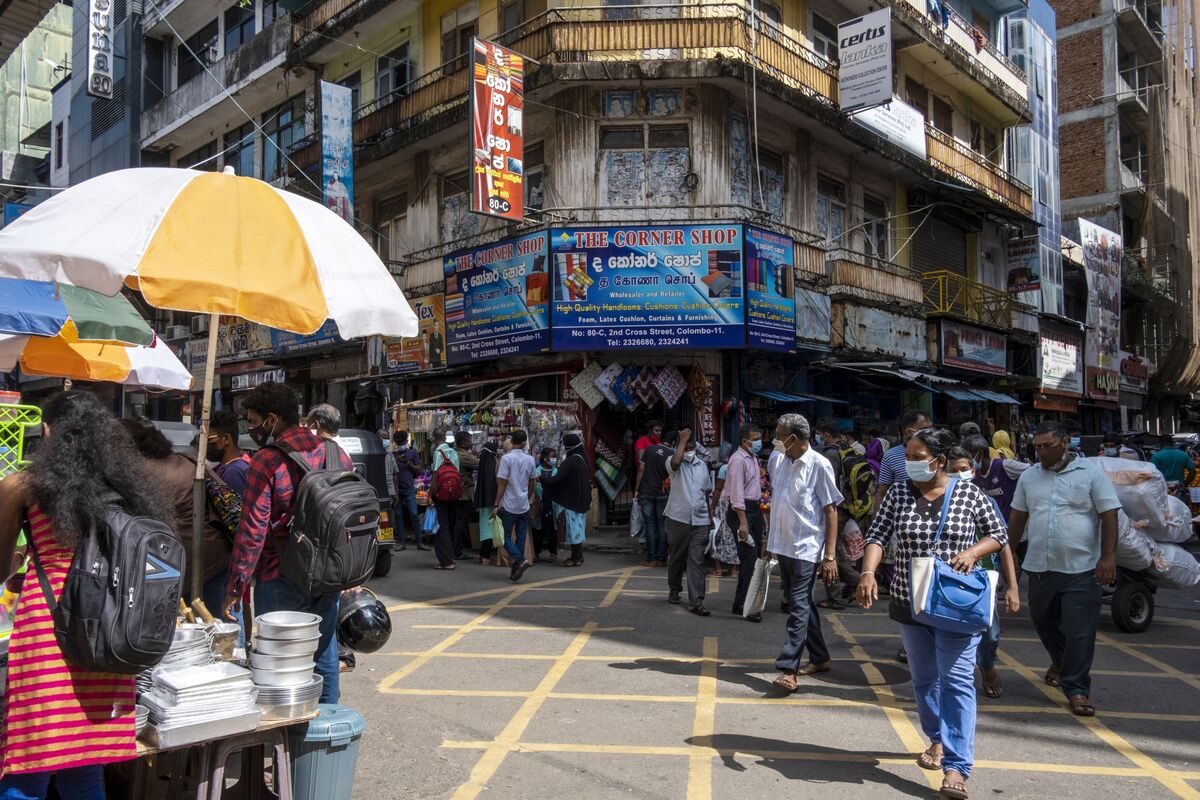
Sri Lanka’s Inflation Accelerates to Asia’s Fastest on FX Crunch
Sri Lanka’s inflation rate surged past Pakistan to make it the fastest in Asia, stoked by failed harvests, import restrictions to conserve dwindling foreign-exchange reserves, and high global prices of key commodities.
 www.bloomberg.com
Sri Lanka’s Inflation Accelerates to Asia’s Fastest on FX Crunch
Gota Rajafuckse is Paxtan's IK. Like Dimran , he wanted to create a naya Paxtan too . Like Dimran he's been extremely successful in his attempt. Like Dimran , he's moving around with a begging bowl in his hands . Unlike Dimran , he'd claim the best of the Buddhists have always begged for alms. That's his vision for SL too.Sri Lanka’s Inflation Accelerates to Asia’s Fastest on FX Crunch
Sri Lanka’s inflation rate surged past Pakistan to make it the fastest in Asia, stoked by failed harvests, import restrictions to conserve dwindling foreign-exchange reserves, and high global prices of key commodities.
Sri Lanka’s Inflation Accelerates to Asia’s Fastest on FX Crunch
India sri lanka news: India delivers 40,000 metric tonnes of fuel to Sri Lanka to help ease energy crisis - The Economic Times
“India a committed partner and a true friend of Sri Lanka. The High Commissioner (Gopal Baglay) handed over 40,000 MT fuel consignment by Indian Oil Company,” a statement issued by the Indian High Commission said.