Dassault Rafale - Updates and Discussion

Fixed it for you, The current radar is pretty ancient and it would be true, He wasn't referring to other radars, where it would be false
As always you have only proved that you understand nothing for imagery and signal processing.
Have you only look at your own phone imagery performance. How small it is and how easy it is to make a network with such small pieces.
You can imagine the same from the sky or space with network of nano sattelites dedicated to imagery.
The fight for RCS will be outdated very soon when not already.
 
Last edited:
  • Like
Reactions: Picdelamirand-oil
I see your logic, I can take a picture of the moon on my phone camera and that's 400,000k away, I can also get pictures of stars, the closest being 40 trillion kilometers ,,,,,,,How far do you want to see?


LOL fool
 
  • Haha
Reactions: Herciv
I see your logic, I can take a picture of the moon on my phone camera and that's 400,000k away, I can also get pictures of stars, the closest being 40 trillion kilometers ,,,,,,,How far do you want to see?


LOL fool
Have you taken into consideration the size of the camera in your phone and imagine how much better sensors are in a military plane ?
Have you taken into consideration how a dense network of such cameras are easy to deploy in the soil, sky and space and put in jeopardy every survivability strategies based mainly on RCS ?
 
Some news about F5 standard.


Rafale: the winning strategy of step-by-step evolution
...
From F1 to F4: Two Decades of Continuous Integration
The Rafale F1, delivered to the French Navy in 2004, was initially only capable of air-to-air combat.
The F2 (2006) paved the way for air-to-ground operations.
The F3 (2008) enabled multiple missions to be completed on a single flight. The F3-R (2018) integrated an AESA radar, the Meteor missile, a TALIOS pod, and an enhanced SPECTRA system.
The F4 standard is being introduced in three phases. The F4.1, qualified in 2023, brings a Scorpion helmet-mounted display, a 1,000 kg AASM bomb, and improvements to the RBE2 radar, OSF, and SPECTRA systems. The F4.2, currently in the experimental phase, enhances connectivity with SATCOM, Link 16 Block 2, the TRAGEDAC system, CAPOEIRA, and the CONTACT software-defined radio. It also adds predictive maintenance capabilities. The F4.3, scheduled for 2026, will integrate the MICA NG missile, a digitized version of the SPECTRA and an enhanced TALIOS pod.

F5: The Next Step
The F5, slated for 2030, aims for a new level of capability. Its objective: to enable the Rafale to operate in contested environments, including nuclear missions. The centerpiece is the RBE2 XG radar. Based on gallium nitride (GaN), it promises a 50 to 70% greater range, improved resistance to jamming, and enhanced electronic warfare capabilities.
The M88 T-REX engine, developed by Safran, will offer 20% more thrust while remaining compatible with current modules. Range will be increased thanks to conformal fuel tanks (CFTs) integrated into the fuselage, without impacting hardpoints.
The F5 also ushers in a new era in weaponry. It will be able to carry the ASN4G hypersonic missile, successor to the ASMP-A, designed to penetrate advanced defenses at Mach 6 or even faster. The Smart Cruiser, a tactical swarm-deployment missile, will restore SEAD/DEAD capability. Up to 18 can be carried by aircraft using multiple launchers. The RJ10 missile, planned for 2035, will complete the arsenal with a supersonic anti-radar capability.

The Rafale F5 will no longer fly alone. It will be accompanied by a stealth combat drone, derived from the nEUROn demonstrator. Controlled from the cockpit, it will detect, strike, or jam targets. Similar in size to the Mirage 2000, with an M88 engine and an internal payload: the human-machine partnership is entering its most challenging phase. The first flight is targeted before 2033.
...

 
HAJJEjHWcAAcBnb

Call sign Dirty​
 
4001784_original.jpg
February 5

Will Vietnam buy Rafale?​


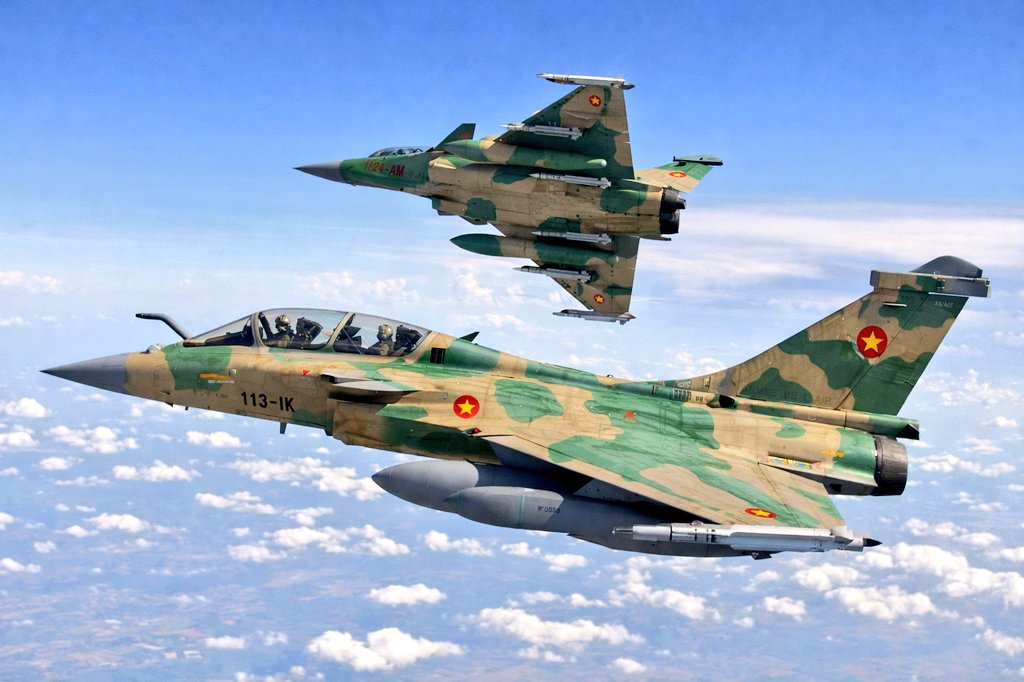
According to L'Express, a leading French weekly news and political magazine, Vietnam may become a new customer for the French Rafale fighter jet.

Until now, Vietnam has purchased Russian Su-30 fighter jets, but the Vietnamese army is seeking to diversify its supplies. Furthermore, in light of the possible imposition of tariffs by the US (Vietnam's export balance is approximately $134 billion), purchasing Russian defense products in the future is an extremely risky undertaking.

Such a contract would be historic for both countries, more than seventy years after the end of the Indochina War. In Southeast Asia, Indonesia has already ordered 42 Rafale jets (it previously purchased Su-30s).

For Russia, this is yet another of many lost "regular" customers, continuing the general trend of being squeezed out of the international arms market. Naturally, the blame lies not only with sanctions, but also with the extremely poor performance of the Russian Aerospace Forces in large-scale warfare. Low compensation for mid- and senior-level management, ineffective electronic warfare, and the lack of precision-guided munitions comparable to European and American counterparts contribute to the high loss rate.

Currently, Algeria remains Russia's only aircraft customer, purchasing S-35s (which Egypt had previously rejected), Su-34s, and a small batch of Su-57s. The position of another "client," Iran, does not yet allow it to be considered a stable customer in the medium term. /END
 
  • Haha
Reactions: Picdelamirand-oil
#GreekAirForce

December 5, 2025 - La Tribune

"I can tell you this as an F-16 pilot": Why the Rafale is so appealing to the Greek Air Force​

The operational availability rate of the Greek Rafales is approaching 90%. Dassault Aviation will sign a new support contract for the Greek aircraft for the period 2026-2029 worth nearly €490 million in Greece.

In Greece, the Rafale is proving popular with the Greek Air Force in terms of operational capabilities and availability. And even beyond. The Chief of Staff of the Hellenic Armed Forces, General Dimitrios Houpis, stated on Monday before the Standing Committee on National Defense and Foreign Affairs of the Parliament that the operational availability rate of Dassault Aviation's fighter jets exceeds 85%, even approaching 90%. This is an unparalleled level for the Greek Air Force, which already possesses a fleet of F-16s currently undergoing modernization. Greece has ordered 24 Rafale fighter jets in two batches (18 in 2021 and 6 in 2022), including 12 second-hand aircraft transferred from the French Air Force.​
According to Lieutenant General (Ret.) Demosthenes Grigoriadis, Chief of the Hellenic Air Force, the Greek Air Force "finally has superior aircraft. I can attest to this as an F-16 pilot with approximately 4,000 flight hours, an aircraft I still fly." I have dedicated my entire career to air defense and I recently flew the Rafale (...) This is a guarantee that we have an excellent aircraft, and I would like to emphasize that the Rafale has the necessary range to provide support and maintain a presence in #Cyprus. This is a considerable advantage that we only partially enjoyed with the F-16 until now.” The head of the Hellenic Air Force explained that the Eurofighter, 20 of which were ordered by Turkey at the end of October, “poses no problem if the adversary is equipped with it. We know this aircraft perfectly well and we have a much better weapons system as well as better pilots.” This could encourage Greece to purchase additional Rafale fighter jets, as it had considered doing in 2024.​

A new contract for Dassault Aviation​
These debates on the Rafale at the Standing Committee on National Defense and Foreign Affairs of Parliament took place in the context of a bill to extend support for the fighter jets sold by Dassault Aviation for the period 2026-2029 (FOS program for Follow On Support). According to the government rapporteur, support needs were estimated based on 13,000 flight hours for the Rafales over the next four years, compared to approximately 6,190 flight hours for the previous contract. In total, the 24 Greek aircraft will each have to complete 135 flight hours per year. Of the Greek Rafale fleet, twelve aircraft require increased maintenance, particularly on the M88 engines (out of a total fleet of 54 units, including six as part of a safety stockpile).​
The value of this new contract amounts to €489.55 million, of which approximately €52.9 million is for 2025. Why? The initial support contract for the first 18 Rafale aircraft expired last March. It was valued at €127.39 million, to which an addendum of €63.68 million was added after the acquisition of the six additional aircraft. While the support contract expired at the end of March, the Greek Rafales maintained an availability rate close to 90% thanks to the responsiveness of the Team Rafale teams (Dassault Aviation, Safran, and Thales). Initially, the French side requested €700 million, but the Greeks reduced the bill, notably by drastically limiting the number of French technicians from the three groups to three (one per company, compared to the initial total of around twenty) and by giving more responsibility to the Greek Air Force.​
The support contract includes an optional component to cover repairs for potential breakdowns, as is currently the case. The Air Force chief informed Parliament that a Rafale fighter jet had been damaged in a bird strike. He specified that a French support team was carrying out the necessary repairs on the aircraft, which should be back in service this week. /END

 
It would be, compared to the F-16D, Even though previously, The Greek AF claimed victory over the Rafale in exercises
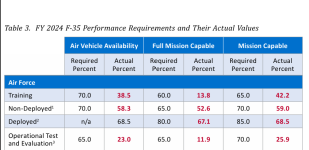
France has about 50% availability, Greek 85-90%?
Greece's F-35 arrive 2028, We will see what stories are written then
 
#GreekAirForce

December 5, 2025 - La Tribune

"I can tell you this as an F-16 pilot": Why the Rafale is so appealing to the Greek Air Force​

The operational availability rate of the Greek Rafales is approaching 90%. Dassault Aviation will sign a new support contract for the Greek aircraft for the period 2026-2029 worth nearly €490 million in Greece.

In Greece, the Rafale is proving popular with the Greek Air Force in terms of operational capabilities and availability. And even beyond. The Chief of Staff of the Hellenic Armed Forces, General Dimitrios Houpis, stated on Monday before the Standing Committee on National Defense and Foreign Affairs of the Parliament that the operational availability rate of Dassault Aviation's fighter jets exceeds 85%, even approaching 90%. This is an unparalleled level for the Greek Air Force, which already possesses a fleet of F-16s currently undergoing modernization. Greece has ordered 24 Rafale fighter jets in two batches (18 in 2021 and 6 in 2022), including 12 second-hand aircraft transferred from the French Air Force.​
According to Lieutenant General (Ret.) Demosthenes Grigoriadis, Chief of the Hellenic Air Force, the Greek Air Force "finally has superior aircraft. I can attest to this as an F-16 pilot with approximately 4,000 flight hours, an aircraft I still fly." I have dedicated my entire career to air defense and I recently flew the Rafale (...) This is a guarantee that we have an excellent aircraft, and I would like to emphasize that the Rafale has the necessary range to provide support and maintain a presence in #Cyprus. This is a considerable advantage that we only partially enjoyed with the F-16 until now.” The head of the Hellenic Air Force explained that the Eurofighter, 20 of which were ordered by Turkey at the end of October, “poses no problem if the adversary is equipped with it. We know this aircraft perfectly well and we have a much better weapons system as well as better pilots.” This could encourage Greece to purchase additional Rafale fighter jets, as it had considered doing in 2024.​

A new contract for Dassault Aviation​
These debates on the Rafale at the Standing Committee on National Defense and Foreign Affairs of Parliament took place in the context of a bill to extend support for the fighter jets sold by Dassault Aviation for the period 2026-2029 (FOS program for Follow On Support). According to the government rapporteur, support needs were estimated based on 13,000 flight hours for the Rafales over the next four years, compared to approximately 6,190 flight hours for the previous contract. In total, the 24 Greek aircraft will each have to complete 135 flight hours per year. Of the Greek Rafale fleet, twelve aircraft require increased maintenance, particularly on the M88 engines (out of a total fleet of 54 units, including six as part of a safety stockpile).​
The value of this new contract amounts to €489.55 million, of which approximately €52.9 million is for 2025. Why? The initial support contract for the first 18 Rafale aircraft expired last March. It was valued at €127.39 million, to which an addendum of €63.68 million was added after the acquisition of the six additional aircraft. While the support contract expired at the end of March, the Greek Rafales maintained an availability rate close to 90% thanks to the responsiveness of the Team Rafale teams (Dassault Aviation, Safran, and Thales). Initially, the French side requested €700 million, but the Greeks reduced the bill, notably by drastically limiting the number of French technicians from the three groups to three (one per company, compared to the initial total of around twenty) and by giving more responsibility to the Greek Air Force.​
The support contract includes an optional component to cover repairs for potential breakdowns, as is currently the case. The Air Force chief informed Parliament that a Rafale fighter jet had been damaged in a bird strike. He specified that a French support team was carrying out the necessary repairs on the aircraft, which should be back in service this week. /END
The Indian Rafale fleet availability is also very very high. A real asset of this bird.
It would be, compared to the F-16D, Even though previously, The Greek AF claimed victory over the Rafale in exercises
France has about 50% availability, Greek 85-90%?
Greece's F-35 arrive 2028, We will see what stories are written then
It is a french choice : to have more jet but less spares & support.
In case of it take 3 years to built a jet, where the spares need days, weeks or months.