Japan unveils lunar rover prototype for joint mission with India
November 26, 2026 (Mainichi Japan)
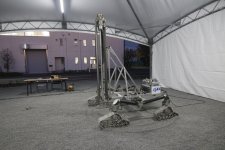
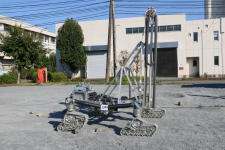
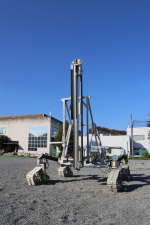
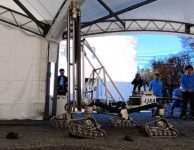 The Japan Aerospace Exploration Agency (JAXA) unveils its new lunar survey rover prototype at JAXA's Chofu Aerospace Center in the Tokyo suburban city of Chofu, Nov. 25, 2026. The rover will be deployed from the Indian Space Research Organization (ISRO)'s LUPEX lunar lander scheduled to travel to the moon's southern polar region in fiscal 2028. (Mainichi/Harumi Kimoto)
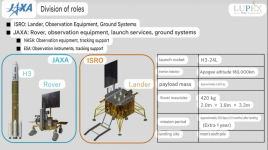
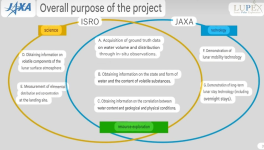
TOKYO -- The Japan Aerospace Exploration Agency (JAXA) unveiled a prototype lunar rover on Nov. 25 for LUPEX, a joint mission with India aimed at exploring water resources near the moon's south pole, with launch targeted for fiscal 2028.
Japan and India signed a memorandum on space cooperation in 2016. The Indian Space Research Organization, or ISRO, is developing the LUPEX lander, while JAXA is responsible for the rover. The United States and Europe will also provide observation instruments.
Japan's total budget for the project is 37.6 billion yen (about $236 million). The spacecraft is scheduled to be launched aboard Japan's flagship H3 rocket and conduct exploration on the lunar surface for about 100 days.
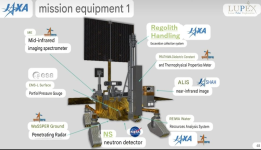
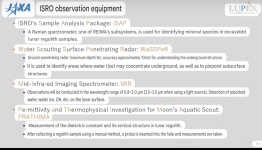
The rover will carry 11 instruments and collect samples from about 1 meter below the lunar surface. It will analyze the amount and characteristics of water in the samples on site. Data and technology obtained and developed through the mission will also be used for construction of a lunar base planned under the U.S.-led international Artemis lunar exploration program.
The prototype was unveiled at JAXA's Chofu Aerospace Center in the Tokyo suburban city of Chofu. Equipped with beltlike crawler tracks instead of wheels, the rover traversed uneven terrain designed to simulate rocks and craters on the lunar surface as its tracks rotated. It is expected to be transported to India in 2027.
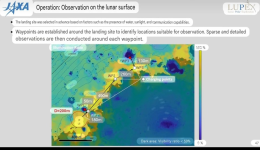
Because the sun remains low on the horizon in the lunar south polar region, some areas inside craters receive no sunlight and are known as permanently shadowed regions, where ice is believed to exist.
Water resources on the moon could potentially be split into hydrogen and oxygen for use as fuel and other purposes, making the south polar region a leading candidate for a lunar base.
Countries are therefore competing to explore the region, with spacecraft from the United States, China, Europe and others scheduled to launch from 2027 onward. LUPEX's strength is its ability to directly analyze samples on the lunar surface, potentially providing detailed data unavailable from other missions.
"We want to secure locations where water is close to areas with good sunlight for power generation and use them to help enable sustainable exploration," project manager Takeshi Hoshino said.
(Japanese original by Harumi Kimoto, Lifestyle, Science & Environment News Department)
Japan unveils lunar rover prototype for joint mission with India - The Mainichi