British/Italian Tempest (GCAP) Fighter : News and Discussion

That was obviously corrected by releasing funding.
Topic was about lack of funding/late funding causing delays, which did happen in reality.


They failed to meet that deadline due to technical issues.
Russian sources explicitly states lack of funding for engine as base for all the technical delays.


. India's money was not a factor for the delay in not meeting the 2015 goal, that had a separate funding pipeline
Given till 2018 we only spent 300million on FGFA before leaving , and news of 2015-2018 period talking about financially strain on the project.
Lack of funding was the main issue, and Indian side could had definitely helped if we released more funding from our side, which we didn't because of our own analysis of cost benifit ratio.


After India backed out, they announced that they will fund the program on their own.
And they did, after more than half a decade of delays.


Sure. But it means SoKo funds the rest. It didn't lead to delays.
That was my original point , Indonesia's financial share in kf21 is so small, that using it as an example of project continuity despite financial trouble of one side is wrong in case of gcap Where's British share is ~30%.
 
Topic was about lack of funding/late funding causing delays, which did happen in reality.


Russian sources explicitly states lack of funding for engine as base for all the technical delays.

Probably an excuse to distract from their technical failures.

The Russians did not need Indian funding for the Su-57 and Izd 30. It was for future variants. Even before Indian money came in, they had everything else they needed under testing, including avionics. Like radar flight testing began in 2012.

They were supposed to begin LRIP deliveries in 2015 with Izd 30 flight tests in 2017 or so, so it had no relevance to Indian money at that point. We were supposed to get 1 prototype with 117 and 2 prototypes with Izd 30. So our participation was intended to be much later.

They messed up and got neither the LRIP in time or the Izd 30. Once again, we were not involved in that part of the program.

Our money was supposed to make it cheaper for production and develop new avionics for later modernizations. They are doing both on their own now. You could say the lack of Indian orders has slowed down their GaN transition, but the delays in the overall program is their own.

And they did, after more than half a decade of delays.

All technical. One of their most imporant prototypes burned down too, so they had to rebuild it using the 6th prototype. Their 117 optimization was late too.

That was my original point , Indonesia's financial share in kf21 is so small, that using it as an example of project continuity despite financial trouble of one side is wrong in case of gcap Where's British share is ~30%.

The contract is supposed to last many years. Even if the Brits are delayed by a year, the other partners can compensate for the loss. Otoh, SoKo had to fund the difference entirely on their own from inception to well into 2025, just a few months before the planned introduction date.
 
Probably an excuse to distract from their technical failures.

The Russians did not need Indian funding for the Su-57 and Izd 30. It was for future variants. Even before Indian money came in, they had everything else they needed under testing, including avionics. Like radar flight testing began in 2012.

They were supposed to begin LRIP deliveries in 2015 with Izd 30 flight tests in 2017 or so, so it had no relevance to Indian money at that point. We were supposed to get 1 prototype with 117 and 2 prototypes with Izd 30. So our participation was intended to be much later.

They messed up and got neither the LRIP in time or the Izd 30. Once again, we were not involved in that part of the program.

Our money was supposed to make it cheaper for production and develop new avionics for later modernizations. They are doing both on their own now. You could say the lack of Indian orders has slowed down their GaN transition, but the delays in the overall program is their own.


All technical. One of their most imporant prototypes burned down too, so they had to rebuild it using the 6th prototype. Their 117 optimization was late too.


The contract is supposed to last many years. Even if the Brits are delayed by a year, the other partners can compensate for the loss. Otoh, SoKo had to fund the difference entirely on their own from inception to well into 2025, just a few months before the planned introduction date.
I’m having a hard time finding the 'fact' in all of this. Most of what you’re saying is just you"re personal thesis built on you're own assumptions . Without any source to back it up right now you’re treating your own imagination like it’s evidence.

Like, You're dismissing the Russian sources talking about financial strain of the project as just an excuse, based on your *believes* or whatever right or wrong or unconfirmed info you use as your basis.


Just like many other previous convos I've had with you.
 
I’m having a hard time finding the 'fact' in all of this. Most of what you’re saying is just you"re personal thesis built on you're own assumptions . Without any source to back it up right now you’re treating your own imagination like it’s evidence.

Like, You're dismissing the Russian sources talking about financial strain of the project as just an excuse, based on your *believes* or whatever right or wrong or unconfirmed info you use as your basis.


Just like many other previous convos I've had with you.

Look, as I said, the Su-57 and Izd 30 funding were irrelevant to India's funding, that's a fact. When we started the design phase of the FGFA, the Su-57 was already flying. So where does India's money come into the picture in the first place?

When FGFA was still in the design phase, Su-57 was equipped with and flew its full suite of avionics, radar, EW suite etc. What's India's money got to do with that either?

The same with the engine, Izd 30 was already in production, it was delivered in 2015 and began ground tests in 2016, and was flight tested in 2017.

They built all the core technologies entirely without Indian funding.

Su-57 (Stage 1, 117) and Su-57M1 (Stage 2, Izd 30) were always supposed to be entirely through their own funding. This never changed. Both stages were announced before FGFA's design stage.

India's money was required to develop modernized versions of the Su-57M1. And even for that, most of India's side of the funding was primarily for India's own expenses, like setting up a production line and prototypes. The Russians would use their share that they would also invest to create new technologies, derivatives of it in turn entering their own future programs. That was their way of saving money.

Think logically, forget the fact that the timelines themselves don't match. Why would Russia, an aspiring superpower with real enemies, hold the future of their aviation industry hostage waiting for another country to invest?

All that money excuse is just to hide the fact that they screwed up the prototype to LRIP transition. Instead of starting deliveries in 2015 they took 4 years extra. IN 2019, their first serial delivered Su-57 crashed too. Post that, it went back to their original schedule, and they are at IOC for their own version.

As for what Borisov stated, after Sukhoi screwed up the Su-57 program, he said they have decided to focus on what is already available. And this wasn't just for Su-57, it was for all R&D programs, including Armata. They pushed production funding towards cheaper alternatives due to their new security situation.

Absolute none of their problems had anything to do with lack of Indian money.
 
Look, as I said, the Su-57 and Izd 30 funding were irrelevant to India's funding, that's a fact. When we started the design phase of the FGFA, the Su-57 was already flying. So where does India's money come into the picture in the first place?
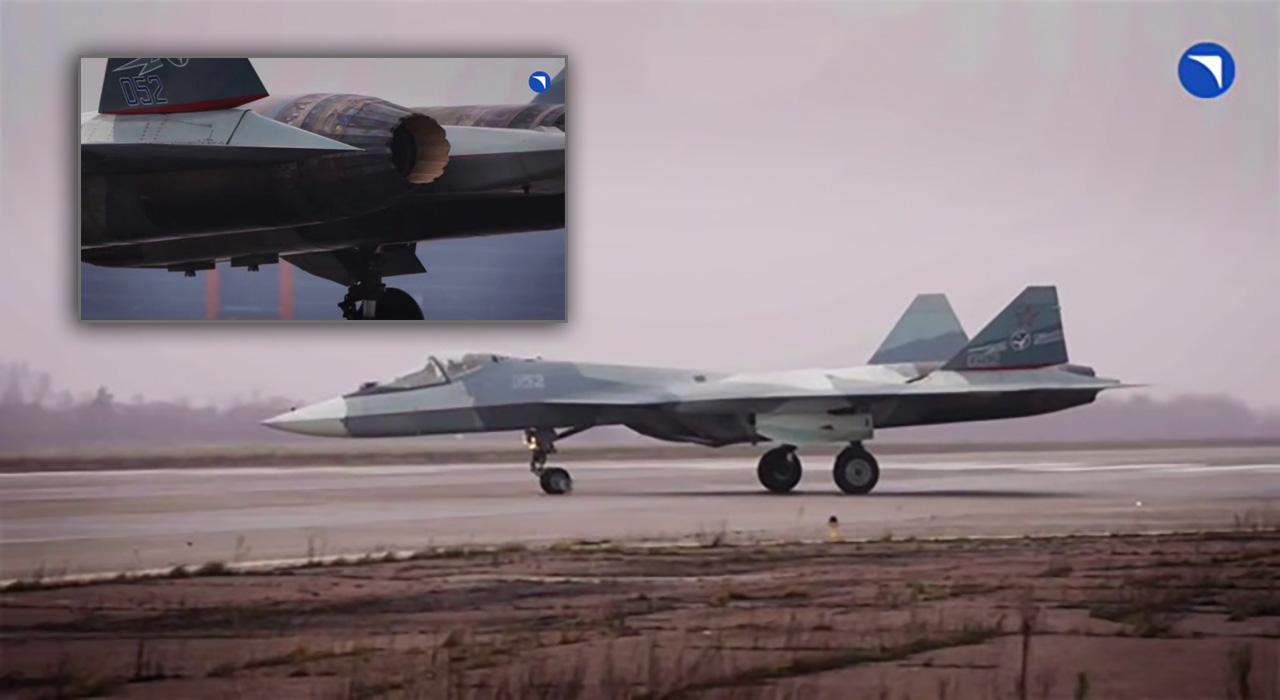
Su57? What made its maiden flight in 29 jan 2010 was t-50-1 prototype, The T-50-1 (the very first flying prototype) was essentially a "proof of concept" airframe, nowhere near close to su57 envisioned, not even a proper prototype to test things, except flight characteristics.
While the physical space for the tandem internal weapons bays existed, the complex hydraulic doors and ejection racks were not operational for weapons release in 2010.
It required literally another decade of development to be called Su-57.

India joined by program in 2007, fgfa design beginning in 2010, Russia initially requested that India contribute $6 billion in the program.


In 2008, following Vladimir Putin's visit to Delhi, the "contours of cooperation" were defined. By 2009, Mikhail Pogosyan (then head of Sukhoi) confirmed that the Indian FGFA design would be **structurally similar to the PAK FA** but would require custom mission computer, navigation, and cockpit displays etc,to meet Indian Air Force (IAF) requirements.


When FGFA was still in the design phase, Su-57 was equipped with and flew its full suite of avionics, radar, EW suite etc. What's India's money got to do with that either?

No36's **initial varient** started testing on t-50-3 in 2012, and testing completed in 2018 for production varient.
6 years for testing.


The same with the engine, Izd 30 was already in production, it was delivered in 2015 and began ground tests in 2016, and was flight tested in 2017.
India joined the program in 2007.
Izd-30 is still not seen in any production su57.


They built all the core technologies entirely without Indian funding
Yeah, and it costed them a delay of 5 years for production to start and even now al-51 equipped su57 are not development.
And multiple russian sources have talked about *financial strain* being the reason for development slowdown and delays, even their defence minister talked about prioritising su-35,34 because su57 was *expensive*

**Deputy Defense Minister Yuri Borisov famously stated that there was no need to mass-produce the Su-57 because the Su-35 was already effective and much cheaper**


**In 2015, the Russian Air Force originally expected to receive 52 Su-57s by 2020. By 2016, this was slashed to just 12 aircraft as the Ministry of Defense prioritized cheaper, "proven" airframes (Su-30SM and Su-35S) to fill the ranks while the economy stabilized.**
Su-57 (Stage 1, 117) and Su-57M1 (Stage 2, Izd 30) were always supposed to be entirely through their own funding. This never changed. Both stages were announced before FGFA's design stage.
Again, they requested ~6billion dollars from India for FGFA around 2010 out of total estimated 10-12 billion dollars cost for fgfa.
The same fgfa which supposed be ~75% similar in airframe components & 60% similar in internals & LRU's to PAK-FA.

Anyone with some brains known you don't need 10-12 billion just to develop a varient of a jet( which you claim russia was supposed to develop entirely on their own funding) that is 75% structurally similar & ~60% internally shares systems to pak-fa, same engines.
Even assuming prototypes building and testing its still too much, especially While the total estimated cost of pak-fa itself including the most expensive engines part development, was ~20 billion dollars at that time.


India's money was required to develop modernized versions of the Su-57M1
Announcement of SU-57M upgrade happened in 2018, same year India left the program, india joined the program in 2007.


Think logically, forget the fact that the timelines themselves don't match. Why would Russia, an aspiring superpower with real enemies, hold the future of their aviation industry hostage waiting for another country to invest?
Because soviet union fell decades before, and they were broke desperately trying to save their industries, looking for foreign customers/partners.
Like the case with Kiev class that became Vikramaditya, or su-30mki deal or t90 deal , in all these indian money saved russian industries.
* aspiring superpower* lmao.


All that money excuse is just to hide the fact that they screwed up the prototype to LRIP transition.
Again, russian sources mentioned financial strain, you haven't provided any sources to support your claim.


As for what Borisov stated, after Sukhoi screwed up the Su-57 program, he said they have decided to focus on what is already available. And this wasn't just for Su-57, it was for all R&D programs, including Armata. They pushed production funding towards cheaper alternatives due to their new security situation.
Yeah, so financial strain.


Absolute none of their problems had anything to do with lack of Indian money.
Its about lack of money, india would just be a potential source to help in that case if we had accepted to invest the ~6 billion dollars at that time.
 
Su57? What made its maiden flight in 29 jan 2010 was t-50-1 prototype, The T-50-1 (the very first flying prototype) was essentially a "proof of concept" airframe, nowhere near close to su57 envisioned, not even a proper prototype to test things, except flight characteristics.
While the physical space for the tandem internal weapons bays existed, the complex hydraulic doors and ejection racks were not operational for weapons release in 2010.
It required literally another decade of development to be called Su-57.

India joined by program in 2007, fgfa design beginning in 2010, Russia initially requested that India contribute $6 billion in the program.

Bruv, you are rewriting history. T-50 was the name of the prototype. The Russians confirmed they did not go the TD route, straight to prototypes.

The Stage 1 was indeed for testing aerodynamics. Stage 2 was the production version. But they royally screwed up the program.

The first Stage 2 prototype T-50-6 flew 30 months after the 5th one 'cause they burned it down. So they had to push LRIP program behind by many years.

India's entry had nothing to do with Su-57.

All India did was sign an agreement signalling entry in 2007. Actual work started in 2010, PDC ended in 2013. There was no relevance to the already ongoing Su-57 at the time.

The Russians already had airframe, engine, and avionics under tests by then. Where will the money come in at that point?

In 2008, following Vladimir Putin's visit to Delhi, the "contours of cooperation" were defined. By 2009, Mikhail Pogosyan (then head of Sukhoi) confirmed that the Indian FGFA design would be **structurally similar to the PAK FA** but would require custom mission computer, navigation, and cockpit displays etc,to meet Indian Air Force (IAF) requirements.

That shows how the Su-57's design was already mature.

No36's **initial varient** started testing on t-50-3 in 2012, and testing completed in 2018 for production varient.
6 years for testing.

After f*cking up T-50-5. So yes, the timeline matches what I've been saying.

**Deputy Defense Minister Yuri Borisov famously stated that there was no need to mass-produce the Su-57 because the Su-35 was already effective and much cheaper**

Due to emergency. They were clearly going to war or making preparations, and we didn't know.

The Su-57 was supposed to have been operational by this time. When it didn't, they had to make excuses.

**In 2015, the Russian Air Force originally expected to receive 52 Su-57s by 2020. By 2016, this was slashed to just 12 aircraft as the Ministry of Defense prioritized cheaper, "proven" airframes (Su-30SM and Su-35S) to fill the ranks while the economy stabilized.**

Exactly. That's how advanced the program was. No Indian money required.

I don't get how you do not see you are supporting my view.

Again, they requested ~6billion dollars from India for FGFA around 2010 out of total estimated 10-12 billion dollars cost for fgfa.
The same fgfa which supposed be ~75% similar in airframe components & 60% similar in internals & LRU's to PAK-FA.

For future development. India's financial committment was for well after Su-57 was already operational. 2015 LRIP.

Anyone with some brains known you don't need 10-12 billion just to develop a varient of a jet( which you claim russia was supposed to develop entirely on their own funding) that is 75% structurally similar & ~60% internally shares systems to pak-fa, same engines.
Even assuming prototypes building and testing its still too much, especially While the total estimated cost of pak-fa itself including the most expensive engines part development, was ~20 billion dollars at that time.

The Russians had already spent $10B+ before India entered the program.

Once again, India's money was necessary for modernization, not for the development of the Su-57M.

Announcement of SU-57M upgrade happened in 2018, same year India left the program, india joined the program in 2007.

Su-57M was just the Su-57 Stage 2. It was supposed to come with Izd 30 and additional avionics. That's all. Stage 1 is the first 24 production models delivered with 117. It's already operational.

Su-57M is the definitive model meant to carry Izd 30, Stage 2. It is the next 2 regiments ordered, out of a total of 76. The first 14 were delivered only a few months ago and with a second interim engine, the 177. The Izd 30 didn't need Indian money for development either.

Because soviet union fell decades before, and they were broke desperately trying to save their industries, looking for foreign customers/partners.
Like the case with Kiev class that became Vikramaditya, or su-30mki deal or t90 deal , in all these indian money saved russian industries.
* aspiring superpower* lmao.

Their current military spending is more than the US and Europe combined.

Based on simple math I predicted an extremely fast modernization cycle for Russia almost a decade ago. Their capital expenditure is multiple times that of the US.

When @Picdelamirand-oil brought up the same arguments you did back then about Russia unable to fund the Su-57, 2018, I proved that they have far more than people imagine.

For example, the US was spending $3B on Virignia class in 2018, the Russians were spending $800M on the Yasen. And this was when rub was 65 to a dollar versus 80 today. A lot of Western analysis on Russian spending is based on rub being 35 to a dollar. So people failed to take PPP into account and the currency multiplier due to devaluation.

So right now, a Yasen costs $625M, 80 rub to a dollar.

That's also how India's FGFA spending dropped from $5.5B to $3.7B, while simultaneously increasing the rub spending from 192.5B rub to over 240B.

Back then, their military spending was modest, but they were still spending 70% of their budget into modernization. It was around $30B in capital expenditure, twice that of India's in terms of value, but...

US' $140B procurement budget could buy 46 Virginias, whereas Russia could buy 48 Yasens with $30B. So back then, Russian modernization was already as big as the US. India's silly $15B budget depending on imports was nowhere close to these numbers. (We pay $3.5-4M for a T-90, they pay less than $1M.)

But after the war, their military budget went up by 4 times and only 30% of that is going into the war effort. Right now they are spending over $160B in defense. Assuming 50% is going into modernization, we are looking at Russia spending 3 times as much as the US is currently in terms of procurement, ie, 130 Yasens a year.

So their militarization is happening at an insane clip. It's not visible yet, but it will become evident by the end of the decade. For example, the US is currently building 1.2 SSNs a year and no SSBNs. Russia's building 1 each of SSNs, SSBNs, and SSKs, and they plan to double or even triple the SSN and SSK numbers after 2030. They are building 500 new tanks a year, which they are likely to expand to 1000. And they are currently building 55 fighter jets a year, which they plan to expand to 100+. They have already tripled the size of their ground forces.

By 2040, they will have a military roughly the same size as the US and China. So, yes, superpower. All funded by oil money and ridiculously cheap unit prices. A T-90 costs them less than $1M. A Su-35 costs them $20M. A Yasen costs no more than $700M. And their trade surplus before sanctions was $300B, with a large chunk of that going to the Russian govt.

In order to counter this, I had suggested that the US and Europe should both increase their procurement budgets by 30%. Trump's doing that now, and forcing Europe to follow him.

So you can see why the West had to push for the Ukraine war. They had no choice but to kill the oil money. But it backfired.

They have currently seized control of domestic money supply. So imagine what will happen once the war ends and the excess war spending is over.

Again, russian sources mentioned financial strain, you haven't provided any sources to support your claim.

Yeah, so financial strain.

Its about lack of money, india would just be a potential source to help in that case if we had accepted to invest the ~6 billion dollars at that time.

The above shows clearly why Indian money wasn't a factor.
 
  • Informative
Reactions: Lolwa
Bruv, you are rewriting history. T-50 was the name of the prototype. The Russians confirmed they did not go the TD route, straight to prototypes.
Yeah an early stage prototype that can only be used for flight testing, without any avionics, without any working iwb doors, only flight testing.
Nothing i have said is wrong history wise, t-50-1 was at most a proof of concept *prototype*


India's entry had nothing to do with Su-57.

All India did was sign an agreement signalling entry in 2007. Actual work started in 2010, PDC ended in 2013. There was no relevance to the already ongoing Su-57 at the time.
Russia asked india to invest 6 billion dollars in 2010.


The Russians already had airframe, engine, and avionics under tests by then. Where will the money come in at that point?
under *tests*. *early stages of tests*

The radar completed testing in *2018*.

Al51 equipped su57 conducted firt flight in 2025

That shows how the Su-57's design was already mature.
A plane is more than just design.


After f*cking up T-50-5. So yes, the timeline matches what I've been saying.
So? Timeline is not a proof of any kind.
Russian media and their own defense minister has said many times about financial difficulties for the program.


The Russians had already spent $10B+ before India entered the program.
Source?

Because the estimate i'm getting is.

Russia’s expenditure before the 2007 IGA is generally estimated at $1 billion to $1.5 billion.
Analysts estimate that by the end of 2010, Russia had likely spent between $2 billion and $3 billion of its own funds.


Once again, India's money was necessary for modernization
Again, another claim without any source, kindly show a russian or atleast credible enough source to back up your claims.


The Su-57 was supposed to have been operational by this time. When it didn't, they had to make excuses.
Again, *excuse* due to technical difficulties unrelated to financial difficulties is your claim.
without anything to back it up.

And he said that, in 2018, there was not war then, Ukraine invasion began in 2022.


Exactly. That's how advanced the program was. No Indian money required.

I don't get how you do not see you are supporting my view.
Maybe you're blind?
You just made another claims to justify the delay , wanting to push it on technical difficulties unrelated to financial difficulties, without anything to back it up.

When both russian media, russian defence minister has said things about financial difficulties in the program, and again there was no war in 2018 when Russian defense minister made those statements.


For future development. India's financial committment was for well after Su-57 was already operational. 2015 LRIP.
Russia asked india to invest 6 billion dollars in *2010*.

2015 LRIP for *prototypes* first *operational standard* jet was delivered in december 2020.


Once again, India's money was necessary for modernization, not for the development of the Su-57M.
Another claim, without any source.


Su-57M was just the Su-57 Stage 2. It was supposed to come with Izd 30 and additional avionics. That's all.
Another claim.

And Announcement of new development( quote stage 2) happened in 2018.

The Izd 30 didn't need Indian money for development either.
Again Russia asked india to invest 6 billion dollars in 2010, out of 10-12 billion dollars for fgfa.

**Anyone with some brains known you don't need 10-12 billion just to develop a varient of a jet( which you claim russia was supposed to develop entirely on their own funding) that is 75% structurally similar & ~60% internally shares systems to pak-fa, same engines.
Even assuming prototypes building and testing its still too much, especially While the total estimated cost of pak-fa itself including the most expensive engines part development, was ~20 billion dollars at that time**


Their current military spending is more than the US and Europe combined.
Another false claim.

Russia's 2024 military spending adjusted for Purchasing Power Parity (PPP) is estimated to be approximately $462 billion.


Based on simple math I predicted an extremely fast modernization cycle for Russia almost a decade ago. Their capital expenditure is multiple times that of the US.
I do not consider you as any credible enough source to trust, as you have shown many times.


When @Picdelamirand-oil brought up the same arguments you did back then about Russia unable to fund the Su-57, 2018, I proved that they have far more than people imagine.
You haven't proved shit, only claims, based on your own assumptions.


For example, the US was spending $3B on Virignia class in 2018, the Russians were spending $800M on the Yasen. And this was when rub was 65 to a dollar versus 80 today. A lot of Western analysis on Russian spending is based on rub being 35 to a dollar. So people failed to take PPP into account and the currency multiplier due to devaluation.
Another bullshit.

Around 2018, the cost of a Yasen-class (Project 885/885M) nuclear-powered submarine for the Russian Navy was estimated to be roughly $1.6 billion to over $2 billion per unit.


US' $140B procurement budget could buy 46 Virginias, whereas Russia could buy 48 Yasens with $30B. So back then, Russian modernization was already as big as the US
No. Taking conservative estimate of 1.6 billion dollars for 1 Yasen in 2017, its 76.8 billion for 48 yasens, if we take 2 billion per sub its 96 billion.


Your ppp estimates are highly exaggerated


But after the war, their military budget went up by 4 times and only 30% of that is going into the war effort. Right now they are spending over $160B in defense. Assuming 50% is going into modernization, we are looking at Russia spending 3 times as much as the US is currently in terms of procurement, ie, 130 Yasens a year.
And another bullshit claim.

Russia current ppp adjusted budget is 450+billion dollars.

Estimates suggests, 65% to 75% of the National Defense budget is now consumed by active warfighting.

The remaining 25% to 35% is split between non-Ukraine-related strategic needs.
( strategic nuclear 10%, modernization 15-25% ).

That's about 100+ billion plus on modernization ppp based for Russia.

The FY 2025 National Defense Authorization Act (NDAA) authorized approximately $167.85 billion for U.S. defense procurement.


For example, the US is currently building 1.2 SSNs a year and no SSBNs. Russia's building 1 each of SSNs, SSBNs, and SSKs, and they plan to double or even triple the SSN and SSK numbers after 2030
U.s is also building many other things and managing 5000+ planes in its airforce including largest stealth fighter fleet, largest transport fleet, largest tanker fleet, biggest navy by tonnage,
10+ super carriers,10 Vikramaditya sized amphibious ships, having bases and logistics halfway around the world etc.


They are building 500 new tanks a year, which they are likely to expand to 1000. And they are currently building 55 fighter jets a year, which they plan to expand to 100+.
Based on fiscal year 2024 and 2025 budget requests and production data, the U.S. Air Force and Navy are inducting (procuring) roughly 150 to 200+ total aircraft per year combined.

And that's when their economy hasn't turned into partial wartime economy like russia's.


By 2040, they will have a military roughly the same size as the US and China. So, yes, superpower
So you're claiming they will continue to spend their wartime defense budget, even in peacetime? After ukraine war is over?
That's no superpower.


. So imagine what will happen once the war ends and the excess war spending is over.
Their defense spending will reduce.


The above shows clearly why Indian money wasn't a factor.
Nothing of clear, literally just false claims and assumptions, and fantasy thinking.

It really hurts mind the more I read it.


With that said.
Unless you have some credible source to back up whatever bullshit you just spewed, I do not wish to engage with you anymore.

Everytime talking with you and your made up bullshit takes a strain on my brain.

 
Last edited:
Yeah an early stage prototype that can only be used for flight testing, without any avionics, without any working iwb doors, only flight testing.
Nothing i have said is wrong history wise, t-50-1 was at most a proof of concept *prototype*

No, it wasn't. They planned on building 50 initially, dropped it to 12 and then built 24 more.

Dude, stop making up history.

Russia asked india to invest 6 billion dollars in 2010.

No.

Russia’s expenditure before the 2007 IGA is generally estimated at $1 billion to $1.5 billion.
Analysts estimate that by the end of 2010, Russia had likely spent between $2 billion and $3 billion of its own funds.

Izd 30 design started in 2002 and PAK FA in 2004. By the time it was in testing, the amount they had spent on foreground and background capabilities was many billions. What you are referring to is merely the cost of the prorotypes.

Again, another claim without any source, kindly show a russian or atleast credible enough source to back up your claims.


As per reports from 2023, the ten Su-57s delivered to the Russian Aerospace Forces (RuAF) until the end of that year from the Komsomolsk-on-Amur plant, and all future production batches, were flying with the Stage 2 Izdeliye/Product 30 (or the AL-51F-1). All these engines are developed by the UEC’s NPO Saturn.

Airframes produced until 2023 were flying with the AL-41F-1S, which produces a 142 kN afterburner thrust. The AL-31F/FP generates 123 kN, and the AL-51F-1 (Izdeliye 30) a 162 kN thrust. The new Izdeliye 177 stands at 156 kN, and the Izdeliye 177S export version at 142 kN.


However, this flight makes it possible to draw a clear three-stage evolutionary path for the Felon:

  • Stage 1: the present (Izdeliye 117 / AL-41F1) This is the engine with which the Su-57 entered service. While it shares its DNA with the AL-41F1S of the Su-35S, the 117 incorporates a more advanced FADEC control system. Delivering between 14,500 and 15,000 kgf of thrust, it has proven sufficient to meet baseline requirements, but remains limited when it comes to fully exploiting the aircraft’s supercruise potential and combat persistence.
  • Stage 1.5: the new development (Izdeliye 177) This is the engine that flew yesterday. It represents a step up to roughly 16,000 kgf of thrust. It is a deeply refined evolution of the AL-41F1 architecture, improving the thrust-to-weight ratio. While its 177S variant—shown at airshows such as Aero India—is marketed at 14,500 kgf as a drop-in replacement for the AL-31FP powering the Su-30MKI, the “clean” 177 version is the high-power standard optimized for near-term Su-57 production batches and its export variant, the Su-57E.
  • Stage 2: the objective (Izdeliye 30 / AL-51F1) The definitive fifth-generation engine. It is intended to deliver up to 19,000 kgf of thrust and to feature new flat, two-dimensional nozzles designed to drastically reduce rear-aspect radar and infrared signatures. This engine continues along its own pre-series testing timeline.


Again, *excuse* due to technical difficulties unrelated to financial difficulties is your claim.
without anything to back it up.

Look at this new Stage 1.5.

And he said that, in 2018, there was not war then, Ukraine invasion began in 2022.

2014.

Maybe you're blind?
You just made another claims to justify the delay , wanting to push it on technical difficulties unrelated to financial difficulties, without anything to back it up.

When both russian media, russian defence minister has said things about financial difficulties in the program, and again there was no war in 2018 when Russian defense minister made those statements.

Once you have airframe, avionics, and engine, money becomes irrelevant to delays. It means the program's already fully funded.

Russia asked india to invest 6 billion dollars in *2010*.

No.

Another claim, without any source.

Lol. Pretty much even bacchas that's followed Su-57 knows what I'm talking about.

Another claim.

And Announcement of new development( quote stage 2) happened in 2018.

Lol.

So AMCA getting F414 as Stage 1 and new engine as Stage 2 is something secret?

**Anyone with some brains known you don't need 10-12 billion just to develop a varient of a jet( which you claim russia was supposed to develop entirely on their own funding) that is 75% structurally similar & ~60% internally shares systems to pak-fa, same engines.
Even assuming prototypes building and testing its still too much, especially While the total estimated cost of pak-fa itself including the most expensive engines part development, was ~20 billion dollars at that time**

As per HAL, most of India's funding was meant for spending within India itself.

Anyway:
The first flight of the platform was expected in 2009, with serial production commencing in 2015.

A “Tactical Technical Assignment” agreement was signed to address 45 necessary improvements. Despite this, progress stalled, and induction was further delayed to 2022. By then, the Indian investment was revised to $5.5 billion (50% of the total estimated cost), with a unit cost of $100 million.

By 2017, Moscow demanded $6.7 billion (₹44,800 crore) for four prototypes, with the first deliveries pushed to 2027–28.


Another false claim.

Russia's 2024 military spending adjusted for Purchasing Power Parity (PPP) is estimated to be approximately $462 billion.

That's why pattern recognition is not everybody's strong suit.

Provide breakdown.

I do not consider you as any credible enough source to trust, as you have shown many times.

But my perdiction from 2018 has been proven true.

You haven't proved shit, only claims, based on your own assumptions.

Already proven true. And now even the steps I anticipate others will take in reaction is now being done.

Another bullshit.

Around 2018, the cost of a Yasen-class (Project 885/885M) nuclear-powered submarine for the Russian Navy was estimated to be roughly $1.6 billion to over $2 billion per unit.


This is why I struggle with people like yourself. And this is also why analysts get everything about Russia and China wrong.

No. Taking conservative estimate of 1.6 billion dollars for 1 Yasen in 2017, its 76.8 billion for 48 yasens, if we take 2 billion per sub its 96 billion.

Try again.

And another bullshit claim.

Russia current ppp adjusted budget is 450+billion dollars.

Estimates suggests, 65% to 75% of the National Defense budget is now consumed by active warfighting.

The remaining 25% to 35% is split between non-Ukraine-related strategic needs.
( strategic nuclear 10%, modernization 15-25% ).

That's about 100+ billion plus on modernization ppp based for Russia.

Yeah, right, even America can't spend that kinda money in proportion with just a normal deficit.

The FY 2025 National Defense Authorization Act (NDAA) authorized approximately $167.85 billion for U.S. defense procurement.

I'm talking about 2018 figures. I haven't done the research for last year.

U.s is also building many other things and managing 5000+ planes in its airforce including largest stealth fighter fleet, largest transport fleet, largest tanker fleet, biggest navy by tonnage,
10+ super carriers,10 Vikramaditya sized amphibious ships, having bases and logistics halfway around the world etc.

That's not part of the procurement budget.

Try doing more research on what that means.

Based on fiscal year 2024 and 2025 budget requests and production data, the U.S. Air Force and Navy are inducting (procuring) roughly 150 to 200+ total aircraft per year combined.

And that's when their economy hasn't turned into partial wartime economy like russia's.

Source.

So you're claiming they will continue to spend their wartime defense budget, even in peacetime? After ukraine war is over?
That's no superpower.

If you get the math wrong, you will come to the wrong conclusion.

With that said.
Unless you have some credible source to back up whatever bullshit you just spewed, I do not wish to engage with you anymore.

Everytime talking with you and your made up bullshit takes a strain on my brain.

You know nothing about Su-57 program and you decided to begin this argument. Of course facts will look like BS.
 

Canada to join GCAP fighter jet program as an observer​

Canada is poised to join the Global Combat Air Program (GCAP) as an observer, a move that would grant it access to a next-generation fighter jet project led by Japan, Britain and Italy, officials revealed.

The observer status will allow for the sharing of certain confidential project information.

Although Canada does not currently intend to participate in the aircraft’s development, it is reportedly considering an eventual purchase.

A FOOT IN THE DOOR

The observer role is designed as a pathway for future partnership.

According to the policy, the role allows a nation to obtain information from the three core countries to consider deeper involvement later, which could include manufacturing, procurement or even joining the development phase, depending on conditions
.

The three partner nations plan to hold a defense ministers’ meeting in Britain as early as July to formally announce Canada’s participation.

A decision on whether Ottawa will purchase the jet would come later.

“Canada will decide after (joining as an observer),” a Japanese government official said.

The topic was on the agenda of a March 6 meeting between Defense Minister Shinjiro Koizumi and Canada’s minister of national defense, David McGuinty, who was in Japan with Prime Minister Mark Carney.

The move reflects strengthening security cooperation between Tokyo and Ottawa, which signed a defense equipment and technology transfer agreement in January.

LINING UP FOR GCAP

Japan, eager to deploy the new fighter by 2035, has been reluctant to add more full partners to the development team over fears of delays.

It does, however, have high hopes for expanding its sales market.

Interest in GCAP is growing, a Defense Ministry official said, noting that the three founding members have been in contact with Singapore, Australia, India and Saudi Arabia.

European nations like Germany, Sweden and Poland have also reportedly expressed interest.


“Countries are lining up for this,” one Defense Ministry source said.

THE TRUMP EFFECT

The growing attention on GCAP comes amid shifts in other next-generation fighter projects.

The Future Combat Air System (FCAS), a joint effort by France, Germany and Spain, has reportedly been hampered by disagreements between Paris and Berlin.

Meanwhile, concrete discussions with allies have not progressed for the F-47 fighter, announced by the U.S. Trump administration.

A view is growing within the Japanese government that as U.S. President Donald Trump brandishes his tariff measures, nations are questioning the reliability of the United States as a partner.

One Defense Ministry official attributed the high interest in GCAP to “a backlash against the Trump administration.”

Canada’s relationship with the United States deteriorated rapidly under the second Trump administration over tariff negotiations and other issues, prompting Carney to call for a move away from dependency on Washington.

“Amid its strained relations with the U.S., it may also be a way of striking a balance,” an official from the Japanese Prime Minister’s Office said of Canada’s interest in GCAP.

CLOCK IS TICKING

Despite the potential benefits of new partners, Tokyo is concerned that if more countries join the development process and gain a say, it could create stagnation and jeopardize the essential 2035 deployment target.


Adding a new full partner would require amending the treaty for the GCAP International Government Organization (GIGO), the body created to manage the project.

To prevent delays, Japan’s position is to develop the initial aircraft with just the three founding nations.


However, the 2035 deployment target is already in doubt.

The signing of public-private contracts, originally set for late 2025, is now expected this summer or later due to circumstances in Britain, leading some industry insiders to believe the aircraft deployment could slip to 2040 or beyond.

The complexities of adding partners were highlighted by Saudi Arabia’s potential participation.

Initially, Riyadh sought formal partnership under the GIGO treaty, but Japan raised concerns about development delays and information security.

Saudi Arabia subsequently decided to purchase F-35s from the United States, and, according to a senior official at the Defense Ministry, “Saudi Arabia’s interest has waned.

This difference in urgency over the deployment timeline—with Japan pushing for 2035 while Britain and Italy are seen as less committed—is expected to lead to difficult negotiations ahead.
 

Canada to join GCAP fighter jet program as an observer​

Canada is poised to join the Global Combat Air Program (GCAP) as an observer, a move that would grant it access to a next-generation fighter jet project led by Japan, Britain and Italy, officials revealed.

The observer status will allow for the sharing of certain confidential project information.

Although Canada does not currently intend to participate in the aircraft’s development, it is reportedly considering an eventual purchase.

A FOOT IN THE DOOR

The observer role is designed as a pathway for future partnership.

According to the policy, the role allows a nation to obtain information from the three core countries to consider deeper involvement later, which could include manufacturing, procurement or even joining the development phase, depending on conditions
.

The three partner nations plan to hold a defense ministers’ meeting in Britain as early as July to formally announce Canada’s participation.

A decision on whether Ottawa will purchase the jet would come later.

“Canada will decide after (joining as an observer),” a Japanese government official said.

The topic was on the agenda of a March 6 meeting between Defense Minister Shinjiro Koizumi and Canada’s minister of national defense, David McGuinty, who was in Japan with Prime Minister Mark Carney.

The move reflects strengthening security cooperation between Tokyo and Ottawa, which signed a defense equipment and technology transfer agreement in January.

LINING UP FOR GCAP

Japan, eager to deploy the new fighter by 2035, has been reluctant to add more full partners to the development team over fears of delays.

It does, however, have high hopes for expanding its sales market.

Interest in GCAP is growing, a Defense Ministry official said, noting that the three founding members have been in contact with Singapore, Australia, India and Saudi Arabia.

European nations like Germany, Sweden and Poland have also reportedly expressed interest.


“Countries are lining up for this,” one Defense Ministry source said.

THE TRUMP EFFECT

The growing attention on GCAP comes amid shifts in other next-generation fighter projects.

The Future Combat Air System (FCAS), a joint effort by France, Germany and Spain, has reportedly been hampered by disagreements between Paris and Berlin.

Meanwhile, concrete discussions with allies have not progressed for the F-47 fighter, announced by the U.S. Trump administration.

A view is growing within the Japanese government that as U.S. President Donald Trump brandishes his tariff measures, nations are questioning the reliability of the United States as a partner.

One Defense Ministry official attributed the high interest in GCAP to “a backlash against the Trump administration.”

Canada’s relationship with the United States deteriorated rapidly under the second Trump administration over tariff negotiations and other issues, prompting Carney to call for a move away from dependency on Washington.

“Amid its strained relations with the U.S., it may also be a way of striking a balance,” an official from the Japanese Prime Minister’s Office said of Canada’s interest in GCAP.

CLOCK IS TICKING

Despite the potential benefits of new partners, Tokyo is concerned that if more countries join the development process and gain a say, it could create stagnation and jeopardize the essential 2035 deployment target.


Adding a new full partner would require amending the treaty for the GCAP International Government Organization (GIGO), the body created to manage the project.

To prevent delays, Japan’s position is to develop the initial aircraft with just the three founding nations.


However, the 2035 deployment target is already in doubt.

The signing of public-private contracts, originally set for late 2025, is now expected this summer or later due to circumstances in Britain, leading some industry insiders to believe the aircraft deployment could slip to 2040 or beyond.

The complexities of adding partners were highlighted by Saudi Arabia’s potential participation.

Initially, Riyadh sought formal partnership under the GIGO treaty, but Japan raised concerns about development delays and information security.

Saudi Arabia subsequently decided to purchase F-35s from the United States, and, according to a senior official at the Defense Ministry, “Saudi Arabia’s interest has waned.

This difference in urgency over the deployment timeline—with Japan pushing for 2035 while Britain and Italy are seen as less committed—is expected to lead to difficult negotiations ahead.

Currently the best option if they intend to stay ahead of the Russians post 2040.
 

Canada to join GCAP fighter jet program as an observer​

Canada is poised to join the Global Combat Air Program (GCAP) as an observer, a move that would grant it access to a next-generation fighter jet project led by Japan, Britain and Italy, officials revealed.

The observer status will allow for the sharing of certain confidential project information.

Although Canada does not currently intend to participate in the aircraft’s development, it is reportedly considering an eventual purchase.

A FOOT IN THE DOOR

The observer role is designed as a pathway for future partnership.

According to the policy, the role allows a nation to obtain information from the three core countries to consider deeper involvement later, which could include manufacturing, procurement or even joining the development phase, depending on conditions
.

The three partner nations plan to hold a defense ministers’ meeting in Britain as early as July to formally announce Canada’s participation.

A decision on whether Ottawa will purchase the jet would come later.

“Canada will decide after (joining as an observer),” a Japanese government official said.

The topic was on the agenda of a March 6 meeting between Defense Minister Shinjiro Koizumi and Canada’s minister of national defense, David McGuinty, who was in Japan with Prime Minister Mark Carney.

The move reflects strengthening security cooperation between Tokyo and Ottawa, which signed a defense equipment and technology transfer agreement in January.

LINING UP FOR GCAP

Japan, eager to deploy the new fighter by 2035, has been reluctant to add more full partners to the development team over fears of delays.

It does, however, have high hopes for expanding its sales market.

Interest in GCAP is growing, a Defense Ministry official said, noting that the three founding members have been in contact with Singapore, Australia, India and Saudi Arabia.

European nations like Germany, Sweden and Poland have also reportedly expressed interest.


“Countries are lining up for this,” one Defense Ministry source said.

THE TRUMP EFFECT

The growing attention on GCAP comes amid shifts in other next-generation fighter projects.

The Future Combat Air System (FCAS), a joint effort by France, Germany and Spain, has reportedly been hampered by disagreements between Paris and Berlin.

Meanwhile, concrete discussions with allies have not progressed for the F-47 fighter, announced by the U.S. Trump administration.

A view is growing within the Japanese government that as U.S. President Donald Trump brandishes his tariff measures, nations are questioning the reliability of the United States as a partner.

One Defense Ministry official attributed the high interest in GCAP to “a backlash against the Trump administration.”

Canada’s relationship with the United States deteriorated rapidly under the second Trump administration over tariff negotiations and other issues, prompting Carney to call for a move away from dependency on Washington.

“Amid its strained relations with the U.S., it may also be a way of striking a balance,” an official from the Japanese Prime Minister’s Office said of Canada’s interest in GCAP.

CLOCK IS TICKING

Despite the potential benefits of new partners, Tokyo is concerned that if more countries join the development process and gain a say, it could create stagnation and jeopardize the essential 2035 deployment target.


Adding a new full partner would require amending the treaty for the GCAP International Government Organization (GIGO), the body created to manage the project.

To prevent delays, Japan’s position is to develop the initial aircraft with just the three founding nations.


However, the 2035 deployment target is already in doubt.

The signing of public-private contracts, originally set for late 2025, is now expected this summer or later due to circumstances in Britain, leading some industry insiders to believe the aircraft deployment could slip to 2040 or beyond.

The complexities of adding partners were highlighted by Saudi Arabia’s potential participation.

Initially, Riyadh sought formal partnership under the GIGO treaty, but Japan raised concerns about development delays and information security.

Saudi Arabia subsequently decided to purchase F-35s from the United States, and, according to a senior official at the Defense Ministry, “Saudi Arabia’s interest has waned.

This difference in urgency over the deployment timeline—with Japan pushing for 2035 while Britain and Italy are seen as less committed—is expected to lead to difficult negotiations ahead.
canada? do they have the money on top of the F35 requirement?