
AMARV (Advanced MAnoeuvring Re-entry Vehicle)
- Thread starter BMD
- Start date
You are using an out of date browser. It may not display this or other websites correctly.
You should upgrade or use an alternative browser.
You should upgrade or use an alternative browser.


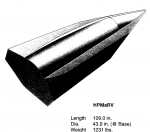
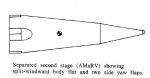
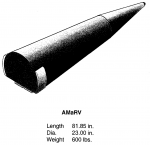
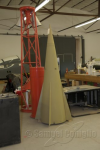
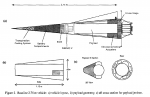
MaRVs new technology? Nope, the US got there 40 years ago. @Gautam, @Bon Plan, @vstol Jockey, @Guynextdoor, @Ginvincible, @Ashwin
Missile Tidbits (@divert_thruster) | Twitter
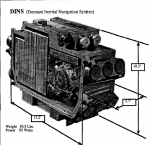
Missile Tidbits (@divert_thruster) | Twitter
Last edited:

@Chain Smoker, @Ginvincible, @m_itsme
 www.astronautix.com
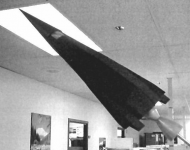
HGV
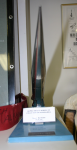
General Dynamic Hypersonic Glide Vehicle as exhibited in 1987
American spaceplane. Study 1992. The Hypersonic Glide Vehicle was a USAF project discussed openly in 1987 to 1988, which may have flown as a black project in 1992-1993.
AKA: Hypersonic Glide Vehicle;Strategic Boost Glide Vehicle. Status: Study 1992. Gross mass: 2,000 kg (4,400 lb).
A model of the General Dynamics concept for the vehicle was shown at the Air Force Association show in 1987. Martin Marietta was an associated or competing contractor. The HGV resurrected the Dynasoar boost-glide bomber concept of the 1950's. A booster would accelerate the HGV to Mach 18 and an altitude of 80 km. It would then enter a long glide, coming over its selected target at Mach 5 at 30 km altitude. An HGV launched by a Minuteman would have a range of 15,000 km; air-launched from a B-1 or B-52, a 7,400 km range.
Advanced materials and lightweight avionics were expected to make it possible for the ca. 2 metric ton HGV to have a useful payload. These might include an interceptor using Raytheon's LORAINE (Long-Range Interceptor Experiment) phased-array radar; or a surface attack missile using Loral air-to-surface guidance concepts developed for the USAF Maneuvering Re-entry Vehicle (MaRV) program. In 1987 the USAF was considering a five-year, $400 million program ending in four Minuteman-boosted HGV flights from Vandenberg AFB. Reports as late as 1992 indicated the tests may have occurred under the Have Space project, with the air-launched version referred to as the HGV and the ground-launched version as the Strategic Boost Glide Vehicle.
The NASA Hyper-X air-launched scramjet experiment may owe some of its launch vehicle underpinnings to HGV.
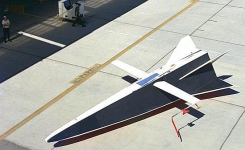
HGV - Encyclopedia Astronautica
American spaceplane. Study 1992. The Hypersonic Glide Vehicle was a USAF project discussed openly in 1987 to 1988, which may have flown as a black project in 19…
HGV
General Dynamic Hypersonic Glide Vehicle as exhibited in 1987
American spaceplane. Study 1992. The Hypersonic Glide Vehicle was a USAF project discussed openly in 1987 to 1988, which may have flown as a black project in 1992-1993.
AKA: Hypersonic Glide Vehicle;Strategic Boost Glide Vehicle. Status: Study 1992. Gross mass: 2,000 kg (4,400 lb).
A model of the General Dynamics concept for the vehicle was shown at the Air Force Association show in 1987. Martin Marietta was an associated or competing contractor. The HGV resurrected the Dynasoar boost-glide bomber concept of the 1950's. A booster would accelerate the HGV to Mach 18 and an altitude of 80 km. It would then enter a long glide, coming over its selected target at Mach 5 at 30 km altitude. An HGV launched by a Minuteman would have a range of 15,000 km; air-launched from a B-1 or B-52, a 7,400 km range.
Advanced materials and lightweight avionics were expected to make it possible for the ca. 2 metric ton HGV to have a useful payload. These might include an interceptor using Raytheon's LORAINE (Long-Range Interceptor Experiment) phased-array radar; or a surface attack missile using Loral air-to-surface guidance concepts developed for the USAF Maneuvering Re-entry Vehicle (MaRV) program. In 1987 the USAF was considering a five-year, $400 million program ending in four Minuteman-boosted HGV flights from Vandenberg AFB. Reports as late as 1992 indicated the tests may have occurred under the Have Space project, with the air-launched version referred to as the HGV and the ground-launched version as the Strategic Boost Glide Vehicle.
The NASA Hyper-X air-launched scramjet experiment may owe some of its launch vehicle underpinnings to HGV.
"BGRV"
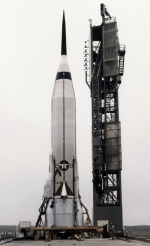
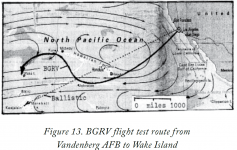
"A typical BGRV flight trajectory and footprint is illustrated in Figure 12. In profile, the Atlas missile would fly to an altitude of about 130,000 feet, turn to horizontal flight to gain speed, and then would separate BGRV on a glide-path at over Mach 15 toward 110,000 foot altitude. The vehicle would spin up, establish a lifting angle of attack to offset gravity, and glide with little change in attitude, managing its energy to reach the desired destination. In the target area, programmed steering equations would take over and turn the vehicle into a terminal dive and maneuver to the intended aimpoint.
Because of its enormous kinetic energy and high L/D, BGRV could glide downrange nearly 5,000 miles or turn out of plane cross range about 2,000 miles. At altitudes near 100,000 feet, there was so little atmosphere; turns took long distances to accomplish and resulted in higher loss of energy than forward fight. The entire flight to maximum range was almost 45 minutes, about twice as long as ballistic missile transit."
This was the late 60s.
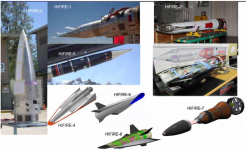
This weird russian MaRV, a Maneuverable Reentry Vehicle, capable of autonomously tracking ground targets.


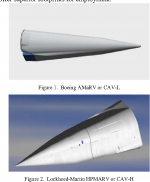
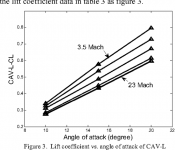
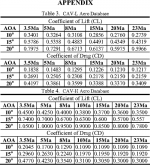
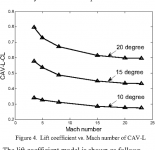
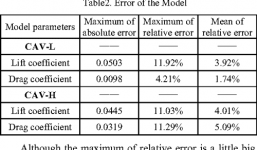
Aerodynamic Coefficients Models of Hypersonic Vehicle Based on Aero Database | Semantic Scholar
The aerodynamic coefficients models are built by the nonlinear least square method based on the CAV aero database and fit the aero characteristic well and can be used in practical design and simulation as a reference. The aerodynamic Coefficients models play an essential part in the simulation...
 www.semanticscholar.org