

Indian Economy : News,Discussions & Updates
- Thread starter Butter Chicken
- Start date
-
- Tags
- indian defence forum
You are using an out of date browser. It may not display this or other websites correctly.
You should upgrade or use an alternative browser.
You should upgrade or use an alternative browser.


The Mechanics of India's Silent Health Revolution: What Drove Households’ Out-of-Pocket Spending Down from 64.2% to 42.7%?
The Indian Matrix
Nov 16, 2026
What happens when a medical emergency strikes a family that has spent years building its savings? For millions of households, an illness meant more than just hospital visits and medicines. It meant - and still means - loans, depleted savings, sold assets and, sometimes, a return to poverty. This is why one of India’s most significant healthcare changes over the past decade deserves attention: households are now paying a considerably smaller share of the country’s total healthcare bill.
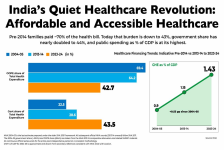
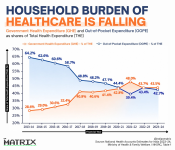
Consider the numbers. In 2013–14, Indian households paid ₹64 out of every ₹100 spent on healthcare. A decade later, in 2023–24, that figure had fallen to approximately ₹43. The share of out-of-pocket expenditure (OOPE) declined from 64.2% to 42.7%, a reduction of 21.5 percentage points. That means more than a fifth of expenditure on healthcare was no longer borne by households.
But what does this change actually mean for an ordinary family?
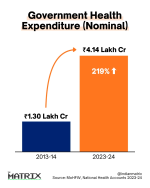
It means that a larger proportion of healthcare expenditure is being financed through sources other than direct payments made by patients and their families. During the same period, government expenditure on health, colloquially called public health expenditure, increased from ₹1.30 lakh crore to ₹4.14 lakh crore. This was a staggering 218.46% hike in government health expenditure.
In other words, the responsibility for financing healthcare has gradually shifted towards public spending and pooled financial resources.
The change becomes even more apparent when government and household contributions are compared. In 2013–14, households were paying more than twice as much as the government towards healthcare. By 2020–21, their respective shares had nearly converged. In 2021–22, the government’s share moved ahead at 48%, compared with 39.4% for households, and has remained higher since.
This did not happen overnight, nor can it be attributed to a single healthcare scheme. It is the outcome of interventions addressing different reasons why healthcare becomes expensive: the cost of medicines, delayed diagnosis, hospitalisation, prolonged illnesses and limited access to medical facilities.
The first challenge: Why should basic healthcare become a recurring financial burden?
For a family managing diabetes or high blood pressure, healthcare expenditure does not begin when someone enters a hospital. It begins with the medicines they need every month, the tests they must undergo and the consultations required to keep their condition under control.
Even when an illness is manageable, recurring medical expenses can gradually eat into household savings. And when treatment is delayed because of its cost, a manageable condition can develop into a much more serious health problem.
Reducing the everyday cost of treatment:
This is where affordable medicines and accessible primary healthcare become important. Rather than waiting for families to reach the hospital with advanced illnesses, the focus has increasingly been on making essential healthcare available closer to where people live.
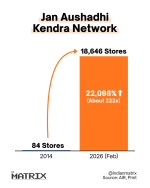
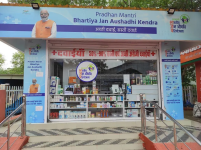
Since 2015, public healthcare facilities have been offering free drugs and diagnostic services. A district hospital now provides 134 free diagnostic tests. The Pradhan Mantri Bhartiya Jan Aushadhi Pariyojana has also expanded access to affordable generic medicines. From just 84 stores in 2014, the Jan Aushadhi Kendra network grew to 18,646 by February 2026. A rise of 22,098%. Yes, you read that right.
For someone who needs medicines every month, the difference between an expensive prescription and an affordable generic alternative is not a one-time saving. It is a reduction in expenditure that continues throughout the treatment period.
The same financial logic applies to patients who need specialised, recurring treatment. Dialysis, for instance, cannot simply be postponed without serious consequences for patients with kidney disease. Under the national dialysis programme, 32.44 lakh patients have received free dialysis across 1,856 centres. This reduces the recurring treatment burden on families who might otherwise struggle to afford every session.
Yet affordable medicines address only one part of the problem. What if a disease is detected too late? What if a patient has to travel long distances simply to consult a doctor?
Taking healthcare beyond hospitals:
India’s expansion of primary healthcare attempts to address these gaps precisely. More than 1.86 lakh functional Ayushman Arogya Mandirs now offer 12 free healthcare services and have recorded over 540 crore visits.
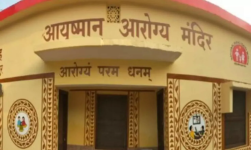
Their importance lies in making healthcare more accessible at the community level. A person should not have to wait until an illness becomes serious, or travel to a large hospital for every basic healthcare requirement.
This is particularly relevant for non-communicable diseases such as hypertension and diabetes, which can remain undetected for years. Under the National Programme for Prevention and Control of Non-Communicable Diseases (NP-NCD), nationwide screening has covered 41.5 crore people for hypertension and 41.3 crore for diabetes.
Early detection allows patients to begin treatment before complications develop. And for those who cannot easily reach a health facility, e-Sanjeevani has extended access through more than 50 crore teleconsultations.
The larger idea is straightforward: healthcare should intervene before an illness becomes a financial crisis.
But what happens when prevention is not enough?
Even with better primary healthcare, not every medical emergency can be prevented. Major surgeries, serious illnesses and prolonged hospital admissions can still leave families facing bills that their savings cannot cover.
This is where the cost of healthcare becomes particularly dangerous. A family may be able to manage regular medicines, but one major hospitalisation can undo years of financial planning.
Ayushman Bharat - PM Jan Arogya Yojana (PM-JAY) was designed to address this vulnerability by providing eligible families with hospitalisation cover of up to ₹5 lakh per year.
Its significance is not limited to the financial assistance itself. For India’s migrant workforce, the ability to access treatment outside one’s home state is equally important.
Consider an eligible construction worker from Bihar employed in Delhi. If he needs hospital treatment, he can access covered services at an empanelled hospital in Delhi without having to return to Bihar. His healthcare coverage travels with him, irrespective of where his employment takes him.
By 21 September 2026, more than 48.51 crore people, approximately one-third of India’s population, held Ayushman cards. The scheme had also funded 13.25 crore hospital admissions worth approximately ₹2.03 lakh crore.
The objective is to ensure that the financial consequences of a serious illness do not fall entirely on the patient and their family.
Government Intervention to Make Medicines Cheaper
There is another expense that often goes unnoticed in discussions about healthcare affordability: the cost of medicines themselves, particularly those required for serious and life-threatening conditions.
A cancer patient, for instance, may face substantial expenses even beyond hospitalisation. Reducing the cost of essential medicines can therefore make a meaningful difference to the overall treatment burden.
Following the 56th GST Council meeting, 36 specified life-saving medicines used for cancer, rare diseases and other severe chronic conditions were brought under the nil GST category. Of these, 33 medicines moved from 12% GST to zero, while three moved from 5% to zero. GST on other medicines was generally reduced from 12% to 5%.
Together, hospitalisation cover and tax relief on medicines address two major financial risks that families face when dealing with serious illnesses.
The cost of illness is not just the cost of treatment
There is another dimension to healthcare expenditure that is often overlooked. An illness can take away a person’s ability to earn at precisely the time when their household needs more money for treatment.
This creates a difficult cycle: medical expenses increase while household income may decline. Tuberculosis (TB) illustrates this challenge particularly well. Prolonged illness can affect a person’s ability to work, while treatment and recovery place additional demands on family finances. India’s efforts to control TB have therefore involved more than simply making treatment available. Early identification, wider screening and successful treatment are all essential to reducing the disease burden.
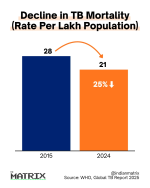
Between 2015 and 2025, India’s estimated TB mortality declined by 38%, from 28 to 21 deaths per lakh population. The treatment success rate for drug-susceptible TB has reached 94%.
Under the TB Mukt Bharat Abhiyaan, more than 25 crore people were brought within intensified screening activities. By November 2026, these efforts had identified 48.64 lakh TB cases, including 14.97 lakh asymptomatic cases. The importance of screening is that diseases can be identified even before patients begin experiencing obvious symptoms. Earlier identification can help initiate treatment sooner and reduce the risk of prolonged illness and its consequences.
The progress against TB is part of a wider public health effort. India received polio-free certification in 2014, achieved maternal and neonatal tetanus elimination in 2015 and was declared free of yaws by WHO in 2016. In 2024, WHO recognised India for eliminating trachoma as a public health problem.
India also achieved the kala-azar elimination threshold of fewer than one case per 10,000 people across 633 endemic blocks in 54 districts in 2023 and has maintained this status. Malaria cases declined by 78.1% and deaths by 77.6% between 2015 and 2024, as the country works towards its 2030 elimination target.
These milestones matter because a stronger healthcare system is not merely one that treats more patients. It is also one that prevents people from falling ill, identifies diseases early and reduces the long-term burden of treatment.
Affordable treatment also needs hospitals, doctors and infrastructure
Now consider another problem. What good is financial coverage if a patient cannot find a hospital nearby? What happens when the number of doctors and medical facilities cannot keep pace with the population’s healthcare needs?
Affordability and accessibility are closely connected. Insurance can help pay a hospital bill, but it cannot create a hospital where one does not exist. Similarly, free medicines are of limited use if patients cannot access the medical professionals needed to diagnose and treat their conditions.
This makes the expansion of India’s healthcare infrastructure an important part of the larger story.
In the last 12 years, 22 new AIIMS have been approved, of which 18 are fully functional. These institutions recorded approximately 6.01 crore outpatient consultations cumulatively by 31 October 2026. Their expansion is significant because specialised healthcare, medical education and research facilities have historically been concentrated in a limited number of locations. More institutions mean a wider geographical reach for advanced medical services.
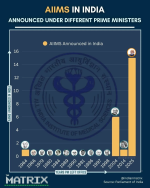
The expansion has also extended to the medical workforce. Since 2014, 15 new AIIMS have been announced, compared with six between 2004 and 2014. Over the same period, MBBS seats increased from approximately 57,000 in 2014 to 1.30 lakh in 2026, more than doubling the country’s undergraduate medical education capacity.
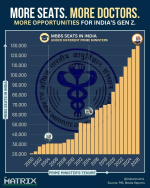
The objective is not simply to build more institutions, but to create the capacity required to serve a growing population. Without sufficient doctors, hospitals and specialised facilities, the benefits of affordable healthcare cannot reach everyone who needs them.
Beyond government support: Is insurance becoming another layer of protection?
Government-funded healthcare and public insurance schemes provide an important safety net. However, financial protection against unexpected medical expenses can also come through individual health insurance and employer-provided coverage.
According to IRDAI, 58 crore lives were covered under 2.65 crore health insurance policies in 2024–25. This includes government-sponsored schemes such as PM-JAY, employer-provided group insurance, and individually purchased policies.
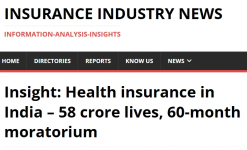
Individual health insurance covered 6.01 crore lives during 2024–25, compared with 5.59 crore in the previous year, marking an increase of 7.7%. While most insured lives continue to be covered through government schemes and group insurance, the increase in individual coverage indicates a growing role for personally purchased financial protection.
The government has also addressed one of the costs associated with purchasing such policies. From 22 September 2025, GST on individual health insurance policies, including family-floater plans, was reduced from 18% to zero. The exemption also covers individual life insurance policies. Employer-sponsored and other group insurance policies, however, continue to attract 18% GST. This provides another route through which households can reduce their exposure to unexpected medical expenses.
So, what has actually changed in India’s healthcare financing?
The most important way to understand the developments of the past decade is to look beyond individual schemes and examine who is paying for healthcare.
Social security expenditure on health increased from 6% to 11% of total health expenditure, while the share of private insurance rose from 3.4% to 10.2%. Per capita government health expenditure also increased from ₹1,042 to ₹2,959 in current prices.
An important part of this expansion has come from the states, which account for 67.9% of government health expenditure. Their role is central because public healthcare facilities, service delivery and several healthcare interventions depend on effective implementation at the state level.
These changes explain the broader shift reflected in India’s National Health Accounts. A greater share of healthcare costs is now being met through public expenditure, social security and insurance, instead of being paid directly by households when they seek treatment.
The decline in out-of-pocket expenditure from 64.2% to 42.7% is therefore not simply a statistical improvement. It points to a gradual change in how India’s healthcare system distributes financial responsibility.
For a household, the difference can be substantial. Money that would otherwise go towards expensive medicines, hospital bills or recurring treatment can remain available for other essential needs. Savings need not be exhausted every time someone falls ill. Families have a better chance of protecting their standard of living even when faced with medical emergencies.
This is also where healthcare policy connects directly with India’s greater poverty-reduction efforts. A family that has worked its way towards financial stability should not be pushed back into poverty because one member needs medical treatment.
Affordable healthcare, therefore, is about more than reducing the cost of a hospital visit. It is about ensuring that illness does not take away the economic progress a household has spent years building. And that is perhaps the most important story behind India’s falling out-of-pocket healthcare expenditure.
The Mechanics of India's Silent Health Revolution: What Drove Households’ Out-of-Pocket Spending Down from 64.2% to 42.7%?
The Indian Matrix
Nov 16, 2026
What happens when a medical emergency strikes a family that has spent years building its savings? For millions of households, an illness meant more than just hospital visits and medicines. It meant - and still means - loans, depleted savings, sold assets and, sometimes, a return to poverty. This is why one of India’s most significant healthcare changes over the past decade deserves attention: households are now paying a considerably smaller share of the country’s total healthcare bill.
Consider the numbers. In 2013–14, Indian households paid ₹64 out of every ₹100 spent on healthcare. A decade later, in 2023–24, that figure had fallen to approximately ₹43. The share of out-of-pocket expenditure (OOPE) declined from 64.2% to 42.7%, a reduction of 21.5 percentage points. That means more than a fifth of expenditure on healthcare was no longer borne by households.
But what does this change actually mean for an ordinary family?
It means that a larger proportion of healthcare expenditure is being financed through sources other than direct payments made by patients and their families. During the same period, government expenditure on health, colloquially called public health expenditure, increased from ₹1.30 lakh crore to ₹4.14 lakh crore. This was a staggering 218.46% hike in government health expenditure.
In other words, the responsibility for financing healthcare has gradually shifted towards public spending and pooled financial resources.
The change becomes even more apparent when government and household contributions are compared. In 2013–14, households were paying more than twice as much as the government towards healthcare. By 2020–21, their respective shares had nearly converged. In 2021–22, the government’s share moved ahead at 48%, compared with 39.4% for households, and has remained higher since.
This did not happen overnight, nor can it be attributed to a single healthcare scheme. It is the outcome of interventions addressing different reasons why healthcare becomes expensive: the cost of medicines, delayed diagnosis, hospitalisation, prolonged illnesses and limited access to medical facilities.
The first challenge: Why should basic healthcare become a recurring financial burden?
For a family managing diabetes or high blood pressure, healthcare expenditure does not begin when someone enters a hospital. It begins with the medicines they need every month, the tests they must undergo and the consultations required to keep their condition under control.
Even when an illness is manageable, recurring medical expenses can gradually eat into household savings. And when treatment is delayed because of its cost, a manageable condition can develop into a much more serious health problem.
Reducing the everyday cost of treatment:
This is where affordable medicines and accessible primary healthcare become important. Rather than waiting for families to reach the hospital with advanced illnesses, the focus has increasingly been on making essential healthcare available closer to where people live.
Since 2015, public healthcare facilities have been offering free drugs and diagnostic services. A district hospital now provides 134 free diagnostic tests. The Pradhan Mantri Bhartiya Jan Aushadhi Pariyojana has also expanded access to affordable generic medicines. From just 84 stores in 2014, the Jan Aushadhi Kendra network grew to 18,646 by February 2026. A rise of 22,098%. Yes, you read that right.
For someone who needs medicines every month, the difference between an expensive prescription and an affordable generic alternative is not a one-time saving. It is a reduction in expenditure that continues throughout the treatment period.
The same financial logic applies to patients who need specialised, recurring treatment. Dialysis, for instance, cannot simply be postponed without serious consequences for patients with kidney disease. Under the national dialysis programme, 32.44 lakh patients have received free dialysis across 1,856 centres. This reduces the recurring treatment burden on families who might otherwise struggle to afford every session.
Yet affordable medicines address only one part of the problem. What if a disease is detected too late? What if a patient has to travel long distances simply to consult a doctor?
Taking healthcare beyond hospitals:
India’s expansion of primary healthcare attempts to address these gaps precisely. More than 1.86 lakh functional Ayushman Arogya Mandirs now offer 12 free healthcare services and have recorded over 540 crore visits.
Their importance lies in making healthcare more accessible at the community level. A person should not have to wait until an illness becomes serious, or travel to a large hospital for every basic healthcare requirement.
This is particularly relevant for non-communicable diseases such as hypertension and diabetes, which can remain undetected for years. Under the National Programme for Prevention and Control of Non-Communicable Diseases (NP-NCD), nationwide screening has covered 41.5 crore people for hypertension and 41.3 crore for diabetes.
Early detection allows patients to begin treatment before complications develop. And for those who cannot easily reach a health facility, e-Sanjeevani has extended access through more than 50 crore teleconsultations.
The larger idea is straightforward: healthcare should intervene before an illness becomes a financial crisis.
But what happens when prevention is not enough?
Even with better primary healthcare, not every medical emergency can be prevented. Major surgeries, serious illnesses and prolonged hospital admissions can still leave families facing bills that their savings cannot cover.
This is where the cost of healthcare becomes particularly dangerous. A family may be able to manage regular medicines, but one major hospitalisation can undo years of financial planning.
Ayushman Bharat - PM Jan Arogya Yojana (PM-JAY) was designed to address this vulnerability by providing eligible families with hospitalisation cover of up to ₹5 lakh per year.
Its significance is not limited to the financial assistance itself. For India’s migrant workforce, the ability to access treatment outside one’s home state is equally important.
Consider an eligible construction worker from Bihar employed in Delhi. If he needs hospital treatment, he can access covered services at an empanelled hospital in Delhi without having to return to Bihar. His healthcare coverage travels with him, irrespective of where his employment takes him.
By 21 September 2026, more than 48.51 crore people, approximately one-third of India’s population, held Ayushman cards. The scheme had also funded 13.25 crore hospital admissions worth approximately ₹2.03 lakh crore.
The objective is to ensure that the financial consequences of a serious illness do not fall entirely on the patient and their family.
Government Intervention to Make Medicines Cheaper
There is another expense that often goes unnoticed in discussions about healthcare affordability: the cost of medicines themselves, particularly those required for serious and life-threatening conditions.
A cancer patient, for instance, may face substantial expenses even beyond hospitalisation. Reducing the cost of essential medicines can therefore make a meaningful difference to the overall treatment burden.
Following the 56th GST Council meeting, 36 specified life-saving medicines used for cancer, rare diseases and other severe chronic conditions were brought under the nil GST category. Of these, 33 medicines moved from 12% GST to zero, while three moved from 5% to zero. GST on other medicines was generally reduced from 12% to 5%.
Together, hospitalisation cover and tax relief on medicines address two major financial risks that families face when dealing with serious illnesses.
The cost of illness is not just the cost of treatment
There is another dimension to healthcare expenditure that is often overlooked. An illness can take away a person’s ability to earn at precisely the time when their household needs more money for treatment.
This creates a difficult cycle: medical expenses increase while household income may decline. Tuberculosis (TB) illustrates this challenge particularly well. Prolonged illness can affect a person’s ability to work, while treatment and recovery place additional demands on family finances. India’s efforts to control TB have therefore involved more than simply making treatment available. Early identification, wider screening and successful treatment are all essential to reducing the disease burden.
Between 2015 and 2025, India’s estimated TB mortality declined by 38%, from 28 to 21 deaths per lakh population. The treatment success rate for drug-susceptible TB has reached 94%.
Under the TB Mukt Bharat Abhiyaan, more than 25 crore people were brought within intensified screening activities. By November 2026, these efforts had identified 48.64 lakh TB cases, including 14.97 lakh asymptomatic cases. The importance of screening is that diseases can be identified even before patients begin experiencing obvious symptoms. Earlier identification can help initiate treatment sooner and reduce the risk of prolonged illness and its consequences.
The progress against TB is part of a wider public health effort. India received polio-free certification in 2014, achieved maternal and neonatal tetanus elimination in 2015 and was declared free of yaws by WHO in 2016. In 2024, WHO recognised India for eliminating trachoma as a public health problem.
India also achieved the kala-azar elimination threshold of fewer than one case per 10,000 people across 633 endemic blocks in 54 districts in 2023 and has maintained this status. Malaria cases declined by 78.1% and deaths by 77.6% between 2015 and 2024, as the country works towards its 2030 elimination target.
These milestones matter because a stronger healthcare system is not merely one that treats more patients. It is also one that prevents people from falling ill, identifies diseases early and reduces the long-term burden of treatment.
Affordable treatment also needs hospitals, doctors and infrastructure
Now consider another problem. What good is financial coverage if a patient cannot find a hospital nearby? What happens when the number of doctors and medical facilities cannot keep pace with the population’s healthcare needs?
Affordability and accessibility are closely connected. Insurance can help pay a hospital bill, but it cannot create a hospital where one does not exist. Similarly, free medicines are of limited use if patients cannot access the medical professionals needed to diagnose and treat their conditions.
This makes the expansion of India’s healthcare infrastructure an important part of the larger story.
In the last 12 years, 22 new AIIMS have been approved, of which 18 are fully functional. These institutions recorded approximately 6.01 crore outpatient consultations cumulatively by 31 October 2026. Their expansion is significant because specialised healthcare, medical education and research facilities have historically been concentrated in a limited number of locations. More institutions mean a wider geographical reach for advanced medical services.
The expansion has also extended to the medical workforce. Since 2014, 15 new AIIMS have been announced, compared with six between 2004 and 2014. Over the same period, MBBS seats increased from approximately 57,000 in 2014 to 1.30 lakh in 2026, more than doubling the country’s undergraduate medical education capacity.
The objective is not simply to build more institutions, but to create the capacity required to serve a growing population. Without sufficient doctors, hospitals and specialised facilities, the benefits of affordable healthcare cannot reach everyone who needs them.
Beyond government support: Is insurance becoming another layer of protection?
Government-funded healthcare and public insurance schemes provide an important safety net. However, financial protection against unexpected medical expenses can also come through individual health insurance and employer-provided coverage.
According to IRDAI, 58 crore lives were covered under 2.65 crore health insurance policies in 2024–25. This includes government-sponsored schemes such as PM-JAY, employer-provided group insurance, and individually purchased policies.
Individual health insurance covered 6.01 crore lives during 2024–25, compared with 5.59 crore in the previous year, marking an increase of 7.7%. While most insured lives continue to be covered through government schemes and group insurance, the increase in individual coverage indicates a growing role for personally purchased financial protection.
The government has also addressed one of the costs associated with purchasing such policies. From 22 September 2025, GST on individual health insurance policies, including family-floater plans, was reduced from 18% to zero. The exemption also covers individual life insurance policies. Employer-sponsored and other group insurance policies, however, continue to attract 18% GST. This provides another route through which households can reduce their exposure to unexpected medical expenses.
So, what has actually changed in India’s healthcare financing?
The most important way to understand the developments of the past decade is to look beyond individual schemes and examine who is paying for healthcare.
Social security expenditure on health increased from 6% to 11% of total health expenditure, while the share of private insurance rose from 3.4% to 10.2%. Per capita government health expenditure also increased from ₹1,042 to ₹2,959 in current prices.
An important part of this expansion has come from the states, which account for 67.9% of government health expenditure. Their role is central because public healthcare facilities, service delivery and several healthcare interventions depend on effective implementation at the state level.
These changes explain the broader shift reflected in India’s National Health Accounts. A greater share of healthcare costs is now being met through public expenditure, social security and insurance, instead of being paid directly by households when they seek treatment.
The decline in out-of-pocket expenditure from 64.2% to 42.7% is therefore not simply a statistical improvement. It points to a gradual change in how India’s healthcare system distributes financial responsibility.
For a household, the difference can be substantial. Money that would otherwise go towards expensive medicines, hospital bills or recurring treatment can remain available for other essential needs. Savings need not be exhausted every time someone falls ill. Families have a better chance of protecting their standard of living even when faced with medical emergencies.
This is also where healthcare policy connects directly with India’s greater poverty-reduction efforts. A family that has worked its way towards financial stability should not be pushed back into poverty because one member needs medical treatment.
Affordable healthcare, therefore, is about more than reducing the cost of a hospital visit. It is about ensuring that illness does not take away the economic progress a household has spent years building. And that is perhaps the most important story behind India’s falling out-of-pocket healthcare expenditure.
The Mechanics of India's Silent Health Revolution: What Drove Households’ Out-of-Pocket Spending Down from 64.2% to 42.7%?

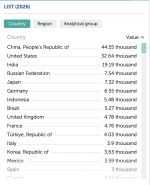
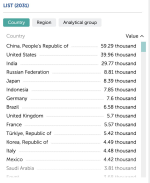
According to IMF, India's CAGR over next 5 years is ~10%/yr in PPP terms compared to ~4% for the USA.
Meaning India will overtake US in GDP PPP in next 10 years.
Given the way they often upgrade India's numbers every update (like they did this time too), it can happen earlier.
They increased our GDP estimate (PPP) by ~$300 bn this update. So it is very well likely it can happen by 2034-35 itself if we maintain the momentum.
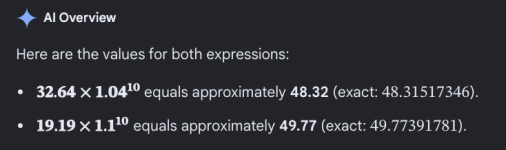
Meaning India will overtake US in GDP PPP in next 10 years.
Given the way they often upgrade India's numbers every update (like they did this time too), it can happen earlier.
They increased our GDP estimate (PPP) by ~$300 bn this update. So it is very well likely it can happen by 2034-35 itself if we maintain the momentum.