Indian Navy LHD/LPD Amphibious Ships : Updates & Discussions


It's nothing undoable, but I'm saying there's no existing solution that the deal is 'tailor-made' for.

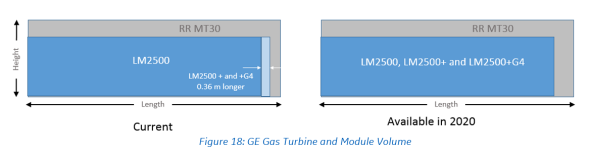
The scale & scope of modification will vary based on the ship. Trieste for example is already made for MT30 so just changing the transmission would be more straightforward compared to JC-1 or Mistral which may have to undergo a greater degree of redesign internally (MT30 enclosure is going to be physically larger than LM2500, while Mistral will have to find a way to rearrange the layout from 3 x diesel engines to a single, or two, MT30s. There might be some CoG/CoM changes that have to be accounted for to recertify the hull.

turbines.png

I don't know if the new RFI changed the elevator needs compared to the old 2021 RFI but if they didn't, it would mean the elevators on these ships will have to be redesigned as well (old RFI needed minimum 24-ton capacity, Mistral's lifts can only do 13-ton). JC-1's lifts have got the capacity, but the dimensions are too small compared to RFI requirement, read this thread:


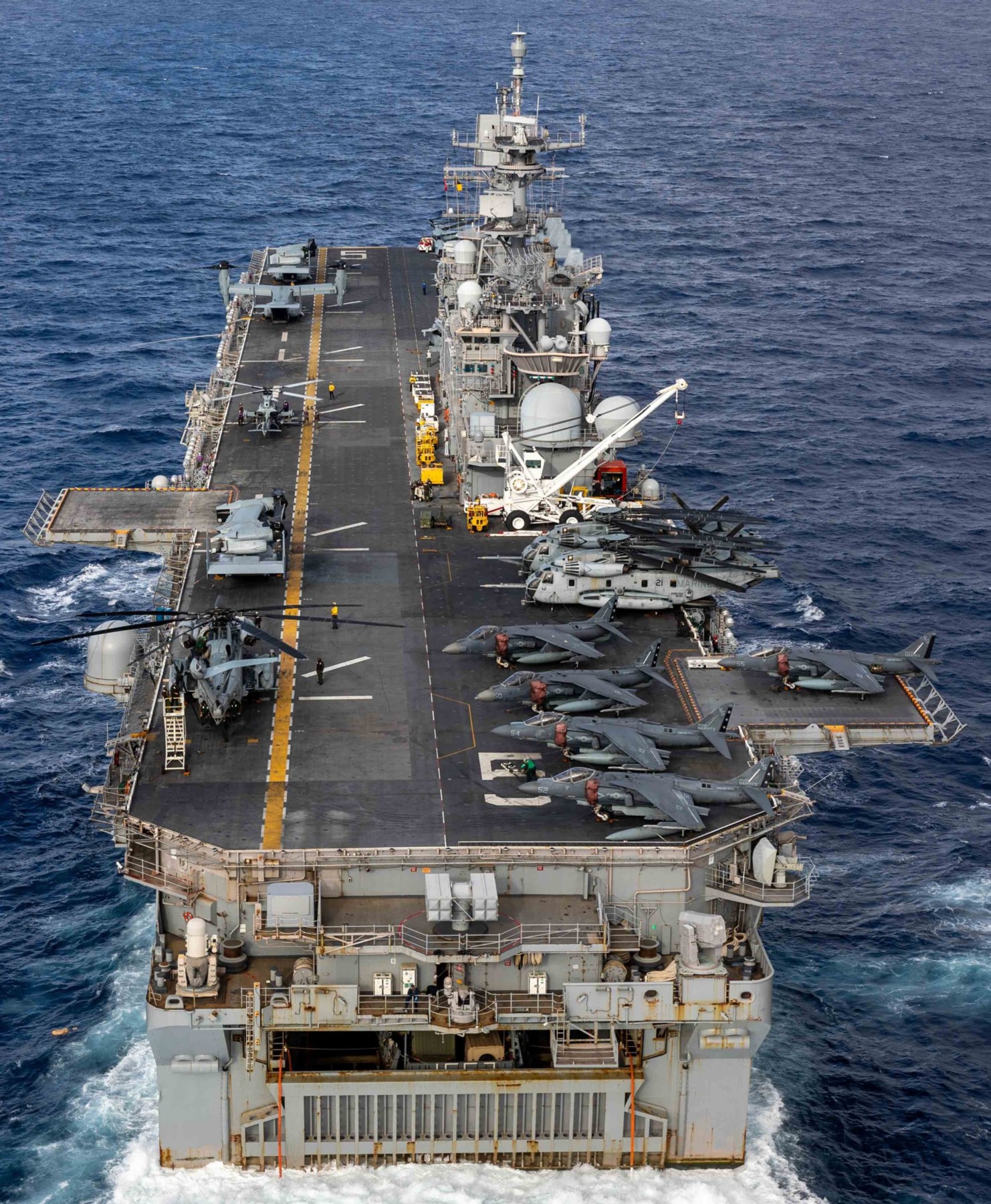
It's possible we might end up requiring strengthened, outboard elevators (like on US LHDs):

LHD-5-USS-Bataan-192.jpg


Again, it's nothing undoable. But will require a revisit to the drawing board for sure. So no ready-made solution, unlike Turkey or Australia buying the Juan Carlos as-is.
 
It's nothing undoable, but I'm saying there's no existing solution that the deal is 'tailor-made' for.

The scale & scope of modification will vary based on the ship. Trieste for example is already made for MT30 so just changing the transmission would be more straightforward compared to JC-1 or Mistral which may have to undergo a greater degree of redesign internally (MT30 enclosure is going to be physically larger than LM2500, while Mistral will have to find a way to rearrange the layout from 3 x diesel engines to a single, or two, MT30s. There might be some CoG/CoM changes that have to be accounted for to recertify the hull.

View attachment 50697

I don't know if the new RFI changed the elevator needs compared to the old 2021 RFI but if they didn't, it would mean the elevators on these ships will have to be redesigned as well (old RFI needed minimum 24-ton capacity, Mistral's lifts can only do 13-ton). JC-1's lifts have got the capacity, but the dimensions are too small compared to RFI requirement, read this thread:


It's possible we might end up requiring strengthened, outboard elevators (like on US LHDs):

LHD-5-USS-Bataan-192.jpg


Again, it's nothing undoable. But will require a revisit to the drawing board for sure. So no ready-made solution, unlike Turkey or Australia buying the Juan Carlos as-is.

I feel IN is over engineering the LPD requirement. The probability of us landing troops in comtested shores is very remote. Even so you would simply send in large LSTs as they can reach pretty much entire IOR.

If there is cash go a second vikrant class design with good helo complement to allow commando style attacks on shore.

We should complement LSTs with commercial ferry style ships which can disembark men and material port side...

Interesringly, the Vikrant's design evolved from the Italian Cavour CV which has significant amphibious capabilities (upto 24 MBTs or AAV/light vehicles)

Imo, a modified version of the Vikrant with well deck and IEPS could fit this requirement . Though, I suspect the IN also wants an ASW command ship for which a through deck LPH might be a better fit than a traditional LPD.
 
It's nothing undoable, but I'm saying there's no existing solution that the deal is 'tailor-made' for.

The scale & scope of modification will vary based on the ship. Trieste for example is already made for MT30 so just changing the transmission would be more straightforward compared to JC-1 or Mistral which may have to undergo a greater degree of redesign internally (MT30 enclosure is going to be physically larger than LM2500, while Mistral will have to find a way to rearrange the layout from 3 x diesel engines to a single, or two, MT30s. There might be some CoG/CoM changes that have to be accounted for to recertify the hull.

View attachment 50697

I don't know if the new RFI changed the elevator needs compared to the old 2021 RFI but if they didn't, it would mean the elevators on these ships will have to be redesigned as well (old RFI needed minimum 24-ton capacity, Mistral's lifts can only do 13-ton). JC-1's lifts have got the capacity, but the dimensions are too small compared to RFI requirement, read this thread:


It's possible we might end up requiring strengthened, outboard elevators (like on US LHDs):

LHD-5-USS-Bataan-192.jpg


Again, it's nothing undoable. But will require a revisit to the drawing board for sure. So no ready-made solution, unlike Turkey or Australia buying the Juan Carlos as-is.
They have definitely tweaked the RFI numbers to match whats available in the market. It was 200 meter +/- 5% before now its 200-230 meter.

On the propulsion rearrangement, I think it's a non-issue. This is not a frigate or destroyer where space is extremely tight. It should be easy to change and rearrange the propulsion quite easily.

I feel IN is over engineering the LPD requirement. The probability of us landing troops in comtested shores is very remote. Even so you would simply send in large LSTs as they can reach pretty much entire IOR.

If there is cash go a second vikrant class design with good helo complement to allow commando style attacks on shore.

We should complement LSTs with commercial ferry style ships which can disembark men and material port side...

They have a long term vision on the propulsion. Their object is to guide towards that.

Future AC and Destroyers will definitely need IEP. So, they are staring with a larger platform.
 
India, UK set to ink inter-government pact for electric propulsion of 4 Landing Platform Docks

Inter-Governmental Agreement will be for development of Integrated Full Electric Propulsion technology on four LPDs to be built in India, say British officials.

By Snehesh Alex Philip
26 August 2026 06:37 pm IST
1787772433821.png
File photo of Indian and British Navies during an exercise | X/@RoyalNavy

New Delhi:
India and the UK are set to sign an Inter-Governmental Agreement (IGA) for the development of Integrated Full Electric Propulsion (IFEP) technology to power four Landing Platform Docks (LPDs) to be built for the Indian Navy, British officials said.

The agreement, expected to be signed soon, will mark a significant step in India’s efforts to develop an indigenous electric propulsion technology for large naval platforms. The four LPDs, which are planned to be built at an Indian shipyard, are envisaged to have a full-electric propulsion architecture.

The UK officials said that British firm GE Vernova will be part of the programme. It has partnered with the state-run Bharat Heavy Electricals Limited (BHEL) to establish India’s first maritime land-based testing facility for IFEP technology.
The facility will allow the integrated propulsion architecture to be developed and tested on land before it is incorporated into naval platforms.

The IFEP represents more than a change in the way a ship is propelled. Under an integrated electric architecture, electricity generated by the ship’s power-generation system can be distributed across propulsion and other major electrical loads.

This gives Naval designers greater flexibility in managing power and allows future warships to accommodate more of the increasingly hi-tech but power consuming sensors, electronic warfare systems, and other advanced equipment.

The proposed IGA follows a Statement of Intent on Cooperation on Design and Development of Electric Propulsion Systems for the Indian Navy, signed by India and the UK in Portsmouth on 28 November 2024.

The Statement of Intent was signed during the third meeting of the Joint Working Group on Electric Propulsion Capability Partnership and provided a framework for cooperation in the co-design, co-creation and co-production of electric-propulsion capabilities for future Indian naval ships.

British officials had earlier indicated that the UK would draw upon its own experience in developing increasingly sophisticated electric-propulsion architectures while working with India.

In a post on X in December 2024, the British High Commission’s Defence Department had said that the cooperation would draw lessons from Britain’s progression from Type 23 frigates to the Landing Platform Dock, Type 45 destroyers, Landing Ship Docks, and ultimately the Queen Elizabeth-class aircraft carriers.

The arrangement also reflects a broader shift in the India-UK defence relationship from conventional equipment sales towards technology cooperation, industrial partnerships and co-development.

For the UK, India is a major potential market for naval propulsion technologies as the Indian Navy expands and modernises its fleet. The plan is to be a 200-ship strong force by 2047 and, hence, a huge market for both GE Vernova and Rolls Royce.

The partnership offers India access to British experience in electric propulsion while retaining the larger objective of developing the capability within its own shipbuilding and engineering ecosystem.

(Edited by Tony Rai)

India, UK set to ink inter-government pact for electric propulsion of 4 Landing Platform Docks
 
  • Like
Reactions: YoungWolf and spice
It's nothing undoable, but I'm saying there's no existing solution that the deal is 'tailor-made' for.

The scale & scope of modification will vary based on the ship. Trieste for example is already made for MT30 so just changing the transmission would be more straightforward compared to JC-1 or Mistral which may have to undergo a greater degree of redesign internally (MT30 enclosure is going to be physically larger than LM2500, while Mistral will have to find a way to rearrange the layout from 3 x diesel engines to a single, or two, MT30s. There might be some CoG/CoM changes that have to be accounted for to recertify the hull.

View attachment 50697

I don't know if the new RFI changed the elevator needs compared to the old 2021 RFI but if they didn't, it would mean the elevators on these ships will have to be redesigned as well (old RFI needed minimum 24-ton capacity, Mistral's lifts can only do 13-ton). JC-1's lifts have got the capacity, but the dimensions are too small compared to RFI requirement, read this thread:


It's possible we might end up requiring strengthened, outboard elevators (like on US LHDs):

LHD-5-USS-Bataan-192.jpg


Again, it's nothing undoable. But will require a revisit to the drawing board for sure. So no ready-made solution, unlike Turkey or Australia buying the Juan Carlos as-is.

The agreement is with GE Vernova, not RR.

So, what are we thinking? Own design with foreign consultancy or completely foreign design?
 
The agreement is with GE Vernova, not RR.

GE Vernova is deeply involved in making IEPs that sit downstream from MT30. Especially on the QEC & T26. A tie-up with them is very much in anticipation of working with RR/MT30 on future combatants.

So, what are we thinking? Own design with foreign consultancy or completely foreign design?

To begin with, I'm thinking foreign design, with as much indigenization as possible.

But they'll be building a lot of testing infrastructure here which will be useful when we develop our own later on.
 

The IN wants its LPDs to have a full length flight deck for a rather large complement of helos + likely drone ops. The Italian Cavour class light carrier with amphib well deck is closer to what the IN needs, (minus the ski jump)

The Trieste would have been a good fit too but the IN might not want a twin island layout, considering it wants to place 16×Brahmos on its LPDs.

Can't wait to see the design proposals from the various bidders on this prog.
 
Of all IN programs i find LPD program most unnecessary - 4 capital ships for what mission? Who are we invading by sea? Even france with the worlds largest EEZ and terretories in the worlds oceans has 2.

Imho LSTs are the way to go for us. Low cost and numerous and 1 more Vikrant class CV with a helicopter based commando force.

Or perhaps 2 HMS ocean style helicopter carrier
 
  • Like
Reactions: Photon Vish
Of all IN programs i find LPD program most unnecessary - 4 capital ships for what mission? Who are we invading by sea? Even france with the worlds largest EEZ and terretories in the worlds oceans has 2.

Imho LSTs are the way to go for us. Low cost and numerous and 1 more Vikrant class CV with a helicopter based commando force.

Or perhaps 2 HMS ocean style helicopter carrier

The substantial weapons fit and aviation component of these ships makes them hybrid LHA/LPH, imo. The IN has likely learned from exposure to USMC and other Western navies that standoff amphib ops via LCAC/LCU and helo insertion provide better flexibility than upfront beaching via LST class ships.

They are trying to combine traditional LPD and LPH roles into a single vessel with some compromises to control costs.

Imo, this could have also been done by opting for traditional CODAG vs IEPS. But the IN is clearly going all out to ensure top of the line capability.
 
Of all IN programs i find LPD program most unnecessary - 4 capital ships for what mission? Who are we invading by sea? Even france with the worlds largest EEZ and terretories in the worlds oceans has 2.

Imho LSTs are the way to go for us. Low cost and numerous and 1 more Vikrant class CV with a helicopter based commando force.

Or perhaps 2 HMS ocean style helicopter carrier

I'll just share two of my previous tweets:


Given the recent expanded strategic partnership between India & the UAE, especially in light of the Saudi-Pak mutual defence agreement and the emerging axis between those two countries and Turkey, we need to be taking another look at Yemen's Socotra Island.

The island was believed to house a significant Israeli intelligence presence at one point. The UAE used to be in de-facto control of the island through the Southern Transitional Council but that arrangement now appears shaky & may not last very long.

Taking the long-term view, Middle-Eastern oil & energy flows are crucial for India's economic & strategic security and will remain so for the foreseeable future. Taking a hands-off approach or counting on the US to maintain the status quo may either prove to be a fatal strategic mistake or simply a move that results in us getting a very raw deal when it comes to cost of energy procurement down the line. The kind that could pull our annual GDP growth rate from 6-8% down to 3-5%.

Being the most populous country, soon to be 3rd-largest economy & a major nuclear-armed military power that has significant interest in having a stake in the Middle East, a hands-off approach like the one we took so far may prove to be unaffordable for us in a world where the US no longer cares about maintaining the status-quo.

Should things take a drastic turn deeper into this century, having a permanent military presence in the Middle-East in close coordination with partners in the region like UAE & Israel would pay dividends. Socotra might be a good step-off point that can serve as a hub for logistics, ship repair & if necessary, massing of troop & aircraft presence. Being an island at a short stand-off distance from the Arabian peninsula, it's an ideal location for a base. Our own little Diego Garcia.

Something tells me, regional partner states may actually consider this a welcome development. Hope we act before it's too late.

(3rd pic below is from an Indian Navy presentation in 2024 that shows our assets using Socotra as a basing/stopover/FARP point for anti-piracy operations in the Arabian Sea region)

++++


I've a feeling we'll end up needing those 4 x LHDs sooner than we realize. The Carriers, LSTs, INS Jalashwa & some of the troopships like Nicobar-class will have to manage till then but it won't be optimal.

The problem isn't getting to Socotra & putting boots on the ground, that's relatively straightforward. The problem will be being able to carry out any kind of sustained combined-arms operation (involving infantry, armour, artillery & rotary aviation) into the Arabian peninsula from there.

Going ahead, defending the Andamans won't be the only prospective role for the Indian Army's amphibious infantry division as we begin to step into our role as a true regional power that has to take matters into its own hands to secure vital national interests such as continued energy security, instead of just counting on the US to maintain the global status-quo.

As such, expansion of the mission scope, capabilities & numbers of our amphibious forces HAS to feature in our medium-term plans.

 
I'll just share two of my previous tweets:


Given the recent expanded strategic partnership between India & the UAE, especially in light of the Saudi-Pak mutual defence agreement and the emerging axis between those two countries and Turkey, we need to be taking another look at Yemen's Socotra Island.

The island was believed to house a significant Israeli intelligence presence at one point. The UAE used to be in de-facto control of the island through the Southern Transitional Council but that arrangement now appears shaky & may not last very long.

Taking the long-term view, Middle-Eastern oil & energy flows are crucial for India's economic & strategic security and will remain so for the foreseeable future. Taking a hands-off approach or counting on the US to maintain the status quo may either prove to be a fatal strategic mistake or simply a move that results in us getting a very raw deal when it comes to cost of energy procurement down the line. The kind that could pull our annual GDP growth rate from 6-8% down to 3-5%.

Being the most populous country, soon to be 3rd-largest economy & a major nuclear-armed military power that has significant interest in having a stake in the Middle East, a hands-off approach like the one we took so far may prove to be unaffordable for us in a world where the US no longer cares about maintaining the status-quo.

Should things take a drastic turn deeper into this century, having a permanent military presence in the Middle-East in close coordination with partners in the region like UAE & Israel would pay dividends. Socotra might be a good step-off point that can serve as a hub for logistics, ship repair & if necessary, massing of troop & aircraft presence. Being an island at a short stand-off distance from the Arabian peninsula, it's an ideal location for a base. Our own little Diego Garcia.

Something tells me, regional partner states may actually consider this a welcome development. Hope we act before it's too late.

(3rd pic below is from an Indian Navy presentation in 2024 that shows our assets using Socotra as a basing/stopover/FARP point for anti-piracy operations in the Arabian Sea region)

++++


I've a feeling we'll end up needing those 4 x LHDs sooner than we realize. The Carriers, LSTs, INS Jalashwa & some of the troopships like Nicobar-class will have to manage till then but it won't be optimal.

The problem isn't getting to Socotra & putting boots on the ground, that's relatively straightforward. The problem will be being able to carry out any kind of sustained combined-arms operation (involving infantry, armour, artillery & rotary aviation) into the Arabian peninsula from there.

Going ahead, defending the Andamans won't be the only prospective role for the Indian Army's amphibious infantry division as we begin to step into our role as a true regional power that has to take matters into its own hands to secure vital national interests such as continued energy security, instead of just counting on the US to maintain the global status-quo.

As such, expansion of the mission scope, capabilities & numbers of our amphibious forces HAS to feature in our medium-term plans.
We need a separate Marine Corps like structure of US. The new Department of Military Affairs (DMA) can manage it as a separate service. Ships are under the navy, and personal and ground equipment under the marines. A few divisions will be enough.

It should be equipped for amphibious/overseas operations. It can be the reserve force in case of border conflicts. So, the force structure should be designed for mobility. Lighter equipment: Light tanks and 4x4-mounted guns etc. Try to be NATO compatible. You will have to work with them eventually if there is a Taiwan like global conflict.

There's no point having some ships here and there without proper structure, training, and equipment.
 
G31ckKpWcAA2URO


Now we have a reasonable price estimate. Rs 33,000 cr or $3.75 billion for 4 LHDs. The ANI report was wrong on the number. This is more likely.
We can confirm Rs 33,000 cr as AoN cost for the project from the GRSE concall. ANI messed up.