

Ukraine - Russia Conflict
- Thread starter randomradio
- Start date
You are using an out of date browser. It may not display this or other websites correctly.
You should upgrade or use an alternative browser.
You should upgrade or use an alternative browser.

Ukrainian soldiers in combat have access to Starlink satellite internet restricted
Outage of terminals managed by Elon Musk’s SpaceX comes as Russia launches ballistic missiles at Ukraine without any advance warning from US
Ukrainian soldiers in combat have suddenly had their access to Starlink satellite internet terminals restricted as the Trump administration has increased pressure on Ukraine to halt long-range strikes on Russia’s oil industry immediately.
The terminals, which are distributed and managed by Elon Musk’s SpaceX, are a key component of Ukraine’s military operations and the sudden restrictions on the terminals travelling at high speeds on Tuesday evening led to the failure of several combat missions, said an adviser on military technology to Ukraine’s president, Volodymyr Zelenskyy.
The sudden outage came as Russia launched ballistic missiles at Ukraine without any advance warning from the US for a second night. For years, the US has provided Ukraine with intelligence when strikes were about to take place.
Donald Trump has denied that his administration has cut intelligence sharing with Ukraine. Zelenskyy also indicated that the US was continuing to share intelligence with Ukraine in an interview with NPR aired on Wednesday, but confirmed that military advisers had received threats from the US that intelligence sharing could be limited.
Ukraine did not receive any warning before Russia launched its first barrage of ballistic missiles on Tuesday evening, according to Col Yurii Ihnat, a spokesperson for the air force. But it did receive warnings from “foreign partners” about three subsequent barrages, leaving further confusion about whether or not the US is intentionally withholding intelligence from Ukraine.
SpaceX did not confirm any changes to Starlink’s functionality and it was not immediately clear why the restrictions had been put in place. Terminals travelling at more than 100mph and using a version of Starlink for the military and other national security agencies suddenly lost connectivity, said Serhiy Beskrestnov, in what appeared to be a targeted outage meant to disrupt military operations.
“Our armed forces did not receive a warning about these restrictions and this led to the failure of a number of missions,” said Beskrestnov, who is also a popular military blogger. “It’s clear that this action cannot be a coincidence and is connected to the current political situation.”
Limiting Starlink’s access speeds would have a significant effect on Ukraine’s mid-range strike campaign, where it uses the satellite internet system to navigate drones to hit targets behind the front in Russian-occupied areas of Ukraine. But there have been no reports that access for static Starlink terminals have been cut, meaning critical battlefield communications for soldiers should remain unaffected. The detection of incoming Russian missiles and drones relies on other technologies.
Musk, an ally of Trump, had previously cut off Starlink service to Ukrainian soldiers during an offensive that took a small amount of Russian territory.
Serhii Sternenko, a political activist with close ties to the military, first reported the outage and later said that the speeds at which the loss of connectivity occurred had fallen even lower. “It is likely that the company ‘SpaceX’ resorted to such measures at the request of the Trump administration,” he said. “Ordinary satellite communication terminals are currently operational.”

Ukraine hits Russian refinery as Zelenskiy says 'we're done' with Trump's energy truce
KYIV, Oct 15 (Reuters) - Ukraine struck a Russian oil refinery on Thursday, after President Volodymyr Zelenskiy said Kyiv was "done" supporting a ceasefire on energy targets announced by US President ...
Strike on a supermarket by Russia, not the first, second or even third time. They can't all be accidents.
Random targeting of a civilian on a bicycle. Too many war crimes to list at this point and the fact there's been zero investigations or punishment means it is approves at command level.
Random targeting of a civilian on a bicycle. Too many war crimes to list at this point and the fact there's been zero investigations or punishment means it is approves at command level.
Last edited:

Trump pauses new Russia sanctions passed by Congress amid deepening row with Ukraine
President signed the legislation championed by late senator Lindsey Graham last month but has waived the restrictions as they were due to come into effect
Donald Trump has put on hold a sweeping new sanctions package targeting the Russian economy, telling Congress the pause on the legislation passed by both chambers was in the national interest.
In an executive order on Friday, the US president said he was waiving many sanctions, restrictions and duties on Russia, in a move that comes as he has been publicly criticising Ukrainian president Volodymyr Zelenskyy, including suggesting that Ukraine needs a new leader.
The move was greeted by Russian presidential envoy Kirill Dmitriev, who wrote on social media: “The Trump administration’s suspension of the Graham Act is an important and truly historic moment.”
Trump signed the legislation last month, after Congress passed the measure in an act of rare bipartisan agreement. It sought to clamp down more quickly on the flow of financial resources fuelling Russia’s war against Ukraine.
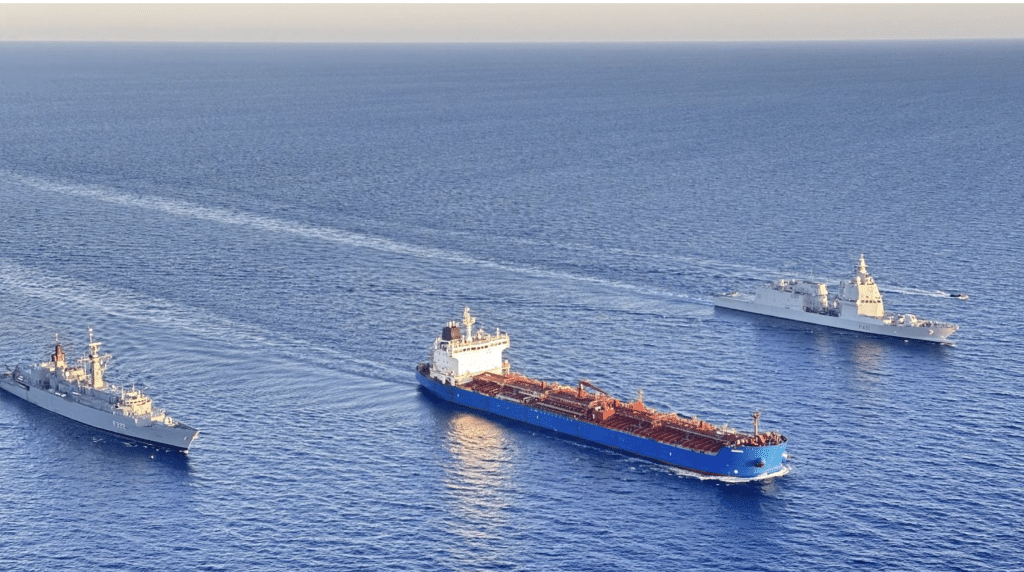
EU Renews Operation IRINI to 2029, Targets Russian Shadow Fleet and CUI Protection - Naval News
The EU Council has extended EUNAVFOR MED IRINI mandate through March 2029, adding new tasks to monitor Russian shadow fleets and safeguard critical undersea infrastructure (CUI).
 www.navalnews.com
A US President cannot legally suspend or nullify laws passed by Congress and signed into law.Trump pauses new Russia sanctions passed by Congress amid deepening row with Ukraine
President signed the legislation championed by late senator Lindsey Graham last month but has waived the restrictions as they were due to come into effectwww.theguardian.com
Donald Trump has put on hold a sweeping new sanctions package targeting the Russian economy, telling Congress the pause on the legislation passed by both chambers was in the national interest.
In an executive order on Friday, the US president said he was waiving many sanctions, restrictions and duties on Russia, in a move that comes as he has been publicly criticising Ukrainian president Volodymyr Zelenskyy, including suggesting that Ukraine needs a new leader.
The move was greeted by Russian presidential envoy Kirill Dmitriev, who wrote on social media: “The Trump administration’s suspension of the Graham Act is an important and truly historic moment.”
Trump signed the legislation last month, after Congress passed the measure in an act of rare bipartisan agreement. It sought to clamp down more quickly on the flow of financial resources fuelling Russia’s war against Ukraine.
Under Article II, Section 3 of the U.S. Constitution, the President is bound by the Take Care Clause, which explicitly mandates that the Chief Executive "shall take Care that the Laws be faithfully executed". The U.S. legal system deliberately omitted the historic "suspending power" once held by English monarchs, meaning the executive branch has no unilateral authority to declare an active statute void.
While a President cannot formally suspend a law, there are legal nuances and avenues of presidential authority that can affect how a law is practically applied:
- Enforcement Discretion (Prosecutorial Discretion)
2. Statutory Authority Granted by Congress
Congress frequently passes laws that contain explicit provisions giving the President emergency powers or waivers. In these cases, if a President "suspends" a specific regulatory requirement or provision, they are not acting above the law; they are exercising a mechanism specifically permitted by that statute.
3. Delays and Deadlines
In some instances, Presidents have delayed the implementation of specific provisions of a law due to logistical or administrative challenges. However, arbitrary or indefinite postponements that cross into outright defiance of a congressional mandate can be challenged in federal court.
4. Impoundment of Funds
Historically, Presidents sometimes tried to suspend laws by refusing to spend the money Congress allocated for them (known as impoundment). However, the Impoundment Control Act of 1974 severely restricted this practice. Today, a President can only defer or request the rescission of funds under highly strict guidelines and must notify Congress.
5. Constitutional Challenges (Signing Statements)
If a President signs a bill into law but believes a specific provision violates the Constitution (for example, if it encroaches on executive war powers), they may issue a presidential signing statement. Modern Presidents have used these statements to announce that the executive branch will construe or enforce the law in a manner consistent with their interpretation of the Constitution.
Ultimately, if a President attempts to unilaterally suspend a valid law without statutory permission, the primary recourse is through the judicial branch, which can rule the executive action illegal or unconstitutional, or through Congress, via legislative corrections, funding restrictions, or impeachment.