

Ukraine - Russia Conflict
- Thread starter randomradio
- Start date
You are using an out of date browser. It may not display this or other websites correctly.
You should upgrade or use an alternative browser.
You should upgrade or use an alternative browser.


Ukraine shared drone footage of the wreckage of a Russian Su-35 fighter jet shot down in Luhansk in an ambush involving F-16s and a Patriot Launcher. Satellite imagery confirms the wreck site.
Sausage factory to increase production.

The key outcome was not that Trump became predictable. It was that NATO’s institutional and material output proved more resilient than Russian pre-summit assumptions.
The first instance of aid being provided to the Russian army occurred in Poland. Krzysztof Tołwiński, leader of the Polish Front party, former member of the Sejm, and former Deputy Minister of State Assets, purchased a batch of medicines and medical supplies for Russian soldiers in Belarus using his personal funds. The medications were sent not on behalf of government agencies, but solely at the party's private initiative. It's worth noting that official relations between Poland and Ukraine have seriously deteriorated recently.
Here is my assessment: Russia can certainly keep going and inflict severe damage, but to achieve a genuine victory—in the sense of imposing a clear-cut military outcome on Ukraine—it would likely require a massive step-up in resources, a move that is becoming politically and socially very difficult.
The current Russian model relies on slow attrition: incremental territorial gains, heavy use of artillery, glide bombs, drones, and missiles, energy-related pressure, and paid contract recruitment. Yet, this model appears increasingly inconclusive. CSIS estimates that monthly Russian casualties in 2026—roughly 30,000 to 34,000 troops—likely outpace the recruitment rate of around 27,000 new soldiers per month. This implies that while Russia can sustain the war effort, it is steadily eroding its pool of available manpower.
To achieve a true "surge," Moscow would need to scale up significantly: broader mobilization, the creation of new units, training, equipment, logistics, command structures, and stockpiles of armored vehicles and ammunition, followed by a massive offensive. However, such a move takes time and carries a heavy political cost. The 2022 partial mobilization already caused social upheaval and a mass exodus; a general mobilization would directly impact major cities, the middle class, industrial sectors, and families that have remained relatively insulated until now.
Even with a general mobilization, the outcome would remain uncertain. More manpower is not enough if structural problems persist: rigid command structures, officer losses, a shortage of modern armored vehicles, Ukrainian drone saturation, deep-strike attacks on fuel and logistics, vulnerable bases, and the lack of total air superiority. Reuters reports that sources close to the Kremlin anticipate a continuation or escalation of the war despite diplomatic efforts; however, this appears driven more by a desire to secure a symbolic victory—particularly in the Donbas—than by any guarantee of a decisive triumph. The Russian dilemma is therefore strategic: without general mobilization, Russia can prolong the war of attrition but struggles to achieve a decisive outcome; with general mobilization, it incurs a major domestic and military risk for an uncertain result. If such a "surge" fails, the regime will have exhausted its most significant political reserve without securing victory.
Another new factor is that Ukraine is now striking deep into Russia’s economic infrastructure. As long as Moscow could trade manpower for a few kilometers of territory while keeping its industrial rear relatively intact, a war of attrition favored it. However, if refineries, fuel supplies, Crimea, ports, tankers, and radar systems become constant targets, general mobilization alone does not solve the problem: that additional mass of troops must also be transported, fed, kept warm, supplied, and motorized.
So yes, Russia still has options for escalation, but they are becoming increasingly unappealing. It can prolong the conflict, escalate the brutality, target Ukraine during the winter, attempt provocations against NATO, or mobilize further. Yet, the path to a clear-cut victory likely requires a massive surge in manpower and materiel—a move that would be politically difficult to sell and militarily far less certain of success than Moscow might have envisioned in 2022. My impression is that while Russia can keep going and inflict severe damage, achieving a true victory—in the sense of imposing a decisive military outcome on Ukraine—would likely require a step-change in resources that is becoming politically and socially very difficult to achieve.
Russia’s current model relies on slow attrition: incremental territorial gains, heavy use of artillery, glide bombs, drones, and missiles, pressure on energy infrastructure, and paid contract recruitment. Yet, this model appears increasingly indecisive. CSIS estimates that by 2026, Russia’s monthly losses—ranging from 30,000 to 34,000 troops—will likely outpace its recruitment rate of approximately 27,000 new soldiers per month. This means that Russia can still fuel the war, but is eroding its pool of available manpower.
To achieve a genuine "surge," Moscow would need to scale up significantly: broader mobilization, the formation of new units, training, equipment, logistics, leadership, armored vehicle and ammunition stockpiles, and finally, massive deployment. Yet, this takes time and carries a heavy political cost. The 2022 partial mobilization had already caused social upheaval and mass departures; a general mobilization would, this time, directly affect major cities, the middle class, industrial sectors, and families that had previously remained relatively insulated.
Even with a general mobilization, the outcome would remain uncertain. Simply adding more manpower is not enough if structural problems persist: rigid command structures, officer losses, a lack of modern armor, Ukrainian drone saturation, deep-strike attacks on fuel and logistics, base vulnerabilities, and the absence of total air superiority. Reuters reports that sources close to the Kremlin anticipate the war continuing or escalating despite diplomatic efforts; however, this appears more like a bid to secure a symbolic success—particularly in the Donbas—than a guarantee of decisive victory.
Russia’s problem is therefore strategic: without general mobilization, Russia can prolong the war of attrition but struggles to achieve a decisive outcome; with general mobilization, it incurs major domestic and military risks for an uncertain result. If such a surge fails, the regime will have exhausted its most significant political capital without achieving victory.
Another new factor is that Ukraine is now striking deep into Russia’s economic infrastructure. As long as Moscow could trade manpower for a few kilometers of territory while keeping its industrial rear relatively intact, a war of attrition favored it. But if refineries, fuel supplies, Crimea, ports, tankers, and radar systems become constant targets, then general mobilization does not solve everything: that additional mass of troops must also be transported, fed, kept warm, supplied, and motorized.
So yes, Russia still has options for escalation, but they are becoming increasingly unappealing. It could prolong the conflict, intensify the brutality, target Ukraine during the winter, attempt provocations against NATO, or mobilize further. Yet the path to a clear-cut victory likely requires a massive surge in manpower and materiel—a move that would be politically difficult to sell and militarily far less certain than Moscow might have envisioned in 2022.
The current Russian model relies on slow attrition: incremental territorial gains, heavy use of artillery, glide bombs, drones, and missiles, energy-related pressure, and paid contract recruitment. Yet, this model appears increasingly inconclusive. CSIS estimates that monthly Russian casualties in 2026—roughly 30,000 to 34,000 troops—likely outpace the recruitment rate of around 27,000 new soldiers per month. This implies that while Russia can sustain the war effort, it is steadily eroding its pool of available manpower.
To achieve a true "surge," Moscow would need to scale up significantly: broader mobilization, the creation of new units, training, equipment, logistics, command structures, and stockpiles of armored vehicles and ammunition, followed by a massive offensive. However, such a move takes time and carries a heavy political cost. The 2022 partial mobilization already caused social upheaval and a mass exodus; a general mobilization would directly impact major cities, the middle class, industrial sectors, and families that have remained relatively insulated until now.
Even with a general mobilization, the outcome would remain uncertain. More manpower is not enough if structural problems persist: rigid command structures, officer losses, a shortage of modern armored vehicles, Ukrainian drone saturation, deep-strike attacks on fuel and logistics, vulnerable bases, and the lack of total air superiority. Reuters reports that sources close to the Kremlin anticipate a continuation or escalation of the war despite diplomatic efforts; however, this appears driven more by a desire to secure a symbolic victory—particularly in the Donbas—than by any guarantee of a decisive triumph. The Russian dilemma is therefore strategic: without general mobilization, Russia can prolong the war of attrition but struggles to achieve a decisive outcome; with general mobilization, it incurs a major domestic and military risk for an uncertain result. If such a "surge" fails, the regime will have exhausted its most significant political reserve without securing victory.
Another new factor is that Ukraine is now striking deep into Russia’s economic infrastructure. As long as Moscow could trade manpower for a few kilometers of territory while keeping its industrial rear relatively intact, a war of attrition favored it. However, if refineries, fuel supplies, Crimea, ports, tankers, and radar systems become constant targets, general mobilization alone does not solve the problem: that additional mass of troops must also be transported, fed, kept warm, supplied, and motorized.
So yes, Russia still has options for escalation, but they are becoming increasingly unappealing. It can prolong the conflict, escalate the brutality, target Ukraine during the winter, attempt provocations against NATO, or mobilize further. Yet, the path to a clear-cut victory likely requires a massive surge in manpower and materiel—a move that would be politically difficult to sell and militarily far less certain of success than Moscow might have envisioned in 2022. My impression is that while Russia can keep going and inflict severe damage, achieving a true victory—in the sense of imposing a decisive military outcome on Ukraine—would likely require a step-change in resources that is becoming politically and socially very difficult to achieve.
Russia’s current model relies on slow attrition: incremental territorial gains, heavy use of artillery, glide bombs, drones, and missiles, pressure on energy infrastructure, and paid contract recruitment. Yet, this model appears increasingly indecisive. CSIS estimates that by 2026, Russia’s monthly losses—ranging from 30,000 to 34,000 troops—will likely outpace its recruitment rate of approximately 27,000 new soldiers per month. This means that Russia can still fuel the war, but is eroding its pool of available manpower.
To achieve a genuine "surge," Moscow would need to scale up significantly: broader mobilization, the formation of new units, training, equipment, logistics, leadership, armored vehicle and ammunition stockpiles, and finally, massive deployment. Yet, this takes time and carries a heavy political cost. The 2022 partial mobilization had already caused social upheaval and mass departures; a general mobilization would, this time, directly affect major cities, the middle class, industrial sectors, and families that had previously remained relatively insulated.
Even with a general mobilization, the outcome would remain uncertain. Simply adding more manpower is not enough if structural problems persist: rigid command structures, officer losses, a lack of modern armor, Ukrainian drone saturation, deep-strike attacks on fuel and logistics, base vulnerabilities, and the absence of total air superiority. Reuters reports that sources close to the Kremlin anticipate the war continuing or escalating despite diplomatic efforts; however, this appears more like a bid to secure a symbolic success—particularly in the Donbas—than a guarantee of decisive victory.
Russia’s problem is therefore strategic: without general mobilization, Russia can prolong the war of attrition but struggles to achieve a decisive outcome; with general mobilization, it incurs major domestic and military risks for an uncertain result. If such a surge fails, the regime will have exhausted its most significant political capital without achieving victory.
Another new factor is that Ukraine is now striking deep into Russia’s economic infrastructure. As long as Moscow could trade manpower for a few kilometers of territory while keeping its industrial rear relatively intact, a war of attrition favored it. But if refineries, fuel supplies, Crimea, ports, tankers, and radar systems become constant targets, then general mobilization does not solve everything: that additional mass of troops must also be transported, fed, kept warm, supplied, and motorized.
So yes, Russia still has options for escalation, but they are becoming increasingly unappealing. It could prolong the conflict, intensify the brutality, target Ukraine during the winter, attempt provocations against NATO, or mobilize further. Yet the path to a clear-cut victory likely requires a massive surge in manpower and materiel—a move that would be politically difficult to sell and militarily far less certain than Moscow might have envisioned in 2022.
Footage of a Russian FPV drone from the 85th Brigade striking a Ukrainian drone control center located in an underground shelter. The video, filmed near Nikonorovka, shows a Ukrainian operator launching the drone. It's worth noting that Ukrainian drone operators are currently a priority target for both Russian aviation and artillery.
Germany set to become first international site for ATACMS missile production

Germany set to become first international site for ATACMS missile production
The move addresses a bottleneck, as Lockheed Martin has been winding down ATACMS output at its Camden, Arkansas, site while prioritizing newer missiles.
 www.defensenews.com
Lockheed Martin and Rheinmetall have signed an agreement to co-produce the U.S. Army Tactical Missile System (ATACMS) at Rheinmetall’s Unterlüß site in northern Germany, marking the first time the ballistic missile is set to be manufactured outside the United States.
Rheinmetall estimates is annual European and Ukrainian demand of 600 to 800 ATACMS units.
Footage of Russian Gerbera drone strikes on the drone launch site and the temporary deployment site of Ukrainian UAV operators. There were three drone strikes in total, and the video shows the operators and a Ukrainian Hexacopter. The video was filmed near Dobropillia in the Donbas.
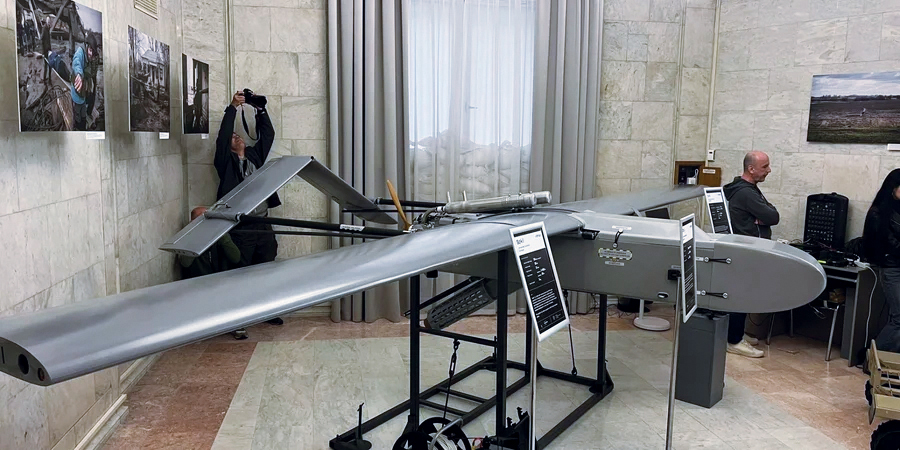
Analysis: How Ukraine Is Reimagining Strategic Attack
Ukraine’s long-range strike campaign successfully adapts classic airpower theory to its own present-day constraints.
 www.airandspaceforces.com