Indian Missiles and Munitions Discussion

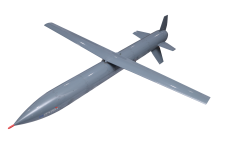
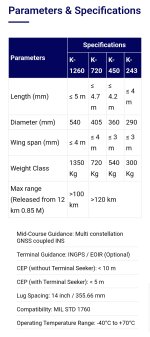
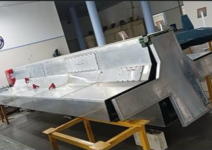
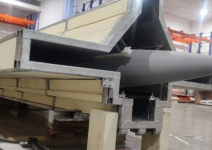
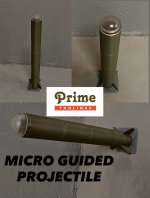
One thing more, the aft end ie the back looks very similar to the RCI made Bhaumi above , so wonder if Bhaumi is also a powered guided weapon in same category with miniaturized seeker and guidance option by drdo, esp as we know RCI has been developing various bldc pmsm motors for different actuation systems as well as turbojet type motor for nasm class weapon. So by weight category it can definitely be applicable to a 500kg class powered munition? Nasm weighs some 400kg so can easily fit ?

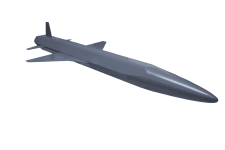
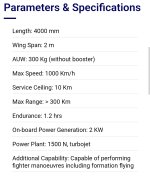
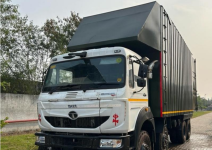
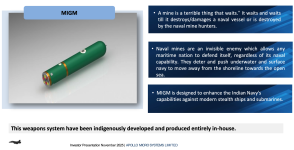
JSR's product was chosen for IDEX challenge by Navy. It is meant to be ship/surface launched.

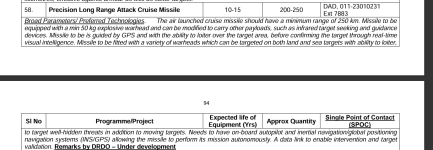
IAF has a separate need for a Delilah class cruise/loitering missile which is under development by DRDO. Screenshot 2025-12-17 152215.png
 
JSR's product was chosen for IDEX challenge by Navy. It is meant to be ship/surface launched.

IAF has a separate need for a Delilah class cruise/loitering missile which is under development by DRDO.
So as always , it is related to the IP right issue, IDeX products are likely to be for GoI to be the sole IPR holder , same as dcpp products be it co-dev or tot handover. I am not sure where the prime tooling or other turbojet indigenous development fit in unless the company is willing to handover IPR or co-own both cases are subject to govt side approval under MoD. I mean with JSR due to ex IAF link and service involvement there may not be any problem but others we are not sure. Even a successful indi product can not see induction if there are objection from any side/stakeholder.

Technology & general structure wise I thought both looks the same, and even the intended purpose. The difference is due to launch condition. A surface launched weapon will need a booster due to starting from an initial standstill point ie no acceleration. That is why NASM SR or any other turbojet powered subsonic weapon launched from a static or low kinetic acceleration point needs a booster to gain the needed acceleration. NASM from the seaking heli, it is dropped from when the heli is hovering. So almost a standstill, not much initial acceleration available without a booster. Hence such weapons has a booster, Nirbhay ITCM, NASM SR Brahmos STAR all of them.

Comparatively the air launched weapons will always have the carrier platform jets high speed to depend upon hence will not need a booster. Brahmos needs one because initial need is high supersonic itself, almost > 1 mach. But subsonic weapons can do with the jets speed very well. Hence that JSR product with turbojet and the RCI one both looks the same powered config with a jet engine and air launched. Earlier I thought it will be rocket powered but unlikely now.
 
So as always , it is related to the IP right issue, IDeX products are likely to be for GoI to be the sole IPR holder , same as dcpp products be it co-dev or tot handover.
Iirc, the main attraction towards iDex, is that the startup/innovator holds the IP of the developed technology/product. Govt.s funds it, promises orders on successful products. That's it.

Unlike DcPP of ToT licensing, which is just drdo led technology being used by manufacturing partners for scaling... iDex initiatives are completely R&D'd by the startup.

They may get support via field visit from scientists, but that their diplomacy. Not a policy.
 
Iirc, the main attraction towards iDex, is that the startup/innovator holds the IP of the developed technology/product. Govt.s funds it, promises orders on successful products. That's it.
Hopefully so, normally all contract docs in tenders say the president of India as the sole IP holder, no IP sharing with any company who do the work.
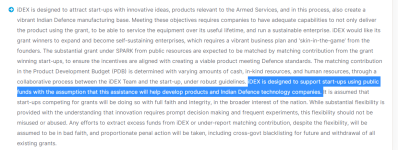
Also the core goal of the whole process lie in the below sentence

1766048915453.png
 
Hopefully so, normally all contract docs in tenders say the president of India as the sole IP holder, no IP sharing with any company who do the work.
Also the core goal of the whole process lie in the below sentence

View attachment 48474
All tenders? As in MoD ones for capital expenditure of armed forces? Maybe for DPSUs, but pvt defense? I doubt so, otherwise how will Indian defense companies and ecosystem be established. At most, there will be restrictions on sharing IP without govt approval, which makes sense.
 
All tenders? As in MoD ones for capital expenditure of armed forces? Maybe for DPSUs, but pvt defense? I doubt so, otherwise how will Indian defense companies and ecosystem be established. At most, there will be restrictions on sharing IP without govt approval, which makes sense.
Mainly the development stage tenders where the deliverables are part of a product or as a whole is a product to be made/developed. Capital expenditures are for a fully proven product via different trials & assessment that are certified for the military use. Military equipment need the different clearance certificate esp for export anyway.
Aim of Idex like venture is to build the mil complex yes but due to huge collusion internally how and why public/market money would flow into defence sector that has a very seasonal/lumpy sort of business and Govt procedure for L1 L2 etc makes it almost non-competitive process by feeding own psu/existing preferred bidder chain once the developed tech is scaled into a product. As tech transfer the companies/dev partners get the documents, they have to scale that written tech manuals into the usable product for the mil forces. That process itself takes multiple years depending upon how complex & multi domain the system is, costs spiral out and yet no certainty of any perceived order, psu co can team up with a foreign jv and offer one item which invariably gets L2 L3 at least and beats with price benchmark. This is old game & in this environment pvt defence vendors can not thrive.
Right now they are **thinking** about letting pvt entities bid competitively alongside the usual suspects, that should tell you everything.
Issue lies with the Govt, it actually does not want a thriving mil complex, it just wants to expand its tax base and privatise the loss making entity so it becomes someone else's headache. mak no mistake, Govt has money, enough of it, but politicians will prefer votebank over national security.

 
Mainly the development stage tenders where the deliverables are part of a product or as a whole is a product to be made/developed. Capital expenditures are for a fully proven product via different trials & assessment that are certified for the military use. Military equipment need the different clearance certificate esp for export anyway.
Aim of Idex like venture is to build the mil complex yes but due to huge collusion internally how and why public/market money would flow into defence sector that has a very seasonal/lumpy sort of business and Govt procedure for L1 L2 etc makes it almost non-competitive process by feeding own psu/existing preferred bidder chain once the developed tech is scaled into a product. As tech transfer the companies/dev partners get the documents, they have to scale that written tech manuals into the usable product for the mil forces. That process itself takes multiple years depending upon how complex & multi domain the system is, costs spiral out and yet no certainty of any perceived order, psu co can team up with a foreign jv and offer one item which invariably gets L2 L3 at least and beats with price benchmark. This is old game & in this environment pvt defence vendors can not thrive.
Right now they are **thinking** about letting pvt entities bid competitively alongside the usual suspects, that should tell you everything.
Issue lies with the Govt, it actually does not want a thriving mil complex, it just wants to expand its tax base and privatise the loss making entity so it becomes someone else's headache. mak no mistake, Govt has money, enough of it, but politicians will prefer votebank over national security.

Yes. The current procurement system is sickening to say the least. L1 and L2 are fixed anyways. The tender is issued in such a way that the one who lobbied successfully, gets the tender in " legal", " non-scam" ways.
 
Not my video, and old video, but my edit .
Looks like india is using Soviet system of top lifting the SLBM.
American and western system uses gas generator to push the missile out of the tube. Even newer Russian Bulava missiles use the same system.
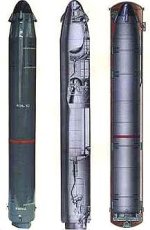
What india is using is USSR era system, where the initial thrust is through a top loaded cap.


This missile is very similar to Soviet R 29

r29r.jpg
 
  • Informative
Reactions: Photon Vish
R29 has bigger diameter bigger height MIRV and more payload carrying capacity but K4 is similar to it? Of course, it takes a brain to know and analyze the difference which inbr*ds dont tend to have. Even if China gives an entire SLBM to pak, you gaandus could never make one even in 100 years. Stick to your 3rd grade copy of Tomahawk.
Ignoring your verbal diarrhea.
The comments was about ejection system, not range , diameter or MIRV .
Soviet R series SLBM had top mounted ejection system, so has Indian SLBM.

You know why ? Because its simpler and has another reason.

Soviets wanted their submarines to be able to fire an SLBM while docked and surfaced.

Western submarines must be submerged to fire an SLBM as their launch tubes need to be filled with pressurised water to eject the missiles.

Soviets didn't need that due to top mounted ejection motors .

Carry on with your rants . Don't bother replying me, I am out .