India to launch its 1st human genome cataloguing project
Department of Biotechnology to rope in 22 partners for project that will help develop better therapies.
By Divya Rajagopal

Several countries have embarked on mapping the genetic mark up of their own population to better understand disease profiles. Photo : Shutterstock.com
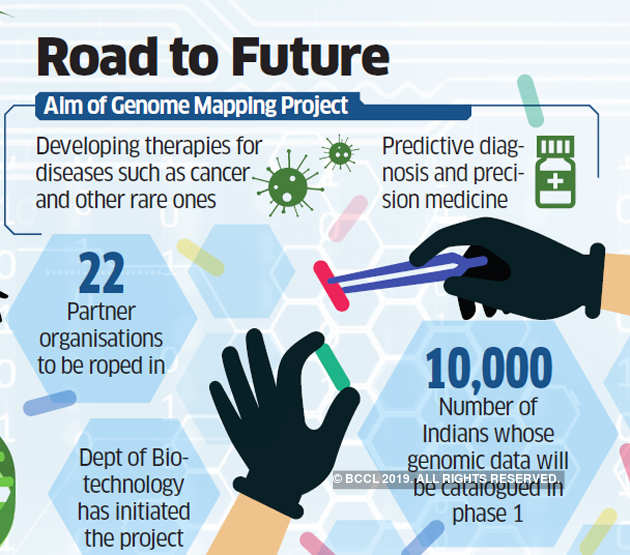
MUMBAI: India will launch its first human genome mapping project by October, a move that will help researchers get closer to developing effective therapies for treating diseases such as cancer. In the first phase of the initiative called the Genome India project, the genomic data of 10,000 Indians will be catalogued. The Department of Biotechnology (DBT) has initiated the project.
“This is going to be transformational for our healthcare because these days disease management is all about data,” DBT secretary Renu Swarup said in an exclusive interview to ET. “For new advancements in medical science like predictive diagnosis and precision medicine, genomic information is key and the backbone.”
A genome is an organism’s complete set of DNA, including all its genes. It contains all the information needed to build and maintain that organism. By sequencing the genome, researchers can discover the functions of genes and identify which of them are critical for life.
The DBT said it will build on its own experience of genomic cataloguing and rope in 22 partner organisations including public health institutions that have obtained regulatory ethical clearances.
Investigators in hospitals will lead the data collection through a simple blood test from participants and the information will be added to bio banks. Swarup expects the DBT will capture data from more than 10,000 people over the next three years and link them to its bio banks and bio repository.
Across the world, predictive diagnosis and precision medicine based on the genetic makeup of patients are emerging fields in the treatment of diseases such as cancer and other genetic disorders. The Genome India project will aim to make predictive diagnostic markers available for some priority diseases such as cancer and other rare and genetic disorders, Swarup explained.
The DBT has started establishing diagnostic labs for genetic testing and counselling services and a programme to train clinicians to produce skilled personnel to set up more such labs. The department has also initiated an outreach programme to provide genetic diagnosis and counselling to families affected by common genetic disorders in certain districts. The Human Genome Project, which was completed in 2003, was led by an international team of researchers looking to sequence and map all the genes – together known as the genome – of human beings.
Several countries have embarked on mapping the genetic mark up of their own population to better understand disease profiles. The UK said in 2013 that it will undertake the sequencing of 100,000 whole genomes of patients suffering from cancer and rare diseases. The project was extended to 1 million in 2018. Genomic England, the organisation that runs the programme, has said that its aim is to create a new genomic medicine service for the National Health Service – transforming the way people are cared for.
However, there are concerns over the use of genetic data. According to a report published in April by UK data consulting firm Ipsos MORI, there are clear limits for how far the public thought genomic data and the information derived from it should be used.
Some of the red lines it raised were genetic engineering, use of genomic data to differentiate groups within society, and predictive insurance tests and targeted marketing.
Participants wanted assurances that there is a robust governance framework and consent process in place that makes clear the intended use of their data, the Ipsos report said.
India to launch its 1st human genome cataloguing project
Department of Biotechnology to rope in 22 partners for project that will help develop better therapies.
By Divya Rajagopal
Several countries have embarked on mapping the genetic mark up of their own population to better understand disease profiles. Photo : Shutterstock.com
MUMBAI: India will launch its first human genome mapping project by October, a move that will help researchers get closer to developing effective therapies for treating diseases such as cancer. In the first phase of the initiative called the Genome India project, the genomic data of 10,000 Indians will be catalogued. The Department of Biotechnology (DBT) has initiated the project.
“This is going to be transformational for our healthcare because these days disease management is all about data,” DBT secretary Renu Swarup said in an exclusive interview to ET. “For new advancements in medical science like predictive diagnosis and precision medicine, genomic information is key and the backbone.”
A genome is an organism’s complete set of DNA, including all its genes. It contains all the information needed to build and maintain that organism. By sequencing the genome, researchers can discover the functions of genes and identify which of them are critical for life.
The DBT said it will build on its own experience of genomic cataloguing and rope in 22 partner organisations including public health institutions that have obtained regulatory ethical clearances.
Investigators in hospitals will lead the data collection through a simple blood test from participants and the information will be added to bio banks. Swarup expects the DBT will capture data from more than 10,000 people over the next three years and link them to its bio banks and bio repository.
Across the world, predictive diagnosis and precision medicine based on the genetic makeup of patients are emerging fields in the treatment of diseases such as cancer and other genetic disorders. The Genome India project will aim to make predictive diagnostic markers available for some priority diseases such as cancer and other rare and genetic disorders, Swarup explained.
The DBT has started establishing diagnostic labs for genetic testing and counselling services and a programme to train clinicians to produce skilled personnel to set up more such labs. The department has also initiated an outreach programme to provide genetic diagnosis and counselling to families affected by common genetic disorders in certain districts. The Human Genome Project, which was completed in 2003, was led by an international team of researchers looking to sequence and map all the genes – together known as the genome – of human beings.
Several countries have embarked on mapping the genetic mark up of their own population to better understand disease profiles. The UK said in 2013 that it will undertake the sequencing of 100,000 whole genomes of patients suffering from cancer and rare diseases. The project was extended to 1 million in 2018. Genomic England, the organisation that runs the programme, has said that its aim is to create a new genomic medicine service for the National Health Service – transforming the way people are cared for.
However, there are concerns over the use of genetic data. According to a report published in April by UK data consulting firm Ipsos MORI, there are clear limits for how far the public thought genomic data and the information derived from it should be used.
Some of the red lines it raised were genetic engineering, use of genomic data to differentiate groups within society, and predictive insurance tests and targeted marketing.
Participants wanted assurances that there is a robust governance framework and consent process in place that makes clear the intended use of their data, the Ipsos report said.
India to launch its 1st human genome cataloguing project