
Corvettes of Indian Navy : News and Discussions
- Thread starter Ashwin
- Start date
-
- Tags
- kamorta class project 28
You are using an out of date browser. It may not display this or other websites correctly.
You should upgrade or use an alternative browser.
You should upgrade or use an alternative browser.


VLSRSAM VLU is underwork. They are trying to reduce weight and create something like C-dome VLS but 4x2. This VLS seems more focused for something like NGMV. Could be fitted on this ship later on I hopeThis is quite disappointing. Not using VLSRSAM, no DRDO CIWS, no increase in number of missiles carried due MRSAM.
This has no capability advantage over the Talwar class despite coming a decade after it.
 preferably with a new VLS capable of quad-packing VLSRSAM.
Last edited:
So no Brahmos but MRASM.
It makes sense given the main role stated by Navy was local naval defence. They will mostly be operating under the umbrella of shore based Anti ship batteries and aircrafts.

I don't get it why are you calling it high? Its a 5000 tons ships which cutting edge sensors includin towed array sonars anti ship misiles + hanger facilites. Its for all intents and purposes as capable in the roles light frigate roles Talwar takes on.Maybe the unexpectedly high per unit cost of the ship has to do with the use of the new Kirloskar diesel engine. I am just guessing. But propulsion makes up for a major part of any ship's cost & each ship will have 2 of these diesel engines.
Here is the price of Upgraded Mogami costs $710 million to $806 million USD per ship. We paid $ 650 millions for the last batch 4 Talwars.
It seems like fair price to me.
That costs as much as a new Type 31 frigate.
Type 31's was priced at $300 million under the contract UK signed. But that contract doesn't cover any Mk41 VLS no anti ship missile and price has already overshot due to rework. Its basically just a CODAD hull + a single rotating AESA panel.
Type 31 has no hull mounted sonar or towed array sonar. NSM and MK41 + air defence missiles will have to integrated seperately.
This one is coming with 4 panel AESA MFSTAR, Hull mounted sonar towed array sonar, air defence VLS all the goodies



Last edited:

I know, for basic version they paid around $350 mil with every goodie it will the double. Thus the comment.Type 31 under the contract UK signed comes without any Mk41 VLS no towed array sonar no bow mounted sonar. Its basically just a CODAD hull + a single rotating AESA panel.
No hull mounted sonars, no towed array nowith mk41 no air defence and nsm too will be seperately ordered who knows what the final cost would be.
Sorry, I deleted you from the orignal post I tagged you in and thought your post was good pointer to add to when comparing costs. Mogami + Type 31.I know, for basic version they paid around $350 mil with every goodie it will the double. Thus the comment.
But Yeah It costs as much as Type 31 and seems to be more well rounded as a general purpose ship.

Multi-Function Surveillance, Track and Guidance Radar (MFSTAR)
 isn't NGC supposed to have indiginious Radar ?
Compare this 5000t 'corvette' with Pak Jinnah class 'frigate' weighing in at ~3300t. Ship classification stds are so different across navies.
Yeah hope they do. Otherwise both NGMV and NGC will have 8 AShM and 16 SAMs. I understand that NGC also has anti sub capability and bigger SAMs, but its 3x the weight as well.VLSRSAM VLU is underwork. They are trying to reduce weight and create something like C-dome VLS but 4x2. This VLS seems more focused for something like NGMV. Could be fitted on this ship later on I hope
Even Pakistani Jinnah class will have more SAMs despite being just 2/3rd in weight
Last edited:
Depends on the VLSRSAM contract, it's in the same ballpark as CAMM ER. Even Kamortas are without a SAM even after a decade.Even Pakistani Jinnah class will have more SAMs despite being just 2/3rd in weight
Kamorta will definitely be fitted with VLSRSAM. No such confirmation for NGCDepends on the VLSRSAM contract, it's in the same ballpark as CAMM ER. Even Kamortas are without a SAM even after a decade.
IIT-Madras start-up AstraYAN outbids global giants to bag propulsion integration contract for GRSE’s ₹32,000 cr warships
AstraYAN outbid prominent global players — such as Fincantieri, an Italian shipyard; Navatia, a Spanish shipyard; and RENK from Germany — to emerge L1 for Propulsion System Integration
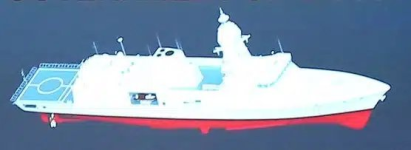
AstraYAN, an IIT-Madras-incubated deep-tech company, has emerged L1 to bag a tender for Propulsion System Integration (PSI) for the five indigenous Next Generation Corvettes — a light armoured warship Garden Reach Shipbuilders & Engineers Ltd (GRSE) will be manufacturing for the Indian Navy at a cost of ₹32,000 crore.
Lt Cdr Raghuveeraje Urs (Rtd), Chief Operating Officer (COO) of AstraYAN Private Ltd, told businessline that his startup has outbid global majors from Italy and Germany to emerge L1 in the contract for integration of advanced Combined Diesel and Gas Turbine–Cross-Connect (CODAG-CC) propulsion arrangement to power the NGCs.
Now, the bid will enter into the price negotiation stage, which would take at least a month before the deal will be closed with the leading defence PSU GRSE to start the work on the PSI, the COO said. AstraYAN, he stressed, is the first Indian company to achieve this rare complex technological feat and with a team of just 15 people.
This propulsion architecture, as per the GRSE, is designed to support the operational requirements of the versatile frontline combat platforms. Designed for a wide spectrum of maritime missions, the NGCs will undertake multi-role operations, including offensive ship-to-ship and ship-to-surface missile attacks, anti-missile defence, anti-submarine warfare, escort duties, maritime interdiction operations (MIO), including Visit, Board, Search and Seizure (VBSS), and local naval defence.
The ancillary contract process stems from the Ministry of Defence (MoD) on Monday signing deals worth ₹53,866.5 crore with GRSE and Goa Shipyard Ltd (GSL) for overall construction of eight NGCs — five by the GRSE and three by GSL. As per the COO, AstraYAN will pitch in to get a contract for similar PSI that the GSL will require for three NGCs it has to build.
Selection process
The selection process, spanning more than a year, began with the participation of five prominent global players — such as Fincantieri, an Italian shipyard; Navatia, a Spanish shipyard; and RENK from Germany, said the naval architect who has served before with the Indian Navy.
The technical evaluation was done by the Indian Navy, the Naval Science & Technological Laboratory (NSTL), a lab of the Defence Research and Development Organisation (DRDO), and the shipyards.
Following technical and commercial evaluation, three companies — Fincanteri, RENK and AstraYAN qualified, with the Chennai-based start-up eventually being declared L1 for the tender.
The corvettes will measure 127 metres in length and 17.6 metres in beam, with a specified deadweight tonnage of 4,950 tonnes. The warships will have an endurance of 14 days at sea without replenishment and a maximum speed of 26 knots.
IIT-Madras start-up AstraYAN outbids global giants to bag propulsion integration contract for GRSE’s ₹32,000 cr warships

AstraYAN outbid prominent global players — such as Fincantieri, an Italian shipyard; Navatia, a Spanish shipyard; and RENK from Germany — to emerge L1 for Propulsion System Integration
AstraYAN, an IIT-Madras-incubated deep-tech company, has emerged L1 to bag a tender for Propulsion System Integration (PSI) for the five indigenous Next Generation Corvettes — a light armoured warship Garden Reach Shipbuilders & Engineers Ltd (GRSE) will be manufacturing for the Indian Navy at a cost of ₹32,000 crore.
Lt Cdr Raghuveeraje Urs (Rtd), Chief Operating Officer (COO) of AstraYAN Private Ltd, told businessline that his startup has outbid global majors from Italy and Germany to emerge L1 in the contract for integration of advanced Combined Diesel and Gas Turbine–Cross-Connect (CODAG-CC) propulsion arrangement to power the NGCs.
Now, the bid will enter into the price negotiation stage, which would take at least a month before the deal will be closed with the leading defence PSU GRSE to start the work on the PSI, the COO said. AstraYAN, he stressed, is the first Indian company to achieve this rare complex technological feat and with a team of just 15 people.
This propulsion architecture, as per the GRSE, is designed to support the operational requirements of the versatile frontline combat platforms. Designed for a wide spectrum of maritime missions, the NGCs will undertake multi-role operations, including offensive ship-to-ship and ship-to-surface missile attacks, anti-missile defence, anti-submarine warfare, escort duties, maritime interdiction operations (MIO), including Visit, Board, Search and Seizure (VBSS), and local naval defence.
The ancillary contract process stems from the Ministry of Defence (MoD) on Monday signing deals worth ₹53,866.5 crore with GRSE and Goa Shipyard Ltd (GSL) for overall construction of eight NGCs — five by the GRSE and three by GSL. As per the COO, AstraYAN will pitch in to get a contract for similar PSI that the GSL will require for three NGCs it has to build.
Selection process
The selection process, spanning more than a year, began with the participation of five prominent global players — such as Fincantieri, an Italian shipyard; Navatia, a Spanish shipyard; and RENK from Germany, said the naval architect who has served before with the Indian Navy.
The technical evaluation was done by the Indian Navy, the Naval Science & Technological Laboratory (NSTL), a lab of the Defence Research and Development Organisation (DRDO), and the shipyards.
Following technical and commercial evaluation, three companies — Fincanteri, RENK and AstraYAN qualified, with the Chennai-based start-up eventually being declared L1 for the tender.
The corvettes will measure 127 metres in length and 17.6 metres in beam, with a specified deadweight tonnage of 4,950 tonnes. The warships will have an endurance of 14 days at sea without replenishment and a maximum speed of 26 knots.
IIT-Madras start-up AstraYAN outbids global giants to bag propulsion integration contract for GRSE’s ₹32,000 cr warships


NGC ships will have 1 LM-2500 each.
GRSE will build 3 ships. GRSE partner shipyard will build 2. GSL will build 2 ships. GSL partner will build 1 ship.
GRSE will build 3 ships. GRSE partner shipyard will build 2. GSL will build 2 ships. GSL partner will build 1 ship.
NGC will have 6 Light weight torpedoes, kavach anti missile systems,
Integrated ASW Defence Suite (IADS) will be manufactured by Mahindra Defence Systems Ltd
Surface Surveillance Radar contenders
(a) Nova Integrated Systems Pvt. Ltd.
(b) Tata Power (SED)
(c) Mahindra Defence Systems Ltd.
Source Gem Portal
Integrated ASW Defence Suite (IADS) will be manufactured by Mahindra Defence Systems Ltd
Surface Surveillance Radar contenders
(a) Nova Integrated Systems Pvt. Ltd.
(b) Tata Power (SED)
(c) Mahindra Defence Systems Ltd.
Source Gem Portal
Can the partner for both be L&T?NGC ships will have 1 LM-2500 each.
GRSE will build 3 ships. GRSE partner shipyard will build 2. GSL will build 2 ships. GSL partner will build 1 ship.
Exclusive: Pvt sector set to build 3 Indian Navy corvettes as DPSUs outsource part of Rs 54k cr order
The government believes whole-of-industry approach via public-private cooperation could see naval shipbuilding contracts executed faster than in isolation.
Bhaswar Kumar
20 November, 2026 04:56 pm IST
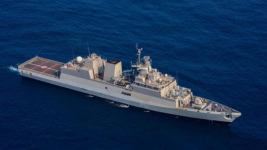
Representative | Govt signed contracts worth Rs 53,866.50 crore with two defence public sector undertaking shipyards on 2 November to build eight Next Generation Corvettes | Indian Navy
New Delhi: The public sector defence shipyards that were awarded contracts to build eight Next Generation Corvettes (NGCs) for the Indian Navy have moved to outsource part of the order to the private sector, a source familiar with the matter told ThePrint on Friday, adding that an announcement could be made soon. The move will allow at least one private shipyard to build a relatively large, heavily armed frontline warship for the Indian Navy for the first time.
The Ministry of Defence (MoD) signed contracts worth Rs 53,866.50 crore for the eight corvettes on 2 November with Garden Reach Shipbuilders & Engineers Limited (GRSE), Kolkata, and Goa Shipyard Limited (GSL), Vasco da Gama, both defence public sector undertaking (DPSU) shipyards.
“Both GRSE and GSL will outsource the construction of a total of three NGCs. The aim is to rope the private sector into major naval platform manufacturing and ensure that production capacity does not constrain naval shipbuilding,” the source said.
“This will allow at least one Indian private sector shipyard, which will be considered the partner shipyard of a public sector counterpart, to build such a large and capable frontline warship for the Indian Navy for the first time,” the source added.
While declining to identify the private shipyard that will take on the role, the source said the move was in line with the dual production pipeline initiative outlined by defence officials in recent months. Under this approach, two or more production lines including existing public sector capacity are established for the same equipment or similar categories of equipment to ensure both scale and speed of production.
“The government would like to see the public and private sectors working together,” the source said. “The thinking is that, in the case of shipbuilding, a whole-of-industry approach through public-private cooperation could lead to faster execution of contracts than is possible in isolation.”
Following the AMCA model
A similar dual production model is already on its way to being implemented in military aviation through the initiative for the country’s first stealth combat aircraft, the Advanced Medium Combat Aircraft (AMCA).
The AMCA is being developed through an industry partnership model. The process of selecting a company or consortium that will help develop and build its prototypes is underway, with the winning bidder expected to be announced soon.
There are three contenders: the Tata Group and two consortia led by the Kalyani Group and Larsen & Toubro (L&T), respectively. Whichever bidder is selected will end state-run Hindustan Aeronautics Limited’s (HAL) monopoly over combat aircraft manufacturing by creating an additional production line in the country.
Now, it appears that an effort is underway to replicate the same in naval shipbuilding.
What are the Next Generation Corvettes?
The eight NGCs will be built to an indigenous design developed by the Indian Navy, according to the MoD’s statement issued when the contracts were signed.
Each warship will have a deadweight tonnage of 4,950 tonnes, an endurance of 14 days at sea without replenishment and a maximum speed of 26 knots. They will have a crew of 11 officers and 139 sailors.
Powered by a combined diesel and gas turbine–cross-connect propulsion arrangement, the NGCs are designed for a range of maritime missions. These include offensive ship-to-ship and ship-to-surface missile strikes, anti-missile defence, anti-submarine warfare, escort duties, maritime interdiction operations—including visit, board, search and seizure—and local naval defence.
They will be equipped with medium-range anti-ship missiles, Israeli-Indian Medium-Range Surface-to-Air Missiles (MRSAM), torpedoes, an upgraded OTO Melara 76 mm super rapid gun mount, an AK-630 close-in weapon system, and 12.7 mm stabilised remote-controlled guns integrated with an electro-optic-based fire control system.
The sensor suite will feature an electro-optical infrared search-and-track system and an Israeli-Indian Multi-Function Surveillance, Track and Guidance Radar (MFSTAR). The corvettes will also have helicopter-operating capabilities.
Responses to queries emailed to GRSE and GSL are awaited. This report will be updated when they are received.
(Edited by Chingkheinganbi Mayengbam)
Exclusive: Pvt sector set to build 3 Indian Navy corvettes as DPSUs outsource part of Rs 54k cr order

The government believes whole-of-industry approach via public-private cooperation could see naval shipbuilding contracts executed faster than in isolation.
Bhaswar Kumar
20 November, 2026 04:56 pm IST
Representative | Govt signed contracts worth Rs 53,866.50 crore with two defence public sector undertaking shipyards on 2 November to build eight Next Generation Corvettes | Indian Navy
New Delhi: The public sector defence shipyards that were awarded contracts to build eight Next Generation Corvettes (NGCs) for the Indian Navy have moved to outsource part of the order to the private sector, a source familiar with the matter told ThePrint on Friday, adding that an announcement could be made soon. The move will allow at least one private shipyard to build a relatively large, heavily armed frontline warship for the Indian Navy for the first time.
The Ministry of Defence (MoD) signed contracts worth Rs 53,866.50 crore for the eight corvettes on 2 November with Garden Reach Shipbuilders & Engineers Limited (GRSE), Kolkata, and Goa Shipyard Limited (GSL), Vasco da Gama, both defence public sector undertaking (DPSU) shipyards.
“Both GRSE and GSL will outsource the construction of a total of three NGCs. The aim is to rope the private sector into major naval platform manufacturing and ensure that production capacity does not constrain naval shipbuilding,” the source said.
“This will allow at least one Indian private sector shipyard, which will be considered the partner shipyard of a public sector counterpart, to build such a large and capable frontline warship for the Indian Navy for the first time,” the source added.
While declining to identify the private shipyard that will take on the role, the source said the move was in line with the dual production pipeline initiative outlined by defence officials in recent months. Under this approach, two or more production lines including existing public sector capacity are established for the same equipment or similar categories of equipment to ensure both scale and speed of production.
“The government would like to see the public and private sectors working together,” the source said. “The thinking is that, in the case of shipbuilding, a whole-of-industry approach through public-private cooperation could lead to faster execution of contracts than is possible in isolation.”
Following the AMCA model
A similar dual production model is already on its way to being implemented in military aviation through the initiative for the country’s first stealth combat aircraft, the Advanced Medium Combat Aircraft (AMCA).
The AMCA is being developed through an industry partnership model. The process of selecting a company or consortium that will help develop and build its prototypes is underway, with the winning bidder expected to be announced soon.
There are three contenders: the Tata Group and two consortia led by the Kalyani Group and Larsen & Toubro (L&T), respectively. Whichever bidder is selected will end state-run Hindustan Aeronautics Limited’s (HAL) monopoly over combat aircraft manufacturing by creating an additional production line in the country.
Now, it appears that an effort is underway to replicate the same in naval shipbuilding.
What are the Next Generation Corvettes?
The eight NGCs will be built to an indigenous design developed by the Indian Navy, according to the MoD’s statement issued when the contracts were signed.
Each warship will have a deadweight tonnage of 4,950 tonnes, an endurance of 14 days at sea without replenishment and a maximum speed of 26 knots. They will have a crew of 11 officers and 139 sailors.
Powered by a combined diesel and gas turbine–cross-connect propulsion arrangement, the NGCs are designed for a range of maritime missions. These include offensive ship-to-ship and ship-to-surface missile strikes, anti-missile defence, anti-submarine warfare, escort duties, maritime interdiction operations—including visit, board, search and seizure—and local naval defence.
They will be equipped with medium-range anti-ship missiles, Israeli-Indian Medium-Range Surface-to-Air Missiles (MRSAM), torpedoes, an upgraded OTO Melara 76 mm super rapid gun mount, an AK-630 close-in weapon system, and 12.7 mm stabilised remote-controlled guns integrated with an electro-optic-based fire control system.
The sensor suite will feature an electro-optical infrared search-and-track system and an Israeli-Indian Multi-Function Surveillance, Track and Guidance Radar (MFSTAR). The corvettes will also have helicopter-operating capabilities.
Responses to queries emailed to GRSE and GSL are awaited. This report will be updated when they are received.
(Edited by Chingkheinganbi Mayengbam)
Exclusive: Pvt sector set to build 3 Indian Navy corvettes as DPSUs outsource part of Rs 54k cr order

DELIVERY OF ANTI-SUBMARINE WARFARE SHALLOW WATER CRAFT, ‘ASHANK’ (YARD 3036)
Posted On: 23 NOV 2026 8:38PM by PIB Delhi‘Ashank’, one of the Anti-Submarine Warfare Shallow Water Craft (ASW SWC), indigenously designed and built by Garden Reach Shipbuilders and Engineers (GRSE), Kolkata, was delivered to Indian Navy on 23 Nov 2026 at Visakhapatnam.
The ASW SWCs (ex-GRSE) have been designed and constructed in accordance with the Classification Rules of Indian Register of Shipping (IRS).
Equipped with state-of-the-art lightweight torpedoes, indigenous rocket launchers and advanced sonar systems, Yard 3036 ‘Ashank’ is a potent platform designed to strengthen the Navy’s underwater surveillance and Anti-Submarine Warfare capabilities, particularly in coastal water. These ships are among the largest Indian Naval warships propelled by waterjets. The ship will further strengthen the Navy’s Anti- submarine, coastal surveillance and mine-laying capabilities.
The delivery of ‘Ashank’ is yet another milestone in the Indian Navy’s pursuit of indigenous shipbuilding, in line with the Government’s vision of Aatmanirbhar Bharat. With over 80 percent indigenous content, the ship stands as a testament to the growing strength of the domestic defence manufacturing ecosystem and reducing dependency on imports.


That was a given as soon as it became apparent it was gonna carry Barak-8/MRSAM.