Dassault Rafale - Updates and Discussion

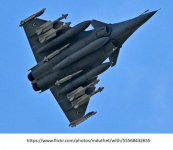
Rafale trials with Al Tariq Long Range glide bombs for the UAE air force.
They seem to use twin launchers on the 2nd harpoint.

Loadout :
  • 2 MICA NG IR
  • 2 METEOR or MICA NG EM
  • 4 Al Tariq LR
  • 6.000 liters of additionnal fuel
Also, the F5 standard will introduce CFTs, adding an extra 2,000–2,500 liters of fuel capacity.

I doubt MICA on harpoint 3 (between AT LR and MICA IR) will be possible so close to the glide bombs.

https://edgegroup.ae/solutions/al-tariq-long-range-precision-guided-munitions
1792223767856.png
 
  • Like
Reactions: Ashwin
Rafale trials with Al Tariq Long Range glide bombs for the UAE air force.
They seem to use twin launchers on the 2nd harpoint.

Loadout :
  • 2 MICA NG IR
  • 2 METEOR or MICA NG EM
  • 4 Al Tariq LR
  • 6.000 liters of additionnal fuel
Also, the F5 standard will introduce CFTs, adding an extra 2,000–2,500 liters of fuel capacity.

I doubt MICA on harpoint 3 (between AT LR and MICA IR) will be possible so close to the glide bombs.

https://edgegroup.ae/solutions/al-tariq-long-range-precision-guided-munitions
View attachment 54306
There are already 4 air-to-air missiles and 4 air-to-surface missiles on a single aircraft, which has a long range thanks to its 6,000 litres of external fuel – that’s already quite a lot for a single aircraft. For a four-aircraft raid – which is a small raid – that would amount to 16 air-to-air and 16 air-to-surface missiles, which would already have a significant impact and offer reasonable chances of success.
 
  • Agree
  • Like
Reactions: _Anonymous_ and BMD
SEAD capability was going to be in F4 2028, it now seems to have slipped to F5, which the UAE has withdrawn major funding,

It doesn't look well going forward, given France's national debt crisis, The word is that the IMF is going to step in, as the French budget minister Amelie de Montchalin warned

I think any plans for 6th gen will be shelved and even a full F-5, may be unable to be budgeted
 
Last edited:
SEAD capability was going to be in F4 2028, it now seems to have slipped to F5, which the UAE has withdrawn major funding,

It doesn't look well going forward, given France's national debt crisis, The word is that the IMF is going to step in, as the French budget minister Amelie de Montchalin warned

I think any plans for 6th gen will be shelved and even a full F-5, may be unable to be budgeted
Who do we know that is going to place a $40 billion order for 114 of these? That would fund an entire ecosystem of 6th gen aircraft and associated CCAs.
 
856539654-4135642409903769-8382593410955815601-n.jpg


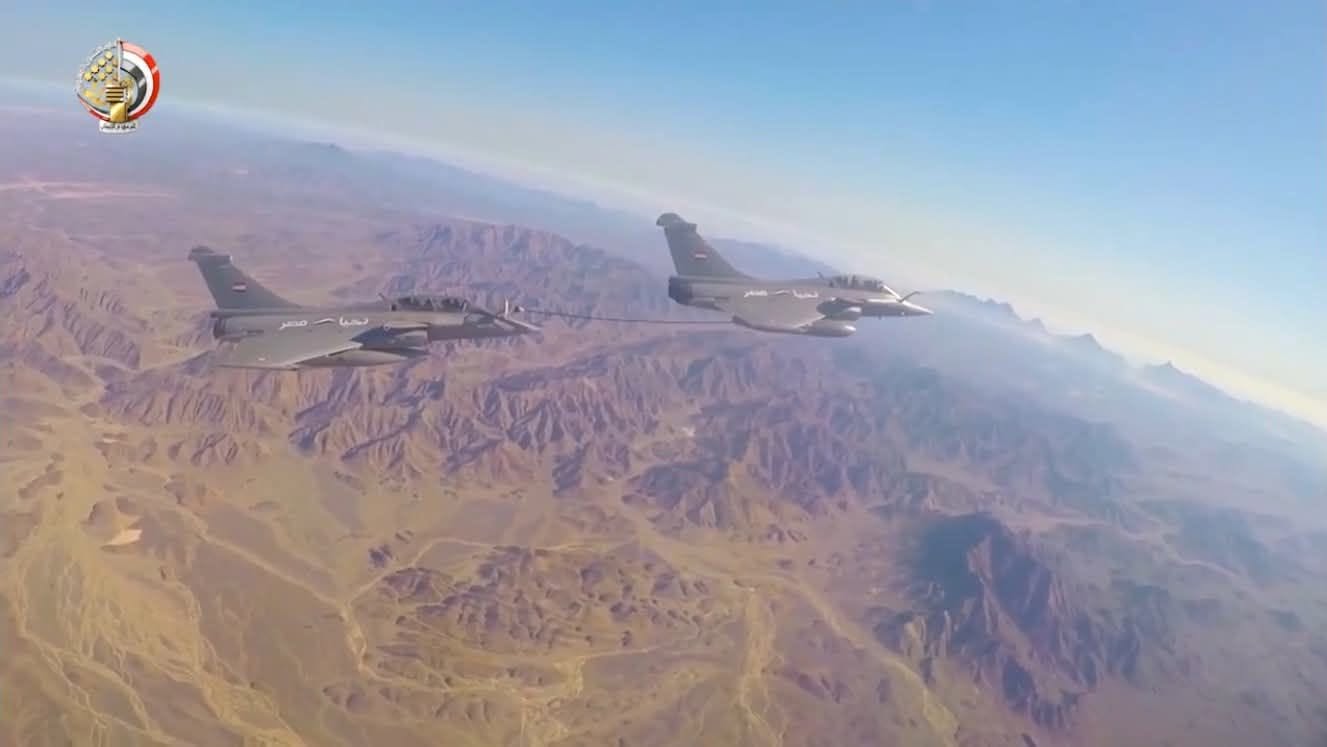
Two Rafale jets from the Egyptian Air Force refuelling
 
F5, which the UAE has withdrawn major funding,

UAE and France deepen defence ties with Rafale F5 fighter-jet deal​


"Defence co-operation is among the areas covered by a series of agreements signed by the UAE and France as the two countries look to bolster ties amid geopolitical uncertainty triggered by the Iran war.

They signed an intergovernmental agreement for co-operation on the Dassault Rafale F5 standard within the French and Emirati Rafale programmes during the visit of French President Emmanuel Macron to Abu Dhabi... "
 
  • Like
Reactions: Amarante
SEAD capability was going to be in F4 2028, it now seems to have slipped to F5, which the UAE has withdrawn major funding,

It doesn't look well going forward, given France's national debt crisis, The word is that the IMF is going to step in, as the French budget minister Amelie de Montchalin warned

I think any plans for 6th gen will be shelved and even a full F-5, may be unable to be budgeted

UAE and France deepen defence ties with Rafale F5 fighter-jet deal​


"Defence co-operation is among the areas covered by a series of agreements signed by the UAE and France as the two countries look to bolster ties amid geopolitical uncertainty triggered by the Iran war.

They signed an intergovernmental agreement for co-operation on the Dassault Rafale F5 standard within the French and Emirati Rafale programmes during the visit of French President Emmanuel Macron to Abu Dhabi... "
Yeah, just like how the MKI bailed out the Russian defence industry in the early to mid 90s looks like India with the MMRCA / MRFA tender & the UAE will do the same for French defence aviation sector.

The financial accruals could well fund further upgrade programs of the Rafale apart from the 6th Gen FCAS program.

Having said that admittedly the French are nowhere near what the Russians faced in the 1990s . However the future certainly looks bleak.
 
France and the United Arab Emirates have signed an intergovernmental agreement on the development of the Rafale F5

Having ordered eighty Rafale F4s in December 2021, the United Arab Emirates were approached by France to contribute financially to the development of the F5 variant of Dassault Aviation’s fighter-bomber, to the tune of 3.5 billion euros [representing 70 per cent of the programme’s estimated cost]. Naturally, with such a significant investment, the UAE hoped to gain access to the most sensitive technologies. This proved to be a sticking point with Paris… which could not be resolved.

Consequently, during the drafting of the update to the 2024–30 Military Programming Law [LPM], it was decided to prioritise the Rafale F5 at the expense of strengthening the ‘fighter’ fleet. This will enable “our air and naval aviation forces to carry out all their missions” and to “revive our partnerships and maintain the Rafale’s appeal on the export market”, explained Catherine Vautrin, the Minister for the Armed Forces, during a parliamentary hearing in April.

In short, France would have to take sole responsibility for developing this new version of the Rafale. In September, the Directorate General of Armaments [DGA] awarded the first contracts to the relevant manufacturers, including one to Safran for the preliminary design of the M88 T-REX engine, which is expected to deliver 20 per cent more thrust than the current M88-2 [i.e. 9 tonnes compared with 7.5 tonnes].

That said, one major factor changed the situation: the involvement of French forces in protecting the United Arab Emirates against attacks launched by the Iranian regime in response to the US operation ‘Epic Fury’. According to General Jérôme Bellanger, Chief of Staff of the Air and Space Force, no fewer than 100 drones and missiles were intercepted by the Rafale jets, not to mention those shot down by the Army’s Tiger helicopters.

Finally, talks between Paris and Abu Dhabi have resumed… and these have just culminated in an intergovernmental agreement, signed during President Macron’s recent official visit to the United Arab Emirates.

“We obviously had interests in the field of defence and […] we were able to […] consolidate our defence relationship with the United Arab Emirates, where a significant agreement was signed – an intergovernmental agreement and a set of agreements to establish a common strategy on the fifth-generation Rafale,” stated the President of the Republic during a press conference held on 21 October. Tactical military equipment

The details of this intergovernmental agreement have not been specified, particularly with regard to the financial aspects.

During his visit to the United Arab Emirates, Mr Macron visited an industrial site belonging to the Emirati defence group Edge. This visit, the group stated in a press release, forms part of its expansion into France.

“In June 2026, the Group launched EDGE Europe, its Paris-based subsidiary, and signed a framework agreement on industrial and technological cooperation with the Directorate General of Armaments. In the same month, EDGE and Safran Electronics & Defence signed a memorandum of understanding to establish a joint venture for the co-development and production of next-generation precision weapons in the United Arab Emirates and France,” the statement noted.

It seems likely that the United Arab Emirates will not be the only country to join the Rafale F5 programme. At the same press conference, Mr Macron referred to France’s defence relationship with Qatar, stating that it would be “consolidated through an upgrade of Qatar’s air capabilities”, with a “new generation of Rafale” aircraft. Is this the Rafale F5? Or the Rafale F4?

Furthermore – and this comes as a surprise, as this matter dates back to the start of Mr Macron’s first term – there is renewed talk of Qatar procuring Infantry Fighting Vehicles [VBCI] from KNDS France.

“A series of agreements have also been concluded in Qatar regarding […] the armoured infantry fighting vehicle, which is also a significant prospect,” the French President stated, without giving further details.

As a reminder, in December 2017, having confirmed an order for twelve additional Rafale fighter jets, Qatar signed a letter of intent to acquire 490 VBCIs for an estimated €1.5 billion. However, as relations between Paris and Doha subsequently became strained, no contract was signed.
 
  • Like
Reactions: Amarante
Ruh roh!

France to receive just two Rafales in 2027 as air chief warns of fighter strain​

France’s Air and Space Force expects to receive just two new Rafale fighters in 2027 while retiring additional Mirage 2000-5 jets, despite its existing combat aircraft already being used more than 15% above their planned utilization rate.

The warning came from General Jérôme Bellanger, Chief of Staff of the French Air and Space Force, during a hearing before the National Assembly’s Defense Committee on October 14, 2026, as lawmakers examined the proposed 2027 defense budget.

Bellanger illustrated the pressure on the fleet with an example from before summer 2026, when approximately 80% of France’s fighter aircraft were committed simultaneously to a nuclear deterrence exercise, operations in the Middle East, NATO’s eastern flank, and an exercise in Côte d’Ivoire, alongside permanent air policing duties.


“Overusing the fleet will no longer be enough tomorrow,” he warned.

The proposed 2027 budget allocates €4.4 billion in commitment authorizations and €1.8 billion in payment appropriations to Rafale procurement and modernization, including development of the F5 standard. However, Bellanger argued that the next military programming law must reconsider the overall size of France’s fighter fleet.

The warning follows similar concerns he raised before the Senate in May 2026, when he argued that France needed additional Rafales before the F5 entered service in 2033, even if that meant procuring more F4-standard aircraft in the meantime.

The planned expansion of France’s nuclear deterrence posture will add another requirement to that assessment, with implications not only for aircraft numbers but also for personnel, training, infrastructure, and support.

Combat drones will not replace fighters one-for-one​

While France intends to introduce collaborative combat drones to increase its operational capacity, Bellanger cautioned against viewing them as substitutes for crewed fighters.

“A collaborative combat drone is not a fighter aircraft. It is not a one-for-one replacement,” he told lawmakers.

He described the future drones as complementary, largely single-mission platforms, compared with the versatility of crewed multirole fighters.

The French Air and Space Force expects to receive its first MBDA DELUGE long-range one-way attack drones in summer 2027. They will form the core capability of a new bombing and reconnaissance drone squadron.

The DELUGE system, known as Durandal in French service, was ordered in January 2026. Powered by a turbojet, it is designed to carry a 50-kilogram (110-pound) payload over distances of up to 500 kilometers (310 miles).

Bellanger outlined a future approach to penetrating enemy air defenses in which inexpensive expendable drones would be used first to expose and saturate defensive systems. Larger collaborative combat drones would then help open corridors for crewed aircraft to strike deeper into enemy territory.

A separate initiative, HYPERION, is expected to reach an initial milestone in 2028 with the experimental operation of an autonomous collaborative platform based on the Dassault nEUROn demonstrator alongside a Rafale or Mirage 2000.

France outlines timetable for Rafale successor​

Looking further ahead, Bellanger provided additional details about the aircraft intended to replace the Rafale following the collapse of the Franco-German next-generation fighter (NGF) project in June 2026.

Now known as the Avion de Combat du Futur (ACF), the future fighter is being envisaged as a nationally developed aircraft, although cooperation with foreign partners remains possible.

According to Bellanger, the ACF should be flying conventional missions by 2040 before taking over the Rafale’s nuclear deterrence role around 2050.

The Rafale F5, currently under development, is expected to reach a major operational milestone around 2035. It will introduce technologies intended for the next-generation aircraft, including advanced sensors, connectivity, and the STRATUS RS missile for suppressing enemy air defenses.

Bellanger insisted that previous work under the Future Combat Air System (FCAS) program had not been wasted, particularly in areas such as stealth, propulsion, and combat-cloud connectivity.


French Armed Forces Minister Catherine Vautrin told lawmakers on October 8 that France intended to build on investments already made under the multinational program. These include the €115 million Turenne 2 propulsion research contract awarded to Safran in 2019, covering technologies to increase the thrust of the Rafale’s M88 engine and prepare the powerplant for the next-generation fighter.

France also intends to maintain cooperation with Germany on combat-cloud technologies to ensure interoperability between European aircraft.

Air defenses and interceptor drones among 2027 priorities​


The hearing also highlighted efforts to strengthen the protection of French air bases against drones and missiles.

Bellanger confirmed plans to create a dedicated interceptor drone squadron, alongside the deployment of four additional PARADE counter-drone systems and the integration of HELMA-P laser technology.

These measures complement efforts to improve the resilience of French air bases against attack. During the recent BASEX exercise, the French Air and Space Force tested the dispersal of Rafale fighters to civilian airports, alongside broader scenarios involving drone incursions, sabotage, and cyberattacks.


France is also scheduled to receive its first SAMP/T NG surface-to-air missile system in 2027, with 10 systems and nine VL MICA systems expected by 2030. The service is also preparing to introduce a multilayer air-defense architecture combining ASTER and VL MICA missiles.

These investments form part of a broader effort to adapt French airpower to high-intensity warfare, in which the ability to field and sustain large numbers of weapons is becoming as important as their individual performance.

Bellanger concluded that the French Air and Space Force must accelerate procurement, production, maintenance, and training if it is to keep pace with the changing threat environment.

After two years in command, he summed up his priority in a single word: speed.


@BMD @Optimist

Oh the irony :LOL::ROFLMAO:
irony-jackseptic-eye.gif
 
  • Informative
  • Like
Reactions: BMD and Optimist
France’s Air and Space Force expects to receive just two new Rafale fighters in 2027 while retiring additional Mirage 2000-5 jets, despite its existing combat aircraft already being used more than 15% above their planned utilization rate.

“Overusing the fleet will no longer be enough tomorrow,” he warned.
The number of Rafale aircraft that Dassault is delivering to France is exactly as stipulated in the contracts.

Bellanger got what he wanted: the French Air Force was due to have 185 Rafale aircraft by 2035, and now plans to have 230 by 2035.

Over-utilisation of the Rafales would be problematic if it were not offset by new purchases, as this would deplete the Air Force’s available reserve of potential flight hours too quickly. However, this is the result of the sale of second-hand Rafales to Greece and Croatia, which is offset by the purchase of an equivalent number of new Rafales. Thus, mid-life Rafales are being replaced by Rafales at the peak of their service life; so, overall, there are no disadvantages for the Air Force – quite the contrary.

The 15 per cent overuse is merely a convention. The Air Force operates its Rafales for 250 hours a year so that they last for 30 years, i.e. 7,500 hours of operational life. However, the Rafale’s operational life has been extended to 9,000 hours following the proposal made to Finland, based on the experience we now have with both the French and foreign fleets. So, if we maintain the 30-year target, the Rafale can now fly 300 hours per year; and as it has only flown 250 hours for half of its service life, it can even fly more than that. The Rafale therefore has no difficulty in achieving this additional 15 per cent. In its proposal to Finland, Dassault had committed to the aircraft being able to fly 1,000 hours per year on a regular basis and, in ‘Surge’ mode, 350 hours per month.

An extra 15 per cent on 250 hours per year brings the total to just 287.5 hours per year. This puts Bellanger’s warning into perspective; his sole aim was to secure a larger budget allocation.
 
Thales
Among the most significant contracts in the third quarter were an order from the French Directorate General of Armaments (DGA) to develop the next generation of the Rafale fighter aircraft’s radar, as well as an order for four additional SAMP/T NG air defence systems, announced by the DGA on Wednesday.

Appartently the RBE2 XG modules will be optimised to operate in the X band, but also in the Ku and K bands.
 
France and the United Arab Emirates have signed an intergovernmental agreement on the development of the Rafale F5

Having ordered eighty Rafale F4s in December 2021, the United Arab Emirates were approached by France to contribute financially to the development of the F5 variant of Dassault Aviation’s fighter-bomber, to the tune of 3.5 billion euros [representing 70 per cent of the programme’s estimated cost]. Naturally, with such a significant investment, the UAE hoped to gain access to the most sensitive technologies. This proved to be a sticking point with Paris… which could not be resolved.

Consequently, during the drafting of the update to the 2024–30 Military Programming Law [LPM], it was decided to prioritise the Rafale F5 at the expense of strengthening the ‘fighter’ fleet. This will enable “our air and naval aviation forces to carry out all their missions” and to “revive our partnerships and maintain the Rafale’s appeal on the export market”, explained Catherine Vautrin, the Minister for the Armed Forces, during a parliamentary hearing in April.

In short, France would have to take sole responsibility for developing this new version of the Rafale. In September, the Directorate General of Armaments [DGA] awarded the first contracts to the relevant manufacturers, including one to Safran for the preliminary design of the M88 T-REX engine, which is expected to deliver 20 per cent more thrust than the current M88-2 [i.e. 9 tonnes compared with 7.5 tonnes].

That said, one major factor changed the situation: the involvement of French forces in protecting the United Arab Emirates against attacks launched by the Iranian regime in response to the US operation ‘Epic Fury’. According to General Jérôme Bellanger, Chief of Staff of the Air and Space Force, no fewer than 100 drones and missiles were intercepted by the Rafale jets, not to mention those shot down by the Army’s Tiger helicopters.

Finally, talks between Paris and Abu Dhabi have resumed… and these have just culminated in an intergovernmental agreement, signed during President Macron’s recent official visit to the United Arab Emirates.

“We obviously had interests in the field of defence and […] we were able to […] consolidate our defence relationship with the United Arab Emirates, where a significant agreement was signed – an intergovernmental agreement and a set of agreements to establish a common strategy on the fifth-generation Rafale,” stated the President of the Republic during a press conference held on 21 October. Tactical military equipment

The details of this intergovernmental agreement have not been specified, particularly with regard to the financial aspects.

During his visit to the United Arab Emirates, Mr Macron visited an industrial site belonging to the Emirati defence group Edge. This visit, the group stated in a press release, forms part of its expansion into France.

“In June 2026, the Group launched EDGE Europe, its Paris-based subsidiary, and signed a framework agreement on industrial and technological cooperation with the Directorate General of Armaments. In the same month, EDGE and Safran Electronics & Defence signed a memorandum of understanding to establish a joint venture for the co-development and production of next-generation precision weapons in the United Arab Emirates and France,” the statement noted.

It seems likely that the United Arab Emirates will not be the only country to join the Rafale F5 programme. At the same press conference, Mr Macron referred to France’s defence relationship with Qatar, stating that it would be “consolidated through an upgrade of Qatar’s air capabilities”, with a “new generation of Rafale” aircraft. Is this the Rafale F5? Or the Rafale F4?

Furthermore – and this comes as a surprise, as this matter dates back to the start of Mr Macron’s first term – there is renewed talk of Qatar procuring Infantry Fighting Vehicles [VBCI] from KNDS France.

“A series of agreements have also been concluded in Qatar regarding […] the armoured infantry fighting vehicle, which is also a significant prospect,” the French President stated, without giving further details.https://www.youtube.com/watch?v=x8qBmTrX2v8&list=PLQ_OzNEYrepVCaN0mTFl62SV-mkWjuSXl

As a reminder, in December 2017, having confirmed an order for twelve additional Rafale fighter jets, Qatar signed a letter of intent to acquire 490 VBCIs for an estimated €1.5 billion. However, as relations between Paris and Doha subsequently became strained, no contract was signed.
So the UAE is still not paying the $3.5b for the F5

France is stopping buying Rafales and updating F4, to fund the F5 development, Which is an excuse because they don't have the money to buy Rafales, IMF is at the door, ready to pounce

They will tell us 2028 for F5, What is the real date now? 2040

They will still dream of a 6th gen, anytime now, real soon, Just as soon as another country is willing to pay for it
 
Last edited:
  • Like
Reactions: Innominate