PAK-FA / Sukhoi Su-57 - Updates and Discussions

Learning from history is an accurate way to predict the future.
In the social domain, this is called credibility;
in mathematics, it is called mathematical induction.

From getting to know someone to falling in love and getting married—you're essentially doing the same thing—judging whether she's right for you by analyzing her past.
This is a basic means of understanding the world. A person who deceived yesterday does not become a saint today.
Denying experience and history runs counter to the fundamental method of objectively understanding the world.

Given the very poor track record of U.S.-made weapons over the past 100 years of aviation history,


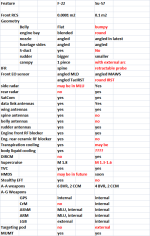
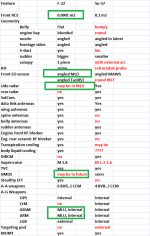
it is possible to anticipate the degree of underperformance in their next new product. The F-22 lags significantly behind the Su-57 in every observable respect. There are objective differences in quality between things, and it is not a matter of subjective scoring. There is no need even to list comparisons, because the F-22 is itself a product of the same era, similar to the Su-37 or MiG-1.44/1.46. Furthermore, the F-35 lacked an initial design objective for "multi-role capability" — which is why it turned out so unfortunate — whereas the PAK-FA was the first fifth-generation aircraft to incorporate "multi-role" or a similar description.
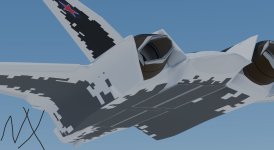
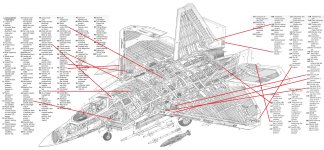
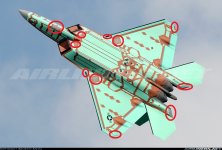
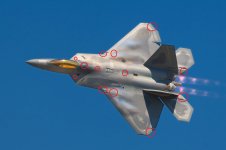
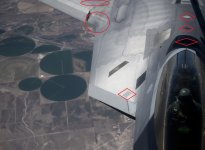
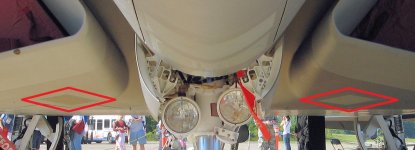
View attachment 52345View attachment 52346
By the way, since you mentioned a table, I once made one may yearS ago, but it was in Chinese. I can machine-translate it and post it.


In the official design guidance documents, one can find that the F-22 prioritized stealth first, maneuverability second, and supercruise third, whereas the Russians placed maneuverability first, supercruise second, and stealth only third. In other respects, the F-22, at the very least, failed to achieve its stated goal of matching the F-15's payload, and the F-35 failed to meet its affordability target,
while the Su-57 developed entirely in accordance with its intended goals — featuring multiple L-band radars that provide a situational awareness capability unmatched by other aircraft, the development of the Su-57D corresponding to item 6, and a superb internal weapons bay capability that delivers powerful air-to-air and air-to-ground strike capabilities also unmatched by other aircraft.
As per Russian sources, Su-57's stealth is very good and so far Ukrainian IADS has failed to detect it.
 
  • Like
Reactions: Hyperactive ADD
Negative. Virupaksha is "specifically" designed to track faintest of targets from 100s of kms away and MKI's future BEL Dual-Band is also designed to track skin-friction of jets flying at subsonic speeds from 200kms away. Rafale will get tracked by MKI from over 200kms+ away in heavy EM clutter, even with SPECTRA playing all of its tricks and get blown away by Astra MK3. Brute power of Virupaksha in itself shifts the game in MKI's favour.

This is not about radar performance, it's about being able to fly outside the cone of the radar before the radar can alert the MKI of the M2000's presence.

The thing is a radar beam is visible at a longer range than the detection range of the radar itself. So if you can move out of the way of the radar cone, and sustainably stay out of its way, then you will avoid detection entirely. This is the tactic the M2000s used to defeat the MKI in 2010.

You essentially move out of the way and then get closer through a blindspot. The MKI is just looking at a different direction at that point.

This is purely a head-to-head comparison.
 
J-10 is f*cking garbage.


While any outcome is possible in actual combat—as demonstrated historically by Mirage F1s and MiG-21s scoring kills against F-14s—military exercises are distinct. Exercises are structured, purposeful confrontations designed to train specific capabilities rather than unconstrained, video-game-style sessions for earning experience points. They are invariably conducted under strict, asymmetrical conditions to ensure both sides gain valuable experience while managing limited fuel and airframe lifespans. Casual external observers who misinterpret these results fail to understand this reality.

Statistically speaking, the J-10 does not possess the inherent capability to reliably defeat the J-16 or Su-35S. Media reports claiming otherwise are driven by sensationalism; while such specific exercise outcomes may have occurred, they cannot be used to extrapolate that the J-10 is superior to the J-16, or that the Rafale is superior to the Su-30MKI.

Avionics rule the roost here. Yeah, the J-10 relative to Su-35 or J-16 is inferior. But we were talking about J-10 vs F-16. To the PAF, the J-10 with next gen avionics and weapons is obviously better than their 2000s era F-16s.

As for the SU-30MKI, India has long lacked upgrades, which can be considered absolute corruption. Imagine replacing it with AL-31F-M1, Irbis-E, or R-77-1

The IAF deemed the Bars was sufficient to defeat J-10, JF-17, and F-16 so there was no need for a radar upgrade. But the EW, comms, computers, weapons etc have received multiple upgrades. It's also not like PLAAF's J-10, J-11, and J-16 could defeat the Bars too. Now, with J-20, we need advanced GaN class AESA with AI for low RCS detection, not just any simple AESA.

AL-31FM1 comes from Salyut, IAF won't be replacing Saturn's engne with a different company's technology. The IAF took a look at 117S and decided it wasn't worth the cost. They preferred to continue upgrading AL-31FP.

India doesn't even have the R-77-1.
The R-77 range of 80 kilometers.

MKI has had R-77-1 since 2019-20, 400 were ordered after Balakot strikes. And has also received Astra Mk1. It was opertional in Sindoor.

At the heart of this geopolitical triangle sits Russia. Neutralizing Russia means China’s fate is effectively sealed. Already plagued by resource depletion and a demographic cliff, China would be like an ICU patient having their life support unplugged the second they are disconnected from Moscow.
After that, they will strike India.

It is also highly plausible that the Greater Israel blueprint rolls out first. If Russia falls, Turkey and China go down with it.

Turkey will have no choice but to pivot completely to the West and become a puppet state, with nations like Egypt, Saudi Arabia, and Jordan falling like dominoes right after.

As long as Washington can cut off the flow of Russian and Middle Eastern energy, both India and China are dead in the water.

This is no longer just a technical or military debate; it is a brutal reality of resource dominance and geography.

Frankly, a historic Indo-Pakistani rapprochement is the optimal play. It allows for the secure overland transport of vital resources rather than relying on vulnerable sea lines of communication,

potentially utilizing transit corridors from Central Asia via Afghanistan.

Russia won't fall. India will continue buying Russian oil and so will China. And their coming militarization will put the West on the backfoot and by then the PLAN will begin catching up with the USN in terms of capital ship capabilities, while India alternatively creates pressure on both US and China via the IN's expansion. All this is just 10-15 years away and by then oil will become another commodity due to the expansion of green hydrogen, ethanol, and isobutanol. Oil will switch into the petrochemical business while energy will be generated regionally in all countries.

10-15 years is not enough to disrupt Russia. India is still 10 years away from becoming truly secure from external pressure. China is just a few years way too.

Both Russia and China have a serious population problem though, but the same afflicts the US and Europe in terms of their white populations. We can't tell how foreign policies will change over 10-15 years in China, Russia, and the West because of that.

Greater Israel is a fantasy. The Jewish population is too small to hold that much land.

Peace between India and Pak is a fantasy too. India would like peace. But a peaceful Pakistan will cease to exist without a serious civilizational enemy like India to sustain the military budget that keeps the country in one piece. Pakistan will either peacefully or violently balkanize, regardless of whether India was involved in its balkanization or not. There are 4 major ethnic groups that hate each other, and recently two of them have militarily allied to fight the other two.

India has created the NSTC through Iran instead.
 
This is not about radar performance, it's about being able to fly outside the cone of the radar before the radar can alert the MKI of the M2000's presence.

The thing is a radar beam is visible at a longer range than the detection range of the radar itself. So if you can move out of the way of the radar cone, and sustainably stay out of its way, then you will avoid detection entirely. This is the tactic the M2000s used to defeat the MKI in 2010.

You essentially move out of the way and then get closer through a blindspot. The MKI is just looking at a different direction at that point.

This is purely a head-to-head comparison.
Now MKI has a counter to that French tactic. Anyways, it's not going to be 1 MKI vs 1 Rafale, rather a group vs another group and there that tactic won't work.
 
Avionics rule the roost here. Yeah, the J-10 relative to Su-35 or J-16 is inferior. But we were talking about J-10 vs F-16. To the PAF, the J-10 with next gen avionics and weapons is obviously better than their 2000s era F-16s.


The IAF deemed the Bars was sufficient to defeat J-10, JF-17, and F-16 so there was no need for a radar upgrade. But the EW, comms, computers, weapons etc have received multiple upgrades. It's also not like PLAAF's J-10, J-11, and J-16 could defeat the Bars too. Now, with J-20, we need advanced GaN class AESA with AI for low RCS detection, not just any simple AESA.

AL-31FM1 comes from Salyut, IAF won't be replacing Saturn's engne with a different company's technology. The IAF took a look at 117S and decided it wasn't worth the cost. They preferred to continue upgrading AL-31FP.


MKI has had R-77-1 since 2019-20, 400 were ordered after Balakot strikes. And has also received Astra Mk1. It was opertional in Sindoor.


Russia won't fall. India will continue buying Russian oil and so will China. And their coming militarization will put the West on the backfoot and by then the PLAN will begin catching up with the USN in terms of capital ship capabilities, while India alternatively creates pressure on both US and China via the IN's expansion. All this is just 10-15 years away and by then oil will become another commodity due to the expansion of green hydrogen, ethanol, and isobutanol. Oil will switch into the petrochemical business while energy will be generated regionally in all countries.

10-15 years is not enough to disrupt Russia. India is still 10 years away from becoming truly secure from external pressure. China is just a few years way too.

Both Russia and China have a serious population problem though, but the same afflicts the US and Europe in terms of their white populations. We can't tell how foreign policies will change over 10-15 years in China, Russia, and the West because of that.

Greater Israel is a fantasy. The Jewish population is too small to hold that much land.

Peace between India and Pak is a fantasy too. India would like peace. But a peaceful Pakistan will cease to exist without a serious civilizational enemy like India to sustain the military budget that keeps the country in one piece. Pakistan will either peacefully or violently balkanize, regardless of whether India was involved in its balkanization or not. There are 4 major ethnic groups that hate each other, and recently two of them have militarily allied to fight the other two.

India has created the NSTC through Iran instead.
Having missed the post-Cold War era of the 1990s when Soviet blueprints were sold by the ton, India's military-industrial complex has always suffered from a profound lack of independence and strategic leverage.

Furthermore, oil remains the true lifeblood of industry; from synthetic fertilizers to asphalt, modern industry simply cannot exist without petroleum, alongside coal and iron. It is far more than just a source of power. The so-called 'green energy transition' is entirely a hoax—a fabricated demand manufactured solely to sustain an auxiliary bureaucratic class. Even nuclear energy is largely a front for nuclear weapons procurement; electricity itself is ultimately a cheap commodity.

Crucially, China possesses zero probability of defeating the United States at sea, regardless of which military branch it deploys. The conflicts involving Iran, the Red Sea, and the Black Sea serve as definitive proofs. Air power can no longer shift the geopolitical balance, and naval power has even less of a chance. In reality,
All it takes is a few Honda jetskis buzzing around the Philippines, than take some Harpoon missiles packed into commercial land containers,
to completely paralyze the entire fleet could shut down the entire theater. The asymmetric, paradigm-shifting impact of these anti-ship missile containers on naval warfare far exceeds the disruption brought by FPV drones to land warfare.

Finally, the enduring conflict between India and Pakistan is a geopolitical trap deliberately laid by the British Pig. Had the Soviet Union spearheaded India’s post-colonial state-building, the subcontinent would never have been balkanized along purely religious lines