Indian Space Program: News & Discussions

  • Thread starter Thread starter Tarun
  • Start date Start date
  • Tags Tags
    isro
Nobody is questions about R&D, question is why ISRO maintained minimum number of constellation by anticipiaating the satellite failiure due to aging? The last navic satellite IRNSS1I was launched in 2018,and the first in 2013. What we are doing in last seven to eight years?
I would admit this is because of poor planning by ISRO. But being the devil's advocate i would also argue this is partly due to the unexpected amount of failures in first batch of NAVIC. That is bound to derail any kind of programme. Their plan was to increase it to 24. But because of circumstances they had work on replacement as soon as 2019-2020.

Also for your kind information the last NAVIC satelite NVS-02 was launched in 2025. NVS-01 was successful launched in 2023 and reached its intended orbit. NVS-02 reached elliptical orbit successfully but couldn't get transferred to circular orbit. Making it a partial failure. Once they replace 11 sats with new series, they will work on expansion, there is already a proposal in DoS for it.
 
  • Like
Reactions: Aniruddha
So what will we be using till 2032 ? And how accurate or reliable whatever we'd be using in the interim be ?
Atomic clocks are needed for GPS & other military grade earth imagery fields. When we started to build the IRNSS sat system we relied on Rubidium based atomic clocks imported from Israel. One by one almost all of these clocks have failed.

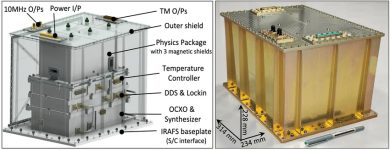
ISRO developed their own Rubidium based atomic clock. The named it Indian Rubidium Atomic Frequency Standard (IRAFS):
1774034009108.png

Here is a research paper on the same: https://www.researchgate.net/public...c_frequency_standard_for_satellite_navigation

Some prototypes of Cesium based clocks were also made for testing. The follow-on series of the IRNSS called the NVS, of which NVS-01 is the only active satellite, uses the IRAFS clock.

This research work is being carried forward by IISER-Pune & IUCAA. They are working on a Strontium based optical lattice atomic clocks which would be ready for deployment by 2032. There is an excellent video on it:

 
The failure could also be an opportunity to upgrade the program to a newer architecture with the hindsight of past operational experience. Was the constellation already using QKD? Is India's own rad hardened atomic clock far enough along - can it be any worse than the swiss? Directional M-code beaming? Boosted signal power techniques?
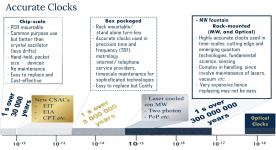
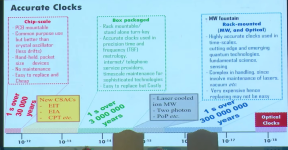
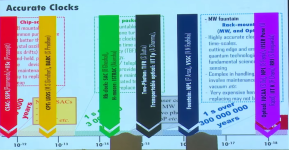
"India lost the market for atomic clocks built since the 1940s. It should not miss the market for the current transition to Optical Clocks"

Screenshot_20260327_111930_YouTube.png
Screenshot_20260327_111427_YouTube.png
 

From the cosmic vantage point of satellites circling Earth, India has now been mapped in extraordinary detail, right down to the contours of its smallest villages.

The Indian Space Research Organisation (Isro), on National Panchayati Raj Day, announced that it has completed high-resolution Land Use and Land Cover mapping for the entire country at a scale of 1:10000.

In simple terms, this means one centimetre on the map represents just 100 metres on the ground, sharp enough to distinguish a paddy field from a pond, a school from a sand quarry.

The dataset is now available to government organisations and has been integrated into the Gram Manchitra web portal of the Ministry of Panchayati Raj.
 

Dr Jitendra Singh reviews plan to set up Space laboratories in Universities and Colleges across India; with seven such labs to be established in the first phase​

Union Minister of State (Independent Charge) Dr. Jitendra Singh today reviewed plans to set up Space laboratories in universities and colleges across India, with seven such labs to be established in the first phase to provide hands-on exposure to students in satellite systems, rocketry and mission design.

The initiative is aimed at building a strong pipeline of skilled youth for India’s expanding space sector, which has attracted over USD 600 million in private investment over the past five years following the opening up of the sector to non-government entities.

The review followed a detailed briefing by Chairman, IN-SPACe, Dr Pawan Goenka, who presented an overview of the progress made in India’s Space reforms and the growing participation of private players across the value chain.

India’s private space ecosystem has expanded rapidly, with the number of StartUps increasing from single digit in 2019 to over 400 by early 2026. These StartUps are now active across launch vehicles, satellite and payload manufacturing, ground infrastructure, data services, and emerging in-orbit segments. Increasing global interest is also reflected in rising engagements with international clients, including established space-faring nations.

To support this momentum, a range of focused initiatives have been rolled out. A ₹1,000 crore venture capital fund is being operationalised with SIDBI to support growth-stage startups, while a ₹500 crore Technology Adoption Fund is enabling the transition of early-stage innovations into commercially viable products. The seed fund scheme is providing grants of up to ₹1 crore to startups at the ideation and prototype stage, along with mentoring and ecosystem support.

Efforts to build a skilled workforce are also underway, with 17 specialised training programmes completed and nearly 900 participants certified in areas such as satellite manufacturing, launch vehicle systems, and space cybersecurity.
The upcoming space laboratories in universities are expected to further strengthen this talent pipeline by offering practical, hands-on learning opportunities.

On the infrastructure front, new opportunities are being created through initiatives such as a privately-led Earth Observation satellite constellation under a public-private partnership model, development of a shared satellite bus platform for startups, and expanded access to design, integration, and testing facilities at the IN-SPACe Technical Centre in Ahmedabad. Technology transfer programmes, including the Small Satellite Launch Vehicle (SSLV), are also progressing with industry participation.

India’s global engagement in the space sector continues to deepen, with partnerships now spanning over 45 countries. Recent collaborations include agreements with Singapore and the UAE, participation of Indian companies in international space forums, and initiatives to connect domestic startups with global markets.

Since its inception, IN-SPACe has received over 1,000 applications from startups, MSMEs, academic institutions and industry, and has granted 129 authorisations, reflecting growing confidence in India’s reformed space ecosystem.

 
  • Like
  • Agree
Reactions: Shan and Aniruddha
an economy 2 times smaller operate 1,559 satellites while Vishwaguru a meager 57 lol

Tell you all about economy scam churan being fed to delusional Indians by Nexus of corrupt political & dhandho class.
What kind of stupid and retarded opinion is this LoL
The 2 times smaller economy was a global superpower about 35 years ago and locked horns with the US in the Space Race.
Russia of today benefits from those investments made decades ago.
Also more than 50% of those satellites are Soviet relics.

Maybe it would be worth channeling your energy into contributing rather than ranting mindlessly
 
an economy 2 times smaller operate 1,559 satellites while Vishwaguru a meager 57 lol

Tell you all about economy scam churan being fed to delusional Indians by Nexus of corrupt political & dhandho class.
I am not sure whether these nos. are exaggerated. However, the third party sources have the no. pegged at much lower range.


  • Russia: 181
These nos. are from 2023-2024 data.
 
Last edited:
I am not sure whether these nos. are exaggerated. However, the third party sources have the no. pegged at much more lower range.


  • Russia: 181
These nos. are from 2023-2024 data.

Russia has been launching dozens of mil sats since the Ukraine War. But many of these are attrition replacements for old analog eo/sar sats.

So likely psyops by the Russians this.