
Ghatak and Rustom Indigenous UAV Programs
- Thread starter Ashwin
- Start date
You are using an out of date browser. It may not display this or other websites correctly.
You should upgrade or use an alternative browser.
You should upgrade or use an alternative browser.




AUW of 13T and twin engine would mean the TWR with KDE+afterburner will give it a TWR of ~1.25 at MTOW.
But it would work well with Dry Kaveri too, giving it a supersonic dash speed for short durations, TWR of 0.8 at MTOW, like what we see on F-16, Gripen E, and Su-35S, when clean.
My guess is they will stick with Dry Kaveri. The lack of pilot means larger fuel tanks. Essentially, a twin-engine LCA Mk2, which puts it in the Rafale class. So 7.5T empty, 4-4.5T fuel, 1-1.5T payload.
Stealth-only mission, there's no external payload, so afterburners are not necessary.
An Mk2 with afterburner will give it full Rafale-class capabilities. Any successor here is a potential template for a 6th gen ASF drone.
The 2030s will be interesting for our aerospace industry.

Only one KDE. This will be no afterburner for FUFA.AUW of 13T and twin engine would mean the TWR with KDE+afterburner will give it a TWR of ~1.25 at MTOW.
Then what was swift about, these mo**** are taking all of us on a ride, no surprise services do not trust them.
Turkroaches, south koreans , yahudis & Chinese have developed & flown flying wings, whereas these morons are stuck in technology demonstration for more than a decade.

Ghatak UCAV's 1st Director Raises Concerns Over Program's Path - Livefist
By BIJU UTHUPFounding Project Director, GHATAK Building on the success of the LCA Tejas program, the Aeronautical Development Agency (ADA) embarked on a new frontier, setting its sights on the development of advanced variants and cutting-edge projects such as the 5th Generation Advanced Medium...
 www.livefistdefence.com

Only one KDE. This will be no afterburner for FUFA.
Then assuming 1.5T for payload, we get empty + fuel at 11.5T, the same as LCA Mk2. And if it's optimized for tailless flying wing without a cockpit or strengthened wings, then it will be lighter, at least by a tonne, so we can assume 7T empty. Then we still get 4.5T for fuel. That's an FF of 40%, essentially more than the Su-35, which implies a range of over 4000 km on internal fuel.
So, yeah, I guess you're right. We can get supersonic dash when the fuel drops to 50%. TWR goes up from 0.4 to 0.55. It will have acceptable fighter-like G and turn performance, so that's fine. Just passable.
It will have absolutely sh!t climb performance though, barely a couple dozen m/s. So it will be entirely reliant on stealth and positioning to survive. So it doesn't matter as much. Even fighters on dry thrust will have poor performance.
But what really matters is acceleration. This is what actually turns the FUFA into an actual fighter. With SE, if it uses agility to dodge missiles, it won't be able to regain energy as quickly as TE can. And SEAD/DEAD requires agility. Even dodging enemy fighters will require agility.
Ghatak turns back when challenged, but a FUFA needing to turn back every time it's challenged will make it useless.
Plus I've overestimated the empty weight in this calculation. With SE, it may not weigh more than 6.5T. So 5 or 5.5T of fuel is absolutely useless for such a low-thrust fighter design.
Otoh, if we stick 2 engines on it, we will double acceleration and it will achieve fighter-level performance (minus climb). We will have sufficient electrical power that's necessary for SEAD/DEAD. And the most crucial factor, it will reduce its vulnerable area and significantly increase survivability when taking a hit. All this for just an extra tonne of weight. Basically the cockpit + wing weight of the LCA Mk2 is just transferred to the second engine.
Thrust, electricity generation, and fuel capacity climbs up to Rafale-class. And payload is adequate for SEAD/DEAD. And we get Rafale-like performance figures for G, turn rate, and dry thrust acceleration. Plus full supersonic dash speed above mach 1.4 on dry thrust. Even supercruise.
That's why I think it's gonna be a TE design.
FUFA is a leading project for the RPSA (Ghatak) UCAV, which is a flying wing design, not a fighter CCA as you are assuming. Check the latest video.Then assuming 1.5T for payload, we get empty + fuel at 11.5T, the same as LCA Mk2. And if it's optimized for tailless flying wing without a cockpit or strengthened wings, then it will be lighter, at least by a tonne, so we can assume 7T empty. Then we still get 4.5T for fuel. That's an FF of 40%, essentially more than the Su-35, which implies a range of over 4000 km on internal fuel.
So, yeah, I guess you're right. We can get supersonic dash when the fuel drops to 50%. TWR goes up from 0.4 to 0.55. It will have acceptable fighter-like G and turn performance, so that's fine. Just passable.
It will have absolutely sh!t climb performance though, barely a couple dozen m/s. So it will be entirely reliant on stealth and positioning to survive. So it doesn't matter as much. Even fighters on dry thrust will have poor performance.
But what really matters is acceleration. This is what actually turns the FUFA into an actual fighter. With SE, if it uses agility to dodge missiles, it won't be able to regain energy as quickly as TE can. And SEAD/DEAD requires agility. Even dodging enemy fighters will require agility.
Ghatak turns back when challenged, but a FUFA needing to turn back every time it's challenged will make it useless.
Plus I've overestimated the empty weight in this calculation. With SE, it may not weigh more than 6.5T. So 5 or 5.5T of fuel is absolutely useless for such a low-thrust fighter design.
Otoh, if we stick 2 engines on it, we will double acceleration and it will achieve fighter-level performance (minus climb). We will have sufficient electrical power that's necessary for SEAD/DEAD. And the most crucial factor, it will reduce its vulnerable area and significantly increase survivability when taking a hit. All this for just an extra tonne of weight. Basically the cockpit + wing weight of the LCA Mk2 is just transferred to the second engine.
Thrust, electricity generation, and fuel capacity climbs up to Rafale-class. And payload is adequate for SEAD/DEAD. And we get Rafale-like performance figures for G, turn rate, and dry thrust acceleration. Plus full supersonic dash speed above mach 1.4 on dry thrust. Even supercruise.
That's why I think it's gonna be a TE design.
I guess FUFA and RPSA are the exact same thing . "Gangadhar hi Shaktiman hai"FUFA is a leading project for the RPSA (Ghatak) UCAV, which is a flying wing design
The project initially started as FUFA (not the 1 ton tech demonstrator) and eventually renamed as RPSA .
"Ghatak" and "AURA" were never the official name of any ADE project .
No, FUFA came later. I think the government asked for a demonstration project when the project moved to ADE. That's my guess.I guess FUFA and RPSA are the exact same thing . "Gangadhar hi Shaktiman hai"
The project initially started as FUFA (not the 1 ton tech demonstrator) and eventually renamed as RPSA .
"Ghatak" and "AURA" were never the official name of any ADE project .
What's the use case then ? Is it a full scale tech demonstrator? A 13 ton flying wing design powered by a single KDE , seems no different than RPSA?No, FUFA came later. I think the government asked for a demonstration project when the project moved to ADE. That's my guess.
Whats the difference between ITCM and LRLACM ? One is a TD to prove engine integration and the other is actual resulting program towards production.What's the use case then ? Is it a full scale tech demonstrator? A 13 ton flying wing design powered by a single KDE , seems no different than RPSA?
I think its the similar story here. SWIFT to prove control laws, FUFA to prove engine integration. RPFA final production program.
FUFA is a leading project for the RPSA (Ghatak) UCAV, which is a flying wing design, not a fighter CCA as you are assuming. Check the latest video.
From what I figure, FUFA is an umbrella program for more variants of drones. Out of which one such drone is the RPSA. Like the LCA program and LCA Mk1/A/2, SPORT, N-LCA etc are jets within the program. So the fighter drone is a different one.
News reports refer to two PDRs. One in 2023, RPSA, which is when Timetooth started their design work for the landing gear in 2024. And the other reported to have finished PDR last year whereas the RPSA's CDR completed last year too.
But that also means Timetooth FUFA's 13T AUW was in reference to RPSA or Ghatak, which actually makes more sense.
I guess FUFA and RPSA are the exact same thing . "Gangadhar hi Shaktiman hai"
The project initially started as FUFA (not the 1 ton tech demonstrator) and eventually renamed as RPSA .
"Ghatak" and "AURA" were never the official name of any ADE project .
Ghatak and AURA were official.
Here's an article written by Ghatak's Program Director.
Ghatak UCAV's 1st Director Raises Concerns Over Program's Path - Livefist
By BIJU UTHUPFounding Project Director, GHATAK Building on the success of the LCA Tejas program, the Aeronautical Development Agency (ADA) embarked on a new frontier, setting its sights on the development of advanced variants and cutting-edge projects such as the 5th Generation Advanced Medium...
www.livefistdefence.com
It looks like you are projecting your hopes. There is no overarching program.From what I figure, FUFA is an umbrella program for more variants of drones. Out of which one such drone is the RPSA. Like the LCA program and LCA Mk1/A/2, SPORT, N-LCA etc are jets within the program. So the fighter drone is a different one.
News reports refer to two PDRs. One in 2023, RPSA, which is when Timetooth started their design work for the landing gear in 2024. And the other reported to have finished PDR last year whereas the RPSA's CDR completed last year too.
But that also means Timetooth FUFA's 13T AUW was in reference to RPSA or Ghatak, which actually makes more sense.
LCA MK2 PDR completion was reported like 5 times. It doesnt mean anything.
It looks like you are projecting your hopes. There is no overarching program.
LCA MK2 PDR completion was reported like 5 times. It doesnt mean anything.
Chinese drone development is a clue to our own drone pursuits.
So while they are preparing to operationalize their version of Ghatak, the GJ-11, they have released two new drones.
A twin-engine Ghatak++ class.

New Chinese Flying Wing Drone Design Emerges
The uncrewed aircraft, which carries the logo of the Chinese Academy of Sciences, was spotted ahead of an airshow in northeastern China.
 www.twz.com

And two ASF drones.

China Unveils Large Unmanned Stealth Fighter Design During Military Parade
The still-unnamed fighter-sized drone is clearly optimized for high performance, likely with supersonic capabilities, as well as low observability. The still-unnamed fighter-sized drone is clearly optimized for high performance as well as low observability.
www.twz.com
The last two drones.
And there's another drone doing the rounds.

New Chinese Stealth Tactical Jet Breaks Cover
We breakdown the possibilities of what this new stealth aircraft could be and its potential mission. At this stage, it’s unclear if the new Chinese design is an advanced drone or yet another crewed combat jet.
www.twz.com
So it shouldn't be surprising if we have concepts of the same today.
Turkey has Kizilelma.
Sure, we can dispute the name used, but these programs are out there in other countries.


India ‘Greenlights’ 4 Squadrons of Ghatak Stealth Bomber Drone
March 27, 2026 / By Team Livefist
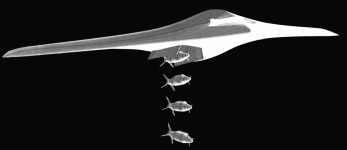
The Indian Ministry of Defence (MoD) has formally greenlit a forecasted requirement for four squadrons of India’s under-development Ghatak stealth combat drone, a move that signals a tectonic shift in the Indian Air Force (IAF) strike architecture. The decision, cleared by the Defence Acquisition Council (DAC) today, marks the first time India has committed to a specific, large-scale force structure for a dedicated unmanned combat aerial vehicles (UCAV).
This development is the latest sign of India’s pronounced focus on unmanned systems and drone warfare. While the Ghatak program has been a quiet, high-priority “black project” for over a decade, the urgency has been amplified by the harsh realities of the Ukraine war and, more recently, the evolving conflict in Iran. The MoD’s sign-off on four squadrons, totaling perhaps 60-80 airframes, reflects real-time learnings from Chinese developments and the general efficacy of stealth aircraft.
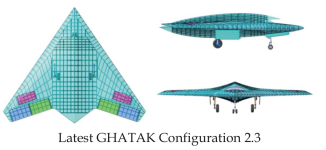
The Ghatak, which began its life as Project AURA (Autonomous Unmanned Research Aircraft) around 2010, was first revealed in detail by Livefist. For years, the project has remained shrouded in secrecy, administered by a high-level team reporting directly to the Prime Minister’s Office. It was always intended to be a national imperative, a platform that would allow India to conduct deep-strike missions in highly contested airspaces without risking a pilot.
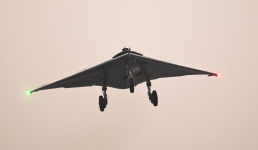
The road to this week’s squadron approval has been paved by the success of the Stealth Wing Flying Testbed (SWiFT). As Livefist has reported through the years, the SWiFT was a 1-ton technology demonstrator designed to prove the complex flying wing configuration, a design that lacks a vertical tail to minimize its radar cross-section. In July 2022, the SWiFT took to the skies at the Aeronautical Test Range in Chitradurga, proving that Indian scientists had mastered the flight control laws for a tailless, unstable aircraft.
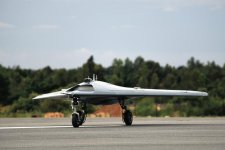
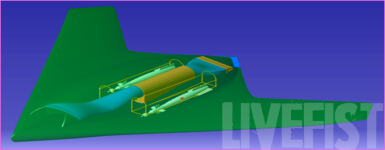
The full-scale Ghatak will potentially be a much more formidable aircraft. Weighing under 15 tons and powered by a “dry” (non-afterburning) variant of the indigenous Kaveri engine, the UCAV is designed to carry precision-guided munitions in an internal weapons bay. This internal carriage is crucial for maintaining its stealth profile, ensuring that no external pylons or missiles “glint” on enemy radar.
The Indian security establishment has been a keen observer of the drone-first doctrine that has defined the Ukraine war. From the early success of the Bayraktar TB2 to the swarms of low-cost loitering munitions, the conflict has proven that unmanned systems can paralyse conventional armored columns and penetrate sophisticated air defences.
However, the Ghatak represents a tier of warfare above the attritable drones seen in Ukraine, Operation Sindoor and Iran. It is a high-end, survivable strategic asset. The ongoing war in Iran and the broader Persian Gulf has further underscored the need for such systems. The use of long-range, jet-powered drones in that theater has shown that precision mass can overwhelm even the most advanced integrated air defence systems.
Indian planners recognize that in a potential conflict with a technologically advanced adversary like China, the first few hours of war will involve a brutal suppression of enemy air defenses (SEAD) campaign. The Ghatak is being groomed for this first wave role. By deploying stealthy UCAVs to take out enemy radar installations and surface-to-air missile batteries, the IAF can create sanitized corridors for its crewed fighters like the Rafale and the upcoming AMCA.
The approval of four squadrons suggests a deployment pattern that covers both the northern and western fronts. It also fits into the broader Vision 2047 roadmap recently articulated by the IAF leadership. This roadmap does not see drones replacing manned fighters but rather acting as force multipliers.
The Ghatak could be a serious cornerstone of India’s Manned-Unmanned Teaming (MUM-T) efforts. In this concept, a single manned fighter, such as a Tejas Mk2 or a Su-30MKI, could control a swarm of Ghatak UCAVs, using them as forward sensors or remote weapon bays. This allows the manned pilot to stay out of the engagement zone while the UCAVs do the heavy lifting in the most dangerous parts of the battlefield.
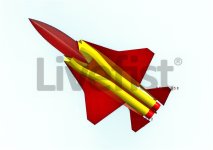
As Livefist has previously detailed, the Ghatak project is technologically yoked to the AMCA (Advanced Medium Combat Aircraft) fifth-generation fighter program. The lessons learned in radar-absorbent materials (RAM), serpentine intakes to hide engine blades, and autonomous flight data links are being shared between the two programs. The MoD’s move to fund four squadrons of the drone version first may suggest a desire to mature these “sixth-generation” technologies on an unmanned platform before they are fully integrated into the manned AMCA.
Despite the formal approval, the path to an operational squadron remains steep. The most critical hurdle remains the engine. While the Kaveri engine has seen a revival of sorts, ensuring it has the reliability and stealthy exhaust signature required for a UCAV of this class is a significant engineering challenge. There are also questions about the brain of the aircraft. A stealth UCAV operating in a denied environment cannot rely on a constant satellite link that might be jammed. It requires a high degree of onboard AI to make combat decisions autonomously.
Also, the transition of the project from the Aeronautical Development Agency (ADA), which handled the initial design, to the Aeronautical Development Establishment (ADE), which is leading the flight testing and productionisation, must be seamless. Previous reports on Livefist have noted the internal debates within the DRDO regarding the program’s leadership and the speed of development.
Skeptics will rightly wonder about the path to an operational Ghatak platform, mirroring in many ways the lack of clarity over how the AMCA will turn out. For a country still fighting to get deliveries of an improved fourth-gen Tejas Mk1A fighter, on the threshold of a monster deal for 114 Rafale fighters from France, committed to an expensive upgrade of its Su-30 fighters and nowhere near proving the many technologies required for the composite ecosystem that makes up a stealth strike drone, is clearance for a four squadrons of the Ghatak more an indicator of “something needs to be seen to be done” rather than the substance of the program itself.
The MoD’s forecasted requirement of four squadrons is more than just a procurement number. And India’s experience with Acceptance of Necessity (AoNs) is frequently an exercise in the theatre of the absurd, given timelines and budgetary pressures/priorities. But it is a declaration of intent. It tells the world, and India’s neighbors, that the IAF is preparing for a future where the first contact in the air will not be between pilots, but between algorithms and low-observable airframes.
For years, the Ghatak was a demure model tucked away in corners of aero-shows or a grainy video of a test flight in rural Karnataka. With this latest approval, the ghost proverbially come out of the shadows. As India watches the skies over Ukraine and the Middle East, it is clear that the Ghatak is no longer just a research project, but a national imperative that has finally found its place in the IAF order of battle. The era of the Indian stealth unmanned bomber has at least officially begun.
India 'Greenlights' 4 Squadrons of Ghatak Stealth Bomber Drone - Livefist
March 27, 2026 / By Team Livefist
The Indian Ministry of Defence (MoD) has formally greenlit a forecasted requirement for four squadrons of India’s under-development Ghatak stealth combat drone, a move that signals a tectonic shift in the Indian Air Force (IAF) strike architecture. The decision, cleared by the Defence Acquisition Council (DAC) today, marks the first time India has committed to a specific, large-scale force structure for a dedicated unmanned combat aerial vehicles (UCAV).
This development is the latest sign of India’s pronounced focus on unmanned systems and drone warfare. While the Ghatak program has been a quiet, high-priority “black project” for over a decade, the urgency has been amplified by the harsh realities of the Ukraine war and, more recently, the evolving conflict in Iran. The MoD’s sign-off on four squadrons, totaling perhaps 60-80 airframes, reflects real-time learnings from Chinese developments and the general efficacy of stealth aircraft.
The Ghatak, which began its life as Project AURA (Autonomous Unmanned Research Aircraft) around 2010, was first revealed in detail by Livefist. For years, the project has remained shrouded in secrecy, administered by a high-level team reporting directly to the Prime Minister’s Office. It was always intended to be a national imperative, a platform that would allow India to conduct deep-strike missions in highly contested airspaces without risking a pilot.
The road to this week’s squadron approval has been paved by the success of the Stealth Wing Flying Testbed (SWiFT). As Livefist has reported through the years, the SWiFT was a 1-ton technology demonstrator designed to prove the complex flying wing configuration, a design that lacks a vertical tail to minimize its radar cross-section. In July 2022, the SWiFT took to the skies at the Aeronautical Test Range in Chitradurga, proving that Indian scientists had mastered the flight control laws for a tailless, unstable aircraft.
The full-scale Ghatak will potentially be a much more formidable aircraft. Weighing under 15 tons and powered by a “dry” (non-afterburning) variant of the indigenous Kaveri engine, the UCAV is designed to carry precision-guided munitions in an internal weapons bay. This internal carriage is crucial for maintaining its stealth profile, ensuring that no external pylons or missiles “glint” on enemy radar.
The Indian security establishment has been a keen observer of the drone-first doctrine that has defined the Ukraine war. From the early success of the Bayraktar TB2 to the swarms of low-cost loitering munitions, the conflict has proven that unmanned systems can paralyse conventional armored columns and penetrate sophisticated air defences.
However, the Ghatak represents a tier of warfare above the attritable drones seen in Ukraine, Operation Sindoor and Iran. It is a high-end, survivable strategic asset. The ongoing war in Iran and the broader Persian Gulf has further underscored the need for such systems. The use of long-range, jet-powered drones in that theater has shown that precision mass can overwhelm even the most advanced integrated air defence systems.
Indian planners recognize that in a potential conflict with a technologically advanced adversary like China, the first few hours of war will involve a brutal suppression of enemy air defenses (SEAD) campaign. The Ghatak is being groomed for this first wave role. By deploying stealthy UCAVs to take out enemy radar installations and surface-to-air missile batteries, the IAF can create sanitized corridors for its crewed fighters like the Rafale and the upcoming AMCA.
The approval of four squadrons suggests a deployment pattern that covers both the northern and western fronts. It also fits into the broader Vision 2047 roadmap recently articulated by the IAF leadership. This roadmap does not see drones replacing manned fighters but rather acting as force multipliers.
The Ghatak could be a serious cornerstone of India’s Manned-Unmanned Teaming (MUM-T) efforts. In this concept, a single manned fighter, such as a Tejas Mk2 or a Su-30MKI, could control a swarm of Ghatak UCAVs, using them as forward sensors or remote weapon bays. This allows the manned pilot to stay out of the engagement zone while the UCAVs do the heavy lifting in the most dangerous parts of the battlefield.
As Livefist has previously detailed, the Ghatak project is technologically yoked to the AMCA (Advanced Medium Combat Aircraft) fifth-generation fighter program. The lessons learned in radar-absorbent materials (RAM), serpentine intakes to hide engine blades, and autonomous flight data links are being shared between the two programs. The MoD’s move to fund four squadrons of the drone version first may suggest a desire to mature these “sixth-generation” technologies on an unmanned platform before they are fully integrated into the manned AMCA.
Despite the formal approval, the path to an operational squadron remains steep. The most critical hurdle remains the engine. While the Kaveri engine has seen a revival of sorts, ensuring it has the reliability and stealthy exhaust signature required for a UCAV of this class is a significant engineering challenge. There are also questions about the brain of the aircraft. A stealth UCAV operating in a denied environment cannot rely on a constant satellite link that might be jammed. It requires a high degree of onboard AI to make combat decisions autonomously.
Also, the transition of the project from the Aeronautical Development Agency (ADA), which handled the initial design, to the Aeronautical Development Establishment (ADE), which is leading the flight testing and productionisation, must be seamless. Previous reports on Livefist have noted the internal debates within the DRDO regarding the program’s leadership and the speed of development.
Skeptics will rightly wonder about the path to an operational Ghatak platform, mirroring in many ways the lack of clarity over how the AMCA will turn out. For a country still fighting to get deliveries of an improved fourth-gen Tejas Mk1A fighter, on the threshold of a monster deal for 114 Rafale fighters from France, committed to an expensive upgrade of its Su-30 fighters and nowhere near proving the many technologies required for the composite ecosystem that makes up a stealth strike drone, is clearance for a four squadrons of the Ghatak more an indicator of “something needs to be seen to be done” rather than the substance of the program itself.
The MoD’s forecasted requirement of four squadrons is more than just a procurement number. And India’s experience with Acceptance of Necessity (AoNs) is frequently an exercise in the theatre of the absurd, given timelines and budgetary pressures/priorities. But it is a declaration of intent. It tells the world, and India’s neighbors, that the IAF is preparing for a future where the first contact in the air will not be between pilots, but between algorithms and low-observable airframes.
For years, the Ghatak was a demure model tucked away in corners of aero-shows or a grainy video of a test flight in rural Karnataka. With this latest approval, the ghost proverbially come out of the shadows. As India watches the skies over Ukraine and the Middle East, it is clear that the Ghatak is no longer just a research project, but a national imperative that has finally found its place in the IAF order of battle. The era of the Indian stealth unmanned bomber has at least officially begun.
India 'Greenlights' 4 Squadrons of Ghatak Stealth Bomber Drone - Livefist
What do you expect from Time Pass Chai Biscuit Quota CHAAPS at DPSUs & Babboons at Defence Ministry acting doing job for monthly Salary...A decade of stories of this and that. Yet they didnt even start it.
 .
. It's your mistake...

Remember the "new" Ghatak model shown a year or so back?
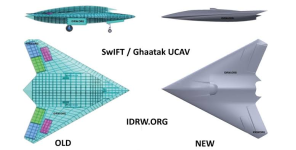
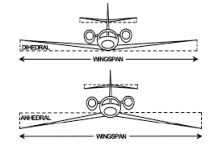
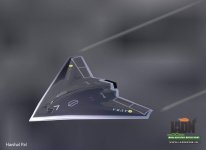
The new design is also a blended wing design. The wing on the new one is an midbody mounted dihedral wing. The old one was a midbody mounted flat wing. This will increase roll stability while reducing roll rate. These changes were seen after the flight tests of the SwIFT. DRDO may have encountered some roll control issues during flight tests.
The overall height has reduced on the new design. The intake cowl has been pushed back; this makes room for a nose mounted radar/sensor. The exhaust has shrouds on both sides; the exhaust has enough room for a 2D thrust vector.
The new design is also a blended wing design. The wing on the new one is an midbody mounted dihedral wing. The old one was a midbody mounted flat wing. This will increase roll stability while reducing roll rate. These changes were seen after the flight tests of the SwIFT. DRDO may have encountered some roll control issues during flight tests.
The overall height has reduced on the new design. The intake cowl has been pushed back; this makes room for a nose mounted radar/sensor. The exhaust has shrouds on both sides; the exhaust has enough room for a 2D thrust vector.

This is the newer designRemember the "new" Ghatak model shown a year or so back?
View attachment 50769
The new design is also a blended wing design. The wing on the new one is an midbody mounted dihedral wing. The old one was a midbody mounted flat wing. This will increase roll stability while reducing roll rate. These changes were seen after the flight tests of the SwIFT. DRDO may have encountered some roll control issues during flight tests.
View attachment 50770
The overall height has reduced on the new design. The intake cowl has been pushed back; this makes room for a nose mounted radar/sensor. The exhaust has shrouds on both sides; the exhaust has enough room for a 2D thrust vector.
DRDO regularly used older models for representative purposes. We have seen the same with AMCA. Many DRDO/ADA presentations showed the AMCA with a spitter plate intake long after the actual model had adopted a DSI type intake.
As for concept arts, almost all of the Ghatak/RPSA artworks are made based on early concept artworks shared by LiveFist & the SwIFT models. Shouldn't take them as the latest models.