
You are using an out of date browser. It may not display this or other websites correctly.
You should upgrade or use an alternative browser.
You should upgrade or use an alternative browser.


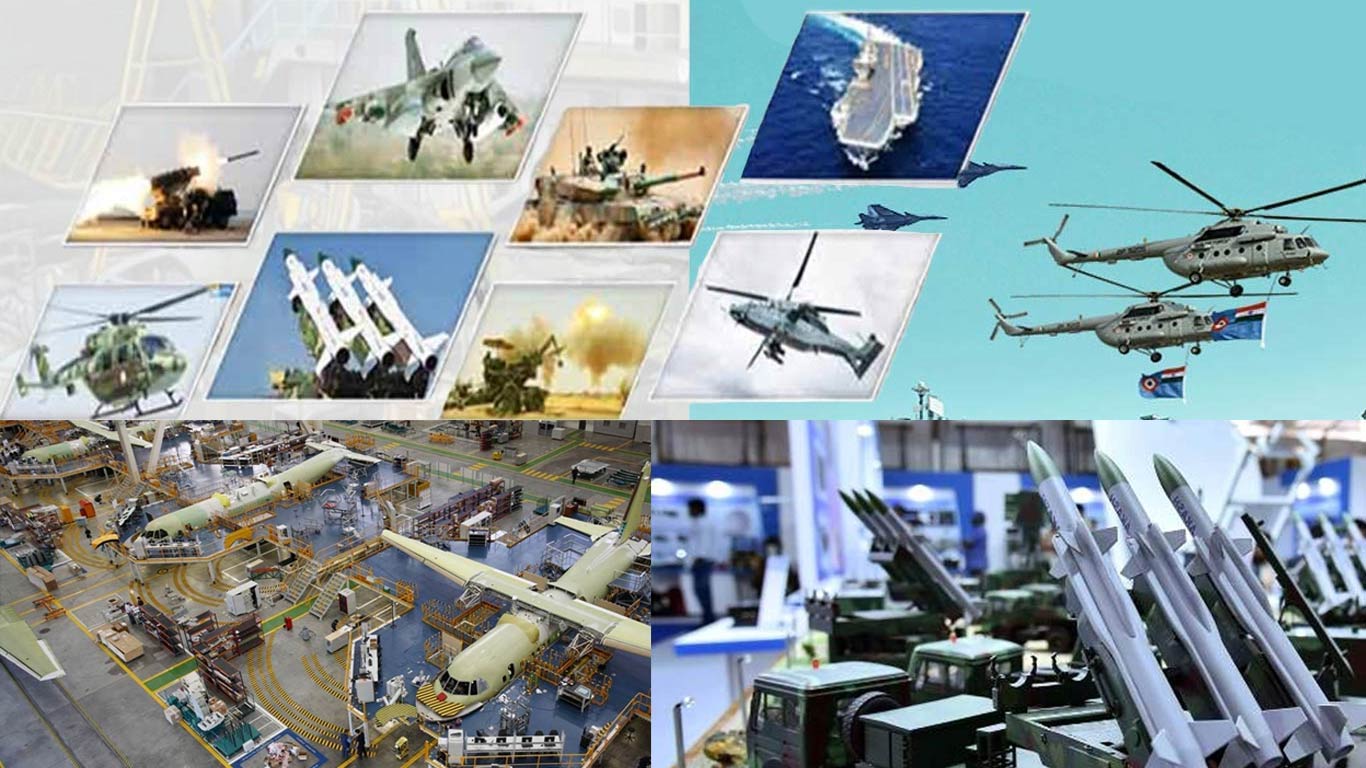
Defence Equipment Manufacturing: Recent Challenges and Way Ahead - Defence Research and Studies
Defence Equipment Manufacturing: Recent Challenges and Way Ahead - Post-independence, India’s “Indigenous Content (IC) in weapon and defence equipment manufacturing story is characterised by slow growth, even though there
 dras.in
- The “Critical Technology” Gap. While India can manufacture hulls, airframes, and missiles, it remains heavily dependent on imports for “heart and brain” technologies.
- Aero-engines. Though India has entered into an agreement with Safran and GE for the development of aero engines for Tejas Mk IA,/Mk II and AMCA fighters, the induction of these engines for our Tejas and AMCA still lacks a clear timeline. The indigenous Kaveri engine, in spite of 40-plus years, is still stuck in dry-regime range.
- Advanced Electronics. High-end sensors, radars, and seeker technologies for missiles are still being sourced from Israel, France, and Russia.
- Semiconductors: The lack of a domestic high-end chip ecosystem makes Indian defence hardware vulnerable to global supply chain shocks.
- Bureaucratic “Administrative Straggling”. The procurement cycle—from the initial “Request for Proposal” (RFP) to the final induction—often spans over a decade. Some of the other straggling pain points in defence procurements are:-
- L1 Syndrome. The historical preference for the “Lowest Bidder” (L1) rather than the “Most Technologically Advanced” has often sidelined innovative private players in favour of stagnant legacy systems.
- Trial Delays: Rigorous and sometimes repetitive field evaluation trials in diverse terrains (from Siachen to the Thar Desert) extend timelines significantly.
- Underfunded Research & Development (R&D). India’s R&D spend is roughly 0.6% to 0.7% of GDP, far below the 2%–3% spent by the US, EU countries, Israel and China.
- DRDO Monopoly. Historically, R&D was centralised within the DRDO. While this is changing with the ADITI and iDEX schemes, the private sector still accounts for only about 23% of total defence production.
- Skill Gap in High-Precision Engineering. As warfare shifts toward AI-driven surveillance, quantum computing, and hypersonic systems, India faces a shortage of specialised talent. There is a “missing middle” of technicians and engineers capable of handling Industry 4.0 manufacturing standards.


Special Report: IWI offers Arbel to Asia-Pacific countries
Israel Weapon Industries (IWI), a subsidiary of Israel's SK Group, is marketing its Arbel computerised firing mechanism for small arms to countries across the...
 www.janes.com
Special Report: IWI offers Arbel to Asia-Pacific countries
Israel Weapon Industries (IWI), a subsidiary of Israel's SK Group, is marketing its Arbel computerised firing mechanism for small arms to countries across the Asia-Pacific.Doron Korol, vice‑president for Asia-Pacific marketing and sales at SK Group, told Janes in December 2025 that India has expressed interest in procuring Arbel, possibly with local production.
According to an IWI spokesperson, Arbel is intended to be operated as an integrated system to enhance target acquisition and the firing performance of soldiers' rifles, adding that the system is being marketed as a counter-unmanned aircraft system (C-UAS) capability requiring no additional platforms or training.
India
In an interview with Janes, Korol said IWI expects to expand into the Indian market with Arbel, following its previous small arms contract with the Indian government.In December 2025, the Indian Ministry of Defence (MoD) awarded a contract to PLR Systems, a joint venture between Indian company Adani Group and IWI, to deliver 170,000 close quarter battle (CQB) carbines to the Indian military over a span of five to six years. The carbines will be produced domestically and will be based on IWI's Galil Ace assault rifle.
“We are now at the first stage of conversations regarding the integration of the Arbel system in India,” Korol said.
The extent of flawed thinking and lack of self-awareness is astounding.

Seems like a good engineering solutions company. Flyer on LCA Avionics from AXISCADES/Mistral:

Some Mk1A components:
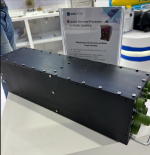
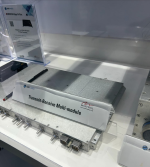
The IN has always led the pack in doing more with less through indigenization. The IA also appears to have changed its colors, but let's wait till the next arty and MBT procurement. Nevertheless, I have hope for them.
The extent of flawed thinking and lack of self-awareness is astounding.
But if IAF just wants to fly, they will become the obsolete arm flying obsolete equipment forever crying about squadron strength. If that is what they want to do, I certainly hope the Indian Space Force will not be under their leadership.
Bharat Electronics Limited (BEL) has approved signing a Joint Venture Agreement (JVA) with Safran Electronics and Defence (SED), France, for the HAMMER weapon system project, according to a stock exchange filing by the company.The approval was granted during BEL's board meeting held on Sunday.
The operationalisation of the joint venture agreement will be subject to regulatory and administrative approvals from authorities in both India and France.As part of the agreement, BEL and Safran Electronics and Defence will jointly incorporate a private limited company under the Companies Act, 2013.
The registered office and principal place of business of the new company will be located in Pune or any other location mutually agreed upon by both partners.BEL, in an official statement, informed that the joint venture company will operate a "Center of Excellence," which will act as a technology and teaming partner.
The company will focus on the manufacturing, supply, maintenance, and repair of the Guidance Kit (GK) for the HAMMER weapon system. The primary end users of this system will be the Indian Air Force and the Indian Navy. Other end users within India may also be included based on mutual agreement between the two companies.
BEL also informed that the joint venture aims to strengthen technological capabilities and support the manufacturing and maintenance of critical components of the HAMMER weapon system in India, in line with operational requirements.

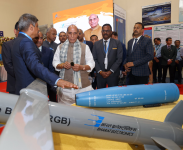
>> He urged Indian scientists to compress timelines in view of the nation's strategic needs. "We must assume that 20 years have already passed and we now have only 5-7 years left," he said, describing it as a call to action aligned with national aspirations.
Can we also align national funding appropriately?
Can we also ensure test facilities dont require 5-7 years to clear permitting and approvals?
Can we also pay scientists and engineers and technicians adequate compensation?


Engineering Hardware Industry: Startup Ecosystem
A good paper on hardware startps and areas of improvement. Fairly recent.
Top insights below by Google Gemini.
1. A $296 Billion Market Opportunity
The report projects that the engineering hardware sector is poised to become India's next major economic engine, with a market potential estimated to reach $296 billion. This growth trajectory suggests that hardware engineering could replicate the success story of India's IT services boom, but with a focus on tangible product creation and deep-tech innovation rather than just software support.2. Strategic Sectoral Focus: Cleantech & Defense
Growth is not uniform across all verticals; the report identifies specific high-impact sectors driving this expansion. Cleantech, Defense/Aerospace, and Electronics are highlighted as the primary pillars. These sectors are benefiting from strong government pushes (like PLI schemes) and a global demand for sustainable energy solutions and sovereign defense capabilities.3. Funding Climate: Resilience Amidst Slowdown
While the broader startup ecosystem faced a "funding winter" and intensified competition in 2025, the engineering hardware segment shows resilience. The report notes a relative slowdown in funding but emphasizes that investors are shifting focus toward sustainable, value-driven growth rather than "growth at all costs." This signals a maturing ecosystem where capital is available for startups with robust fundamentals and deep-tech IP.4. The "Viksit Bharat 2047" Roadmap
The report aligns the hardware industry's growth with the national vision of Viksit Bharat (Developed India) 2047. It outlines a long-term roadmap that positions India not just as a consumer of hardware but as a global design and manufacturing hub. This involves a strategic interplay between startups, academia, and government policy to build self-reliance (Atmanirbhar Bharat) in critical technologies.5. Deep Tech & IP Creation as Differentiators
A critical insight is the shift toward Intellectual Property (IP)-led value creation. The report, based on insights from over 100 startups, stresses that for Indian hardware companies to compete globally, they must move beyond assembly and into core engineering and R&D. This involves leveraging tools (like those from partner Synopsys) to accelerate chip design, prototyping, and complex system engineering.Challenges for startups (esp. defence sector):
Funding Issues (68% of respondents):
- Cautious investor sentiment post-2021 funding peak
- Limited access to alternative funding sources
- High cost of ownership for testing equipment
- Limited access to affordable digital design tools
- Security and privacy concerns with digital infrastructure
Last edited by a moderator:

Airbus H125 assembly line opens in India
With the launch of a new rotary-wing final assembly line (FAL) in the Indian state of Karnataka, Airbus Helicopters and Tata Advanced Systems Limited (TASL) are...
www.janes.com
Airbus H125 assembly line opens in India
While the FAL is focused on the production of the baseline H125 for the civil aviation market, Bruno Even, CEO of Airbus Helicopters, said the facility “will also be able to produce the military version H125M with a level of local manufacturing that ensures the Indian forces remain mission-ready at all times”.According to Airbus, TASL will “undertake the manufacturing, integration, testing, and maintenance” of the rotary-wing platform at the facility.
Agreements
Bharat Electronics Limited (BEL) and Safran Electronics & Defense also signed a joint venture (JV)-related memorandum of understanding (MoU) to manufacture the Armement Air‐Sol Modulaire (AASM) Highly Agile Modular Munition Extended Range (Hammer) smart precision-guided air-to-ground weapon.The two companies first announced a plan to create a JV during Aero India 2025. Janes previously reported that BEL aims to manufacture, customise, and sell the system under the JV.
Mistral Solutions wins ~₹25 crore order to supply Single Board Computer for HAL's LCA Mk1ASeems like a good engineering solutions company. Flyer on LCA Avionics from AXISCADES/Mistral:
View attachment 49729
Some Mk1A components:
View attachment 49730
View attachment 49731

As Modi visits, Israel-India defense cooperation deepens
 en.globes.co.il
Over the past decade, India has become a major customer of Israel’s defense industry, with the expectation at the political level that the scale of cooperation will further expand. India has been Israel's biggest defense customer for years, with 34% of total sales between 2020 and 2024, according to the Stockholm International Peace Research Institute (SIPRI). Figures from the Ministry of Defense International Defense Cooperation Directorate (SIBAT) show that total arms sales by Israel to India during this period amounted to about $20.5 billion.
The ties between the countries go beyond direct procurement deals, as each of the major Israeli defense companies currently has Indian subsidiaries and collaborations with local industry on the subcontinent. These moves are intended to align Israeli activity with the "Make in India" and "Self Reliance" programs led by Modi with the aim of strengthening his country's productive independence.
Ahead of Modi’s visit, SIBAT head, Brig. Gen. (Res.) Yair Kulas, tells Globes about the trends in trade with India, and sheds light on the joint work behind the scenes during the war.
The Israeli-Indian standard
Kulas says that Ministry of Defense director general Gen. (res.) Amir Baram has defined India as a key country and even personally led a delegation of all the heads of departments in the ministry to deepen ties. India’s importance was clearly reflected during the war, when, according to foreign media reports, ships with Indian-made weapons docked in Israel. A prominent example of this cooperation is Adani Corp., which produces the Indian Drishti 10 Starliner drone based on Elbit Systems Hermes 900.
"Especially during the war, we turned to many sources and purchased equipment through the Defense Procurement Directorate," Kulas explains of bilateral procurement. According to him, India is a true partner, and in times of war there is a clear desire to procure from it, since the Indians produce "to the standards of Israeli industries."
However, the biggest story is the enormous size of India’s procurements from Israel. "In 2012, we exported $300 million, we rose to $700 million in 2013 and to $1 billion in 2014," says the head of SIBAT. "The big jump occurred in 2017 with the sale of Barak systems, which led to a jump to about $3.4 billion."
After that, there was a consistent decline to $880 million in 2023, and again a growth trend. "In 2024, we sold about $1.1 billion, and in 2025, although the data has not yet been fully processed, it is more than $1.5 billion."
What made the difference?
"The decline was created as a result of the Make in India and Self Reliance programs, which require more significant production, of about 50% to 60% of the deal," explains Kulas. According to him, every major power today has a desire for local production, and therefore the strategy of Israeli industries is to establish "production units" in target countries. Just as a large company must have production in the US for the American market or in Germany for NATO procurement, India is the central anchor in Asia. Due to the enormous size of the Indian market, participation in tenders currently requires a massive manufacturing presence within the country.
Forbes India recently reported that the total number of deals that Israel has closed with India since the beginning of the year is a whopping $8.6 billion. Kulas says he does not know this specific figure, but stresses that the official export figures do not reflect the full depth of the ties. "The SIBAT figure is partial," explains Kulas, "It includes exports from our industries in Israel to India, but does not include what our industries produce within India itself. "There is currently no data that can indicate exactly how much, for example, Adani Corporation will produce in India with its share of the partnership."
Getting ahead of the copycats
By virtue of his role as the defense export leader at the Ministry of Defense, Kulas routinely works with government officials in India to create marketing and sales opportunities. He describes a close relationship with the Indian procurement director general and explains that Israeli industry now understands that it must have a local "manufacturing foothold," while Indian companies need technology transfer. "We provide the political umbrella for things to flourish," he says. "Military cooperation also includes the work of startups between MAFAT and the Indian DRDO, and it is clear that both countries are united around this goal."
The Gateway to Asia
According to Kulas, manufacturing within India does not only serve the local army, but is a gateway to the entire Asian market. "Once you produce in India, you can reach other countries," he says optimistically. "The market is big not only for India itself but also for third countries in the region."
How do you summarize 2025 for SIBAT in general? And what are the main objectives of Modi's visit?
Kulas replies that although the final figures will only be received in April, he feels that Israel’s defense industry will succeed in breaking "another glass ceiling." "Despite the challenges of the war, demand is on a crazy rise," explains Kulas. "The boycotts and recriminations have indeed created difficulties, but on the other hand, the proof on the battlefield and the results of the fighting in Gaza, Lebanon, Syria and Iran are bringing a surge in our industries."
As for the main objectives of Modi's visit, Kulas emphasizes the importance of direct involvement at the highest political level. "This is a visit at a strategic level, and once there is direct involvement of the prime ministers, they are the ones who guide the defense industries and the defense ministries," he notes.
Gliders India Limited (GIL) has created history by producing a state-of-the-art, highly advanced Parachute System in collaboration with its design partner ADRDE. Two of these parachute systems, duly inspected by DGAQA and certified by CEMILAC (RCMA Kanpur), put to First Live Jumps on 20 Feb 2026 at Malpura Drop Zone, Agra.Project team from ADRDE, Representatives of GIL, DGAQA Kanpur and officials of IAF were also present during conduct of live jumps.Wg Cdr Rahul Jha, Chief Test Jumper and MWO R J Singh, Test Jumper from ADRDE undertook these jumps in high altitude mode confirming its tactical employability in high altitude terrain thus enhancing operational capabilities of our airborne forces exponentially.This versatile advance parachute system offers multiple mode of deployment giving it a wide range of operational altitude. This successful project will give impetus to efforts of GIL under able leadership of Sri M. C. Balasubramaniam CMD/GIL to provide safe and comfortable solutions to the requirements of Armed Forces of India on priority.