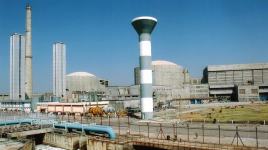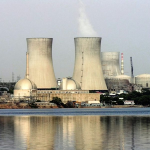
Indian Small Modular Reactors : Updates

Gautam

Staff member
Moderator
Feb 16, 2019
16,849
23,182
Tripura, NE, India
India developing three types of small modular reactors: Jitendra Singh

PTI / Jul 24, 2025, 17:21 IST
1753473443963.png

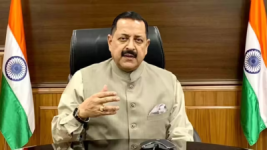
NEWS DELHI: India is developing three different types of small modular reactors (SMRs), including one dedicated to the production of hydrogen, mostly in the form of captive plants for energy-intensive industries, Union minister Jitendra Singh said on Thursday.

In a written reply to the Rajya Sabha, Singh said the three types of SMRs, 200 MWe Bharat Small Modular Reactor (BSMR), 55 MWe SMR and 5 MWth High Temperature Gas Cooled Reactor, for the production of hydrogen are being designed and developed indigenously.

"In-principle approval has been obtained for the construction of these demonstration reactors. These demonstration reactors are likely to be constructed in 60 to 72 months after receipt of administrative sanction of projects," he said.

The minister said the lead units of BSMR and SMR are planned to be installed at Department of Atomic Energy (DAE) sites in collaboration with Nuclear Power Corporation of India Limited (NPCIL).

"An estimate prepared based on the experience of setting up of 220 MWe plants indicates that the overall cost for the lead unit of 200 MWe Bharat Small Modular Reactor (BSMR-200) will be about Rs 5,750 crore," said Singh, the Minister of State in the Prime Minister's Office that oversees the DAE.

A 5 MWth high temperature Gas Cooled Reactor (GCR) is also planned to be used exclusively for hydrogen production by coupling with a suitable thermochemical hydrogen production process, he said.

The potential thermo-chemical technologies for hydrogen production, such as Copper-Chloride (Cu-Cl) and Iodine-Sulphur (I-S) cycles, have already been developed and demonstrated by the Bhabha Atomic Research Centre (BARC), Singh said.

Necessary technology for the deployment of these reactors is available in the country and the majority of equipment is within the manufacturing capability of the Indian industry with technological handholding by the DAE, he said.

"These plants are designed & developed considering deployment as captive power plants, repurposing of retiring fossil fuel-based plants and hydrogen production to support the transport sector with the prime objective of decarbonisation," Singh said.

Presently, the installed nuclear power capacity in the country comprises 25 reactors with a total capacity of 8,880 MW, including RAPS-1 (100 MW), which is under long-term shutdown.

Two units of 700 MWe each - Kakrapar Atomic Power Station (KAPS) 3 and 4 and one 700 MWe unit at Rajasthan Atomic Power Project (RAPP-7) have already commenced commercial operation.

At present, 18 reactors with a total capacity of 13,600 MW, including 500 MW Prototype Fast Breeder Reactor implemented by BHAVINI, are at various stages of implementation. On the progressive completion of these units, the installed nuclear power capacity will reach 22,480 MW, Singh said.

India developing three types of small modular reactors: Jitendra Singh | India News - Times of India
 
The UK is the first country India managed to get a zero tariff for its nuclear energy mission, the government is now considering exporting its indigenous small nuclear reactors, touted to be cheaper than those of the US, France and South Korea. India has developed 3 types of SMRs as posted above . Getting into exports is a natural progression for NPCIL. "The progression will be similar to the defence sector, where now we are seeing 'Made in India' products being exported. The India-UK trade deal provides India with a gateway for its nuclear reactors, which are significantly cheaper than those offered by Western countries", according to NTPC officials.

Interestingly, as part of the trade deal, India has also slashed tariffs on nuclear reactors imported from the UK to nil from 8.2 percent. However, officials said since the UK does not have many companies that build nuclear reactors, imports from the country are likely to be limited.
 

PARLIAMENT QUESTION: R&D OF SMALL MODULAR REACTORS

Posted On: 20 AUG 2025 4:24PM by PIB Delhi


During the Budget 2025 announcement the government had launched a Nuclear Energy Mission with an outlay of ₹20,000 crore for research and development of Small Modular Reactors (SMRs). Currently, Bhabha Atomic Research Centre (BARC) a constituent unit of DAE, is developing following Small Modular Reactors:

i. Bharat Small Modular Reactors (BSMR-200) for repurposing of retiring thermal power plants & captive power plants for energy intensive industry such as aluminium, steel, metal etc.

ii. Small Modular Reactors (SMR-55) for providing energy for remote as well as off grid location with objective to decarbonise the energy sector.

iii. High Temperature Gas Cooled Reactor of capacity 5 MWth for hydrogen generation for decarbonisation of transport sector & process industries. Lead units of these reactors are planned to be set up at DAE sites. The subsequent units are to be located at the sites of the end-user industry in case of captive power plants and at brownfield sites of retiring thermal power plants. The Department has obtained in-principle approval for construction of these reactors.

There are plans to establish some of the newly proposed SMR-type reactors at BARC Vizag, Andhra Pradesh. Sites for Nuclear Power Plants including SMRs are finalized based on various criteria decided by the Site Selection Committee. Prospective vendors and public or private institutions will be selected on the basis of appropriate bidding process, for execution of equipment delivery, construction, erection and commissioning activities pertaining to these reactors.

BARC has developed a new campus at Vizag, Andhra Pradesh. This new campus will be housing several research reactors and R&D facilities in addition to some of the new SMRs being developed by the Department.

This information was given by Dr. Jitendra Singh, Union Minister of State (Independent Charge) for Science and Technology, Earth Sciences, MoS PMO, MoS Personnel, Public Grievances & Pensions, Department of Atomic Energy and Department of Space, in a written reply in the Lok Sabha today.

 
  • Like
Reactions: Gautam and Ironhide
G2kseo5aAAI0Oz9
 

PARLIAMENT QUESTION: R&D OF SMALL MODULAR REACTORS

Posted On: 20 AUG 2025 4:24PM by PIB Delhi


During the Budget 2025 announcement the government had launched a Nuclear Energy Mission with an outlay of ₹20,000 crore for research and development of Small Modular Reactors (SMRs). Currently, Bhabha Atomic Research Centre (BARC) a constituent unit of DAE, is developing following Small Modular Reactors:

i. Bharat Small Modular Reactors (BSMR-200) for repurposing of retiring thermal power plants & captive power plants for energy intensive industry such as aluminium, steel, metal etc.

ii. Small Modular Reactors (SMR-55) for providing energy for remote as well as off grid location with objective to decarbonise the energy sector.

iii. High Temperature Gas Cooled Reactor of capacity 5 MWth for hydrogen generation for decarbonisation of transport sector & process industries. Lead units of these reactors are planned to be set up at DAE sites. The subsequent units are to be located at the sites of the end-user industry in case of captive power plants and at brownfield sites of retiring thermal power plants. The Department has obtained in-principle approval for construction of these reactors.

There are plans to establish some of the newly proposed SMR-type reactors at BARC Vizag, Andhra Pradesh. Sites for Nuclear Power Plants including SMRs are finalized based on various criteria decided by the Site Selection Committee. Prospective vendors and public or private institutions will be selected on the basis of appropriate bidding process, for execution of equipment delivery, construction, erection and commissioning activities pertaining to these reactors.

BARC has developed a new campus at Vizag, Andhra Pradesh. This new campus will be housing several research reactors and R&D facilities in addition to some of the new SMRs being developed by the Department.

This information was given by Dr. Jitendra Singh, Union Minister of State (Independent Charge) for Science and Technology, Earth Sciences, MoS PMO, MoS Personnel, Public Grievances & Pensions, Department of Atomic Energy and Department of Space, in a written reply in the Lok Sabha today.

The potential of small modular reactors to enhance energy security is truly impressive can't wait to see how this progresses!
 
India’s gen-next nuclear reactors BSMR-200 and SMR-55 to come up at Maharashtra's Tarapur by 2033

Kalyan Ray DHNS
Last Updated: 06 December 2025, 20:37 IST
1765107898840.png
Tarapur Atomic Power Station. Credit: Wikipedia.

New Delhi: India’s first two next generation nuclear reactors – a 200 MW Bharat Small Modular Reactor and 55 MW Small modular Reactor – will come up at Tarapur near Mumbai where the country’s first nuclear power plant was set up more than five decades ago.

Sources said under the Nuclear Energy Mission, Bhabha Atomic Research Centre, Mumbai was developing two types of small modular reactors and the lead unit of both would be located at Tarapur, which houses the country’s oldest nuclear power plant.

A third 5 MW high temperature gas cooled reactor is also being designed. Meant for hydrogen generation, this reactor is proposed to be constructed at BARC Visakhapatnam campus.

BSMR-200 and SMR-55 can be deployed as captive plants for energy intensive industries like aluminium, steel and metal as well as for repurposing the retiring fossil fuel-based power plants and providing energy for remote locations.

Hydrogen produced from high temperature gas cooled reactors on the other hand, can be utilized in transport sector and process industries, sources said, adding that SMRs were positioned as key contributors for decarbonisation of power, energy intensive industries and transport sector and for clean energy generation in the coming decades.

According to a road map prepared by the Department of Atomic Energy, these demonstration reactors are to be set up within 60-72 months of getting the permission. The plan is to have five indigenous SMR (small modular reactors) by 2033.

An allocation of Rs 5,960 crore has been proposed to design and develop BSMR-200 whereas Rs 7,000 crore is planned to be earmarked for realising two units of SMR-55. The high-temperature gas cooled reactor will receive Rs 320 crore.

In addition, an allocation of Rs 800 crore has been proposed for common design, development and engineering works.

The Union government has announced plans to partner with private players for deployment of BSMR-220 and Nuclear Power Corporation of India Limited issued a Request for Proposal within the existing legal framework, inviting Indian industries to participate in setting up of the BSMR for captive power generation.

BSMR-220 and SMR-55 are the type of nuclear reactor technology where the government would seek active participation from the private sector.

An amendment to the Atomic Energy Act, 1962 may be introduced in the ongoing winter session of the Parliament, aiming to open up the closely guarded sector for the private sector. Nuclear energy has a key role in the Centre’s plan to achieve net-zero by 2070.

In the Union Budget 2025–26, the government allocated Rs 20,000 crore for the design, development, and deployment of Small Modular Reactors aiming to operationalise indigenously developed SMRs by 2033.

India to Build Next-Gen BSMR-200 & SMR-55 Nuclear Reactors at Tarapur by 2033
 
These can also be used for semiconductor plants BTW since they give 24/7 electricity with like a 2-3 week maintenance break every 3-7 yrs. Will be really useful for any sort of high end electronics plant that needs a shit ton of stable electricity.
India’s gen-next nuclear reactors BSMR-200 and SMR-55 to come up at Maharashtra's Tarapur by 2033

Kalyan Ray DHNS
Last Updated: 06 December 2025, 20:37 IST
View attachment 48211
Tarapur Atomic Power Station. Credit: Wikipedia.

New Delhi: India’s first two next generation nuclear reactors – a 200 MW Bharat Small Modular Reactor and 55 MW Small modular Reactor – will come up at Tarapur near Mumbai where the country’s first nuclear power plant was set up more than five decades ago.

Sources said under the Nuclear Energy Mission, Bhabha Atomic Research Centre, Mumbai was developing two types of small modular reactors and the lead unit of both would be located at Tarapur, which houses the country’s oldest nuclear power plant.

A third 5 MW high temperature gas cooled reactor is also being designed. Meant for hydrogen generation, this reactor is proposed to be constructed at BARC Visakhapatnam campus.

BSMR-200 and SMR-55 can be deployed as captive plants for energy intensive industries like aluminium, steel and metal as well as for repurposing the retiring fossil fuel-based power plants and providing energy for remote locations.

Hydrogen produced from high temperature gas cooled reactors on the other hand, can be utilized in transport sector and process industries, sources said, adding that SMRs were positioned as key contributors for decarbonisation of power, energy intensive industries and transport sector and for clean energy generation in the coming decades.

According to a road map prepared by the Department of Atomic Energy, these demonstration reactors are to be set up within 60-72 months of getting the permission. The plan is to have five indigenous SMR (small modular reactors) by 2033.

An allocation of Rs 5,960 crore has been proposed to design and develop BSMR-200 whereas Rs 7,000 crore is planned to be earmarked for realising two units of SMR-55. The high-temperature gas cooled reactor will receive Rs 320 crore.

In addition, an allocation of Rs 800 crore has been proposed for common design, development and engineering works.

The Union government has announced plans to partner with private players for deployment of BSMR-220 and Nuclear Power Corporation of India Limited issued a Request for Proposal within the existing legal framework, inviting Indian industries to participate in setting up of the BSMR for captive power generation.

BSMR-220 and SMR-55 are the type of nuclear reactor technology where the government would seek active participation from the private sector.

An amendment to the Atomic Energy Act, 1962 may be introduced in the ongoing winter session of the Parliament, aiming to open up the closely guarded sector for the private sector. Nuclear energy has a key role in the Centre’s plan to achieve net-zero by 2070.

In the Union Budget 2025–26, the government allocated Rs 20,000 crore for the design, development, and deployment of Small Modular Reactors aiming to operationalise indigenously developed SMRs by 2033.

India to Build Next-Gen BSMR-200 & SMR-55 Nuclear Reactors at Tarapur by 2033
 
These can also be used for semiconductor plants BTW since they give 24/7 electricity with like a 2-3 week maintenance break every 3-7 yrs. Will be really useful for any sort of high end electronics plant that needs a shit ton of stable electricity.
The bigger Data centers?
 
The bigger Data centers?
depends on the size. most data centres are 100-200MW so these should be more than enough with other redundancies in place when the maintenance happens but there are a few data centres that so into the high hunderds and some even cross 1 GW. for these you need either 5-6 SMRs or 1 big boi reactor.
It still might be faster to make 5-6 SMRs because they are planned to be made in a factory like setting. I think tata themselves have said 40-50 SMRs in 8 years is probable once serial production is established(factory like serial production) But this is mid 2030s and early 2040s news so we are going to have to find a different way to power data centres for the short term.
 
Adani Explores Nuclear Power Foray With 1.6 GW Small Reactor Project

By Tsvetana Paraskova - Dec 19, 2025, 8:00 AM CST
1766169811854.png

Adani Group, the conglomerate of Indian billionaire Gautam Adani, is in talks with the state government of India’s northern Uttar Pradesh state on a public-private partnership to build small modular reactors (SMRs) as India opens its nuclear energy sector to private investment.

Adani Group is in discussions with Uttar Pradesh officials to build eight SMRs with capacity of 200 megawatts (MW) each at yet-to-be-identified sites in the state, anonymous sources with knowledge of the matter told Bloomberg on Friday.

A potential deal would give Adani’s conglomerate a total of 1.6 GW of total nuclear capacity with SMRs and could place the private firm at the forefront of India’s nuclear development.

Adani’s reported efforts to enter India’s nuclear power sector come as the country is opening its nuclear industry to private investment and participation as it seeks to boost domestic power capacity to meet soaring demand.

This week, the government said that its Nuclear Energy Mission targets 100 GW capacity by 2047 “through deployment of existing and emerging advanced nuclear technologies, both indigenous & with foreign cooperation.”

The federal government plans to spend as much as $2.23 billion (200 billion Indian rupees) on research and development of SMRs.

Earlier this year, a panel set up by India’s power ministry said in a report that India’s goal to boost its installed nuclear power capacity to 100 GW by 2047, up from just 8.8 GW now, would require as much as 19.28 trillion Indian rupees, or $214 billion at current exchange rates, of cumulative capital.

“Substantial technical and financial resources will be required for accelerated deployment of 100 GW of nuclear capacity by 2047,” the panel said.

“The private sector has abundant capital, and inherent efficiency in timely construction and innovation adaption.”

A public-private partnership with Adani would give the conglomerate an early-mover status in India’s new nuclear power industry.

Adani Explores Nuclear Power Foray With 1.6 GW Small Reactor Project | OilPrice.com
 
Adani Explores Nuclear Power Foray With 1.6 GW Small Reactor Project

By Tsvetana Paraskova - Dec 19, 2025, 8:00 AM CST
View attachment 48500

Adani Group, the conglomerate of Indian billionaire Gautam Adani, is in talks with the state government of India’s northern Uttar Pradesh state on a public-private partnership to build small modular reactors (SMRs) as India opens its nuclear energy sector to private investment.

Adani Group is in discussions with Uttar Pradesh officials to build eight SMRs with capacity of 200 megawatts (MW) each at yet-to-be-identified sites in the state, anonymous sources with knowledge of the matter told Bloomberg on Friday.

A potential deal would give Adani’s conglomerate a total of 1.6 GW of total nuclear capacity with SMRs and could place the private firm at the forefront of India’s nuclear development.

Adani’s reported efforts to enter India’s nuclear power sector come as the country is opening its nuclear industry to private investment and participation as it seeks to boost domestic power capacity to meet soaring demand.

This week, the government said that its Nuclear Energy Mission targets 100 GW capacity by 2047 “through deployment of existing and emerging advanced nuclear technologies, both indigenous & with foreign cooperation.”

The federal government plans to spend as much as $2.23 billion (200 billion Indian rupees) on research and development of SMRs.

Earlier this year, a panel set up by India’s power ministry said in a report that India’s goal to boost its installed nuclear power capacity to 100 GW by 2047, up from just 8.8 GW now, would require as much as 19.28 trillion Indian rupees, or $214 billion at current exchange rates, of cumulative capital.

“Substantial technical and financial resources will be required for accelerated deployment of 100 GW of nuclear capacity by 2047,” the panel said.

“The private sector has abundant capital, and inherent efficiency in timely construction and innovation adaption.”

A public-private partnership with Adani would give the conglomerate an early-mover status in India’s new nuclear power industry.

Adani Explores Nuclear Power Foray With 1.6 GW Small Reactor Project | OilPrice.com

India should be careful about SMRs - no private company has built it profitably yet.

NuScale was supposed to usher in the era of SMRs for America and then it flopped with the Idaho project because of cost overruns. Think twice before letting Adani subsidize the SMR development programs of other nations. Build more IPHWRs which is proving out to be a very successful design for India.
 
India should be careful about SMRs - no private company has built it profitably yet.

NuScale was supposed to usher in the era of SMRs for America and then it flopped with the Idaho project because of cost overruns. Think twice before letting Adani subsidize the SMR development programs of other nations. Build more IPHWRs which is proving out to be a very successful design for India.
Modi government not bending over for Adani? You are asking for the impossible.

Less tongue in cheek, if Adani is seriously looking at the possibility of building SMEs, then it's reasonably certain that government is serious about pushing forward in that direction.

That doesn't mean we will stop building regular nuclear reactors though.
 
Posting the Bloomberg Article

Adani Plans Nuclear Energy Foray as India Allows Private Firms

Gautam Adani’s conglomerate is in talks with a northern Indian state to build a commercial nuclear energy project, giving the billionaire a head start in a sector India is opening up to private firms, people aware of the development said.

The Adani Group has been in discussions with officials in the Uttar Pradesh government to build eight 200-megawatt small modular reactors, or SMRs, according to the people, who asked not to be identified as the discussions are private. The plan, part of efforts by Asia’s second-richest man to broaden his renewable portfolio, would give the conglomerate about 1,600 MW of nuclear capacity.

The state government has yet to identify a riverside site, which is needed to ensure a steady water supply for the reactors, the people said.

Adani’s foray comes as the Narendra Modi–led government pushes to diversify India’s energy mix and reduce its reliance on fossil fuels, even as data-center expansion and AI-powered systems drive a surge in electricity demand. India’s parliament on Thursday approved opening up its nuclear industry to unlock investment opportunities worth $214 billion, after tight regulations stifled the sector for decades.

Representatives of Uttar Pradesh government and the Adani Group did not immediately respond to emails seeking comments.

Under a Nuclear Energy Mission announced in the annual budget speech in February, the federal government said it will spend 200 billion rupees on the research and development of SMRs.

Other Indian conglomerates, including the Tata Group, Reliance Industries Ltd. and the JSW Group, are also jockeying for access to this sector, local news wire PTI reported in October.

Public-Private Partnership
The ports-to-power group’s discussion with the Uttar Pradesh government is anchored around a public-private partnership. This involves the state-run Nuclear Power Corporation of India Ltd., which will operate the proposed plant on behalf of the conglomerate, the people said.

The state-run Bhabha Atomic Research Centre, is working on the design and development of 200 MW SMRs that the Adani Group plans to install in the state. The entire project is expected to take five to six years to complete after the government approval — a longer timeline largely due to Adani being a new entrant in the sector — the people said.

A spokesperson Department of Atomic Energy that oversees Nuclear Power Corp. and Bhabha Atomic did not immediately respond to an email seeking comments.

The Indian government aims to achieve 100 gigawatt of nuclear power output by 2047.

The country currently has about two dozen nuclear reactors at seven locations, contributing approximately 3% of the total electricity generation, according to a statement in the parliament in July. While these reactors can generate as much as 8,780 MW of nuclear power, plans are underway to boost it to 13,600 MW with projects in various stages of implementation.
 
Posting the Bloomberg Article

Adani Plans Nuclear Energy Foray as India Allows Private Firms

Gautam Adani’s conglomerate is in talks with a northern Indian state to build a commercial nuclear energy project, giving the billionaire a head start in a sector India is opening up to private firms, people aware of the development said.

The Adani Group has been in discussions with officials in the Uttar Pradesh government to build eight 200-megawatt small modular reactors, or SMRs, according to the people, who asked not to be identified as the discussions are private. The plan, part of efforts by Asia’s second-richest man to broaden his renewable portfolio, would give the conglomerate about 1,600 MW of nuclear capacity.

The state government has yet to identify a riverside site, which is needed to ensure a steady water supply for the reactors, the people said.

Adani’s foray comes as the Narendra Modi–led government pushes to diversify India’s energy mix and reduce its reliance on fossil fuels, even as data-center expansion and AI-powered systems drive a surge in electricity demand. India’s parliament on Thursday approved opening up its nuclear industry to unlock investment opportunities worth $214 billion, after tight regulations stifled the sector for decades.

Representatives of Uttar Pradesh government and the Adani Group did not immediately respond to emails seeking comments.

Under a Nuclear Energy Mission announced in the annual budget speech in February, the federal government said it will spend 200 billion rupees on the research and development of SMRs.

Other Indian conglomerates, including the Tata Group, Reliance Industries Ltd. and the JSW Group, are also jockeying for access to this sector, local news wire PTI reported in October.

Public-Private Partnership
The ports-to-power group’s discussion with the Uttar Pradesh government is anchored around a public-private partnership. This involves the state-run Nuclear Power Corporation of India Ltd., which will operate the proposed plant on behalf of the conglomerate, the people said.

The state-run Bhabha Atomic Research Centre, is working on the design and development of 200 MW SMRs that the Adani Group plans to install in the state. The entire project is expected to take five to six years to complete after the government approval — a longer timeline largely due to Adani being a new entrant in the sector — the people said.

A spokesperson Department of Atomic Energy that oversees Nuclear Power Corp. and Bhabha Atomic did not immediately respond to an email seeking comments.

The Indian government aims to achieve 100 gigawatt of nuclear power output by 2047.

The country currently has about two dozen nuclear reactors at seven locations, contributing approximately 3% of the total electricity generation, according to a statement in the parliament in July. While these reactors can generate as much as 8,780 MW of nuclear power, plans are underway to boost it to 13,600 MW with projects in various stages of implementation.
🤣🤣 "Leftists" and their hate affair with Adani continues. Before reading any opinion pieces, i go check the author. Their history of opeds reveal if the article will provide nuances or subtle push to narrative.