Regenerative Braking on a locomotive and that on an entire train set are very much different in amount of energy regeneration, Locomotives are non comparable to Train sets at any point, Train sets are always superior.... And yes I agree that some areas still require Locomotives and better Locomotives,.... So we are seeing leading Locomotives manufacturers like ALSTOM , SIEMENS, GE are investing now in India and building new generation Locomotives like WAG12, D9 etc.... But apart from all these VANDE BHARAT class of Train Sets are highly required in India to address the previously mentioned problems by me in first comment in Indian Railways.Regenerative breaking is introduced in Traditionals engines as well. I can recall one article published years ago on one study from IIT. They had said that shaping engines aerodynamically could save 3.5 crore energy per train per year and engine can run faster. We have never focused on some basic things. Look at our railway engines. They are flat as if one wall is moving. Some shaping could have saved billions of INR every year in electricity and diesel.
High speed / Semi-High speed rail projects of Indian Railways
- Thread starter Ashwin
- Start date
You are using an out of date browser. It may not display this or other websites correctly.
You should upgrade or use an alternative browser.
You should upgrade or use an alternative browser.


There's a huge issue brewing as far as the Bullet Train Project goes. Apparently the Ministry of Railways has awarded a contract to Siemens for the signalling system somewhere around June - July this year worth some INR 4500 crore.
They're also negotiating with the Japanese for their Shinkasen Trainset. Apparently the Japanese have offered their latest E 10 model to India instead of the E5 , though this news isn't confirmed.
The issue is these Trainsets will be undergoing certification by 2027-28 post which they will be prioritised for delivery in Japan . India comes into the picture only after the orders for Japan are executed. Which means in order to run the entire complement of the 17-18 Trainsets IIRC it'd take another 4-5 years post 2030-32.
That's not all . The entire Shinkasen series are incompatible with non Japanese signalling systems. This obviously means IR is considering non Japanese Trainsets . In that case what's the point in negotiating with the Japanese ?
To make matters more complicated , IR has awarded an order to BEML to develop 2 HSR Trainsets of 8 coaches each with a max speed of 250 kmph . Last I read BEML is either scouting for a foreign consultant or a technical collaborator.
In any case even if BEML manages to achieve the targetted date of 2027-28 for delivery of these Trainsets , they'd have to be tested for certification. That's another couple of years at least assuming everything goes right.
They'd still be in the nature of Technology Demonstrators cum Prototype which means they can't be run as a regular service . In any case in order to run a regular service the total requirement is for somewhere between 15-20 Trainsets of 12-15 coaches capacity.
The time taken to mfg the entire complement would easily be 4-5 years once the TDs are certified. In other words it's still 2034-25 assuming everything works out fine with BEML which is a big ask since this is the first time they're executing such a huge undertaking.
The state of project management is absolutely pathetic. Nobody knows what's going on ?! All we have is PR in the media.
Japan has given a trainset to India , so we can do testing and certification without setting back the timeline.There's a huge issue brewing as far as the Bullet Train Project goes. Apparently the Ministry of Railways has awarded a contract to Siemens for the signalling system somewhere around June - July this year worth some INR 4500 crore.
They're also negotiating with the Japanese for their Shinkasen Trainset. Apparently the Japanese have offered their latest E 10 model to India instead of the E5 , though this news isn't confirmed.
The issue is these Trainsets will be undergoing certification by 2027-28 post which they will be prioritised for delivery in Japan . India comes into the picture only after the orders for Japan are executed. Which means in order to run the entire complement of the 17-18 Trainsets IIRC it'd take another 4-5 years post 2030-32.
That's not all . The entire Shinkasen series are incompatible with non Japanese signalling systems. This obviously means IR is considering non Japanese Trainsets . In that case what's the point in negotiating with the Japanese ?
To make matters more complicated , IR has awarded an order to BEML to develop 2 HSR Trainsets of 8 coaches each with a max speed of 250 kmph . Last I read BEML is either scouting for a foreign consultant or a technical collaborator.
In any case even if BEML manages to achieve the targetted date of 2027-28 for delivery of these Trainsets , they'd have to be tested for certification. That's another couple of years at least assuming everything goes right.
They'd still be in the nature of Technology Demonstrators cum Prototype which means they can't be run as a regular service . In any case in order to run a regular service the total requirement is for somewhere between 15-20 Trainsets of 12-15 coaches capacity.
The time taken to mfg the entire complement would easily be 4-5 years once the TDs are certified. In other words it's still 2034-25 assuming everything works out fine with BEML which is a big ask since this is the first time they're executing such a huge undertaking.
The state of project management is absolutely pathetic. Nobody knows what's going on ?! All we have is PR in the media.
As for IR tenders and such.. it's a project financed by Japan and direct oversight of PMO. If the contracts are awarded then there's already other things going on simultaneously which makes it possible.
It's also possible for us to manufacture E-5 version in India with manufacturing ToT or japanese JV in India. Whatever suits them.
Untill Indian railways comes up with V.B max.
Scheduled to arrive in early 2026. Besides what exactly will it achieve when it'd be incompatible with Siemens signalling systems ?Japan has given a trainset to India , so we can do testing and certification without setting back the timeline.
Like what ? Ideally we ought to have developed a team & given both them & the Japanese a free hand to implement the project taking a leaf out of the Chinese playbook for efficient project management know how & possibly know why .As for IR tenders and such.. it's a project financed by Japan and direct oversight of PMO. If the contracts are awarded then there's already other things going on simultaneously which makes it possible.
Post that we could engage the Japanese for a project or 2 in our HSR network for consulting if need be or execute future projects in house without any external aid or supervision.
Simultaneously we could also have contracted BEML to develop indigenous HSR Trainsets beginning with a top speed of 250 kmph & take it as high as possible in future iterations.
Instead we have this hotchpotch.
They'd charge us an arm & a leg. What do you think the present impasse is all about ? Ministry of Railways thinks the Japanese are over charging us for the Trainsets.It's also possible for us to manufacture E-5 version in India with manufacturing ToT or japanese JV in India. Whatever suits them.
News Station & Sudhanshu Mani have covered this issue in depth . Please watch videos of the former released in the past month or read up Mani's opinion on the matter . You'd get a much more clearer picture of the issues at hand.
Untill Indian railways comes up with V.B max.
I will Look into it in more detail. But I doubt PMO would let IR derail the project on account of ego/and technical mismatch of various systems.. more than it already has due to politics and bureaucratic hurdles.Scheduled to arrive in early 2026. Besides what exactly will it achieve when it'd be incompatible with Siemens signalling systems ?
Like what ? Ideally we ought to have developed a team & given both them & the Japanese a free hand to implement the project taking a leaf out of the Chinese playbook for efficient project management know how & possibly know why .
Post that we could engage the Japanese for a project or 2 in our HSR network for consulting if need be or execute future projects in house without any external aid or supervision.
Simultaneously we could also have contracted BEML to develop indigenous HSR Trainsets beginning with a top speed of 250 kmph & take it as high as possible in future iterations.
Instead we have this hotchpotch.
They'd charge us an arm & a leg. What do you think the present impasse is all about ? Ministry of Railways thinks the Japanese are over charging us for the Trainsets.
News Station & Sudhanshu Mani have covered this issue in depth . Please watch videos of the former released in the past month or read up Mani's opinion on the matter . You'd get a much more clearer picture of the issues at hand.
But yeah, let me look into it more and I will get back to you
It is as if there was no experienced engineer and project manager in the entire team that is implementing the whole thing. Some babu said ye sasta hai and that is what was agreed upon. Divide the system into incompatible sub procurement procedures. Why take the curved road around the mountain? I want to know if I can dig a tunnel and get to the other side. I read a report about this issue when it just came out. It was if a babu was mocking me from the other side of the newspaper.There's a huge issue brewing as far as the Bullet Train Project goes. Apparently the Ministry of Railways has awarded a contract to Siemens for the signalling system somewhere around June - July this year worth some INR 4500 crore.
They're also negotiating with the Japanese for their Shinkasen Trainset. Apparently the Japanese have offered their latest E 10 model to India instead of the E5 , though this news isn't confirmed.
The issue is these Trainsets will be undergoing certification by 2027-28 post which they will be prioritised for delivery in Japan . India comes into the picture only after the orders for Japan are executed. Which means in order to run the entire complement of the 17-18 Trainsets IIRC it'd take another 4-5 years post 2030-32.
That's not all . The entire Shinkasen series are incompatible with non Japanese signalling systems. This obviously means IR is considering non Japanese Trainsets . In that case what's the point in negotiating with the Japanese ?
To make matters more complicated , IR has awarded an order to BEML to develop 2 HSR Trainsets of 8 coaches each with a max speed of 250 kmph . Last I read BEML is either scouting for a foreign consultant or a technical collaborator.
In any case even if BEML manages to achieve the targetted date of 2027-28 for delivery of these Trainsets , they'd have to be tested for certification. That's another couple of years at least assuming everything goes right.
They'd still be in the nature of Technology Demonstrators cum Prototype which means they can't be run as a regular service . In any case in order to run a regular service the total requirement is for somewhere between 15-20 Trainsets of 12-15 coaches capacity.
The time taken to mfg the entire complement would easily be 4-5 years once the TDs are certified. In other words it's still 2034-25 assuming everything works out fine with BEML which is a big ask since this is the first time they're executing such a huge undertaking.
The state of project management is absolutely pathetic. Nobody knows what's going on ?! All we have is PR in the media.
Subgrade, the problem is that IR did not need to do this when the project is already running quite late. This is almost a comical level of mismatch. A travesty such as this should not have been allowed to occur as the project timeline is way past its projected end status. This will end up costing time and money. A bureaucrat somewhere decided to be a tad too clever and landed us in a soup.I will Look into it in more detail. But I doubt PMO would let IR derail the project on account of ego/and technical mismatch of various systems.. more than it already has due to politics and bureaucratic hurdles.
But yeah, let me look into it more and I will get back to you
Last edited:


Vande Bharat sleeper, Amrit Bharat with AC coaches & more - what will train travel on Indian Railways look like in 2026?
Infrastructure News: Train travel in India is a vibe, with Indian Railways transporting millions of passengers. With the launch of the Vande Bharat Express trains a few ye.
 timesofindia.indiatimes.com
India is also looking to manufacture its own bullet train and a project has been awarded to BEML, in collaboration with ICF for manufacturing two high-speed train sets. The train will be indigenously designed and manufactured.
“High speed rail is being manufactured by BEML. We have given the order to BEML - ICF, NHRCL, and BEML are collaborating on that project. The preliminary designs are all ready. They are also finalizing the vendors for all the sub-assembles and all important components. Orders are also being placed,” Subba Rao shared.
“The final designs will be done and once some components arrive the manufacturing of the prototype car body will start. By early 2027, the first train should be running,” he added.
Talking about the India-specific features of the bullet train, the ICF GM said, “It will be an air-conditioned chair car train suited for Indian conditions.
Tropicalization has to be done. That's why designing the train within India is very important, since we know the conditions much better. In Europe, it is very cold, so they had to concentrate more on heating systems, whereas in India it is quite hot. So we have to concentrate on the AC system. So that's one of the basic differences.
“The second difference is our country is quite dusty, so that aspect also has to be taken into account. The filters have to be much better so that the air quality inside the coach is acceptable,” he added

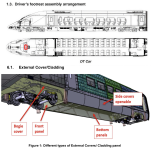
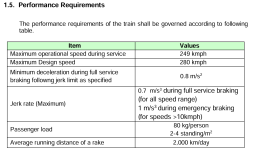
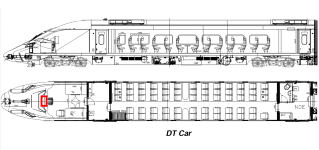
This is our first high speed platform right? so the speed should improve with time.
Specs from the tender:
View attachment 48648
A zoomed in pic of the trainset:
View attachment 48647
The BEML tender doc is attached.
Speed should increase with time. This trainset is supposed to run on the HSR line. IIRC, the HSR line can support 320+ km/hr. These trainsets still use stainless steel body. BEML has been trying to switch to aluminum alloys in the recent years, they haven't managed to do so yet. If this trainset body is made of Al-alloys, I think we can go past 300 km/hr.This is our first high speed platform right? so the speed should improve with time.
Of course there will be problems with reducing weight. A lighter trainset will struggle to gain traction especially during a slope climb. Recall the problems we had with the WAG-12A loco. Fixing those problems is what led to WAG-12B loco.
maybe they should try and go for a carbon fibre body like the Cr450Speed should increase with time. This trainset is supposed to run on the HSR line. IIRC, the HSR line can support 320+ km/hr. These trainsets still use stainless steel body. BEML has been trying to switch to aluminum alloys in the recent years, they haven't managed to do so yet. If this trainset body is made of Al-alloys, I think we can go past 300 km/hr.
Of course there will be problems with reducing weight. A lighter trainset will struggle to gain traction especially during a slope climb. Recall the problems we had with the WAG-12A loco. Fixing those problems is what led to WAG-12B loco.
We barely make enough carbon fibre composites for our aerospace/defence needs.maybe they should try and go for a carbon fibre body like the Cr450

would be a nice way to upgrade our capablities no?We barely make enough carbon fibre composites for our aerospace/defence needs.
Titagarh with its acquisition of an Italian firm has tech for aluminum profiling, tilting technology (?) & HSR.Speed should increase with time. This trainset is supposed to run on the HSR line. IIRC, the HSR line can support 320+ km/hr. These trainsets still use stainless steel body. BEML has been trying to switch to aluminum alloys in the recent years, they haven't managed to do so yet. If this trainset body is made of Al-alloys, I think we can go past 300 km/hr.
Of course there will be problems with reducing weight. A lighter trainset will struggle to gain traction especially during a slope climb. Recall the problems we had with the WAG-12A loco. Fixing those problems is what led to WAG-12B loco.

Nita Ambani inaugurates cancer and dialysis centre ‘Jeevan’ in memory of father Ravindrabhai Dalal
Sir HN Reliance Foundation Hospital in Mumbai has opened a new facility named Jeevan. This wing is dedicated to cancer and dialysis care. The launch marks the hospital's 10th anniversary. Nita Ambani inaugurated the centre. The facility offers advanced oncology and dialysis services. It also...
Ideally this HSR project should've been awarded to them or Titagarh roped into a JV with BEML.
Instead we've this experimentation when we're already running behind schedule.
India’s first indigenous high-speed train set to enter manufacturing phase soon
Trainsets to be deployed on Mumbai-Ahmedabad high-speed rail corridor
By Christin Mathew Philip
January 05, 2026 / 16:27 IST
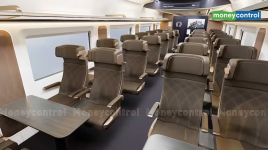
Interior renders of the proposed high-speed train.
Manufacturing activities for India’s first indigenous high-speed train are expected to begin soon, with the design phase nearing completion, sources familiar with the development told Moneycontrol.
The project is being executed by BEML-Medha, which received the contract from Integral Coach Factory (ICF) in 2024 to build two chair-car high-speed trainsets. Designed for an operational speed of 250 kmph and a maximum speed of 280 kmph, the trains will be deployed on Mumbai-Ahmedabad High-Speed Rail (HSR) corridor by 2027.
ICF general manager U Subba Rao told Moneycontrol, “The final design is nearing completion, and manufacturing will begin once it is frozen. We expect manufacturing to start between April and June. Component designs including carbody, bogies, suspension system, and doors are being developed in parallel and are in the final stages.”
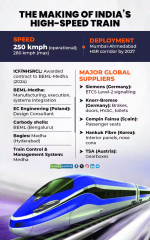
Each trainset will consist of eight coaches, including seven chair cars and one executive class coach, with pantry and toilet facilities broadly aligned with those seen in chair-car Vande Bharat trains.
Design phase nearing completion
Sources said the design phase of the project is nearing completion, with Poland-based EC Engineering- design consultant for the project-having submitted detailed design for review and approval. EC Engineering had earlier worked with BEML and Medha on the design of the Vande Bharat sleeper train.
Officials involved in the project said global vendors with a proven track record of supplying European high-speed rail systems have been engaged to ensure compliance with international performance and safety benchmarks. “We are also enabling localisation and the gradual development of domestic manufacturing capabilities” an official said.
Moneycontrol has also accessed interior renders of the proposed high-speed train, which will be deployed on Mumbai-Ahmedabad HSR corridor.
Parallel work on systems and bogies
Manufacturing activities are expected to commence with the fabrication of car body shells at BEML’s Bengaluru plant, while Medha will begin production of bogies at its Hyderabad facility. In parallel, Medha is also developing the Train Control and Management System (TCMS) software and working on the integration of Siemens’ signaling system with the train systems.
Prototype rollout targeted for December 2026
The first prototype of the indigenous high-speed train is expected to roll out by December 2026. “Following this, the train will undergo a comprehensive testing and certification program lasting about seven to eight months, covering static and dynamic trials, safety validations, and high-speed test runs, including trials mandated by the Research Designs and Standards Organization (RDSO),” a source said.
Follow-on order for 16 trainsets likely
Industry sources said the BEML-Medha consortium is likely to receive a follow-on order for 16 additional high-speed trainsets.
Phased start to commercial operations
Commercial services using the first two indigenous trainsets likely to begin on Surat–Bilimora section of the corridor, subject to the successful completion of trials and statutory approvals.
Railways Minister Ashwini Vaishnaw has recently said that the Mumbai-Ahmedabad high-speed rail project will be commissioned in phases starting in 2027. He said the Surat-Bilimora section will be opened on August 15, 2027, followed by successive sections-Vapi-Surat, Vapi-Ahmedabad, Thane-Ahmedabad, and Mumbai-Ahmedabad.
Project background
The 508-km Mumbai-Ahmedabad High-Speed Rail corridor will connect Maharashtra and Gujarat through 12 stations. While Japanese Shinkansen E5 trains, capable of speeds of up to 350 kmph, were originally planned for the corridor, high procurement costs led the Union government to pursue an indigenous high-speed train program.
https://www.moneycontrol.com/news/i...-enter-manufacturing-phase-soon-13756924.html
Trainsets to be deployed on Mumbai-Ahmedabad high-speed rail corridor
By Christin Mathew Philip
January 05, 2026 / 16:27 IST
Interior renders of the proposed high-speed train.
Manufacturing activities for India’s first indigenous high-speed train are expected to begin soon, with the design phase nearing completion, sources familiar with the development told Moneycontrol.
The project is being executed by BEML-Medha, which received the contract from Integral Coach Factory (ICF) in 2024 to build two chair-car high-speed trainsets. Designed for an operational speed of 250 kmph and a maximum speed of 280 kmph, the trains will be deployed on Mumbai-Ahmedabad High-Speed Rail (HSR) corridor by 2027.
ICF general manager U Subba Rao told Moneycontrol, “The final design is nearing completion, and manufacturing will begin once it is frozen. We expect manufacturing to start between April and June. Component designs including carbody, bogies, suspension system, and doors are being developed in parallel and are in the final stages.”
Each trainset will consist of eight coaches, including seven chair cars and one executive class coach, with pantry and toilet facilities broadly aligned with those seen in chair-car Vande Bharat trains.
Design phase nearing completion
Sources said the design phase of the project is nearing completion, with Poland-based EC Engineering- design consultant for the project-having submitted detailed design for review and approval. EC Engineering had earlier worked with BEML and Medha on the design of the Vande Bharat sleeper train.
Officials involved in the project said global vendors with a proven track record of supplying European high-speed rail systems have been engaged to ensure compliance with international performance and safety benchmarks. “We are also enabling localisation and the gradual development of domestic manufacturing capabilities” an official said.
Moneycontrol has also accessed interior renders of the proposed high-speed train, which will be deployed on Mumbai-Ahmedabad HSR corridor.
Parallel work on systems and bogies
Manufacturing activities are expected to commence with the fabrication of car body shells at BEML’s Bengaluru plant, while Medha will begin production of bogies at its Hyderabad facility. In parallel, Medha is also developing the Train Control and Management System (TCMS) software and working on the integration of Siemens’ signaling system with the train systems.
Prototype rollout targeted for December 2026
The first prototype of the indigenous high-speed train is expected to roll out by December 2026. “Following this, the train will undergo a comprehensive testing and certification program lasting about seven to eight months, covering static and dynamic trials, safety validations, and high-speed test runs, including trials mandated by the Research Designs and Standards Organization (RDSO),” a source said.
Follow-on order for 16 trainsets likely
Industry sources said the BEML-Medha consortium is likely to receive a follow-on order for 16 additional high-speed trainsets.
Phased start to commercial operations
Commercial services using the first two indigenous trainsets likely to begin on Surat–Bilimora section of the corridor, subject to the successful completion of trials and statutory approvals.
Railways Minister Ashwini Vaishnaw has recently said that the Mumbai-Ahmedabad high-speed rail project will be commissioned in phases starting in 2027. He said the Surat-Bilimora section will be opened on August 15, 2027, followed by successive sections-Vapi-Surat, Vapi-Ahmedabad, Thane-Ahmedabad, and Mumbai-Ahmedabad.
Project background
The 508-km Mumbai-Ahmedabad High-Speed Rail corridor will connect Maharashtra and Gujarat through 12 stations. While Japanese Shinkansen E5 trains, capable of speeds of up to 350 kmph, were originally planned for the corridor, high procurement costs led the Union government to pursue an indigenous high-speed train program.
https://www.moneycontrol.com/news/i...-enter-manufacturing-phase-soon-13756924.html