
India - United States Relations
- Thread starter Butter Chicken
- Start date
You are using an out of date browser. It may not display this or other websites correctly.
You should upgrade or use an alternative browser.
You should upgrade or use an alternative browser.


Misleading headline or my misunderstanding? The footnote in video says to terminate the national emergency used to impose global tarrifs. That means the base 10% he applied at start to get around WTO rules, at most. Even then isn't just the emergency terminated.. tarrifs are still another matter their senate or courts will have to decide. WTO is ineffective anyways.

Russia-backed sanctioned Indian refiner Nayara Energy boosts crude runs to 90%, sources say
Reuters
Last Updated: Oct 31, 2025, 03:41:00 PM IST
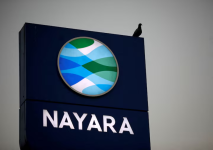
Logo of Nayara is seen at its fuel station on the outskirts of Ahmedabad, India, November 16, 2022. REUTERS/Amit Dave/File Photo Purchase Licensing Rights
Synopsis
Nayara Energy has increased its Vadinar refinery operations to 90-93 percent capacity. This comes after European Union sanctions had previously reduced its processing levels. The refinery is now exclusively processing Russian oil. This oil is being supplied through traders, with Rosneft arranging the purchases. Nayara is continuing its operations by sourcing crude from Russia.
Nayara Energy has increased its Vadinar refinery operations to 90-93 percent capacity. This comes after European Union sanctions had previously reduced its processing levels. The refinery is now exclusively processing Russian oil. This oil is being supplied through traders, with Rosneft arranging the purchases. Nayara is continuing its operations by sourcing crude from Russia.
Russia-backed Indian refiner Nayara Energy has ramped up crude processing at its Vadinar refinery to 90% to 93% of capacity, two sources familiar with the matter said, after European Union sanctions curtailed operations earlier this year.
Oil processing at Nayara's 400,000 barrels per day western India plant dropped to 70% to 80% after the EU sanctioned it in July, denting its exports and leading suppliers such as Iraq and Saudi Arabia to halt crude sales to the company, sources have previously said.
Before the sanctions, Nayara's refinery was running at 104% of capacity.
Nayara is majority-owned by Russian entities including Rosneft, which holds a 49.13% stake and was sanctioned last week by the United States.
Nayara and Rosneft did not immediately respond to requests for comments.
Nayara's crude runs have rebounded recently as it boosted domestic fuel sales, including supplies to state-owned refiner Hindustan Petroleum Corp, the sources said.
The private refiner is operating its plant using only Russian oil, ship tracking data shows. The sources said Russian oil was arranged by Rosneft and sold to Nayara through traders.
Nayara is likely to continue buying Russian oil through non-sanctioned entities, the sources said, declining to elaborate on how Nayara is making payments for its crude oil purchases.
Reuters reported previously that Nayara was settling payment for its Russian oil supplies against product exports.
Most Indian refiners, including Russia's biggest Indian client, Reliance Industries, halted purchases of Russian oil after Washington imposed sanctions last week on Rosneft and Lukoil,
another Russian energy company.
However, state-owned Indian Oil Corp, India's biggest refiner, bought five cargoes of Russian oil for December arrival from non-sanctioned entities, Reuters reported on Friday.
Nayara operates more than 6,600 retail fuel outlets.
Russia-backed sanctioned Indian refiner Nayara Energy boosts crude runs to 90%, sources say
It was obvious. They just needed to change the buyer-supplier-seller dynamics.
View attachment 47475
Russia-backed sanctioned Indian refiner Nayara Energy boosts crude runs to 90%, sources say
Reuters
Last Updated: Oct 31, 2025, 03:41:00 PM IST
View attachment 47474
Logo of Nayara is seen at its fuel station on the outskirts of Ahmedabad, India, November 16, 2022. REUTERS/Amit Dave/File Photo Purchase Licensing Rights
Synopsis
Nayara Energy has increased its Vadinar refinery operations to 90-93 percent capacity. This comes after European Union sanctions had previously reduced its processing levels. The refinery is now exclusively processing Russian oil. This oil is being supplied through traders, with Rosneft arranging the purchases. Nayara is continuing its operations by sourcing crude from Russia.
Russia-backed Indian refiner Nayara Energy has ramped up crude processing at its Vadinar refinery to 90% to 93% of capacity, two sources familiar with the matter said, after European Union sanctions curtailed operations earlier this year.
Oil processing at Nayara's 400,000 barrels per day western India plant dropped to 70% to 80% after the EU sanctioned it in July, denting its exports and leading suppliers such as Iraq and Saudi Arabia to halt crude sales to the company, sources have previously said.
Before the sanctions, Nayara's refinery was running at 104% of capacity.
Nayara is majority-owned by Russian entities including Rosneft, which holds a 49.13% stake and was sanctioned last week by the United States.
Nayara and Rosneft did not immediately respond to requests for comments.
Nayara's crude runs have rebounded recently as it boosted domestic fuel sales, including supplies to state-owned refiner Hindustan Petroleum Corp, the sources said.
The private refiner is operating its plant using only Russian oil, ship tracking data shows. The sources said Russian oil was arranged by Rosneft and sold to Nayara through traders.
Nayara is likely to continue buying Russian oil through non-sanctioned entities, the sources said, declining to elaborate on how Nayara is making payments for its crude oil purchases.
Reuters reported previously that Nayara was settling payment for its Russian oil supplies against product exports.
Most Indian refiners, including Russia's biggest Indian client, Reliance Industries, halted purchases of Russian oil after Washington imposed sanctions last week on Rosneft and Lukoil,
another Russian energy company.
However, state-owned Indian Oil Corp, India's biggest refiner, bought five cargoes of Russian oil for December arrival from non-sanctioned entities, Reuters reported on Friday.
Nayara operates more than 6,600 retail fuel outlets.
Russia-backed sanctioned Indian refiner Nayara Energy boosts crude runs to 90%, sources say
Russian crude perhaps be used for domestic needs while other sources' crude can be used for exports. It just needs coordination among petroleum majors in India. And there's no time better than outside pressure that unite these babus ( govt or pvt).
There might be other dynamics too. But, i am just saying that jibes on govt being scared is good for narrative, but India has come too far for its govt ( irrespective of political party) to be scared of anyone, but its own people. Ironically.


This is what will happens if you go against US president, Broken & un-attractive.

Indians have taken a lot of loan to maintain their living standard, be it phone, bike, car, house, laptop, everything is on EMI the day this bubble bursts then only it can damage. Just keep the watch on banks if any one goes bankrupt then it will shatter dreams.
Indians have taken a lot of loan to maintain their living standard, be it phone, bike, car, house, laptop, everything is on EMI the day this bubble bursts then only it can damage. Just keep the watch on banks if any one goes bankrupt then it will shatter dreams.
It reminds one of 2008 financial crisis which originated from USA. But there's a lot of difference between their situation and ours.
1. Americans consumed way way more than sustainable for them. The status of Dollar as world currency, only embolden ed them. Hence they used to give "bad" loans a lot. That was ingrained in their culture. The capitalism.
2. India is nowhere near that line. Neither Indian psyche and economy is similar. Although both American and US economy are consumption based economy.. India is just started to grow. Finances aren't limited to few major cities only. Theres a wide rural populace that's still faces hurdles in accessing loans.
3. Banks went down because of poor management, govt control meaning they could be bailed out, hence unprofessional attitude even at the top. But that was when banks were just started to grow accustomed to get freedom after 1991. Today, our banks are consolidated, more mature, and infused with greater capital.
Policies from govt comes in timely manner to keep the best practices in banking. Just look at our DPI structure. While EMI has become a trend, it's also a fact that it has become very accessible through digital connectivity.
And mind you, our banks are not capitalist oriented like US of post 1945. They are very wary, and the managers approving any loans do their due diligence. ( Except when it concerns political). I can say this, because I have gone through the process, they don't dish out loans just like that.
4. Your EMI point is very valid. But that I believe is a cycle our young society needs to go through, there will be people who misused credit card, go into debt.. but it won't happen at a scale that will derail the system. But it hopefully will bring greater financial prudence among society. But the only thing to lookout for is the non finance experts influencers manipulating public. Other than that, people have been using EMI since decades and decades. Through home loans, car loans, etc. and rather than being bad, it has filed indian economy.
And it also helps the individuals. If you want proof, you just have to look at any businessman. Not adani. But your local businessman. Almost everything they have, will be on loans and EMIs. If you ask them, if so much debt is good, they will say yes because it frees up their capital. Capital that they invest in other ventures. Like expanding business, investing in stocks, buying land as investment etc etc.. which generated revenue for them, more than offsetting the EMI payment.
So, on paper the EMI culture might look like a doomsday scenario in waiting, but what it does is, it drives up the ambition. Ambitions drive a person to create value. Forming a virtuous cycle.
* There's two sides to every coin, when a person can't sustain ambition through legal means, they turn to crime and easy money. That is where, state regulations comes in. Just giving money isn't enough. It's also important to have better mechanism, technology to catch frauds, criminals.. empowering agencies like SEBI, CBI and states' finance task force. Have robust tools at hand to differentiate between abuse of financial access and value creation in someone's life. After all, people are first priority of the state.
5. Last but not least, it's not all rosy. But as everything in world, when it comes to macroeconomics.. it depends on continuous government management and evolution. i.e.
Creating opportunities for people to earn money. Consolidation of capital by merging underperforming banks. Streamline operations, cut administrative costs, pool the capital.
Bring in Foreign capital. i.e. setting up of foreign banks's subsidiaries in India. Which connects their capital or Indian ambitions. For eg: local branches of JP morgan etc.
Even in India-EFTA free Trade agreement, EFTA states have shown huge interest in financial sector of India. They have asked for permission to have their banks to have subsidaries inside India. Under RBI norms ofcourse. EFTA = swiss, norway, iceland, leicheimstein.. all rich nations.
The challenge in front of the government is regulation. To ensure fair practice and safeguard against exploitation and fraud. For that we need to be updated on evolving RBI policies in coming times.
There's talk about leveraging Blockchain and Quantum communication and security technology for Adhaar infra. That means banks are getting a infrastructure update. While military is gonna get benefits from experiments in domain of quantum security, it's not limited to them only na.
Although, I havent seen indigineous Blockchain system as of now. As opposed to work in QKD.
Note: I don't know if your comment was based on common observation and natural tendency to think in that direction, given indian culture of savings first ( me too) or any broad data that points towards it.
But for me, at the end of the day, it's all about resources. Access to EMIs will unlock the trapped ambitions and potential of crores of Indians. Even if few lakhs misuse it or go overboard.
Meanwhile, even corporate loans and ED's recovery mechanism have found its way to global forum as global standards. Kudos.
4. Your EMI point is very valid. But that I believe is a cycle our young society needs to go through, there will be people who misused credit card, go into debt.. but it won't happen at a scale that will derail the system. But it hopefully will bring greater financial prudence among society. But the only thing to lookout for is the non finance experts influencers manipulating public. Other than that, people have been using EMI since decades and decades. Through home loans, car loans, etc. and rather than being bad, it has filed indian economy.
And it also helps the individuals. If you want proof, you just have to look at any businessman. Not adani. But your local businessman. Almost everything they have, will be on loans and EMIs. If you ask them, if so much debt is good, they will say yes because it frees up their capital. Capital that they invest in other ventures. Like expanding business, investing in stocks, buying land as investment etc etc.. which generated revenue for them, more than offsetting the EMI payment.
So, on paper the EMI culture might look like a doomsday scenario in waiting, but what it does is, it drives up the ambition. Ambitions drive a person to create value. Forming a virtuous cycle.
Not all businesses are successful you know. People have started asking their friends and family for money. lol

What this has to do with India-US geopolitical relationship? Mods plz move this to offtopic.
This is what will happens if you go against US president, Broken & un-attractive.
Not all businesses are successful you know. People have started asking their friends and family for money. lol
People have been asking their friends and family for money since millenium lol. Even before banks, loan as a practice was there. Banking just institutionalised it.
And while not all businesses are successful.. there are bankruptcy law in place too. Banks aren't gonna crash because of some unsuccesful business venture. We aren't talking about conglomerates. But common citizen.
The only thing missing is financial knowledge and best practices in our school curriculum. That will solve the innocent mistakes.
To be honest, school curriculum does include some basic lessons on finance, but the real issue is in how those lessons are taught. Most teachers present it as just another chapter to cover something students memorize for marks and forget later. Since it often involves simple math, it gets treated as a scoring topic rather than a life skill. As a result, students never really learn how to apply it in the real world. Heck I have seen people who have very little understanding of how taxation works despite it being taught in schools. As long as teachers and students treat it as just easy mark scoring subject, how much financial knowledge might get added into the curriculum it would have below expected results.People have been asking their friends and family for money since millenium lol. Even before banks, loan as a practice was there. Banking just institutionalised it.
And while not all businesses are successful.. there are bankruptcy law in place too. Banks aren't gonna crash because of some unsuccesful business venture. We aren't talking about conglomerates. But common citizen.
The only thing missing is financial knowledge and best practices in our school curriculum. That will solve the innocent mistakes.

People have been asking their friends and family for money since millenium lol. Even before banks, loan as a practice was there. Banking just institutionalised it.
And while not all businesses are successful.. there are bankruptcy law in place too. Banks aren't gonna crash because of some unsuccesful business venture. We aren't talking about conglomerates. But common citizen.
The only thing missing is financial knowledge and best practices in our school curriculum. That will solve the innocent mistakes.
There is no bankruptcy law, but we do have a loan waiver program in place lol, which gets selectively implemented to keep votes happy. In NCR are these jaats and gujjar sold their land, did not spend the money wisely and then there is a muawza story every day.
Then you have builder who took loan from investors, banks and people to provide them residency on time, but the project dealyed because the builder invested the money in more projects and went bankrupt. People after a decade still waiting for the possesion. LOL.
These small issues one day pile up become a thousand crore burden on government and people.
Look at the new trend which I call it scam, the real estate scam. 3.bhk 140 sq meters house 5th floor costing 1.9 crore, -2.9 crore in the name of luxury apartment. Unneccesary load on people to spend more money on low value commodity which has been made to look like a gold.
There is no bankruptcy law, but we do have a loan waiver program in place lol, which gets selectively implemented to keep votes happy. In NCR are these jaats and gujjar sold their land, did not spend the money wisely and then there is a muawza story every day.
Then you have builder who took loan from investors, banks and people to provide them residency on time, but the project dealyed because the builder invested the money in more projects and went bankrupt. People after a decade still waiting for the possesion. LOL.
These small issues one day pile up become a thousand crore burden on government and people.
Look at the new trend which I call it scam, the real estate scam. 3.bhk 140 sq meters house 5th floor costing 1.9 crore, -2.9 crore in the name of luxury apartment. Unneccesary load on people to spend more money on low value commodity which has been made to look like a gold.
But that has nothing to do with EMI culture of banks of the loans given out.
Your point a) we do have a bankruptcy law. It's bankruptcy code I believe, where on declaring bankruptcy, several process are initiated.. but they are often invoked by conglomerate. Like Kotak.
B) Loan waiver is a political gimmick started from 2015-16 MP elections and then 2018-19 Delhi elections. But if voters vote for freebies over development, it's not banks fault. And we all know that only rich landlord cum farmers ( on paper) get loan waivers. People who show income as agricultural to evade taxes. They also take loans too. Meanwhile small farmers don't have access to the institutions for loans. They have to depend on loan sharks. Local hoodlums. Sarpanch etc etc.. Those who harrass them. Even here, The EMI accessibility with digital connectivity can bridge the gap between rural farmers and Banking institutions. You also have many new microfinance lenders in market like AU.
Imagine someone wanting to take up a course but can't afford it. EMI options help. And you don't have to visit the baks everyday. Everything's online. So, focus must be on digital and financial inclusion. One key area that have unlocked the potential in last decade. Do not underestimate the impact UPI and Rupay have had on making Indian economy resilient. Also, most of the waivers are when govt pays it to banks. Banks don't waive loans. Govt pays them. And MP Congress did a u turn saying govt have no money. Same in Punjab, Telangana and Karnataka. All three CMs are coming in open saying they don't have money. While a state like UP ( unbelievable right?) is in revenue surplus. And it's revenue surplus.
B) Your point on real state scams is very valid. And RERA act was the first step towards it. Where builders have to give timely possesion or face law. I am not sure about how much of its implemented tho. Almost all builders are connected to political circles.
But again, that doesn't have an effect on banking financials. They, through ED if needed or on own , can recover the losses by collateral, seizing property etc etc..
That's real state mafia and can't be seen through the prism of EMI-BANKING-FINANCE.
C) The rates you cited are a real menace. What they do is.. they book the flats with help of a third party themselves. That drives up the prices of even substandard portions. Later they sell out rest of the inventory. It's a scam by property dealers. To tackle this, we need social campaign. No law can beat this efficiently.
Instead, if people stop buying these houses/flats at high prices.. the temporary buyer aka third party.. will have to borne huge huge losses. Because they have to pay the amount after holding for certain period of time.
So, next time you see such high prices, i advice you to advice whoever is being lured.. to not buy it. Instead, invest in SIP, Funds, bonds, any side venture.. and get a place on rent.
Other things is to look for work for home, see if the place has metro connectivity. If yes, then look for a place bit further away. There are many steps to it.
But if someone wants to buy the flat because it's costly and they can show off.. them let them. Just my two cents.
P.S. Please shift this Convo to the relevant thread. And I have a request from management here. I know that this is a defense forum, but can we have a sticky thread on financial management and counter-misinfo.
Think of it like as an initiative to safeguard Indian public interest. Defense from misinformation peddled by you know who. + Bots
Last edited:

Why do we even respond to US sanctions threat, we should simply ignore them. If we back off , it only emboldens them to keep indulging in threats.
India remains 2nd largest buyer of Russian oil with imports worth $2.9 billion as US levies sanctions on major oil firms
By Riya R Alex
Updated16 Nov 2025, 12:10 PM IST
India purchased $2.9 billion worth of crude oil from Russia in October, remaining the second-largest buyer after China. Sanctions on Russian oil following the invasion of Ukraine have led to increased oil purchases from India.
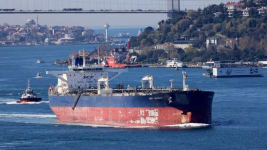
India imports $2.9 billion worth of Russian crude oil in October. Representative image.
India has purchased crude oil worth $2.9 billion from Moscow in October, ahead of the latest sanctions imposed on Russian entities, according to a European think tank.
India continues to be the second-largest buyer of Russian fossil fuels in October, after China, the report said, citing the Centre for Research on Energy and Clean Air (CREA).
US sanctions on Russian firms
India's Russian oil purchases are in focus as the US imposed sanctions last month on Rosneft and Lukoil, two of Russia's largest oil producers, with the aim of cutting Kremlin's resources to fund the Ukraine war. Additionally, US President Donald Trump's repeated claims that India has cut down its oil purchases from Russia following tariffs imposed by the US.
These sanctions have led companies such as Reliance Industries, HPCL-Mittal Energy Ltd, and Mangalore Refinery and Petrochemicals Ltd to temporarily halt imports, PTI reported.
In October, Russia exported 60 million barrels of crude oil, with Rosneft and Lukoil collectively accounting for 45 million barrels.
"India remained the second-largest buyer of Russian fossil fuels, importing a total of EUR 3.1 billion. Crude oil dominated India's purchases at 81 per cent (EUR 2.5 billion), followed by coal at 11 per cent (EUR 351 million) and oil products at 7 per cent (EUR 222 million)," CREA noted in its monthly report for October.
India's growing oil purchases from Russia
India, conventionally dependent on Middle Eastern oil, substantially increased its imports from Russia after the February 2022 invasion of Ukraine, PTI reported.
Russian oil was available at steep discounts due to Western sanctions and reduced demand in Europe. Therefore, India's Russian crude imports soared from less than 1% to nearly 40% of its total crude oil imports in a short period of time.
In September, India had spent nearly $4.18 billion (3.6 billion euros), which included $2.9 billion (2.5 billion euros) on crude oil, $525 million (452 million euros) on coal, and $400 million (344 million euros) on oil products.
CREA noted that India's Russian crude imports in October increased by 11% compared to the previous month. Although private refiners accounted for more than two-thirds of India's total imports, state-owned refineries nearly doubled their Russian crude volumes from the previous month.
"In a keen development, the Rosneft-owned Vadinar refinery (in Gujarat) - now sanctioned by the EU and the UK - increased its production to 90% in October. After the EU sanctions in July, the refinery has been importing crude solely from Russia. In October, their imports from Russia recorded a 32 per cent month-on-month increase to their highest volumes since the full-scale invasion," CREA said.
The refinery's exports have decreased sharply by 47 per cent compared to the same month last year, reaching the lowest levels since May 2023, according to the report.
"While there was an 8 per cent month-on-month reduction in sanctioning countries' imports from the six Indian and Turkish refineries using Russian crude in October, the decrease was led chiefly by the EU and UK, which recorded monthly reductions of 9 per cent and 73 per cent," CREA said.
After Russia invaded Ukraine in February 2022, a series of sanctions was imposed by the United States, the European Union, and other Western nations with the aim to hamper the Russian economy. One of the primary sanctions targeted Russian oil exports, which greatly affected Russia's capacity to sell oil to European markets.
Consequently, Russia started selling crude oil at heavily discounted rates to attract new buyers. India, with its significant energy demands and an economy sensitive to fluctuations in oil prices, ramped up its purchases.
The discount on Russian oil, which has sometimes been as high as $18-20 per barrel below the market price of other oils, enabled India to buy oil at a cheaper price.
India remains 2nd largest buyer of Russian oil with imports worth $2.9 billion as US levies sanctions on major oil firms | Mint
By Riya R Alex
Updated16 Nov 2025, 12:10 PM IST
India purchased $2.9 billion worth of crude oil from Russia in October, remaining the second-largest buyer after China. Sanctions on Russian oil following the invasion of Ukraine have led to increased oil purchases from India.
India imports $2.9 billion worth of Russian crude oil in October. Representative image.
India has purchased crude oil worth $2.9 billion from Moscow in October, ahead of the latest sanctions imposed on Russian entities, according to a European think tank.
India continues to be the second-largest buyer of Russian fossil fuels in October, after China, the report said, citing the Centre for Research on Energy and Clean Air (CREA).
US sanctions on Russian firms
India's Russian oil purchases are in focus as the US imposed sanctions last month on Rosneft and Lukoil, two of Russia's largest oil producers, with the aim of cutting Kremlin's resources to fund the Ukraine war. Additionally, US President Donald Trump's repeated claims that India has cut down its oil purchases from Russia following tariffs imposed by the US.
These sanctions have led companies such as Reliance Industries, HPCL-Mittal Energy Ltd, and Mangalore Refinery and Petrochemicals Ltd to temporarily halt imports, PTI reported.
In October, Russia exported 60 million barrels of crude oil, with Rosneft and Lukoil collectively accounting for 45 million barrels.
"India remained the second-largest buyer of Russian fossil fuels, importing a total of EUR 3.1 billion. Crude oil dominated India's purchases at 81 per cent (EUR 2.5 billion), followed by coal at 11 per cent (EUR 351 million) and oil products at 7 per cent (EUR 222 million)," CREA noted in its monthly report for October.
India's growing oil purchases from Russia
India, conventionally dependent on Middle Eastern oil, substantially increased its imports from Russia after the February 2022 invasion of Ukraine, PTI reported.
Russian oil was available at steep discounts due to Western sanctions and reduced demand in Europe. Therefore, India's Russian crude imports soared from less than 1% to nearly 40% of its total crude oil imports in a short period of time.
In September, India had spent nearly $4.18 billion (3.6 billion euros), which included $2.9 billion (2.5 billion euros) on crude oil, $525 million (452 million euros) on coal, and $400 million (344 million euros) on oil products.
CREA noted that India's Russian crude imports in October increased by 11% compared to the previous month. Although private refiners accounted for more than two-thirds of India's total imports, state-owned refineries nearly doubled their Russian crude volumes from the previous month.
"In a keen development, the Rosneft-owned Vadinar refinery (in Gujarat) - now sanctioned by the EU and the UK - increased its production to 90% in October. After the EU sanctions in July, the refinery has been importing crude solely from Russia. In October, their imports from Russia recorded a 32 per cent month-on-month increase to their highest volumes since the full-scale invasion," CREA said.
The refinery's exports have decreased sharply by 47 per cent compared to the same month last year, reaching the lowest levels since May 2023, according to the report.
"While there was an 8 per cent month-on-month reduction in sanctioning countries' imports from the six Indian and Turkish refineries using Russian crude in October, the decrease was led chiefly by the EU and UK, which recorded monthly reductions of 9 per cent and 73 per cent," CREA said.
After Russia invaded Ukraine in February 2022, a series of sanctions was imposed by the United States, the European Union, and other Western nations with the aim to hamper the Russian economy. One of the primary sanctions targeted Russian oil exports, which greatly affected Russia's capacity to sell oil to European markets.
Consequently, Russia started selling crude oil at heavily discounted rates to attract new buyers. India, with its significant energy demands and an economy sensitive to fluctuations in oil prices, ramped up its purchases.
The discount on Russian oil, which has sometimes been as high as $18-20 per barrel below the market price of other oils, enabled India to buy oil at a cheaper price.
India remains 2nd largest buyer of Russian oil with imports worth $2.9 billion as US levies sanctions on major oil firms | Mint
An immediate decline would be detrimental to the Oil markets. Folks in Washington also know that this setup will not change in the short term. Many X gurus were saying that major changes in import would be visible from the winter months itself. No dearth of people just pulling data from wherever and then making a fool out of Indians.India remains 2nd largest buyer of Russian oil with imports worth $2.9 billion as US levies sanctions on major oil firms
By Riya R Alex
Updated16 Nov 2025, 12:10 PM IST
India purchased $2.9 billion worth of crude oil from Russia in October, remaining the second-largest buyer after China. Sanctions on Russian oil following the invasion of Ukraine have led to increased oil purchases from India.
View attachment 47925
India imports $2.9 billion worth of Russian crude oil in October. Representative image.
India has purchased crude oil worth $2.9 billion from Moscow in October, ahead of the latest sanctions imposed on Russian entities, according to a European think tank.
India continues to be the second-largest buyer of Russian fossil fuels in October, after China, the report said, citing the Centre for Research on Energy and Clean Air (CREA).
US sanctions on Russian firms
India's Russian oil purchases are in focus as the US imposed sanctions last month on Rosneft and Lukoil, two of Russia's largest oil producers, with the aim of cutting Kremlin's resources to fund the Ukraine war. Additionally, US President Donald Trump's repeated claims that India has cut down its oil purchases from Russia following tariffs imposed by the US.
These sanctions have led companies such as Reliance Industries, HPCL-Mittal Energy Ltd, and Mangalore Refinery and Petrochemicals Ltd to temporarily halt imports, PTI reported.
In October, Russia exported 60 million barrels of crude oil, with Rosneft and Lukoil collectively accounting for 45 million barrels.
"India remained the second-largest buyer of Russian fossil fuels, importing a total of EUR 3.1 billion. Crude oil dominated India's purchases at 81 per cent (EUR 2.5 billion), followed by coal at 11 per cent (EUR 351 million) and oil products at 7 per cent (EUR 222 million)," CREA noted in its monthly report for October.
India's growing oil purchases from Russia
India, conventionally dependent on Middle Eastern oil, substantially increased its imports from Russia after the February 2022 invasion of Ukraine, PTI reported.
Russian oil was available at steep discounts due to Western sanctions and reduced demand in Europe. Therefore, India's Russian crude imports soared from less than 1% to nearly 40% of its total crude oil imports in a short period of time.
In September, India had spent nearly $4.18 billion (3.6 billion euros), which included $2.9 billion (2.5 billion euros) on crude oil, $525 million (452 million euros) on coal, and $400 million (344 million euros) on oil products.
CREA noted that India's Russian crude imports in October increased by 11% compared to the previous month. Although private refiners accounted for more than two-thirds of India's total imports, state-owned refineries nearly doubled their Russian crude volumes from the previous month.
"In a keen development, the Rosneft-owned Vadinar refinery (in Gujarat) - now sanctioned by the EU and the UK - increased its production to 90% in October. After the EU sanctions in July, the refinery has been importing crude solely from Russia. In October, their imports from Russia recorded a 32 per cent month-on-month increase to their highest volumes since the full-scale invasion," CREA said.
The refinery's exports have decreased sharply by 47 per cent compared to the same month last year, reaching the lowest levels since May 2023, according to the report.
"While there was an 8 per cent month-on-month reduction in sanctioning countries' imports from the six Indian and Turkish refineries using Russian crude in October, the decrease was led chiefly by the EU and UK, which recorded monthly reductions of 9 per cent and 73 per cent," CREA said.
After Russia invaded Ukraine in February 2022, a series of sanctions was imposed by the United States, the European Union, and other Western nations with the aim to hamper the Russian economy. One of the primary sanctions targeted Russian oil exports, which greatly affected Russia's capacity to sell oil to European markets.
Consequently, Russia started selling crude oil at heavily discounted rates to attract new buyers. India, with its significant energy demands and an economy sensitive to fluctuations in oil prices, ramped up its purchases.
The discount on Russian oil, which has sometimes been as high as $18-20 per barrel below the market price of other oils, enabled India to buy oil at a cheaper price.
India remains 2nd largest buyer of Russian oil with imports worth $2.9 billion as US levies sanctions on major oil firms | Mint