Any more details regarding this, please?
Were they all indian? What did they fail in
Any more details regarding this, please?
L&T and GA-ASI Announce Strategic Partnership for MALE RPAS Manufacture in IndiaSo, here is what happening with high end UAV procurement.
In 2023, CDS ordered studies on major military platforms used by all three services. The study recommend to acquire 31 MQ-9B High Altitude Long Endurance (HALE) UAVs and 155 Medium Altitude Long Endurance (MALE) UAVs.
Currently, 31 MQ-9B HALE drones are under order to be delivered by 2030.
Now to MALE procurement:
So, if they conclude the 87 MALE procurement and Heron upgrade in the coming years, we will be better off in the UAV front. It will give time for Archer-NG to mature which can replace older Herons post 2030s.
- Under EP, Army procured 4 Heron Mk2 and 2 Hermes Starliner each by AF and Navy. Currently operational.
- Tapas, 10 to be ordered by Navy and Airforce.
- Tender is our for procurement of 87 MALE UAV under local production with 60% localisation. DAC clearance last week.
- India currently operate around 70+ older Heron UAVs which were suppose to be upgraded under project cheetah. The original idea to weaponize was dropped to reduce costs. Army aviation operates around 30 of these.
L&T and GA-ASI Announce Strategic Partnership for MALE RPAS Manufacture in India
I believe they will offer MQ-1C Gray Eagle for this MALE tender.
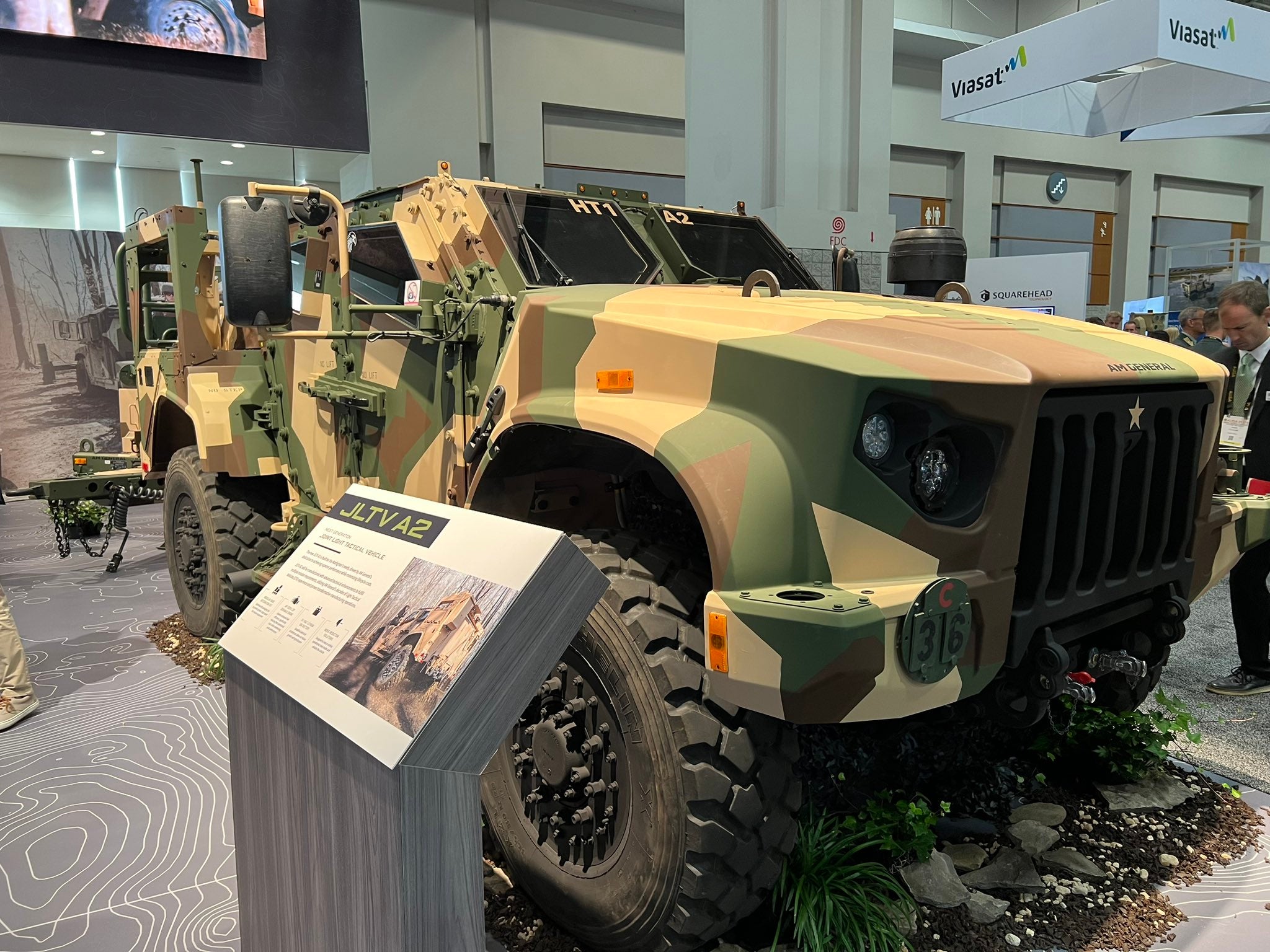
 www.defensedaily.com
Isn't this too outdated? So, an outdated tech that US Army is stopping procurement of.. but India forces will induct?
Wasn't there some news a days ago of our own MALE program.
Hegseth Directs Army Scrap ‘Outdated’ Systems, Cuts Include JLTVs, AH-64Ds, Gray Eagles - Defense Daily
Defense Secretary Pete Hegseth has directed the Army to cut “outdated weapon systems” as part of a new “comprehensive transformation strategy,” with the
From Wikipedia citation
How are they outdated ? The drone fills the requirement asked by the military. Just because US doesn't find the use for them doesn't mean we can't. Hopefully we can leverage the US stopping procurement to move majority of production line here over time and get our own sensors in it. Very likely it will be Drishti-10 vs MQ-1C

The design of the drones will not be outdated in near future. The design meets our requirement and hence we will look to buy them. Adani already makes the body of Drishti-10 in India and L&T will likely do the same. The subsystems on these drones like sensors and engines can easily be replaced and upgraded over time using indigenous systems developed for Tapas program. We can always follow what Russia and Britain did with Forpost-R (Locally built Searcher Mk-2) and Thales Watchkeeper (Local variant of Hermes 450) drone program respectively.Firstly, it was not a claim I made but a question in my mind. I will be Happy to be updated.
My rationale being : It's outdated because these drones won't get inducted anytime soon. By the time they do get inducted, next gen systems will be used by our adversary. As is happening now.
Remember.. this is just manufacturing. How much assembly will be there from US kits and how much indian made ones.. is well.. drishti-10.
It wouldn't be a problem if our industry was great at absorbing technology through transfer. But it isn't. It lags far too much to be efficiently absorbing it. Only successful programs have been which saw R&Dd from start... Since for some reason we are averse to reverse engineer and add it to academic and manufacturing discourse.
- Right now it's 87, what about after that? As our budget grows, capex grows, 87 will multifold. 87 is not enough, nowhere enough. It just fits the projected capex available to forces. So, later they will issue another RFP for advanced systems.. gov will negotiate again and import untill that tech is outdated enough to shift the production line?
Ofcourse, i am no seer and India could see a miracle and become STEM R&D focused nation. But I am just contemplating by looking at how things stand currently.
They are not catching up, rather they established a very good baseline of operational requirement based on different use cases seen in recent conflict and now developing in house capability + the required industrial supply chain for a very mature use case where you are likely to face less need for improvisation. Without having a very good idea how and where armed drones or even ISR drones can work well, it will be a problematic situation at each turn of operation as at every level there will be surprise.Seema like Army finally started catching up and started inducting drones in large numbers. It should have been done in 2023 itself, better late than never.
True. The former CDS General Rawat Sir has started talking about drones, way back in 2018. Before even the Russia-Ukraine war started. He was spearheading policymakers and developers in that direction.They are not catching up, rather they established a very good baseline of operational requirement based on different use cases seen in recent conflict and now developing in house capability + the required industrial supply chain for a very mature use case where you are likely to face less need for improvisation. Without having a very good idea how and where armed drones or even ISR drones can work well, it will be a problematic situation at each turn of operation as at every level there will be surprise.
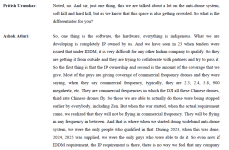
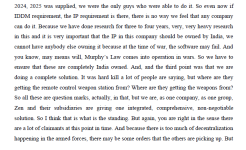
An example of the same from Zen tech anti drone dev experience
View attachment 47535
View attachment 47536
 ..
..They are not catching up, rather they established a very good baseline of operational requirement based on different use cases seen in recent conflict and now developing in house capability + the required industrial supply chain for a very mature use case where you are likely to face less need for improvisation. Without having a very good idea how and where armed drones or even ISR drones can work well, it will be a problematic situation at each turn of operation as at every level there will be surprise.
An example of the same from Zen tech anti drone dev experience
View attachment 47535
View attachment 47536
The threat identification matrix first need to be established, contextualized and for a very new gen threat that is fast evolving it takes some time esp for those who are seeing from the outside. Without this baseline properly identified, the solution or counter strategy you will develop will not be able to sustain the same effect as you would hope for. Most of your strategy will turn out void once the threat has evolved into another level very quickly.Thats not ground breaking revelation, battle between electronic warfare team and drones have been going on since the start of Ukraine war. Indian military should have started Inducting drones in large numbers atleast from 2023 onwards. It's been clear from 2023 onwards that FPV drones changed modern warfare forever. Now a days more than 70-80% causalities are from FPV drones. It's the new rifle of the modern battle field. If you compare the number of soldiers who died from FPV drones vs the number of soldiers killed from rifle fire, it will paint a picture of how drastic this change is. Hundreds of KMs worth fronts are today held by dozens of FPV drones units located few km in depth and frontline trenches are no longer manned by companies, but by handful of soldiers.
Ask the 2 sides battling it out in Ukr & Rus flat land to fight it out in the bushy thick growth mountain narrow pathways , in numbers like we deploy and you will see the strategy will evolve into another due to obstacle faced in drone op. Many aspects will remain valid, but many won't. That is why in battle there is never one single solution, it is a very dynamic process that evolves tactically with time.And about EW, the only real option is fiber optic FPV drones. It was the Russian introduction of Fiber optic FPV drones that ultimately contained and caused the defeat of Ukraine's Kursk offensive. Ukrainian had fitted their vehicles with a fairly advanced EW systems that uses AI and automatically scan different frequencies to jam drone signals. So when the Ukranian drove into Kursk, almost all Russian FPV drones failed and none could fly close to advancing Ukranian vehicles. It was only the fiber optic drones that stopped Ukranian advance. Now a days entire frontline is filled with fiber optic FPV drones, laying in ambush and even flying more than 20+ km deep into the rear.
When you look at all these pictures posted by Indian military, you still don't see any fiber optic FPV drones. So no, they still have not caught up with the changing dynamic.
Marich, since you mentioned CBRN.. any idea where our preparedness stands in countering such threats.The threat identification matrix first need to be established, contextualized and for a very new gen threat that is fast evolving it takes some time esp for those who are seeing from the outside. Without this baseline properly identified, the solution or counter strategy you will develop will not be able to sustain the same effect as you would hope for. Most of your strategy will turn out void once the threat has evolved into another level very quickly.
In theory this gamut of fpv threat itself is evolving, and fiber optic worked in Ukr because the terrain suit it. This same aspect will find huge problem in a mountain region with huge undergrowth or heavily masked landscape where there are not that much free space available for the drone to continue flying. Hence correct analysis of this threat, where it work best & where not, what strength it offers etc first need to be established in literature form, then the counter will be developed with scope for further adaptation.
Ask the 2 sides battling it out in Ukr & Rus flat land to fight it out in the bushy thick growth mountain narrow pathways , in numbers like we deploy and you will see the strategy will evolve into another due to obstacle faced in drone op. Many aspects will remain valid, but many won't. That is why in battle there is never one single solution, it is a very dynamic process that evolves tactically with time.
Drones have been used for some time by the army, but putting explosives on it was generally considered a dirty tactics worldwide. What is happening in Ukr, like those long range drones striking apartments in both countries, or small fpv against infantry level use both cases are example of such a dirty tactics that is non conventional warfare. For context imagine in place of explosives, some CBRN agent was put in those drones, what would be the effect?
IA and in general we as a country take threat matrix very seriously, our response to such petulant event that you cite (like something revolutionary in warfare, which it is not that much, its more of a cowardice tactic) would be so severe for the enemy that they will think twice, thrice multiple times before even employing such tactics again. Response is the key element why Pak had to stop within 4 days and Rus-Ukr ongoing for more than 4 years. Everybody is a boss, until the real boss walks in is apt in war.
They take it seriously enough for military and new research verticals point to further divergence into associated field of application gradually as research & dev of new solution come into effect. There are some studies around but overall picture is not fully clear wrt CBRN related emergency, at least I have not studied much around this. Mostly being sensitive it is confined to some select labs , not sure how many practical application or reach it has for civilian defence purpose.Marich, since you mentioned CBRN.. any idea where our preparedness stands in countering such threats.
Not just in military with vehicles made for it.. but as an academia and industry.. Research.. leading to both weaponised and counter-CBRN form.
We saw a glimpse during Covid.. and it was better than expected when it came to vaccine development and state machinery tbh.. but what about a targeted attack and after that

Imo, propeller driven MALE drones is all we can hope to get from abroad. The IAF originally wanted upto 100 MQ-20 Avenger C jet-powered LO UAVs from GA. The US said no (likely on ITAR grounds).Firstly, it was not a claim I made but a question in my mind. I will be Happy to be updated.
My rationale being : It's outdated because these drones won't get inducted anytime soon. By the time they do get inducted, next gen systems will be used by our adversary. As is happening now.
Remember.. this is just manufacturing. How much assembly will be there from US kits and how much indian made ones.. is well.. drishti-10.
It wouldn't be a problem if our industry was great at absorbing technology through transfer. But it isn't. It lags far too much to be efficiently absorbing it. Only successful programs have been which saw R&Dd from start... Since for some reason we are averse to reverse engineer and add it to academic and manufacturing discourse.
- Right now it's 87, what about after that? As our budget grows, capex grows, 87 will multifold. 87 is not enough, nowhere enough. It just fits the projected capex available to forces. So, later they will issue another RFP for advanced systems.. gov will negotiate again and import untill that tech is outdated enough to shift the production line?
Ofcourse, i am no seer and India could see a miracle and become STEM R&D focused nation. But I am just contemplating by looking at how things stand currently.
That is complete BS. To begin with, fiber optic FPVs works better under challenging conditions such as thick vegetation than any other type of drones. There are footages of Russian FPV drones flying kms through thick forests hunting for enemy positions. Even if that's true, much of Indian borders with the enemy isn't thick vegetation, its farmlands, deserts and high altitude deserts.The threat identification matrix first need to be established, contextualized and for a very new gen threat that is fast evolving it takes some time esp for those who are seeing from the outside. Without this baseline properly identified, the solution or counter strategy you will develop will not be able to sustain the same effect as you would hope for. Most of your strategy will turn out void once the threat has evolved into another level very quickly.
In theory this gamut of fpv threat itself is evolving, and fiber optic worked in Ukr because the terrain suit it. This same aspect will find huge problem in a mountain region with huge undergrowth or heavily masked landscape where there are not that much free space available for the drone to continue flying. Hence correct analysis of this threat, where it work best & where not, what strength it offers etc first need to be established in literature form, then the counter will be developed with scope for further adaptation.
Ask the 2 sides battling it out in Ukr & Rus flat land to fight it out in the bushy thick growth mountain narrow pathways , in numbers like we deploy and you will see the strategy will evolve into another due to obstacle faced in drone op. Many aspects will remain valid, but many won't. That is why in battle there is never one single solution, it is a very dynamic process that evolves tactically with time.
Again, that's another stupid excuse to mask incompetence. What's next? May be Ambushing enemy reconnaissance team is also "dirty"? May be bombing enemy from 20,000 feet high is "dirty"? Or firing artillery shell against an unaware enemy 40km away is "dirty"? May be we should go back to duels? What a Joke.. Reminds me of the Indian airforce's obsession with dogfights in what obviously an age of bvr warfare.Drones have been used for some time by the army, but putting explosives on it was generally considered a dirty tactics worldwide. What is happening in Ukr, like those long range drones striking apartments in both countries, or small fpv against infantry level use both cases are example of such a dirty tactics that is non conventional warfare.
For context imagine in place of explosives, some CBRN agent was put in those drones, what would be the effect?
IA and in general we as a country take threat matrix very seriously, our response to such petulant event that you cite (like something revolutionary in warfare, which it is not that much, its more of a cowardice tactic) would be so severe for the enemy that they will think twice, thrice multiple times before even employing such tactics again. Response is the key element why Pak had to stop within 4 days and Rus-Ukr ongoing for more than 4 years. Everybody is a boss, until the real boss walks in is apt in war
How many mountains have ukraine got? or the vegetation part, even that is different to what faced in Himalayas to jungles.That is complete BS. To begin with, fiber optic FPVs works better under challenging conditions such as thick vegetation than any other type of drones. There are footages of Russian FPV drones flying kms through thick forests hunting for enemy positions. Even if that's true, much of Indian borders with the enemy isn't thick vegetation, its farmlands, deserts and high altitude deserts.
Would have explained a lot but clearly you are way too immature mentally to understate a serious threat like that, so maybe when you are capable of understanding I will explain.And what exactly is Indian state is going to do even if they use CBRN agent against infantry? At best we will also use it or b!tch about it to a world that will give lip service. We are talking about a country that didn't do anything after enemy sent thousands of terrorist all throught 90s to kill tens of thousands of our people or when it financed and conducted Multiple teror attacks throughout our hinterland.